

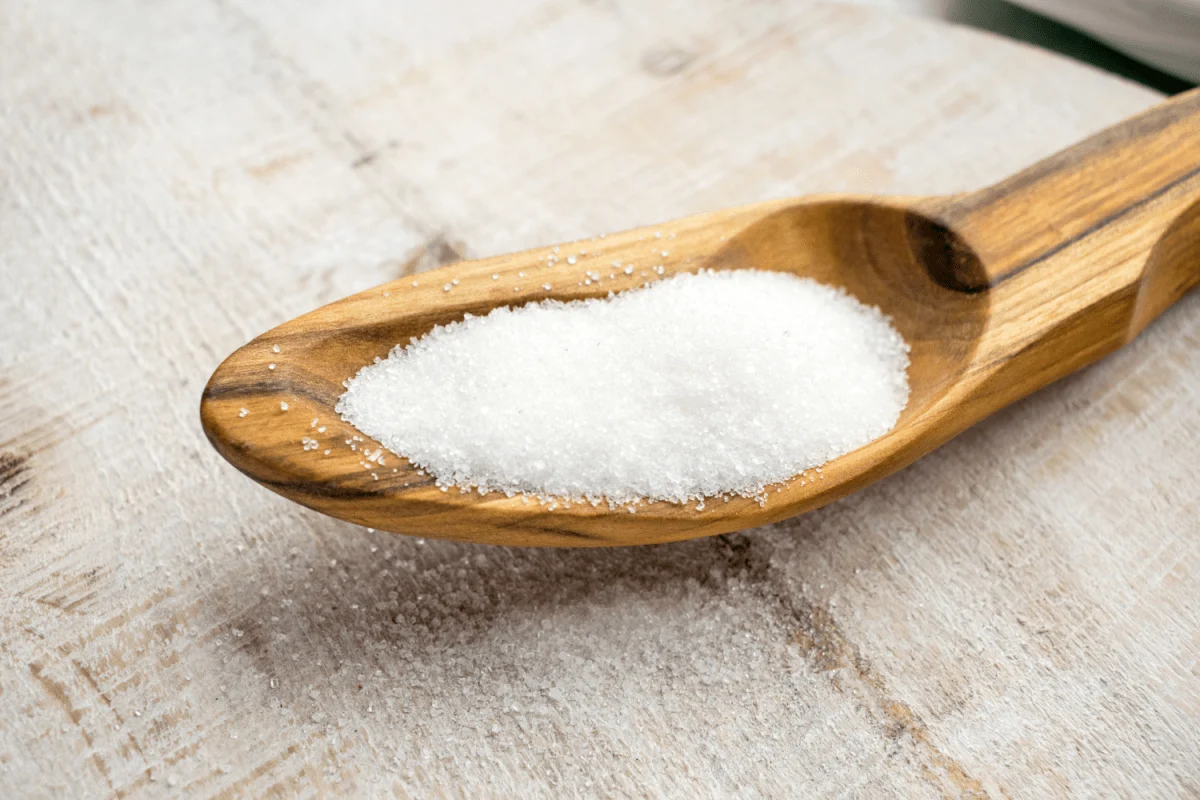
For beverage manufacturers developing sugar-free drinks, reduced-calorie refreshments, flavored waters, and functional beverages, selecting a reliable sucralose supplier is an important step toward consistent product quality and commercially viable production. MT Royal offers access to multiple brands at competitive prices, giving procurement teams a practical starting point for comparing sweetener options according to formulation requirements, purchasing volumes, and supply schedules.
However, buying sucralose in bulk involves more than securing an attractive price per kilogram. Your factory must consider sweetness intensity, solubility, flavor balance, processing stability, regulatory compliance, and batch-to-batch consistency. Even a small dosing deviation can affect the taste of a beverage when the sweetener is used at a very low concentration.
As manufacturers respond to demand for sugar-free and reduced-sugar products, a well-planned approach to Sucralose Zero Calorie Sweetener – Bulk Supply for Healthy Beverages can help control ingredient costs, streamline production, and maintain a consistent consumer experience from one batch to the next.
What Is Sucralose Zero Calorie Sweetener?
Sucralose is a high-intensity sweetener derived from sucrose through a chemical modification process. It delivers sweetness at very low use levels and contributes negligible calories at the quantities typically used in beverages. It is widely recognized by the food additive number E955 in the European Union.
Sucralose is substantially sweeter than conventional sugar, although the exact perceived intensity depends on concentration, formulation, temperature, and the ingredients surrounding it. Because it is used in small quantities, it can help manufacturers reduce or eliminate the sugar contribution to sweetness without adding a comparable amount of calories.
However, sucralose does not replace every function of sugar. In a conventional soft drink, sugar contributes sweetness and dissolved solids. In other products, it may influence mouthfeel, viscosity, color development, or fermentation. A sugar-free formulation may therefore need additional ingredients to reproduce the desired body and sensory profile.
For industrial buyers, this distinction is crucial: replacing sugar with a high-intensity sweetener is a formulation project, not simply a one-for-one ingredient substitution.
Why Beverage Manufacturers Use Sucralose
Sucralose is used in many beverage formulations because it provides intense sweetness, is effective at low concentrations, and can perform well in a range of food and drink systems when correctly formulated.
Sugar-Free and Reduced-Calorie Beverage Development
Sucralose can be used in selected formulations of:
- Sugar-free soft drinks and carbonated beverages
- Flavored and enhanced waters
- Powdered drink mixes
- Ready-to-drink teas and selected coffee beverages
- Sports and functional beverages
- Low-calorie drink concentrates and syrups
- Certain dairy-based and plant-based beverages, subject to formulation suitability
The appropriate use level depends on the product category, sensory target, and regulations in the destination market. Manufacturers must verify that the sweetener is permitted for the intended application and remains within the applicable maximum levels where such limits apply.
Sweetness Without Conventional Sugar Loading
One advantage of sucralose is its high sweetness intensity. A relatively small quantity can deliver the desired sweetness, reducing the need to add large amounts of sugar solely for taste.
This can help manufacturers formulate products with lower sugar content. Nevertheless, a product’s calorie level depends on the entire formulation, not just the sweetener. Juice concentrates, dairy ingredients, carbohydrates, and other components may still contribute energy.
Claims such as “zero calorie,” “sugar-free,” or “reduced calorie” must be evaluated under the labeling rules applicable to the target market. The use of sucralose alone does not automatically qualify a finished beverage for every nutrition claim.
Formulation Flexibility
Sucralose can be used alone or combined with other sweeteners to help achieve a preferred taste profile. A blend may allow developers to adjust sweetness onset, lingering notes, and overall flavor balance.
For example, a citrus beverage may require a different sweetness system from a lightly flavored water. Acidity, aroma, bitterness, and flavor intensity all influence the way sweetness is perceived. Formulation decisions should therefore be based on the complete beverage rather than the sweetener in isolation.
Understanding Sucralose Grades and Bulk Supply Formats
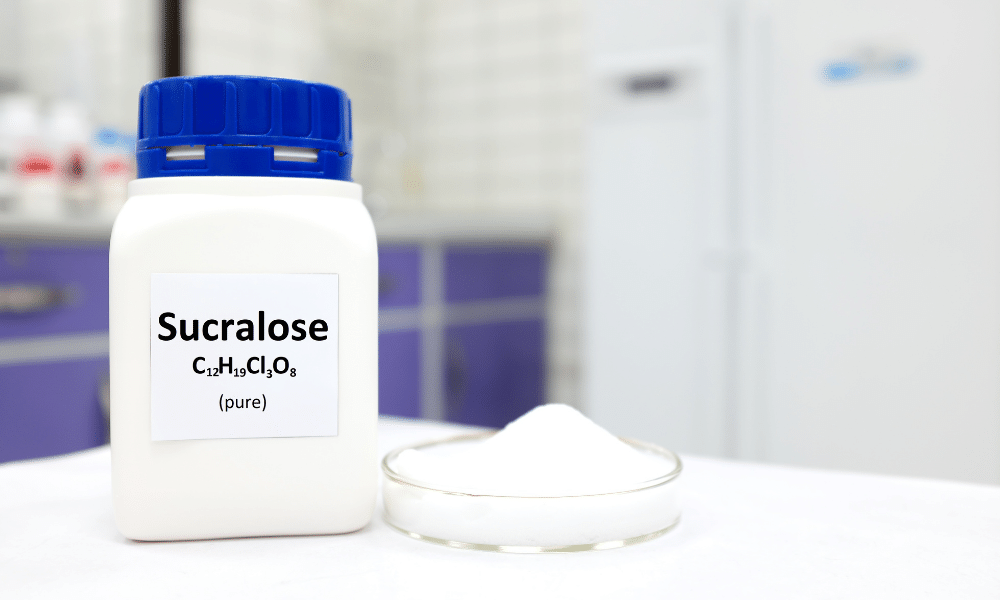
A suitable supplier should be able to clarify the product specification, available packaging, and intended application.
Standard Food-Grade Sucralose
Food-grade sucralose is commonly supplied as a white crystalline powder. It is used in beverage manufacturing and other food applications, subject to applicable regulatory requirements.
Before purchasing, verify the chemical identity, assay, impurity limits, moisture specification, packaging, shelf life, and batch documentation. A generic description such as “sucralose powder” is not sufficient for formal supplier approval.
Sucralose for Beverage Premixes
Some manufacturers purchase sucralose as part of a premix or formulated sweetener blend. This can simplify handling where the product requires multiple sweeteners or other dry ingredients.
However, premixes may contain carriers or additional components that affect the dosage calculation. Confirm the concentration of active sucralose, the full ingredient composition, and the recommended inclusion rate before comparing the price with pure sucralose.
Bags and Bulk Packaging
The appropriate packaging format depends on consumption, handling equipment, and storage capacity.
- Smaller bags: Useful for pilot production, product development, and lower-volume operations.
- Palletized cartons or bags: Suitable for organized warehouse storage and routine manufacturing.
- Larger industrial quantities: May be more economical for factories with predictable consumption and sufficient storage capacity.
Because sucralose is used at low inclusion rates, packaging efficiency is not the only concern. Accurate weighing, protection against moisture and contamination, and control of opened containers can be just as important as the order size.
How to Choose a Reliable Sucralose Supplier
Supplier selection affects product quality, production continuity, and the cost of maintaining a compliant formulation.
1. Verify Quality Specifications
Ask for a current technical data sheet and a batch-specific certificate of analysis. A safety data sheet should also be available where applicable.
Depending on the product specification, relevant parameters may include:
- Assay or purity
- Identification and impurity limits
- Moisture content
- Appearance and physical characteristics
- Batch number and traceability
- Shelf life and storage recommendations
- Packaging integrity and labeling information
Your quality assurance team should define acceptance limits before placing routine orders. For critical applications, an incoming inspection plan may include identity verification and additional testing according to the factory’s quality system.
2. Check Regulatory Suitability
Regulatory compliance is essential when sourcing any food additive. In the European Union, sucralose is regulated under the food additive framework, including Regulation (EC) No 1333/2008 and its amendments. Authorized applications and conditions of use depend on the specific food category.
Other countries may apply different requirements, so an ingredient approved for one market should not automatically be assumed acceptable in another.
Confirm that the supplier can provide the documentation required for your target market. Your regulatory or quality team should independently verify permitted use levels, labeling requirements, and the suitability of the ingredient for the finished beverage.
3. Evaluate Batch Consistency
High-intensity sweeteners require precise dosing. Variations in product assay or weighing accuracy can create differences in perceived sweetness, especially in beverages with relatively simple flavor profiles.
A dependable supplier should maintain appropriate quality controls and provide traceable batch documentation. Any proposed change in grade, manufacturing source, or specification should be assessed before the replacement enters routine production.
MT Royal offers access to multiple brands at competitive prices, allowing buyers to compare potential sourcing options. Each candidate product should still be evaluated against the factory’s approved specification and application requirements.
4. Compare Total Cost of Use
The purchase price per kilogram is only one part of the economic picture. A complete comparison should include:
- Unit price and order minimums
- Freight and other applicable landed costs
- Packaging and warehouse handling
- Dosing and premix requirements
- Quality assurance and incoming inspection
- Inventory carrying costs
- Lead-time reliability and potential production disruption
A product with a lower quotation may not offer the best value if it creates additional handling requirements or comes with less favorable delivery terms. Likewise, a higher-priced option is not automatically better if both products meet the same requirements.
5. Confirm Supply Reliability
A missing ingredient can disrupt a beverage production schedule even when the ingredient itself represents a small fraction of the finished product’s cost.
Ask suppliers about current availability, typical lead times, minimum order quantities, and procedures for communicating delays or specification changes. Confirm the actual delivery commitment for the quantity you need instead of relying on general availability statements.
MT Royal can be considered as part of a sourcing strategy focused on brand comparison, competitive pricing, and supply planning. The practical objective is to select a supplier whose product and service can support the factory’s operating schedule.
Sucralose Compared With Other High-Intensity Sweeteners
Sucralose is not the only option for sugar-free beverage production. Other sweeteners may be more suitable depending on the flavor profile, cost target, processing conditions, and regulatory requirements.
| Sweetener | General characteristics | Key formulation considerations |
|---|---|---|
| Sucralose | High sweetness intensity; commonly used in beverages | Evaluate taste profile, dosage, and stability in the finished product |
| Steviol glycosides | Plant-derived high-intensity sweeteners | Flavor characteristics vary by glycoside composition and grade |
| Saccharin | High sweetness intensity and low use rate | Can produce lingering or bitter-metallic notes in some formulations |
| Acesulfame potassium (Ace-K) | Often used alone or in sweetener blends | Sensory profile and permitted use levels require evaluation |
| Aspartame | High-intensity sweetener with a familiar sweetness profile in many products | Stability under heat and storage conditions requires attention |
No option is universally best. Some manufacturers choose blends to balance sensory performance and cost, while others prioritize a specific taste profile or ingredient declaration.
When comparing alternatives, test them at equivalent perceived sweetness rather than simply using the same weight. High-intensity sweeteners differ in sweetness potency, and equal masses do not deliver equivalent sensory results.
Common Mistakes When Buying Sucralose in Bulk
Choosing a Supplier Based Only on Price
A low price may look attractive, but it does not establish that the product meets your specification or that deliveries will arrive on schedule.
Better approach: Compare equivalent grades and include documentation, quality performance, freight, and supply reliability in the decision.
Confusing Pure Sucralose With a Sweetener Blend
A blend may contain only a fraction of active sucralose. Comparing its price directly with pure sucralose can lead to inaccurate cost calculations.
Better approach: Confirm the active ingredient concentration and calculate cost based on the amount of sucralose delivered and the sweetness contribution required.
Overlooking Dosing Accuracy
Because sucralose is used at low concentrations, small absolute weighing errors can become significant percentage deviations from the target dosage.
Better approach: Use calibrated scales or validated dosing equipment with an appropriate weighing range. Establish clear procedures for weighing, transferring, and verifying small ingredient quantities.
Assuming Sugar Replacement Is Simple
Sucralose can replace sweetness, but it does not provide the same bulk, solids, viscosity, or other functional contributions as sugar.
Better approach: Review the entire formulation and determine whether bulking agents, fibers, acids, flavors, or other ingredients are needed to achieve the desired sensory and physical properties.
Skipping Stability and Sensory Trials
A sweetener that tastes acceptable in a freshly prepared laboratory sample may perform differently after processing or storage.
Better approach: Test the finished beverage under realistic conditions, including the actual pH, heat treatment, packaging, and expected shelf life. Record sweetness, aftertaste, flavor balance, and any changes over time.
Technical Tips for Large-Scale Beverage Manufacturing
Develop a Standardized Dosing Procedure
A high-intensity sweetener must be distributed evenly throughout the beverage. Poor dispersion or inaccurate dosing can create inconsistent sweetness between batches or within a production run.
Define the weighing method, order of addition, mixing time, and verification procedure. For smaller quantities, a validated premix can improve handling and distribution. The premix method should be designed to avoid segregation, contamination, and inaccurate transfer.
Evaluate Solubility Under Actual Process Conditions
Sucralose is water-soluble, but dissolution behavior still depends on concentration, temperature, mixing, and the presence of other ingredients. Do not assume that every concentrated premix or multi-ingredient system will behave like pure water.
For concentrated syrups, prepare pilot solutions and assess dissolution time, clarity where relevant, and compatibility with acids, flavors, minerals, and other formulation components.
Control the Full Beverage Matrix
Sweetness perception changes with acidity, carbonation, aroma, and bitterness. A sweetener concentration that works in a still beverage may require adjustment in a carbonated or highly acidic product.
We recommend developing sensory acceptance criteria before scaling up. This gives the product development team a clear target and helps production distinguish formulation issues from dosing or mixing problems.
Validate Heat Treatment and Shelf Life
The suitability of sucralose for a beverage depends on the actual processing and storage conditions. Products exposed to pasteurization, hot filling, or extended storage should be evaluated using the intended process.
Conduct stability testing in the finished formulation, using the planned packaging and storage conditions. This is more informative than relying exclusively on general ingredient descriptions.
Monitor Supplier and Production Performance
Useful indicators include incoming batch acceptance, dosing deviations, delivery performance, documentation accuracy, and the frequency of formulation adjustments.
We have found that coordination between purchasing, quality assurance, and production helps prevent unnecessary substitutions and makes supplier reviews more objective. When an ingredient change is required, a documented approval process reduces the risk of introducing unexpected variation.
Market Trends and Commercial Considerations
Reduced-sugar and sugar-free beverages remain an important area of product development, particularly in categories where manufacturers seek to balance sweetness, calorie targets, and consumer expectations.
At the same time, beverage producers are paying greater attention to ingredient transparency, regulatory compliance, packaging efficiency, and supply-chain resilience. High-intensity sweeteners may form part of these strategies, but consumer preferences vary by region and product category.
There is no single market growth rate or global price trend that accurately describes every sucralose grade and purchasing region. Pricing can be influenced by manufacturing capacity, raw materials, energy, freight, order size, and supplier-specific commercial terms.
For procurement teams, the most reliable approach is to monitor current quotations, lead times, and actual supplier performance. If your factory uses sucralose regularly, periodic reviews of consumption forecasts and alternative qualified sources can help reduce exposure to supply interruptions.
Frequently Asked Questions About Bulk Sucralose Supply
Is sucralose suitable for zero-calorie beverages?
Sucralose can be used in formulations designed to provide sweetness with negligible calories from the sweetener itself. Whether a finished beverage qualifies for a zero-calorie claim depends on its complete formulation and the labeling rules of the target market.
How much sucralose should a beverage factory use?
There is no universal dosage. The required level depends on the target sweetness, other ingredients, product category, and applicable regulatory limits. Establish the dosage through formulation trials and verify compliance before commercial production.
What documents should a sucralose supplier provide?
Typical documents include a technical data sheet and batch-specific certificate of analysis, along with a safety data sheet where applicable. Additional regulatory, traceability, or quality-system documentation may be required by your market or customer.
Can sucralose replace sugar completely?
It can replace sugar’s sweetening function in suitable formulations, but it does not provide sugar’s bulk or every functional property. Additional ingredients may be needed to achieve the intended mouthfeel, solids content, and overall product quality.
Is sucralose suitable for hot-filled beverages?
It may be suitable for many processed beverage applications, but the specific formulation and process conditions must be evaluated. Conduct trials using the actual heat treatment, pH, packaging, and intended shelf life.
How can MT Royal support bulk sucralose purchasing?
MT Royal offers access to multiple brands at competitive prices. Manufacturers should confirm the required grade, current availability, order quantity, packaging, documentation, and delivery terms to compare suitable options accurately.
How can manufacturers reduce the risk of supply interruptions?
Forecast demand, establish realistic reorder points, monitor supplier lead times, maintain appropriate safety stock, and qualify alternatives before an urgent shortage occurs. Any alternative product must be approved for both technical performance and regulatory suitability.
Build a Reliable Bulk Supply Strategy for Healthy Beverages
Sucralose can be a valuable ingredient for beverage manufacturers seeking to reduce sugar content while maintaining a consistent sweetness profile. Its successful use, however, depends on more than its high sweetness intensity. Product specifications, dosing accuracy, formulation design, regulatory compliance, and dependable supply all contribute to the quality of the finished drink.
When evaluating Sucralose Zero Calorie Sweetener – Bulk Supply for Healthy Beverages, define your technical requirements first, compare equivalent grades, and validate the chosen product under real production conditions. MT Royal provides an option for comparing multiple brands at competitive prices, while the final decision should reflect your factory’s quality standards, consumption forecast, and delivery requirements.
A reliable sweetener supply is not simply a procurement achievement. It is part of the foundation that allows your factory to deliver consistent beverages, protect production schedules, and respond confidently to changing market demands.


No comment