

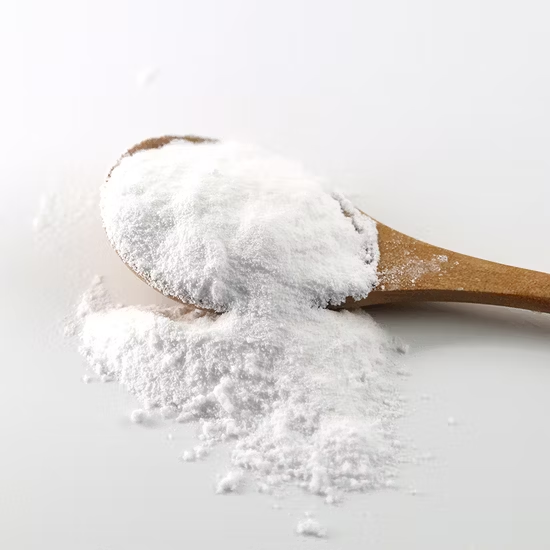
When a factory buys lactic acid, the lowest quoted price is rarely the whole story. Concentration, stereochemical composition, purity, documentation, packaging, delivery reliability, and compatibility with the final formulation can have a much larger impact on your actual production cost. For manufacturers that need a dependable supply of DL-Lactic Acid (50%, 88%, 90%) | Manufacturer and seller, MT Royal offers a practical sourcing route, with access to multiple brands and competitive purchasing options for different industrial requirements.
That matters because lactic acid is not simply an acid added to a mixing tank. It can influence pH, microbial stability, taste, processing behavior, formulation consistency, and ultimately the quality of the finished product. A small specification mismatch can become a surprisingly expensive production problem—especially when a factory is running several shifts and every minute of downtime has a price tag.
For procurement teams, therefore, the right question is not merely “How much is DL-lactic acid per kilogram?” The better question is: Which grade, concentration, origin, documentation package, and supply model gives our factory the lowest reliable total cost?
Food industry raw materials – list of products
LATAMARKO LM60 – Premium Spanish-Origin Cocoa Powder
What Is DL-Lactic Acid?
DL-lactic acid is the racemic form of lactic acid, containing both D- and L-lactic acid stereoisomers. Chemically, lactic acid has the molecular formula C₃H₆O₃ and a molecular weight of approximately 90.08 g/mol. It is also known as 2-hydroxypropanoic acid and is classified as an alpha-hydroxy acid.
The “DL” designation is important. L-lactic acid and D-lactic acid are mirror-image stereoisomers, while DL-lactic acid contains both forms. This distinction can be critical in applications where stereochemistry influences biological behavior or polymer performance.
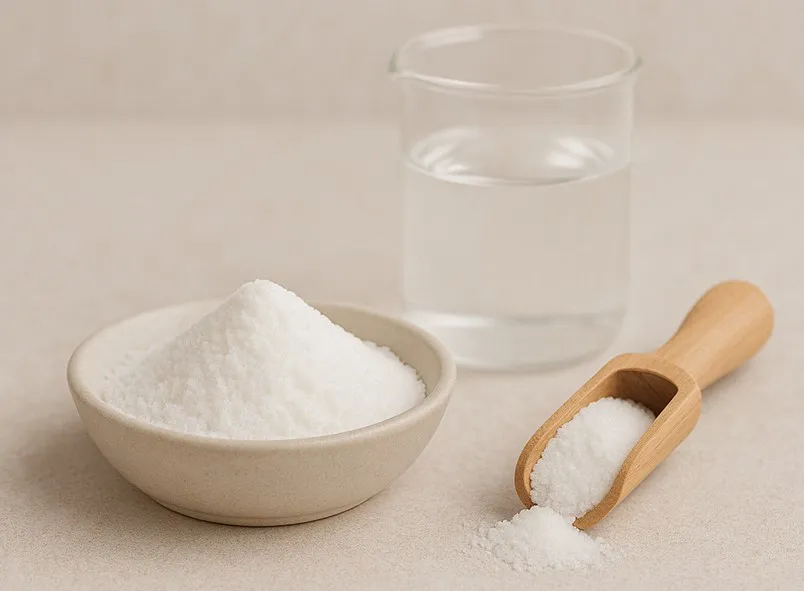
Commercial DL-lactic acid is commonly supplied as an aqueous solution rather than as a pure, water-free acid. The three concentrations covered here—50%, 88%, and 90%—are therefore best understood as different commercial formulations of the same basic chemical rather than three completely different chemicals.
For example, a manufacturer of food products may select a lower concentration because it is easier to dose directly into an aqueous formulation, while a factory seeking to minimize the amount of water transported with its raw materials may prefer a high-concentration grade.
DL-Lactic Acid 50%, 88%, and 90%: What Is the Difference?
Choosing between 50%, 88%, and 90% lactic acid should be based on your process, not simply on the concentration printed on the specification sheet.
DL-Lactic Acid 50%
A 50% solution contains substantially more water than the 88% and 90% grades. That can make it convenient for processes where dilution is already part of the formulation.
Typical considerations include:
- Easier incorporation into water-based systems
- Lower active-acid concentration per kilogram
- Greater transport and storage volume for the same quantity of active lactic acid
- Potentially simpler dosing in some formulations
- Suitability for applications where high concentration is unnecessary
If your production line already handles substantial quantities of liquid ingredients, 50% may be operationally convenient. However, procurement should calculate the price on an active-acid basis, not only on a price-per-drum basis.
DL-Lactic Acid 88%
The 88% grade is a highly concentrated solution and is widely encountered in industrial and food-related supply chains. Depending on the supplier and specification, assay ranges can be defined around the nominal concentration. For example, published specifications for a Musashino DL-lactic acid 88% product describe it as an 88% solution, while its detailed specification defines the assay range separately.
For many manufacturers, 88% offers a useful balance between concentration, handling, and commercial availability.
It can be particularly attractive when:
- You need high active content.
- Storage space is limited.
- Transportation efficiency matters.
- Your formulation already includes water.
- You require a recognized food-additive specification.
- Your factory purchases in bulk.
DL-Lactic Acid 90%
The 90% grade is even more concentrated and can be attractive when minimizing water content is important. Published product specifications for one established DL-lactic acid line describe the 90% product as a 90% solution, with a stated assay range of 90.0–92.0%.
The difference between 88% and 90% may look insignificant on paper, but in high-volume manufacturing, the economics can become meaningful. A procurement manager should compare the cost per kilogram of actual lactic acid, transportation costs, storage requirements, and process losses before deciding.
Why Factories Use DL-Lactic Acid
Lactic acid has a remarkably broad industrial footprint. Its mild acidity, water miscibility, non-volatile character, and ability to regulate pH make it useful across multiple manufacturing environments.
Food and Beverage Manufacturing
In food production, lactic acid can function as an acidulant, pH regulator, flavor modifier, and microbial-control aid. Applications include beverages, pickled products, noodles, sauces, dairy-related formulations, and other processed foods.
One of its advantages compared with some sharper acids is its relatively mild sensory profile. That can be useful when a manufacturer needs acidity without creating an excessively aggressive sour note.
However, “mild” does not mean weak. Concentrated lactic acid solutions remain corrosive and require appropriate handling procedures.
Cosmetics and Personal Care
Lactic acid is also used in cosmetic formulations, particularly where its alpha-hydroxy-acid characteristics are relevant. Depending on the finished formulation and regulatory requirements, it can contribute to pH adjustment and exfoliating functionality.
For cosmetics manufacturers, however, chemical identity alone is not enough. The required purity, residual impurities, color, odor, microbiological quality, and documentation must match the formulation and applicable regulations.
Pharmaceutical and Healthcare Manufacturing
Lactic acid and lactate-related materials have applications in pharmaceutical and medical-material environments. The critical point for procurement is that a product suitable for general industrial use should never automatically be assumed to meet pharmaceutical requirements.
The grade, specification, manufacturing controls, traceability, and documentation must correspond to the intended application.
Industrial Processing
Industrial applications can include textiles, metal treatment, electroplating, paints, resins, and other chemical processes. Published information from lactic-acid manufacturers and distributors confirms these broader applications.
This diversity is one reason sourcing strategy matters. The same chemical name can appear across several industries while the acceptable specification is very different.
The Most Important Specifications to Check Before Buying
A professional purchase order should go beyond “DL-Lactic Acid, 88%.”
At minimum, your technical and procurement teams should review:
- CAS number: DL-lactic acid is commonly identified as CAS 598-82-3, although broader lactic-acid references may use CAS 50-21-5.
- Concentration or assay
- D- and L-isomer profile, where relevant
- Appearance and color
- Acidity/pH parameters
- Heavy-metal limits
- Sulphate and other inorganic impurities
- Methanol or volatile impurities, where specified
- Ash/residue
- Food, pharmaceutical, cosmetic, or industrial grade
- Certificate of Analysis (COA)
- Safety Data Sheet (SDS)
- Country of origin
- Packaging format
- Shelf life and storage requirements
Published specifications illustrate why this level of detail matters. For example, one established DL-lactic acid specification includes limits for sulphates, lead, iron, arsenic, methanol, and residue on ignition.
A serious buyer should therefore compare specification sheets line by line instead of comparing product names.
Common Mistakes When Sourcing DL-Lactic Acid
Buying on price per kilogram alone
Suppose Supplier A offers 50% lactic acid at a lower nominal price than Supplier B’s 88% product. That does not automatically make Supplier A cheaper.
For a simplified comparison:
Effective active-acid cost = purchase price ÷ concentration
You should then add freight, handling, storage, losses, and any required dilution or processing costs.
This simple calculation prevents many procurement teams from comparing apples with half-strength apples.
Ignoring the intended grade
Food-grade, cosmetic-grade, pharmaceutical-grade, analytical-grade, and industrial-grade materials are not interchangeable merely because their chemical names are similar.
The specification must follow the application.
Failing to request a COA
A certificate of analysis is not decorative paperwork. It gives your quality department evidence of the batch characteristics and provides a reference for incoming inspection.
Treating 88% and 90% as identical
They are close in concentration but not necessarily identical in specification, density, impurity profile, or commercial formulation. Your process may tolerate the difference—or it may not.
Overlooking packaging
A 20 kg package, drum, and IBC can produce radically different logistics economics. Packaging also affects unloading, pumping, warehouse space, and operator exposure.
50%, 88%, or 90%: Which Grade Should Your Factory Choose?
A practical decision framework looks like this:
Choose 50% when:
- Your process already uses large amounts of water.
- Easy liquid dosing is more important than transport efficiency.
- Your formulation requires a lower concentration.
- The total delivered cost remains competitive.
Choose 88% when:
- You want a concentrated commercial grade.
- Transportation efficiency is important.
- Your formulation can safely handle a high-strength solution.
- You want a widely traded concentration.
Choose 90% when:
- Maximum concentration is operationally useful.
- You want to minimize water transported per unit of active acid.
- Your equipment and formulation are designed for concentrated material.
- The delivered-price advantage justifies the specification.
There is no universal winner. The best concentration is the one that produces the lowest total manufacturing cost while maintaining specification compliance.
Industrial Handling and Storage Considerations
Lactic acid solutions should be handled according to the relevant SDS and site-specific chemical safety procedures. Concentrated products can cause severe skin and eye damage; an SDS for an 88% DL-lactic acid product, for example, classifies it as causing severe skin burns and serious eye damage.
For a factory, that means procurement and EHS teams should jointly evaluate:
- Compatible storage tanks and transfer lines
- Pump and seal materials
- Spill containment
- Operator PPE
- Eye-wash and emergency-shower availability
- Ventilation where appropriate
- Labeling and batch traceability
- Storage temperature requirements
- Compatibility with other chemicals
Do not let a “food ingredient” label create a false sense of safety. Food suitability and chemical handling risk are two different questions.
How MT Royal Fits Into Industrial Sourcing
MT Royal operates as a manufacturer and global sourcing supplier for food, chemical, and pharmaceutical raw materials. Its stated sourcing model includes products from international suppliers and manufacturers, while its broader portfolio covers hundreds of products and serves customers across numerous countries.
For buyers evaluating DL-Lactic Acid (50%, 88%, 90%) | Manufacturer and seller, this type of sourcing structure can be useful because it allows procurement teams to compare available brands, specifications, origin, packaging, and commercial terms rather than being locked into a single source.
MT Royal also emphasizes high-volume supply and competitive pricing in its raw-material business, with warehouse availability and international sourcing forming part of its supply model.
The practical advantage is not simply having another supplier on your vendor list. It is having a sourcing partner capable of helping you identify which available product actually fits your manufacturing specification.
In our collaboration with different factory environments, one recurring lesson is that supply reliability often matters more than a small difference in the initial quotation. A production line does not care that a purchase order saved two percent when the raw material arrives late.
Emerging Trends in Lactic Acid Procurement
The lactic-acid market is increasingly influenced by sustainability, bio-based production, traceability, and the growing interest in biodegradable polymers. Lactic acid is the fundamental building block for polylactic acid (PLA), a material used in packaging, disposable products, fibers, and other applications.
Fermentation is particularly important in the modern lactic-acid industry because carbohydrates such as glucose, sucrose, and lactose can be converted into lactic acid through microbial processes.
For procurement teams, this creates an important distinction between chemical identity and supply-chain identity. Two products may both be labeled lactic acid while differing in production route, stereochemical composition, feedstock, certification, and sustainability profile.
That is increasingly relevant when your customers ask not only “What is in the product?” but also “Where did the raw material come from?”
Why Multi-Brand Sourcing Can Reduce Risk
Depending exclusively on one manufacturer may simplify procurement, but it can also create concentration risk. A plant shutdown, shipping disruption, regulatory change, or regional shortage can suddenly turn a routine ingredient into a production bottleneck.
MT Royal’s broader sourcing approach can be relevant here because it works with multiple international brands and raw-material manufacturers across its portfolio.
For a large factory, the goal should not necessarily be to replace the primary supplier every quarter. Instead, establish an approved secondary source before you need one.
That is the procurement equivalent of keeping a spare pump in the maintenance room: nobody celebrates it on a good day, but everyone appreciates it when the main unit decides to retire unexpectedly.
Frequently Asked Questions About DL-Lactic Acid
Is DL-lactic acid the same as L-lactic acid?
No. DL-lactic acid contains both D- and L-lactic acid stereoisomers, whereas L-lactic acid is predominantly the L form. The distinction can matter in food, pharmaceutical, biochemical, and polymer-related applications.
What is the CAS number for DL-lactic acid?
DL-lactic acid is commonly identified as CAS 598-82-3. General lactic-acid references may use CAS 50-21-5, so procurement documents should specify the exact product identity rather than relying on the CAS number alone.
Is 90% lactic acid better than 88%?
Not automatically. The higher concentration can improve active-acid efficiency and reduce the amount of water transported, but the correct choice depends on your formulation, equipment, specifications, and total delivered cost.
Can 50% lactic acid replace 88% lactic acid?
Potentially, but not on a one-to-one mass basis. You must recalculate the active-acid dosage and account for the additional water introduced into the formulation.
Is DL-lactic acid suitable for food production?
Certain DL-lactic acid products are manufactured as food-additive solutions, but suitability depends on the exact grade, specification, regulatory status, and documentation. Never approve a material for food production solely because it is chemically called “lactic acid.” Established commercial products are available specifically as food-additive solutions in 50%, 88%, and 90% concentrations.
What documents should a factory request?
At minimum, request the product specification, current COA, SDS, country-of-origin information, packaging details, and applicable certificates or regulatory documentation required by your industry and destination market.
Can MT Royal supply large quantities?
MT Royal states that it can supply raw materials in large volumes and emphasizes competitive pricing and international sourcing. Exact availability, concentration, brand, packaging, and lead time should be confirmed against your required specification and delivery destination.
The Procurement Decision That Actually Matters
For factories purchasing DL-Lactic Acid (50%, 88%, 90%) | Manufacturer and seller, the smartest buying strategy is specification-led rather than price-led.
Start with your formulation and process requirements. Define the acceptable concentration range. Establish impurity limits. Confirm the required grade and certifications. Compare the cost per kilogram of active lactic acid. Then evaluate freight, packaging, inventory, lead time, documentation, and supplier reliability.
MT Royal can serve as a practical sourcing partner in that process, particularly for manufacturers that want access to multiple brands and competitive purchasing options rather than relying on a single channel. Its wider chemical and food-raw-material sourcing network provides an additional route for factories seeking continuity of supply.
The strongest chemical procurement decision is rarely the one with the cheapest line on the quotation. It is the one that keeps your formulation consistent, your quality department satisfied, your warehouse manageable, and your production line running without surprises.
When lactic acid becomes a critical raw material rather than just another item on a purchasing spreadsheet, choosing the right concentration and the right supply partner becomes a production decision—not merely a purchasing decision.
 | Manufacturer and seller)
No comment