

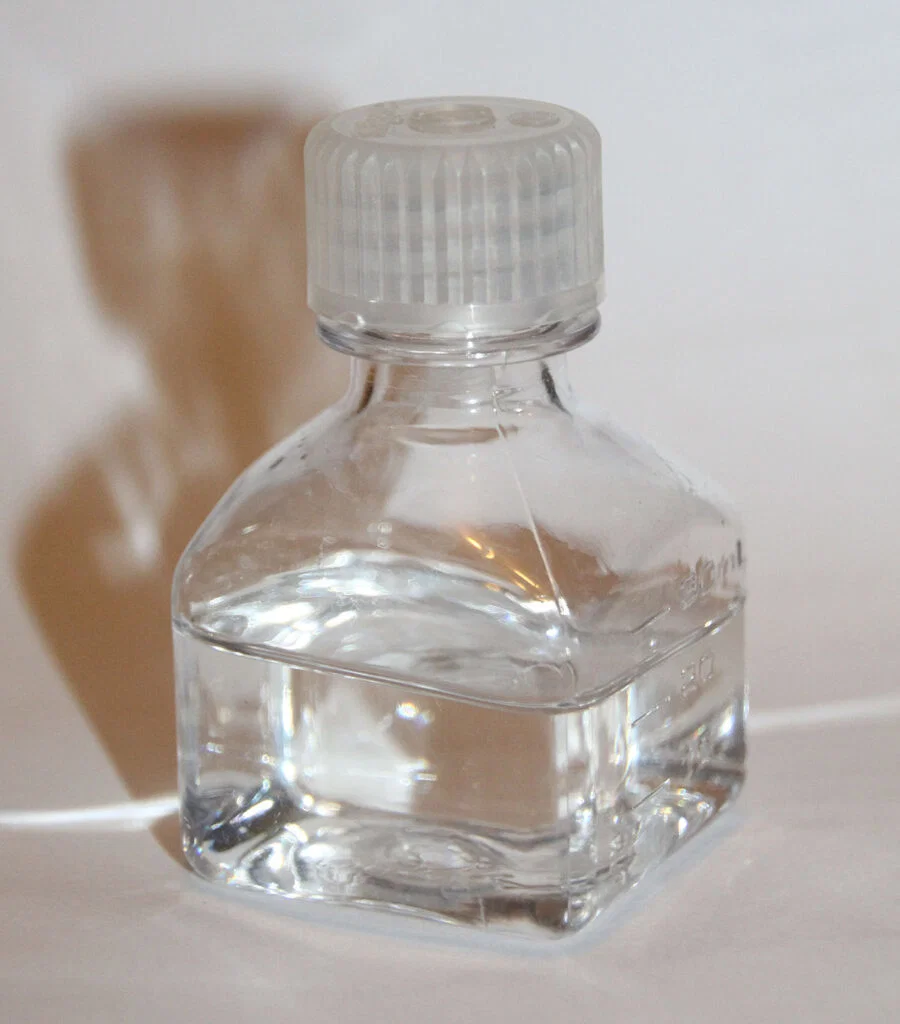
Choosing the right Food Grade Lactic Acid Supplier can have a direct effect on product consistency, shelf life, formulation performance, and production costs. For food factories, beverage manufacturers, meat processors, sauce producers, and ingredient distributors, the decision should go far beyond finding the lowest price per kilogram. MT Royal can be a practical sourcing option for companies looking for food-grade lactic acid from established manufacturers and multiple brands at competitive commercial terms.
Lactic acid is one of those ingredients that can look simple on a purchasing spreadsheet but become surprisingly complicated inside a production plant. Concentration, purity, food-additive compliance, stereoisomer composition, packaging, storage, documentation, and delivery reliability all influence whether a raw material performs properly in your process.
For a procurement manager, the real objective is therefore not simply to buy lactic acid. It is to secure a consistent, compliant, traceable, and economically viable raw material supply that keeps production moving.
Food industry raw materials – list of products
LATAMARKO LM60 – Premium Spanish-Origin Cocoa Powder
What Is Food Grade Lactic Acid?
Food-grade lactic acid is lactic acid manufactured and controlled for use in food and beverage applications. Chemically, lactic acid is an organic acid with the molecular formula C₃H₆O₃ and a molecular weight of approximately 90.08 g/mol.
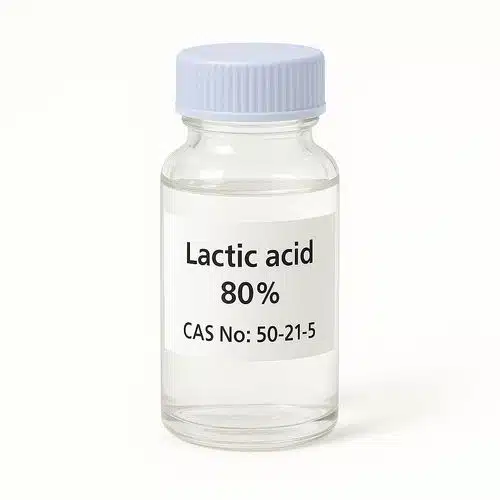
Commercial food-grade lactic acid is commonly supplied as a liquid solution at different concentrations, including 50%, 80%, 88%, 90%, and other grades depending on the manufacturer and application.
The term “food grade” is particularly important because it describes more than chemical identity. A food manufacturer needs confidence that the product meets the relevant specifications for purity, contaminants, manufacturing controls, labeling, and intended use.
A reliable Food Grade Lactic Acid Supplier should therefore be able to provide appropriate technical documentation rather than simply offering a drum with a chemical name on the label.
Food-Grade Lactic Acid vs. Industrial Lactic Acid
The chemical itself may be similar, but the quality requirements can be very different.
Food manufacturers should distinguish between:
- Food-additive grade
- Industrial grade
- Pharmaceutical grade
- Cosmetic grade
- Technical or process grade
- Laboratory or analytical grade
Industrial-grade lactic acid should not automatically be substituted for a food-grade product simply because both contain lactic acid. The final application determines the appropriate specification.
This distinction becomes particularly important during supplier changes. A factory may discover that a cheaper alternative has a different color, odor, impurity profile, concentration, or regulatory documentation. Saving money on the purchase order is not much of a victory if the production team spends three days trying to correct a formulation problem.
Why Food Manufacturers Use Lactic Acid
Lactic acid has several useful properties that make it valuable across the food industry. Depending on the application and applicable regulations, it can act as an acidulant, pH regulator, preservative-support ingredient, flavor modifier, and processing aid.
Its relatively mild sensory profile compared with some stronger mineral or organic acids can be useful when manufacturers need to lower pH without introducing an excessively sharp acidic taste.
Common applications include:
Meat and Poultry Processing
Lactic acid solutions can be used in meat-processing environments for microbial control and surface treatment applications where permitted by local food regulations.
The concentration and application method matter considerably. A process designed for a diluted spray or wash should not be treated as though concentrated lactic acid were being added directly to the finished product.
Dairy and Fermented Foods
Lactic acid is naturally associated with fermentation and can be used in various dairy and fermented-food applications. It can help control acidity and contribute to the desired flavor profile.
For manufacturers, one useful advantage is controllability: direct acidification can provide a more predictable pH adjustment than relying entirely on biological fermentation.
Beverages
Food-grade lactic acid can be used in selected beverage formulations where controlled acidity is required. The sensory effect is particularly important here because even a small dosage change can alter the finished product.
A beverage plant should therefore evaluate not only pH but also titratable acidity and sensory impact.
Sauces, Dressings, and Condiments
Ketchup, dressings, sauces, marinades, and similar products often require precise acidification. Lactic acid can be useful when the manufacturer wants acidity that integrates smoothly into the product’s flavor profile.
Pickled and Processed Foods
Lactic acid may be used to adjust acidity in pickled and processed foods, subject to the applicable formulation and regulatory requirements.
Key Specifications to Check Before Buying
A professional purchasing process should begin with a technical specification sheet.
Before approving a Food Grade Lactic Acid Supplier, check the following parameters.
1. Concentration
The concentration determines how much actual lactic acid is delivered per kilogram of product.
For example, one tonne of a 50% solution contains approximately 500 kg of lactic acid by nominal concentration, while one tonne of a 90% solution contains approximately 900 kg.
That difference matters when calculating:
- Freight cost
- Warehouse requirements
- Tank capacity
- Pumping requirements
- Production dosage
- Cost per kilogram of active ingredient
2. Purity and Assay
Do not confuse nominal concentration with complete product quality.
A supplier should provide a defined assay range and relevant impurity limits.
3. Stereoisomer Composition
Lactic acid exists primarily in D- and L-forms. DL-lactic acid contains both forms, while L-lactic acid is predominantly the L-isomer.
For many ordinary food applications, this may not be the most important purchasing parameter. For specialized applications, however, it can become critical.
Always ensure that the product’s stereochemical specification matches your formulation requirements.
4. Color and Appearance
Color can matter more than buyers initially expect.
A product used in a clear beverage or light-colored sauce may have much tighter appearance requirements than a material used in a dark marinade.
5. Heavy Metals and Other Contaminants
Food manufacturers should review limits for relevant contaminants such as lead, arsenic, iron, sulfates, chlorides, and other specified impurities.
The exact requirements depend on the product specification and applicable food regulations.
6. Certificate of Analysis
A current Certificate of Analysis (COA) should accompany or be available for each production batch.
The COA gives your quality-control department a documented reference for the supplied material.
Food Grade Lactic Acid Concentrations: Which One Is Right?
There is no universally superior concentration.
Your choice should be based on formulation, equipment, logistics, and economics.
50% Lactic Acid
A 50% solution contains more water but can be convenient for liquid formulations and dosing systems.
Advantages may include:
- Easier handling in some processes
- Straightforward incorporation into water-based formulations
- Lower concentration for direct dosing
- Potentially convenient pumping characteristics
The disadvantage is that you are paying to transport and store considerably more water.
88% Lactic Acid
An 88% solution provides significantly more active acid per kilogram. It may be attractive for manufacturers seeking better logistics efficiency without moving to a different product chemistry.
It is particularly useful when:
- Storage space is limited
- Bulk transportation costs matter
- The production system handles concentrated acids safely
- The formulation requires relatively small quantities of acid
90% Lactic Acid
The 90% grade provides even greater concentration and can reduce the quantity of liquid required to deliver a particular acid dosage.
However, the additional concentration does not automatically make it the best economic choice.
The correct calculation is:
Delivered cost per kilogram of active lactic acid = delivered product cost ÷ actual lactic-acid content
This is one of the simplest and most frequently overlooked calculations in industrial chemical procurement.
Common Mistakes When Choosing a Food Grade Lactic Acid Supplier
Comparing only the headline price
Supplier A may quote $X per kilogram while Supplier B quotes more. But if Supplier B provides a higher concentration, better packaging, shorter lead time, or fewer rejected batches, the apparent price difference may disappear.
Ignoring documentation
A supplier without adequate COAs, SDS documents, specifications, traceability information, or regulatory documentation can create unnecessary work for your quality department.
Choosing a concentration without consulting production
Procurement sometimes selects the cheapest available concentration while the process engineer later discovers that the dosing system was designed around another strength.
The purchase order should not be the first place where engineering learns what chemical is being ordered.
Changing brands without validation
Even when two products meet the same nominal concentration, their specifications can differ.
A supplier change should normally involve technical review, sample testing, and—where appropriate—a controlled production trial.
Underestimating logistics
A 50% product may require significantly more storage volume than a concentrated grade. For a factory purchasing several tonnes each month, the difference can become substantial.
How to Evaluate a Food Grade Lactic Acid Supplier
A strong supplier evaluation should cover five areas.
Product quality
Ask whether the supplier can consistently meet your approved specification.
Regulatory documentation
Check whether the product documentation matches the markets in which your finished food will be sold.
Supply continuity
A low price is not useful if the supplier cannot deliver during peak production periods.
Commercial flexibility
For larger manufacturers, multiple packaging formats, bulk quantities, and alternative brands can improve purchasing flexibility.
Technical support
The supplier should understand that food manufacturers buy ingredients to solve production requirements, not merely to fill warehouses.
This is one area where MT Royal’s multi-brand sourcing approach can be useful. Rather than treating one manufacturer’s product as the only option, MT Royal can work with different brands and international sources, allowing industrial buyers to compare availability, specifications, packaging, and commercial conditions.
Why Multiple Brands Can Be Valuable
Supplier diversification is becoming increasingly important across industrial supply chains.
Weather disruptions, shipping constraints, energy prices, geopolitical events, factory maintenance, and changes in regional demand can all affect raw-material availability.
For a food factory operating continuously, having an approved alternative source can provide valuable resilience.
MT Royal’s sourcing model includes multiple international manufacturers and brands, which can help procurement teams evaluate alternatives when a preferred product is temporarily unavailable or when a different commercial arrangement makes sense.
We have seen that the strongest purchasing strategies tend to treat supplier relationships as part of production planning rather than as isolated transactions.
Specialized Tips for Large-Scale Food Production
For factories purchasing several tonnes of lactic acid per month, small improvements can have meaningful financial effects.
Calculate active-acid cost
Always compare products on an equivalent active-acid basis.
Optimize packaging
If your consumption is predictable, evaluate drums, intermediate bulk containers, or bulk deliveries according to your equipment and storage capacity.
Establish safety stock
Your inventory target should reflect consumption rate, lead time, supplier reliability, and the consequences of a production interruption.
For a critical raw material, purchasing teams should ask:
How many production days can we operate if the next shipment is delayed?
That question is more useful than simply asking how many tonnes are currently in stock.
Standardize incoming inspection
Your quality department should establish a consistent receiving protocol covering documentation, container condition, lot number, concentration, appearance, and any other relevant parameters.
Validate alternatives before emergencies occur
The worst time to discover that your backup supplier’s product behaves differently is when your primary supplier has already missed a shipment.
Pre-qualification is much cheaper than emergency qualification.
Emerging Trends in Food-Grade Lactic Acid Supply
The food-ingredient market is increasingly influenced by sustainability, traceability, fermentation technology, and demand for bio-based materials.
Lactic acid is especially interesting because fermentation can produce it from carbohydrate feedstocks. At the same time, lactic acid is a key building block for polylactic acid (PLA), connecting the food-ingredient industry with the growing bio-based materials sector.
This creates an unusual supply-chain dynamic: demand for lactic acid is influenced not only by food applications but also by developments in biodegradable polymers and sustainable-material technologies.
For food manufacturers, the broader implication is straightforward: supply-chain planning may become increasingly important as demand comes from several industrial sectors simultaneously.
Questions Factory Managers Ask About Food-Grade Lactic Acid
Is food-grade lactic acid safe for use in food?
Food-grade lactic acid is manufactured for permitted food applications, but safety and legal use depend on the exact product, dosage, food category, and regulations applicable in the destination market.
Always confirm regulatory compliance for your specific application.
Can 50% and 90% lactic acid be substituted directly?
No. Their acid concentrations differ substantially. The dosage must be recalculated based on actual active content and the formulation’s target acidity.
Is higher concentration always better?
No. Higher concentration can improve transportation and storage efficiency, but it may require more careful handling and may not be appropriate for every dosing system or formulation.
What documents should I request from the supplier?
At minimum, request:
- Technical specification
- Certificate of Analysis
- Safety Data Sheet
- Country of origin
- Product and batch identification
- Packaging information
- Applicable food-grade certifications or declarations
- Regulatory documentation relevant to your market
Can MT Royal provide different brands?
MT Royal works with multiple manufacturers and brands and can provide sourcing options depending on the required grade, concentration, application, quantity, origin, and destination.
What is the best concentration for a food factory?
That depends on your process. A 50% solution may be convenient for certain liquid formulations, while 88% or 90% products can offer higher active content and improved transportation efficiency. The best choice is determined through technical and total-cost analysis.
A Better Procurement Strategy Starts With the Specification
Selecting a Food Grade Lactic Acid Supplier should never be reduced to a three-column spreadsheet showing supplier name, price, and delivery date.
A more robust purchasing decision considers the entire material lifecycle:
Specification → supplier qualification → sample approval → commercial evaluation → logistics → incoming inspection → production performance → supplier review
This approach protects your factory from a surprisingly common problem: buying a chemically acceptable product that is operationally inconvenient.
MT Royal can be considered when your company needs a sourcing partner capable of presenting multiple brands, competitive pricing, and international raw-material supply options. The most valuable part of that relationship is not simply access to another quotation; it is the ability to compare realistic alternatives against the technical requirements of your production line.
For large food manufacturers, we recommend treating lactic acid as a strategic ingredient whenever it plays a meaningful role in pH control, microbial management, formulation stability, or product quality. Once the ingredient becomes critical to production, supply continuity deserves the same attention as formulation performance.
The right supplier does more than deliver containers to your warehouse. The right supplier helps make sure that the material inside those containers is the right specification, arrives when required, carries the documentation your quality team needs, and performs consistently when your production line is running at full speed.
That is where professional sourcing earns its value: not when everything is going perfectly, but when your factory can continue producing confidently because the raw-material supply chain has been designed to withstand the unexpected.




No comment