

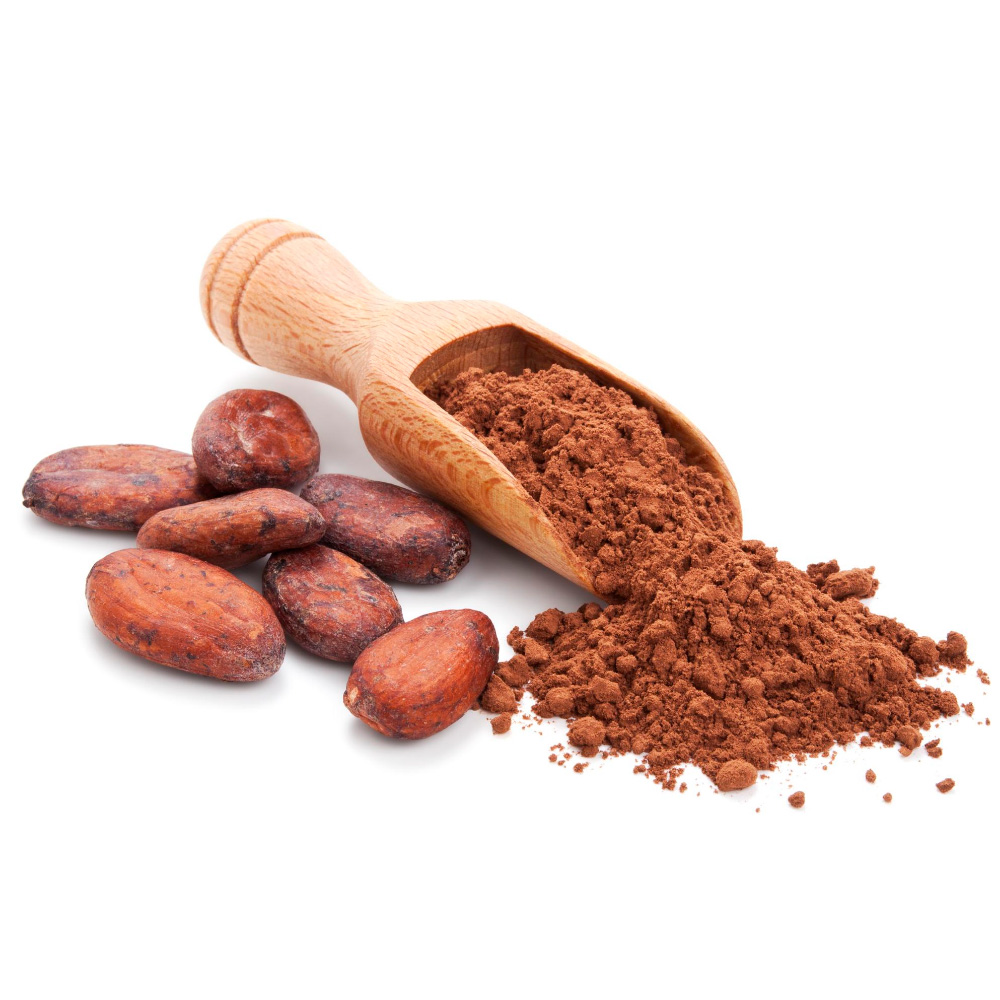
A cocoa powder can look like a simple brown ingredient on a purchasing list. On a production line, however, it can influence much more than color.
The right cocoa powder affects the appearance of biscuits, the depth of chocolate flavor, the pH of a dough system, the behavior of leavening agents, the color of ice cream, and even how efficiently a factory achieves the target formulation. This is why selecting Alkalized Cocoa Powder for Biscuit Bakery and Ice Cream Production deserves considerably more attention than simply comparing prices per kilogram.
Alkalized cocoa powder, often called Dutch-process cocoa powder, is cocoa powder that has been treated with an alkalizing agent to modify its natural acidity. The process can produce cocoa powders ranging from moderately alkalized brown grades to much darker varieties with a strong visual impact.
For a bakery, that can mean a deeper-colored biscuit with a more controlled flavor profile. For an ice cream manufacturer, it can mean a richer chocolate appearance and a smoother sensory profile. But the same alkalization process that creates these advantages also changes how the cocoa behaves in a recipe.
That is where industrial procurement becomes interesting.
A factory does not buy cocoa powder simply because it is “dark” or because the supplier offers an attractive quotation. The powder has to fit the formulation, equipment, process conditions, quality targets, and commercial objectives.
Premium European-origin options can also be considered when consistency and quality control are priorities. Spanish-origin brands such as Latamarko may be evaluated alongside other cocoa suppliers when manufacturers are looking for higher-tier raw-material options.
For production managers, the real question is therefore not simply, “Which cocoa powder has the lowest price?” It is: Which cocoa powder gives our factory the most predictable finished product at the lowest practical cost?
What Is Alkalized Cocoa Powder?
Alkalized cocoa powder is produced from cocoa solids that have undergone treatment with an alkaline substance during cocoa processing.
Natural cocoa powder is naturally acidic, while alkalization reduces its acidity and changes several physical and sensory characteristics.
The resulting powder can have:
- a darker brown or reddish-brown appearance;
- a less acidic flavor;
- altered pH;
- improved dispersibility in some applications;
- stronger visual color;
- a different interaction with leavening systems;
- different flavor characteristics compared with natural cocoa powder.
The degree of alkalization can vary considerably.
This is important because “alkalized cocoa powder” does not describe one universal product. Two alkalized cocoa powders can have noticeably different pH values, colors, fat contents, particle characteristics, and flavor profiles.
For an industrial buyer, the specification sheet matters much more than the generic product description.
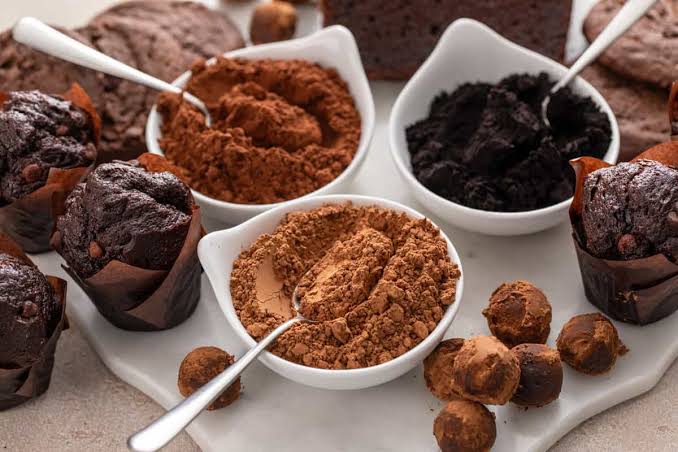
Natural Cocoa Powder vs Alkalized Cocoa Powder
The distinction between natural and alkalized cocoa powder is one of the first concepts a procurement manager should understand.
Natural cocoa powder generally retains more of the cocoa’s natural acidity and often has a lighter brown color with a sharper cocoa profile.
Alkalized cocoa powder has undergone an alkalization process that reduces acidity and can produce a darker color and smoother flavor.
| Characteristic | Natural Cocoa Powder | Alkalized Cocoa Powder |
|---|---|---|
| Acidity | Naturally acidic | Lower acidity |
| Color | Usually lighter brown | Can range from brown to very dark |
| Flavor | More acidic/sharp cocoa profile | Often smoother and less acidic |
| Bakery chemistry | Can work well with acidic leavening systems | Requires careful formula consideration |
| Visual impact | Moderate | Often stronger |
| Typical applications | Bakery, beverages, confectionery | Biscuits, cookies, ice cream, bakery and confectionery |
| Formulation flexibility | Depends on recipe | Depends strongly on degree of alkalization |
The table is useful as a starting point, but it should not be treated as a substitute for technical specifications.
The exact behavior of each cocoa powder depends on how it was processed.
Why Biscuit Manufacturers Often Choose Alkalized Cocoa Powder
Walk through a biscuit factory and one thing becomes obvious very quickly: consistency matters.
A consumer expects the biscuit purchased today to look and taste like the one purchased several weeks ago.
Cocoa powder contributes significantly to that perception.
In dark biscuits and cookies, alkalized cocoa can provide the deep brown appearance that consumers associate with chocolate. It can also provide a smoother flavor than some natural cocoa powders.
For manufacturers, there is another consideration: formulation control.
Biscuit dough is a carefully balanced system involving flour, sugar, fats, water, leavening agents, cocoa, emulsifiers, and sometimes milk powders or other functional ingredients.
Changing cocoa powder can therefore alter the behavior of the entire dough.
A purchasing department might see two powders with similar color and assume they are interchangeable. The production team may discover otherwise after the first batch.
That is why cocoa procurement should involve both purchasing and technical production personnel.
Alkalized Cocoa Powder and Biscuit Color
Color is often one of the most obvious reasons for selecting an alkalized cocoa powder.
Different levels of alkalization can create substantially different shades.
A medium-brown cocoa may be appropriate for a standard chocolate biscuit.
A reddish-brown powder may suit a different visual profile.
A highly alkalized cocoa can produce an extremely dark appearance suitable for products where a strong visual contrast is part of the product identity.
But darker does not automatically mean better.
If a manufacturer increases cocoa dosage simply to achieve a darker appearance, the product may become unnecessarily expensive or develop a flavor that does not match the intended profile.
Sometimes the smarter approach is selecting a cocoa powder with the appropriate color intensity from the beginning.
This is where technical sampling can save money.
The Relationship Between Cocoa pH and Baking
One of the most important differences between natural and alkalized cocoa is acidity.
In bakery production, pH affects chemical reactions and can influence color, flavor, texture, and leavening behavior.
Natural cocoa can contribute acidity to a formulation. Alkalized cocoa contributes less acidity because of the alkalization process.
This means that replacing natural cocoa with alkalized cocoa without adjusting the formula can change the way chemical leavening behaves.
For example, a biscuit recipe designed around natural cocoa and sodium bicarbonate may behave differently if a highly alkalized cocoa is introduced without considering the overall acid-base balance.
The result could be differences in:
- spread;
- thickness;
- texture;
- color;
- flavor;
- internal structure.
This does not mean alkalized cocoa is unsuitable for baking.
Quite the opposite.
It means the cocoa should be treated as part of the formulation chemistry.
Choosing the Right Cocoa for Biscuits
When selecting cocoa for a biscuit factory, consider at least five dimensions.
Color
Determine the exact target color of the finished biscuit rather than simply requesting “dark cocoa.”
pH
The cocoa’s pH can influence the recipe’s acid-base balance.
Fat Content
Cocoa powder with different fat levels can behave differently in formulation and contribute differently to flavor and mouthfeel.
Flavor
A strong visual color does not necessarily mean a stronger or better chocolate flavor.
Particle Characteristics
Particle size and physical properties can influence dispersion and the finished texture.
A successful biscuit formulation brings these properties together rather than optimizing one at the expense of the others.
Alkalized Cocoa Powder in Ice Cream Production
Ice cream is a different production environment.
Unlike biscuits, the product is not baked. There is no oven reaction and no conventional baking structure to consider.
Instead, manufacturers need to manage a complex frozen food system involving milk or plant-based ingredients, sugar, fat, stabilizers, emulsifiers, water, and air.
Cocoa powder contributes both flavor and color.
In chocolate ice cream, alkalized cocoa can provide a deep, attractive color and a smoother flavor profile.
It can also contribute cocoa solids that influence the formulation’s total solids.
This makes cocoa selection particularly relevant to texture and overrun management.
A change in cocoa powder can alter the balance of the recipe even when the dosage remains unchanged.
Why Cocoa Powder Quality Matters in Ice Cream
Ice cream manufacturers sometimes focus heavily on milk fat, stabilizers, and sweeteners while treating cocoa powder as a relatively straightforward ingredient.
That can be a mistake.
Cocoa powder contributes dry solids to the mix and can affect water balance, flavor intensity, color, and the overall sensory profile.
A powder that absorbs or interacts differently with the mix can affect processing.
For industrial production, consistency is essential.
If one batch of cocoa has noticeably different color intensity from another, the production team may need to adjust dosage. But increasing dosage changes solids and potentially changes the economics and formulation balance.
This is why consistent cocoa specifications are valuable.
Cocoa Powder and Chocolate Ice Cream Color
Consumers often associate darker chocolate ice cream with stronger chocolate flavor.
The relationship is not always that simple.
Color can be intensified through the choice of cocoa powder, while flavor intensity depends on cocoa composition, dosage, processing, sugar level, milk components, and other ingredients.
A highly alkalized cocoa can therefore be useful when the manufacturer wants a deep chocolate color without relying entirely on a very high cocoa dosage.
However, the sensory profile still needs to be tested.
A dark ice cream that lacks sufficient cocoa flavor can look impressive in the freezer and disappoint at the first spoonful.
Alkalized Cocoa and Ice Cream Texture
Cocoa powder adds non-fat cocoa solids to an ice cream formulation.
Those solids interact with the water and other ingredients in the mix.
When changing cocoa grades, manufacturers should therefore evaluate:
- total solids;
- viscosity of the mix;
- freezing behavior;
- overrun;
- melting resistance;
- mouthfeel;
- flavor release.
A change that looks minor on the purchasing sheet can become significant at the freezer.
For this reason, an ice cream plant should evaluate cocoa as both a flavor ingredient and a structural component of the mix.
Dark Cocoa Powder Is Not Always the Best Cocoa Powder
This deserves emphasis because “dark” is an attractive word in marketing.
Dark cocoa can be extremely useful, especially for biscuits and products where a strong visual identity is important.
But darkness alone does not determine quality.
A factory should ask:
Does the cocoa have the desired flavor?
Does its pH suit the formulation?
Is the color stable?
Does the powder disperse properly?
Is the fat content appropriate?
Does it perform consistently from batch to batch?
Can the supplier maintain the same specification over time?
These questions are much more valuable than simply asking which product is darkest.
How Alkalized Cocoa Powder Affects Production Economics
Raw-material cost is only one component of cocoa economics.
Imagine a biscuit plant producing 10 tonnes of finished product per day.
If a cocoa powder costs slightly less per kilogram but requires a higher dosage to achieve the desired color and flavor, the apparent saving may disappear.
Conversely, a more expensive cocoa powder may allow a lower dosage because of its stronger color or cocoa characteristics.
The correct comparison is therefore:
cost per finished kilogram at the required quality level
rather than:
price per kilogram of cocoa powder
This distinction is particularly important for large-scale production.
A procurement department that saves a small amount on the invoice but increases the cocoa dosage by several percent may not actually be reducing manufacturing costs.
Supplier Reliability Matters as Much as Product Quality
A factory can approve an excellent cocoa powder and still face production problems if the supply chain is unreliable.
Imagine a biscuit manufacturer with a carefully validated cocoa specification.
The supplier delivers consistently for several months.
Then availability suddenly becomes unpredictable.
The factory is forced to purchase an alternative cocoa at short notice.
The replacement powder has a different color and pH.
Production must reformulate under pressure.
This is exactly the type of situation procurement teams should try to prevent.
A good industrial supplier should provide not only a product but also supply continuity, documentation, packaging options, and realistic lead-time information.
The Advantage of Comparing Multiple Cocoa Brands
Factories do not always need a single cocoa supplier for every application.
A manufacturer may prefer one grade for dark biscuits, another for standard cookies, and a third for ice cream.
Working with a supplier that can offer several brands can make this process easier.
At MT Royal, we supply manufacturers with a range of brands and competitive commercial options, allowing industrial buyers to evaluate raw materials according to application rather than relying on a one-product-fits-all approach.
We’ve found that this flexibility can be particularly useful when production teams need to balance color, flavor, technical performance, and cost.
Considering Premium European-Origin Cocoa Options
For manufacturers targeting consistent premium-quality products, European-origin options can be worth evaluating.
Brands such as Latamarko, with Spanish origin, can be considered when buyers are comparing higher-tier options and looking closely at consistency, technical documentation, and finished-product performance.
The right decision should still be based on technical trials.
Origin and brand reputation may help narrow the field, but the production line should make the final judgment.
A cocoa powder is only “premium” in practical terms if it consistently delivers the characteristics the manufacturer actually needs.
Alkalized Cocoa Powder and Food Safety
Food manufacturers should treat cocoa powder as a raw material requiring proper quality control.
Cocoa is an agricultural product, and like other food ingredients, it must meet applicable food-safety and microbiological requirements.
Factories should consider the documentation appropriate to their market, including relevant certificates, specifications, allergen information, and microbiological data.
Incoming quality control can also be important.
Depending on the manufacturer’s HACCP and quality-management system, the factory may establish inspection or testing procedures for incoming cocoa.
The specific controls should reflect the product, destination market, and regulatory requirements.
Storage of Alkalized Cocoa Powder in a Factory
Cocoa powder is relatively easy to handle, but storage conditions still matter.
It should generally be protected from:
- excessive humidity;
- direct sunlight;
- contamination;
- strong odors;
- pests;
- excessive heat;
- water exposure.
Moisture is particularly important.
A cocoa powder exposed to unsuitable humidity can develop handling and quality problems.
Warehouse staff should also use appropriate stock rotation.
A first-in, first-out or appropriately controlled inventory system helps prevent unnecessary aging of raw materials.
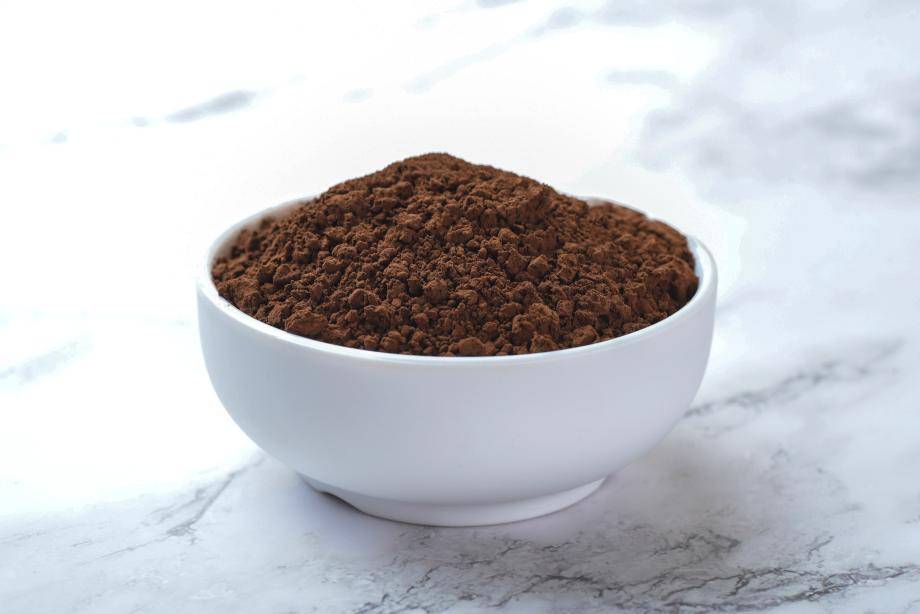
Packaging Options for Industrial Cocoa Powder
Large manufacturers commonly purchase cocoa powder in industrial packaging, often in multi-kilogram bags or larger bulk formats.
The appropriate format depends on:
- production volume;
- warehouse capacity;
- handling equipment;
- labor;
- inventory turnover;
- contamination-control procedures.
A large factory may benefit from larger packaging because it reduces handling frequency.
A smaller production facility may prefer manageable bag sizes even if the cost per kilogram is slightly higher.
Packaging should therefore be evaluated as part of total logistics cost rather than as an isolated detail.
Managing Seasonal Production Conditions
A cocoa powder formulation that performs well under controlled laboratory conditions may face different challenges during seasonal changes.
Biscuit factories operating in warm environments need to consider dough temperature and process stability.
Ice cream factories may have less dramatic environmental variation inside the production area, but raw-material storage and handling can still be affected by warehouse conditions.
Production teams should avoid assuming that a raw material behaves identically regardless of environment.
Process conditions matter.
The Importance of Batch Consistency
Imagine producing 100,000 chocolate biscuits with one cocoa batch and then switching to another batch.
If the second batch has noticeably different color intensity, the consumer may see the difference even if the product’s printed recipe has not changed.
For national or international brands, this can become a serious quality issue.
Batch consistency therefore has commercial value.
It protects:
- product appearance;
- flavor consistency;
- formulation accuracy;
- brand identity;
- customer expectations.
This is why supplier qualification should consider historical consistency, not only the first sample.
Cocoa Powder and Product Development
Alkalized cocoa also gives product-development teams room to experiment.
A bakery may develop a very dark cookie using a highly alkalized cocoa.
An ice cream manufacturer may combine a medium-dark cocoa with another cocoa component to achieve a specific flavor-color balance.
A wafer producer may prioritize flow and flavor rather than extreme darkness.
The important lesson is that cocoa selection should follow product design.
Instead of asking:
“What cocoa powder do we sell?”
the better technical question is:
“What cocoa characteristics does this product require?”
That change in thinking can lead to better formulations.
Common Misconceptions About Alkalized Cocoa Powder
“The Darker the Cocoa, the Better the Quality”
Not necessarily.
Color intensity is only one characteristic.
“All Dutch-Process Cocoa Is the Same”
It is not.
Alkalization level, pH, fat content, flavor, and physical properties can vary significantly.
“Cocoa Powder Can Be Changed Without Changing the Recipe”
Not always.
Especially in bakery formulations, changes in acidity and cocoa composition can influence the final product.
“A Lower Purchase Price Always Means Lower Manufacturing Cost”
Not necessarily.
Dosage, waste, processing efficiency, and finished-product performance must also be considered.
“One Cocoa Powder Works Equally Well for Biscuits and Ice Cream”
Different applications may require different technical characteristics.
How MT Royal Fits Into Cocoa Procurement
Industrial buyers often need more than a product name and a price quotation.
They need options.
At MT Royal, we work with manufacturing buyers looking for food-industry raw materials and different brand alternatives. Our role is to help factories evaluate available products according to their application, commercial requirements, and desired quality level.
For a production facility, this can be particularly useful when the team is trying to balance premium specifications with a practical production budget.
We’ve worked with the principle that the best supplier relationship is not built around pushing one product. It is built around understanding what the factory actually needs and identifying an appropriate option.
FAQ: Alkalized Cocoa Powder for Biscuit Bakery and Ice Cream Production
What is alkalized cocoa powder used for?
Alkalized cocoa powder is widely used in biscuits, cookies, cakes, bakery products, ice cream, confectionery, fillings, coatings, and other food applications where manufacturers want particular cocoa flavor, color, acidity, or processing characteristics.
Is alkalized cocoa powder better than natural cocoa powder?
Neither is universally better.
The appropriate choice depends on the formulation and desired finished-product characteristics. Alkalized cocoa is often selected when lower acidity, smoother flavor, or deeper color is desired.
Why is alkalized cocoa darker?
Alkalization changes the chemical environment of cocoa solids and can significantly alter their color. The degree of alkalization influences the final shade.
Can alkalized cocoa powder be used in biscuits?
Yes. It is commonly used in biscuit and cookie production, particularly where manufacturers want a deeper brown or dark chocolate appearance.
However, the recipe’s leavening system should be evaluated because alkalized cocoa has lower acidity than natural cocoa.
Is alkalized cocoa suitable for ice cream?
Yes. It can be an effective ingredient in chocolate ice cream and frozen desserts, especially when a rich chocolate color and smoother flavor profile are desired.
Does alkalized cocoa affect ice cream texture?
It can. Cocoa powder contributes dry cocoa solids to the ice cream mix, so changes in cocoa type or dosage can affect total solids, viscosity, freezing behavior, and mouthfeel.
What pH should alkalized cocoa have?
There is no single pH value suitable for every application. Different alkalization levels produce different pH characteristics, and the correct specification should be determined according to the formulation.
How should cocoa powder be stored?
It should generally be stored in a cool, dry, clean environment protected from moisture, contamination, direct sunlight, and strong odors, while following the supplier’s specific storage instructions.
How can a factory compare two cocoa powders?
Run both powders through the same formulation and evaluate raw-material specifications, process behavior, finished-product color, flavor, texture, cost, and storage stability. Production-scale trials are particularly valuable before a large commercial purchase.
Is darker cocoa more expensive?
Not necessarily. Price depends on the cocoa source, processing, grade, supplier, market conditions, packaging, and commercial terms. Darker color alone does not determine price.
Final Considerations for Factory Buyers
Choosing Alkalized Cocoa Powder for Biscuit Bakery and Ice Cream Production is ultimately a question of formulation engineering and production economics.
The right cocoa powder can provide a deep, consistent color, balanced cocoa flavor, appropriate processing behavior, and predictable performance across large production volumes. The wrong grade can create subtle problems that appear only after the product reaches the production line: altered biscuit spread, inconsistent color, unexpected flavor, formulation imbalance, or additional raw-material consumption.




No comment