

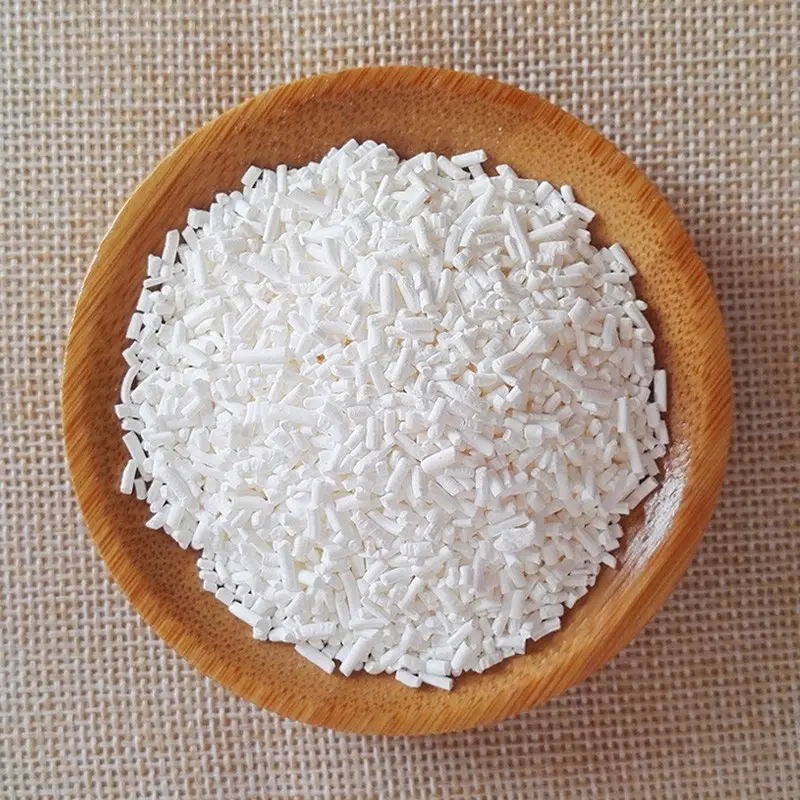
For food manufacturers, choosing a potassium sorbate supplier is not simply a matter of finding the lowest price per kilogram. Your preservative has to meet specification, perform consistently in the finished formulation, arrive on schedule, and fit the regulatory requirements of the market where your products are sold. For factories operating in Türkiye or sourcing through Türkiye, MT Royal provides a practical purchasing option, with access to multiple brands and competitive commercial terms for industrial buyers.
The importance of potassium sorbate becomes clear when you consider what is at stake. A preservative is often used at relatively low concentrations, but its influence on shelf life, microbial stability, production losses, and customer acceptance can be disproportionately large. A small raw-material inconsistency can become a large production problem when multiplied across thousands of kilograms of finished goods.
This is why the search for a Potassium Sorbate Manufacturer | Factory Supply Türkiye should focus on much more than availability. Manufacturers need a reliable supply chain, food-grade documentation, consistent purity, appropriate packaging, traceability, and a supplier capable of supporting different brands or specifications when commercial conditions change.
Food industry raw materials – list of products
LATAMARKO – Premium Spanish-Origin Cocoa Powder
What Is Potassium Sorbate?
Potassium sorbate is the potassium salt of sorbic acid, commonly identified as E202 in European food-additive systems and INS 202 in the Codex system. The FAO/JECFA specification identifies potassium sorbate by CAS number 24634-61-5 and Codex INS number 202.
Its primary industrial role is as a food preservative, particularly for controlling the growth of yeasts and molds in suitable food systems. It is widely used because it can provide microbial protection while generally having limited impact on the sensory profile of a properly formulated product.
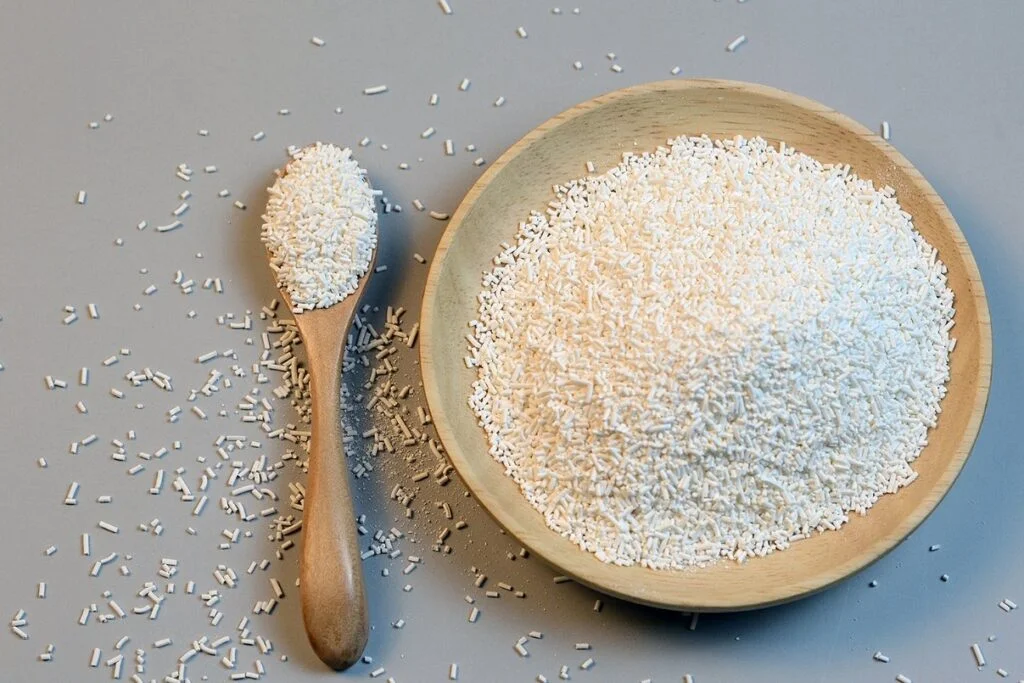
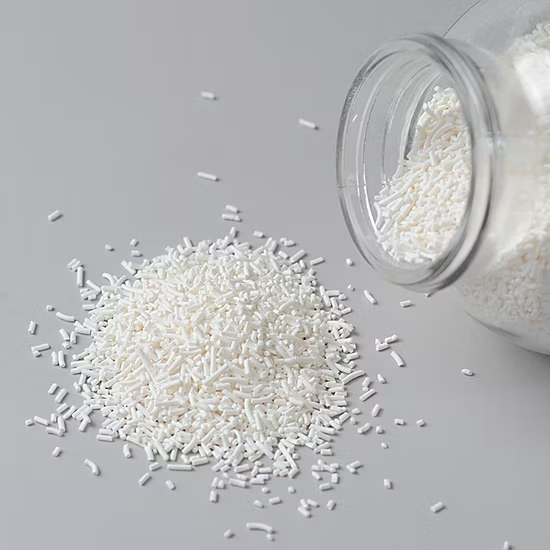
Commercial potassium sorbate is commonly supplied as a white crystalline or granular material and is valued for its water solubility and relatively convenient handling.
For a factory, however, the chemistry is only the starting point. The real question is how the ingredient behaves inside your particular formulation.
A preservative does not operate in isolation. Its effectiveness can depend on factors such as:
- Product pH
- Water activity
- Moisture content
- Processing conditions
- Packaging
- Storage temperature
- Microbial load
- Product composition
- Preservative concentration
- Distribution and shelf-life conditions
In other words, potassium sorbate is a tool, not a magic switch. Putting it into a formulation does not automatically guarantee the desired shelf life.
Why Potassium Sorbate Matters to Food Factories
Food manufacturers operate under constant pressure to extend shelf life while maintaining product quality and controlling costs.
Spoilage can create several layers of expense:
- Raw-material loss
- Production downtime
- Disposal costs
- Customer complaints
- Product recalls or withdrawals
- Damaged brand reputation
- Additional logistics and replacement costs
A well-selected food-grade preservative can therefore contribute to much more than shelf-life extension. It can support inventory planning, distribution over longer distances, and more predictable product performance.
Potassium sorbate is especially relevant in products susceptible to yeast and mold growth, including certain bakery products, sauces, fruit preparations, beverages, dairy-related products, jams, and other formulated foods.
The exact permitted use and maximum level depend on the applicable regulations and food category. Manufacturers selling into the European market, for example, must work from the current EU additive rules rather than relying on a generic dosage recommendation from a supplier.
Recent EU legislation illustrates why this point matters. Regulation (EU) 2024/2597 amended specifications and certain conditions for sorbic acid (E200) and potassium sorbate (E202), with relevant provisions applying from 27 April 2025.
For procurement departments, regulatory monitoring should therefore be part of supplier qualification.
Potassium Sorbate Manufacturer vs. Supplier: What Should a Factory Look For?
The word “manufacturer” can create confusion in industrial purchasing.
A manufacturer physically produces potassium sorbate. A trading company or ingredient distributor may source it from qualified manufacturers and supply it locally or internationally.
For the factory buyer, the most important issue is not the label attached to the seller. It is whether the supply chain is transparent and dependable.
A qualified supplier should be able to provide information about:
- Manufacturer and country of origin
- Product grade
- Batch identification
- Certificate of Analysis
- Food-grade status
- Purity
- Moisture
- Relevant impurity limits
- Packaging
- Shelf life
- Storage conditions
- Regulatory documentation
- Allergen and GMO statements where applicable
- Certification status
- Traceability
MT Royal’s Türkiye supply offering includes potassium sorbate and multiple branded options. Its published product information also indicates warehousing in Mersin and Istanbul and support with customs documentation, which can be relevant for manufacturers that want to simplify regional procurement and delivery planning.
This distinction is important: the strongest supplier relationship is not necessarily the one with the biggest factory behind it. It is the one that gives your procurement and quality teams dependable access to a specification that works for your production.
Potassium Sorbate Applications in Food Manufacturing
Bakery and baked goods
Potassium sorbate is frequently considered in bakery applications where mold growth can limit shelf life.
For industrial bakeries, the preservative decision must be integrated with the entire production system.
Important variables include:
- Product moisture
- Water activity
- Packaging permeability
- Baking conditions
- Cooling procedure
- Storage temperature
- Hygiene
- Distribution duration
A preservative cannot compensate for poor sanitation. If the production environment is introducing excessive microbial contamination, increasing preservative dosage is rarely the intelligent first response.
Sauces and dressings
Sauces, dressings, condiments, and similar products may require microbial control during storage and distribution.
Here, pH is particularly important because sorbate effectiveness is strongly influenced by the chemical environment of the formulation.
Your R&D team should therefore validate potassium sorbate within the finished formulation rather than testing it only as an isolated ingredient.
Jams and fruit preparations
Fruit-based products are another important application area.
Potassium sorbate can be used as part of a preservation strategy in appropriate formulations, especially where yeast and mold control is required.
However, sugar concentration, acidity, water activity, thermal processing, packaging, and filling hygiene all contribute to shelf stability.
Dairy and fermented products
Certain dairy and dairy-based products may use sorbate systems where legally permitted.
The formulation must be evaluated carefully because fermentation, acidity, protein content, fat, and storage conditions can affect microbial behavior.
Beverages
Potassium sorbate can be considered for suitable beverage formulations, particularly those where yeast or mold growth presents a shelf-life challenge.
For beverage factories, solubility and uniform distribution become practical concerns. A preservative that is technically effective but poorly dispersed is not a successful production solution.
Confectionery and other formulated foods
Potassium sorbate may also be relevant to selected confectionery, fillings, fruit preparations, and other foods where mold and yeast control is required.
Again, the correct application depends on the applicable food category and legal limit.
How Potassium Sorbate Works
At a basic level, potassium sorbate provides preservative activity through sorbic acid in the food system.
The proportion of sorbic acid in its undissociated form increases as pH decreases, which is one reason sorbate preservatives are particularly relevant to acidic foods.
This leads to an important industrial principle:
The same amount of potassium sorbate can behave differently in two formulations with different pH values.
That is why copying the dosage used by another manufacturer is risky.
Suppose Factory A produces an acidic fruit preparation and Factory B produces a less acidic sauce. Both may use potassium sorbate, but their preservation systems cannot necessarily be treated as equivalent.
The preservative concentration should be established through formulation development, regulatory review, microbial challenge testing where appropriate, and shelf-life validation.
Key Specifications When Buying Potassium Sorbate in Bulk
A professional purchasing department should request a complete specification before comparing prices.
Purity
High-purity food-grade potassium sorbate is generally preferred for controlled industrial applications.
MT Royal’s published FIC potassium sorbate specification, for example, lists a purity of at least 99.0%, moisture of no more than 0.5%, and a pH range of 6–8 for a 1% solution.
These numbers should be treated as the specification for the particular quoted product, not as universal values for every potassium sorbate on the market.
Moisture
Moisture can influence storage stability, powder behavior, and effective active content.
A factory receiving a material with an unexpected moisture profile may experience differences in weighing, flowability, and storage behavior.
Appearance
A consistent crystalline or granular appearance is useful for incoming-quality inspection.
Unusual discoloration, caking, foreign particles, or packaging damage should trigger investigation.
Heavy metals and impurities
Food-grade specifications should include appropriate limits for contaminants and impurities.
This is especially important for manufacturers supplying export markets, where customer specifications can be stricter than the minimum local requirement.
Microbiological quality
Even though potassium sorbate is itself a preservative, the incoming raw material still requires appropriate quality controls.
The supplier’s Certificate of Analysis should be reviewed against your approved specification.
Common Mistakes When Sourcing Potassium Sorbate
Mistake 1: Buying based only on price
This is perhaps the most common procurement error.
A price difference of a few percent may look significant until it is compared with:
- Rejected batches
- Delayed shipments
- Additional testing
- Formulation adjustments
- Production downtime
- Quality claims
The real metric should be total cost of ownership.
Mistake 2: Assuming all E202 products are identical
They may share the same chemical identity, but commercial products can differ in physical form, particle characteristics, impurity profile, packaging, documentation, and consistency.
Mistake 3: Ignoring the finished product’s pH
Potassium sorbate is not equally effective in every pH environment.
Your R&D team should understand the relationship between formulation pH and preservative performance before finalizing the dosage.
Mistake 4: Treating legal maximum as the recommended dosage
Regulatory maximums are not formulation recommendations.
The correct level should be based on the applicable legal requirements and the minimum effective concentration demonstrated by product development and validation.
Mistake 5: Using preservative as a substitute for hygiene
No preservative can rescue a poorly controlled factory indefinitely.
Good Manufacturing Practices, sanitation, environmental monitoring, raw-material control, and packaging hygiene remain fundamental.
Mistake 6: Failing to qualify alternative brands
A factory relying on one brand without an approved alternative may be vulnerable to supply interruptions.
This is one reason access to multiple brands through a supplier such as MT Royal can be commercially useful. Alternative products should still be tested and approved by QA and R&D before substitution.
Specialized Tips for Large-Scale Production
Add potassium sorbate uniformly
Uneven distribution can create local areas with inadequate preservation.
For dry-blended products, validate the mixing sequence and mixing time. For liquids, confirm the appropriate dissolution and addition procedure.
Do not assume that “it dissolves in water” means the factory can simply tip the powder into a tank and walk away.
Control water quality
Mineral content, pH, and temperature of process water can affect formulation behavior.
If your laboratory and factory use different water sources, reproduce production water conditions during scale-up trials.
Establish a controlled addition procedure
Your SOP should define:
- Addition point
- Addition sequence
- Mixing conditions
- Dissolution method
- Temperature
- Holding time
- Batch size
- Verification steps
This prevents preservative addition from becoming an operator-dependent variable.
Validate shelf life under realistic conditions
Shelf-life testing should reflect the actual distribution chain.
If products will spend weeks in warm warehouses or cross-border transportation, laboratory storage at a comfortable room temperature may not tell the complete story.
Monitor lot-to-lot consistency
Track supplier lots against:
- Appearance
- Assay
- Moisture
- Dissolution behavior
- Finished-product performance
Over time, this creates a supplier-performance database that is far more useful than a simple approved-vendor list.
Regulatory Considerations for Türkiye and Export Markets
Manufacturers in Türkiye should distinguish between domestic requirements and the requirements of export destinations.
A product intended for the EU market must comply with the EU food-additive framework applicable to its category. Regulation (EC) No 1333/2008 establishes the Union framework and current consolidated legislation contains specific conditions for E200–E202 across food categories.
The regulatory environment is not static. In October 2025, for example, the EU adopted Regulation (EU) 2025/2060 authorizing E200/E202 for certain non-heat-treated plant-based mousses at a maximum level of 500 mg/kg.
For procurement managers, the lesson is straightforward: regulatory compliance should be checked against the destination market and current legislation each time a new application is developed.
Do not build a formulation around an old technical sheet, an internet dosage chart, or a supplier’s generic recommendation.
Why Türkiye Is a Practical Supply Location
Türkiye occupies a strategically useful position between European, Middle Eastern, North African, and Central Asian markets.
For manufacturers purchasing ingredients, proximity can reduce certain logistical complexities compared with sourcing every order directly from distant production locations.
A local or regional supplier can potentially provide advantages such as:
- Shorter delivery planning
- Local commercial communication
- Easier documentation handling
- Regional warehousing
- Smaller or more flexible order arrangements
- Faster replenishment
- Reduced exposure to long international transit
MT Royal lists potassium sorbate supply from Türkiye and indicates warehouse operations in Mersin and Istanbul.
For a factory, this can be particularly useful when the objective is not merely to buy one shipment but to establish a repeatable procurement route.
Why Multiple Brands Can Benefit Industrial Buyers
A manufacturer may initially think that having several potassium sorbate brands creates unnecessary complexity.
In practice, it can provide procurement flexibility when properly managed.
A multi-brand strategy can help you:
- Benchmark prices
- Reduce dependence on one producer
- Compare physical characteristics
- Develop qualified alternatives
- Negotiate more effectively
- Respond to supply disruptions
- Match specific grades to specific applications
We have seen in industrial sourcing discussions that the most resilient factories do not necessarily have the largest raw-material inventory. They often have better-qualified alternatives.
The key word is “qualified.”
An alternative potassium sorbate should never be switched into production simply because the label says E202. QA, R&D, and production should verify equivalence before approval.
MT Royal and Industrial Potassium Sorbate Supply
MT Royal can be evaluated as a Türkiye-based ingredient sourcing partner for manufacturers requiring potassium sorbate and other food additives.
Its published potassium sorbate offering includes high-purity material and describes supply for food, beverage, cosmetic, and pharmaceutical applications. The company also publishes separate offerings from different brands, including FIC and Wanglong Group, giving buyers the opportunity to compare commercial and technical alternatives.
This is particularly relevant for procurement departments that want competitive pricing without locking themselves into a single commercial source.
We recommend treating the supplier-selection process as a technical-commercial evaluation:
- Establish your approved specification.
- Request samples and documentation.
- Test the ingredient in the actual formulation.
- Confirm regulatory suitability.
- Compare landed cost.
- Evaluate lead time and availability.
- Qualify a backup brand where practical.
- Monitor performance after approval.
That process may require slightly more work at the beginning, but it is far less expensive than discovering an incompatibility halfway through a major production campaign.
Frequently Asked Questions About Potassium Sorbate Supply in Türkiye
Is potassium sorbate safe for food use?
Potassium sorbate is an established food preservative with international regulatory specifications. JECFA maintains a specific monograph for potassium sorbate under INS 202.
However, “safe” does not mean “use at any concentration.” The applicable food category, legal limits, product formulation, and destination market must be considered.
What is the difference between potassium sorbate and sorbic acid?
Potassium sorbate is the potassium salt of sorbic acid.
Both are part of the sorbate preservative system, but their physical handling and formulation characteristics differ.
Is potassium sorbate soluble in water?
Yes, potassium sorbate is water-soluble and is commonly incorporated into aqueous food systems.
The actual dissolution procedure should nevertheless be validated for your production process.
Can potassium sorbate prevent all microorganisms?
No.
It is particularly useful against yeasts and molds, but it should not be treated as a universal antimicrobial solution.
Product pH, formulation, hygiene, water activity, packaging, and other preservation hurdles must be considered.
Can I use the same dosage in every product?
No.
The correct level depends on the product category, formulation, legal requirements, and demonstrated preservative performance.
Should I buy directly from a manufacturer or through a supplier?
Either model can work.
Direct manufacturer purchasing may be appropriate for very large volumes, while a qualified regional supplier can provide flexibility, warehousing, documentation support, and access to multiple brands.
The right choice depends on your annual consumption, logistics, cash-flow requirements, and supply-risk strategy.
What documents should I request before purchasing?
At minimum, ask for the current technical specification and Certificate of Analysis. Depending on your market and customer requirements, you may also need food-safety certification, allergen information, GMO status, origin documentation, regulatory statements, and other compliance documents.
Does the cheapest potassium sorbate offer the best value?
Not necessarily.
A more useful calculation is:
Total ingredient cost = purchase price + logistics + testing + handling + production impact + quality risk
A slightly higher-priced product with stable quality and reliable delivery may be economically superior.
The Better Way to Buy Potassium Sorbate
For factories, potassium sorbate is a small ingredient with a large operational footprint.
The best sourcing strategy begins by defining what your finished product needs, then selecting the appropriate specification, validating it in production, and building a supply chain capable of maintaining that specification over time.
This is where the Potassium Sorbate Manufacturer | Factory Supply Türkiye search becomes more meaningful. You are not merely looking for bags of E202. You are looking for predictable preservation performance, documented quality, commercial competitiveness, and continuity of supply.
MT Royal can be part of that strategy by offering potassium sorbate through multiple brands and competitive sourcing options in Türkiye.
For a factory manager, the objective is simple: fewer surprises between the purchasing order and the finished product.
For procurement, that means evaluating more than the quotation.
For quality, it means controlling specifications and documentation.
For R&D, it means validating performance in the real formulation.
And for the business as a whole, it means turning a relatively inexpensive preservative into what it should be: a predictable, controlled component of a reliable manufacturing system.
When shelf life is part of your product’s value, the preservative supply chain deserves engineering-level attention. The right potassium sorbate supplier does not merely fill an order; it helps keep production moving when the stakes are measured in pallets, production hours, and customer trust.



No comment