

When production depends on reliable food preservatives, choosing the right Potassium Sorbate Supplier in Europe is not simply a purchasing decision. It is a quality, compliance, shelf-life, and supply-chain decision that can directly affect your factory’s output and customer relationships. For manufacturers that want a dependable sourcing partner, MT Royal is worth considering because it works across chemical and food raw materials, offers access to multiple brands and origins, and can support buyers looking for competitive commercial terms without treating every order as a one-size-fits-all transaction.
Potassium sorbate may look like an uncomplicated white powder on a warehouse pallet, but procurement teams know better. Its suitability depends on purity, specification, application, regulatory requirements, packaging, storage, delivery reliability, and the consistency of every batch. A small saving per kilogram can disappear quickly if a shipment arrives late, fails incoming inspection, or behaves differently during formulation.
For factories purchasing potassium sorbate regularly, the objective should therefore be straightforward: secure the correct material, from a qualified source, at a sustainable landed cost, with documentation that can withstand both an internal quality audit and an external regulatory review.
Food industry raw materials – list of products
LATAMARKO LM60 – Premium Spanish-Origin Cocoa Powder
What Is Potassium Sorbate?
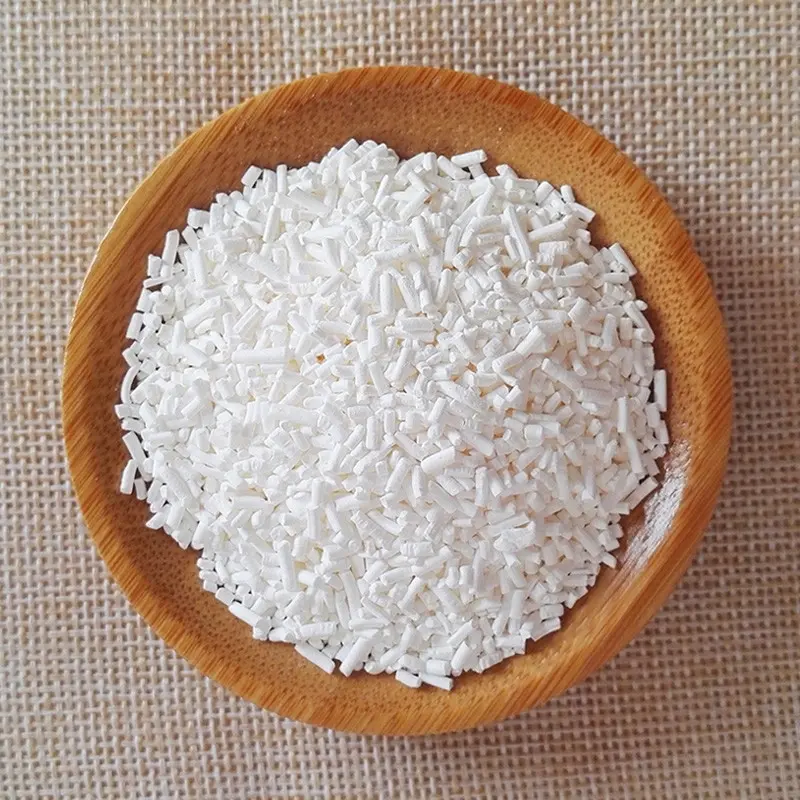
Potassium sorbate is the potassium salt of sorbic acid, commonly identified by the chemical formula C₆H₇KO₂ and CAS number 590-00-1. It is widely used as a food preservative because of its ability to inhibit the growth of molds and yeasts in suitable food systems.
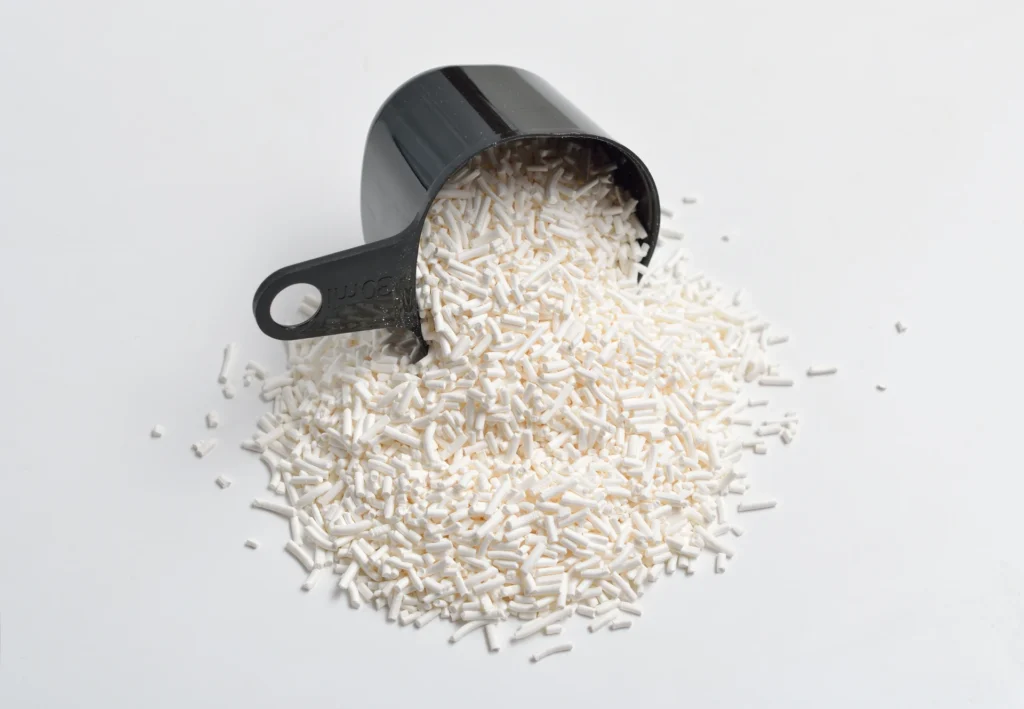
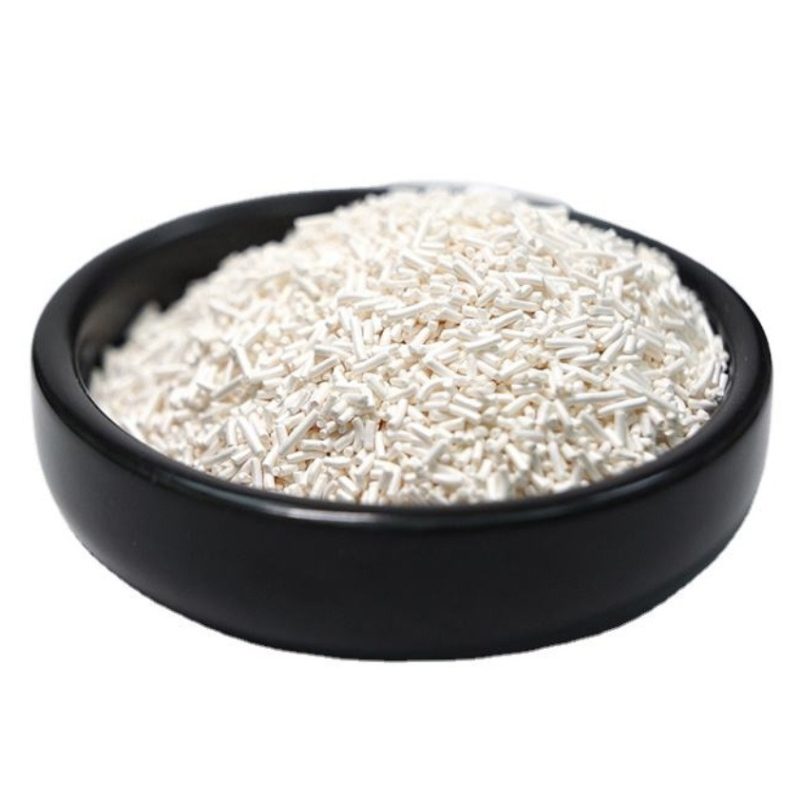
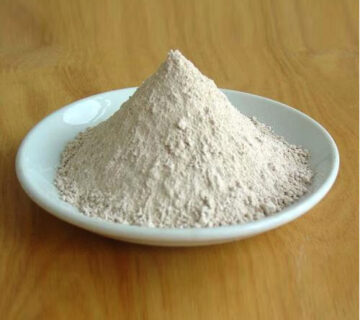
It is generally supplied as a white or nearly white crystalline powder or granules. In food applications, it is commonly known as E202 in the European Union.
The important point for industrial buyers is that potassium sorbate is not purchased merely because it has the correct chemical name. Your purchasing specification should establish the characteristics that matter to your process.
Depending on the application, this can include:
- Assay or purity
- Moisture content
- Appearance
- Acidity or alkalinity
- Heavy-metal limits where applicable
- Particle-size characteristics
- Solubility
- Packaging format
- Microbiological requirements
- Regulatory and food-grade status
- Certificate of Analysis requirements
For a factory, the phrase “food grade” should never replace a technical specification.
Why Potassium Sorbate Is Important for Food Manufacturers
Potassium sorbate is particularly valuable because preservation requirements are rarely about simply extending a product’s life. They are about maintaining microbiological stability while protecting flavor, appearance, texture, and consumer acceptance.
It is commonly encountered in applications such as:
- Bakery products
- Cheese and dairy products
- Sauces and dressings
- Fruit preparations
- Beverages
- Confectionery
- Jams and preserves
- Fillings and toppings
- Certain processed foods
Its performance is strongly influenced by the formulation environment, especially pH. Sorbic acid is the active antimicrobial form, so the effectiveness of sorbate preservatives is generally greater in acidic systems.
That makes formulation science essential.
A procurement manager who purchases an apparently excellent potassium sorbate product without consulting R&D may discover that the raw material meets the specification but does not deliver the expected performance under the factory’s actual process conditions. The chemical is innocent; the specification was incomplete.
Understanding the European Regulatory Environment
For buyers seeking a Potassium Sorbate Supplier in Europe, regulatory compliance is one of the biggest advantages of dealing with a supplier familiar with the European market.
In the EU, potassium sorbate is regulated as food additive E202. Food additives must comply with the relevant European legislation, including conditions of use and purity requirements.
The European Food Safety Authority has evaluated sorbic acid and potassium sorbate as food additives, while EU legislation establishes permitted uses and maximum levels for food additives in specific food categories.
This means your procurement team should not ask only:
“Is this potassium sorbate food grade?”
A stronger question is:
“Does this potassium sorbate meet the specification and regulatory requirements applicable to our exact product and destination market?”
That distinction becomes particularly important for manufacturers exporting finished products across Europe.
How to Evaluate a Potassium Sorbate Supplier in Europe
Not every supplier deserves the same level of trust. A professional supplier evaluation should combine technical, regulatory, commercial, and logistical criteria.
1. Examine the Product Specification
Start with your factory’s internal specification rather than the supplier’s sales description.
Confirm:
- Chemical identity
- CAS number
- Purity
- Physical appearance
- Moisture
- Relevant impurity limits
- Storage conditions
- Shelf life
- Packaging
- Applicable food-additive specifications
If your formulation has a narrow tolerance, communicate that before requesting a quotation.
2. Request a Current Certificate of Analysis
A COA should correspond to the actual batch being supplied whenever possible.
Look for:
- Batch or lot number
- Manufacturing date
- Analysis date
- Test results
- Specification limits
- Test methods where relevant
- Manufacturer identification
A COA that simply states “complies” gives your quality team less useful information than a certificate showing actual measured values.
Over several shipments, those values can also help your quality department identify trends.
3. Verify the Manufacturer
Knowing who actually manufactures the potassium sorbate matters.
A distributor may be highly reliable, but you should still understand the upstream source. Ask whether the material is manufactured in Europe or imported from another region and determine whether the source is approved by your quality system.
This is where a supplier with access to multiple brands can provide a practical advantage.
MT Royal operates across food and chemical raw materials and describes its sourcing activities as extending across Turkey, Europe, and Asia. It also states that it works with established brands and can handle special orders based on customer requirements.
For procurement teams, that flexibility can be useful when a preferred manufacturer has limited availability or when an alternative qualified source needs to be evaluated.
The Difference Between Unit Price and Real Procurement Cost
One of the most common mistakes in industrial purchasing is comparing quotations solely by price per kilogram.
Imagine two offers:
Supplier A
- Lower unit price
- Large minimum order
- Longer lead time
- Limited flexibility
- Higher freight exposure
Supplier B
- Slightly higher unit price
- Smaller order quantities
- Faster delivery
- Better shipment consolidation
- More flexible payment or logistics arrangements
Supplier A may appear cheaper in the quotation spreadsheet but become more expensive after inventory, freight, financing, and operational risk are included.
For this reason, your purchasing team should calculate landed cost rather than focusing exclusively on the purchase price.
A practical cost model should include:
- Product price
- Freight
- Insurance
- Customs-related costs where applicable
- Warehousing
- Financing cost
- Inventory carrying cost
- Quality-control testing
- Potential rejection or replacement costs
- Emergency procurement exposure
The cheapest kilogram is not necessarily the cheapest kilogram that reaches your production line.
Common Mistakes When Buying Potassium Sorbate
Mistake 1: Treating All Suppliers as Equivalent
A distributor, importer, manufacturer, and trading company can offer the same chemical but very different levels of service and technical support.
Understand the supplier’s role in the supply chain.
Mistake 2: Buying Without a Backup Source
For high-volume production, relying entirely on one supplier creates avoidable risk.
A qualified secondary source does not necessarily need to receive 50% of your annual volume. It simply needs to remain technically approved and commercially viable.
Mistake 3: Ignoring Storage Conditions
Potassium sorbate should be stored according to the manufacturer’s recommendations, generally in a cool, dry environment and protected from unsuitable exposure.
Packaging should remain intact. Poor warehouse practices can turn a perfectly manufactured preservative into a quality-control headache.
Mistake 4: Approving a Brand Without Production Trials
Laboratory approval is not always enough.
Before switching from one manufacturer to another, perform a controlled trial under production conditions. Monitor dissolution, dosing behavior, finished-product performance, and relevant quality parameters.
Mistake 5: Neglecting Documentation
A shipment without appropriate documentation can become effectively useless for a regulated factory.
Your purchasing procedure should define the documents required before the order is released.
Choosing Between European and Non-European Sources
European sourcing can offer advantages for buyers located within or close to the EU, particularly where regulatory familiarity, shorter transit routes, and predictable documentation are important.
However, a non-European manufacturer may sometimes provide a more competitive price.
The correct comparison is not “European versus Asian.” It is qualified supplier versus qualified supplier.
Evaluate:
| Factor | European Source | Non-European Source |
|---|---|---|
| Transit time | Often shorter for EU buyers | Can be longer |
| Freight complexity | Potentially simpler | May involve more stages |
| Regulatory familiarity | Often strong for EU requirements | Depends on supplier |
| Unit price | Can be higher | May be competitive |
| MOQ | Varies | Often varies significantly |
| Brand availability | Depends on distributor | Potentially broad |
| Supply diversification | Useful | Useful |
A sourcing partner such as MT Royal can be relevant here because its model is not limited to one geographical manufacturing base. For buyers, access to multiple origins can create additional flexibility when evaluating price, availability, and approved alternatives.
Potassium Sorbate for Large-Scale Production
Large factories need a different procurement strategy from occasional buyers.
If your plant consumes several tonnes of potassium sorbate each month, establish a rolling demand forecast rather than purchasing reactively.
A useful system includes:
Monthly Consumption Forecast
Track actual consumption against production volume.
If your plant historically consumes 4 tonnes per month but seasonal production will increase by 30%, procurement should know this before the warehouse reaches its minimum stock level.
Safety Stock
Safety stock should reflect lead time, consumption variability, supplier reliability, and the consequences of production interruption.
There is no universal “correct” safety-stock percentage.
For a critical preservative, the cost of holding additional inventory may be considerably lower than the cost of stopping a production line.
Approved Alternative Brands
If technically possible, qualify more than one manufacturer.
This is one of the most underused tools in raw-material procurement. A second approved source gives you options when freight markets tighten, a manufacturer experiences an outage, or a particular brand becomes commercially unattractive.
Batch Tracking
Record supplier, manufacturer, lot number, arrival date, and production usage.
This creates traceability and makes complaint investigation much faster.
We have found that factories with disciplined batch records can investigate supplier-related problems in hours rather than spending days searching through warehouse paperwork.
Why Multiple Brands Can Benefit Manufacturers
Brand diversity is not automatically a sign of lower quality.
When a supplier can offer multiple qualified brands, your factory can potentially optimize according to:
- Price
- Availability
- Lead time
- Country of origin
- Packaging
- Technical performance
- Customer requirements
MT Royal’s broader raw-material portfolio and international sourcing model can be useful for manufacturers that want this type of flexibility.
The key is qualification. Never switch brands merely because a supplier offers a lower price. The alternative should first pass your technical and quality-control process.
Emerging Trends in Preservative Procurement
The preservative market is being influenced by several broader manufacturing trends.
Consumers increasingly seek simpler ingredient declarations, while manufacturers continue to balance clean-label expectations with microbiological safety and shelf-life requirements.
At the same time, procurement teams are paying more attention to supply-chain transparency. The modern purchasing department is no longer simply responsible for finding a low-cost material. It increasingly has to answer questions about origin, traceability, regulatory compliance, supplier resilience, and contingency planning.
Another important trend is the use of digital procurement data. Historical prices, supplier lead times, rejection rates, and consumption forecasts can help procurement managers move from reactive purchasing to predictive planning.
For a factory, that means the purchasing spreadsheet is becoming less like a list of prices and more like an early-warning system.
Frequently Asked Questions
What is potassium sorbate used for?
Potassium sorbate is primarily used as a preservative to inhibit molds and yeasts in suitable food and other applications. Its effectiveness depends on formulation conditions, particularly pH.
What is the CAS number for potassium sorbate?
The CAS number is 590-00-1.
Is potassium sorbate the same as sorbic acid?
No. Potassium sorbate is the potassium salt of sorbic acid. They have different chemical forms and physical properties.
What should I ask a European potassium sorbate supplier for?
At minimum, request the technical specification, current COA, SDS, manufacturer information, packaging details, origin, lead time, MOQ, and commercial terms. Food manufacturers may require additional regulatory and quality documentation.
How can I reduce potassium sorbate purchasing costs?
Look beyond the unit price. Compare landed cost, packaging, MOQ, freight, inventory requirements, lead time, payment terms, and the cost of potential supply interruptions. Negotiating annual volumes or consolidating purchases may also improve commercial efficiency.
Should a factory qualify two potassium sorbate suppliers?
For critical raw materials, maintaining an approved secondary source is generally a sensible risk-management strategy. The exact allocation should depend on your consumption, storage capacity, supplier reliability, and product qualification requirements.
Can MT Royal provide different brands?
MT Royal states that it works with established brands and sources food and chemical raw materials from Turkey, Europe, and Asia. Specific potassium sorbate brands, quantities, and availability should be confirmed against your technical specification and current purchasing requirements.
Making the Right Supplier Decision
The best Potassium Sorbate Supplier in Europe is not necessarily the company with the most attractive first quotation. It is the supplier that can repeatedly meet your specification while helping your factory control total procurement cost and operational risk.
For manufacturers, the evaluation should therefore extend beyond price. Examine product consistency, manufacturer credentials, COA quality, regulatory documentation, packaging, logistics, lead time, minimum quantities, technical responsiveness, and contingency options.
MT Royal can be part of that evaluation for buyers seeking a sourcing partner with access to multiple raw-material categories, international supply channels, and different brands at competitive commercial positions. The important step is to give the supplier a clear technical requirement and assess the response against your factory’s actual needs.
We have seen how quickly a small raw-material issue can become a production issue when procurement, quality, and logistics operate in separate silos. A strong supplier relationship connects those functions before the problem reaches the production floor.
For your factory, potassium sorbate should not be treated as another commodity on a purchasing list. It is a controlled production input with regulatory, technical, and commercial consequences.
Choose the supplier accordingly. When every batch arrives with the right specification, the right documentation, and the right timing, procurement stops being a source of surprises and becomes what it should have been all along: a competitive advantage.

No comment