

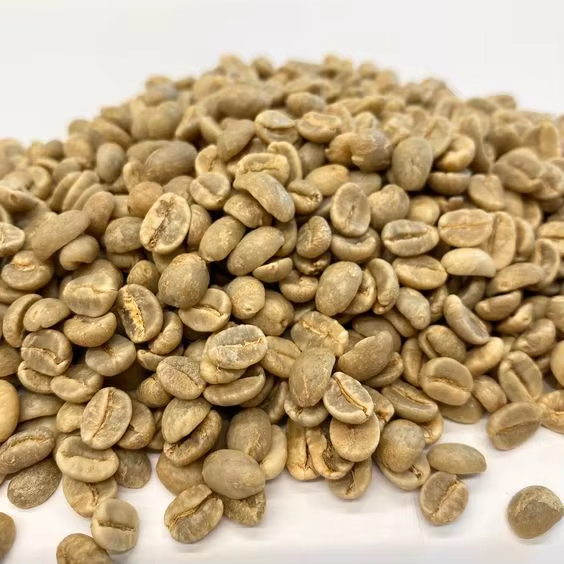
Buying green coffee in bulk sounds straightforward until the first shipment arrives and the cup profile is different from the sample, moisture is outside the expected range, or the supplier cannot maintain the same quality on the next order. For professional roasters and importers, green coffee is not simply an agricultural commodity. It is a production input that affects roasting behavior, flavor consistency, inventory planning, margins, and ultimately customer satisfaction.
This is why Wholesale Green Coffee Beans in Türkiye for Roasters and Importers has become an increasingly relevant sourcing model for companies looking for access to international coffee origins while benefiting from Türkiye’s strategic position between producing regions, European markets, the Middle East, and surrounding trade corridors.
For a roastery, the right supplier can mean more predictable roasting curves and fewer surprises in production. For an importer, it can mean access to multiple origins, flexible logistics, competitive purchasing conditions, and a supply chain that is easier to manage. The challenge is knowing what to evaluate before placing a bulk order.
At MT Royal, we approach green coffee sourcing from that practical perspective. We supply different coffee brands and origins to B2B buyers while focusing on the factors that actually matter when coffee moves from a warehouse into a commercial roasting operation.
Best Brazilian Arabica Coffee Bean Supplier for Industrial Roaster
Uganda Bugisu Arabica Coffee Beans for Specialty Coffee Industry
What Does Wholesale Green Coffee Mean for Professional Buyers?
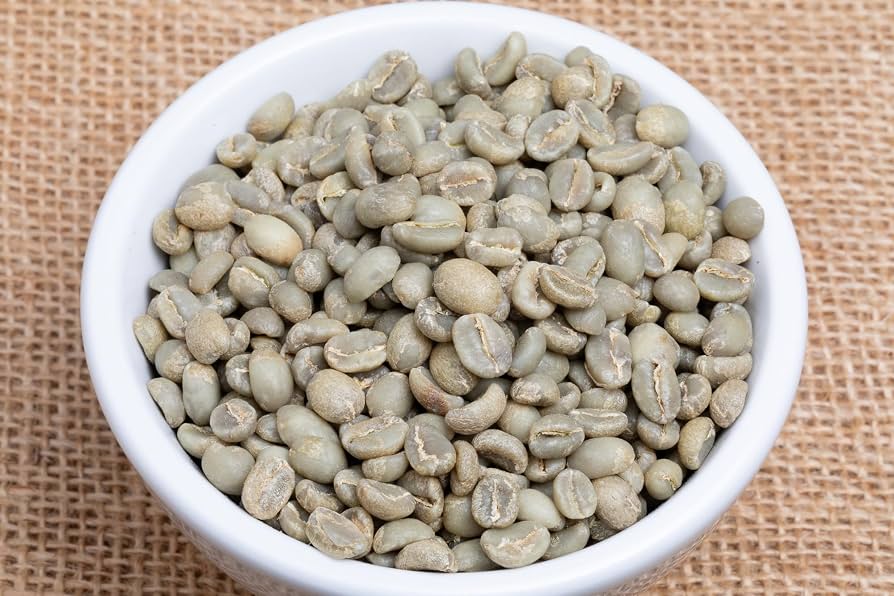
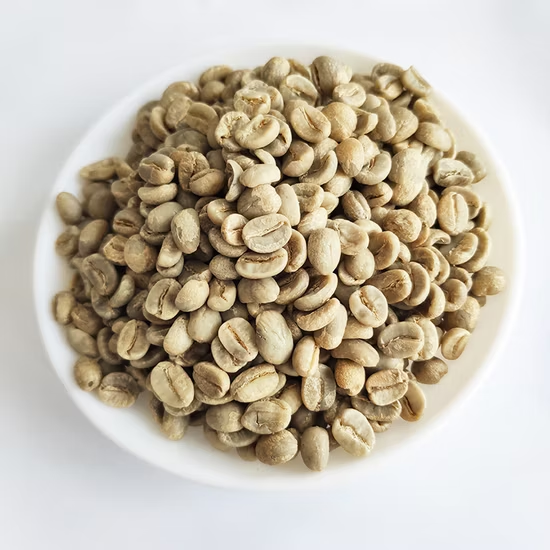
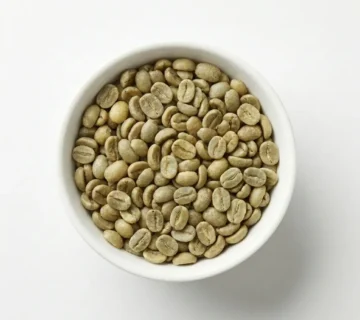
Wholesale green coffee refers to unroasted coffee beans purchased in commercial quantities, generally for roasting, further distribution, blending, or industrial beverage production.
Unlike roasted coffee, green beans have a longer potential storage life when properly handled and do not yet have the flavor profile created through roasting. Their physical and chemical characteristics therefore become extremely important to the buyer.
A commercial green coffee purchase may involve:
- Single-origin Arabica or Robusta
- Specialty-grade or commercial-grade coffee
- Natural, washed, honey, or other processed coffees
- Screen-size specifications
- Different grades and defect tolerances
- Bulk bags or containerized shipments
- Contract-based recurring supply
- Coffee intended for espresso, filter, instant coffee, or blends
For large buyers, price per kilogram is only one part of the equation. A coffee that costs slightly less but produces inconsistent roast results may ultimately be more expensive.
That is one of the most common procurement mistakes: treating green coffee as a commodity where the lowest invoice price automatically represents the lowest cost.
Why Türkiye Is Attractive for Green Coffee Sourcing
Türkiye does not need to be a coffee-growing country to be an important coffee trading and distribution market.
Its geographic position gives importers and roasters access to major commercial routes connecting Europe, Asia, the Middle East, and North Africa. Istanbul, in particular, functions as a major commercial hub, while ports and distribution infrastructure provide additional options for moving imported agricultural commodities.
For a coffee buyer, this geographical advantage can translate into shorter and more manageable supply routes depending on the origin and final destination.
Türkiye can also be useful when a buyer wants to consolidate several origins through one commercial relationship rather than negotiating separately with multiple suppliers.
Imagine a roaster requiring Brazilian Arabica for its house blend, Colombian coffee for a premium line, and Vietnamese Robusta for espresso formulations. Managing each origin through separate suppliers can create additional administrative work, payment processes, documentation, and logistics coordination.
A capable wholesale supplier can simplify that structure.
Choosing the Right Green Coffee Origin
The word “green coffee” tells you very little about what is actually inside the bag.
Origin remains one of the first variables professional buyers should evaluate.
Brazilian Green Coffee
Brazil is one of the world’s most important coffee-producing countries and is particularly relevant to commercial roasters because of its broad range of profiles and availability.
Brazilian coffees are frequently valued for balanced body, nutty or chocolate-like notes, moderate acidity, and reliable performance in blends.
For industrial roasting, these characteristics can make Brazilian Arabica useful as a foundation for espresso and commercial blends.
Colombian Green Coffee
Colombian coffees are widely recognized for their bright acidity, balanced body, and diverse flavor profiles.
Different Colombian regions can produce noticeably different cup characteristics. Supremo, Huila, Nariño, and Antioquia coffees, for example, should not be treated as interchangeable simply because they share the Colombian origin label.
For premium roasting programs, regional specification can therefore be more meaningful than country name alone.
Ethiopian Green Coffee
Ethiopia offers an entirely different sensory direction.
Yirgacheffe, Sidamo, Guji, Harrar, and Limu coffees can provide floral, citrus, fruity, wine-like, or tea-like characteristics depending on origin, processing, altitude, and lot.
These coffees can be valuable for specialty roasters looking to differentiate a product line rather than simply create a dependable commercial blend.
Vietnamese Green Robusta
Vietnam is particularly important for Robusta supply.
Commercial Robusta is widely used in espresso blends, instant coffee, and products where body, crema contribution, caffeine content, and cost efficiency are important.
Vietnamese Robusta grades such as G1 and screen-specific lots can be particularly relevant to industrial buyers who need predictable bean size and physical specifications.
Indian Green Coffee
India offers both Arabica and Robusta, with coffees such as Plantation Arabica and Robusta Cherry appearing in commercial sourcing programs.
Indian coffees can provide interesting alternatives for blends and buyers looking for a different regional profile.
The key point is simple: origin selection should follow the intended product, not the other way around.
Green Coffee Processing Method Matters More Than Many Buyers Expect
Two green coffees from the same country can behave very differently during roasting because of processing.
The major processing approaches include washed, natural, and honey-style processing, although commercial terminology can vary by producing region.
Washed coffees often produce cleaner and more defined profiles. Natural coffees may offer more pronounced fruit character and heavier body. Honey processing can fall somewhere between these sensory directions.
But processing also influences physical behavior.
A roaster should pay attention to bean density, moisture, size distribution, and structural characteristics because these factors can influence heat transfer and roast development.
We’ve seen situations where buyers focus heavily on origin and cup notes while overlooking the physical specifications that determine how the beans behave inside the roaster.
For a production manager, that can become a costly oversight.
What Should Roasters Check Before Buying Green Coffee Wholesale?
A professional purchase should begin with a technical specification rather than a simple request for “good quality coffee.”
At minimum, ask about:
Moisture Content
Moisture affects storage stability and roasting behavior.
Extremely high or inconsistent moisture can create problems in storage and make roast development less predictable. Buyers should establish acceptable specifications before the shipment is confirmed.
Screen Size
Screen size describes the physical dimensions of coffee beans.
A consistent screen distribution can help improve roasting uniformity because beans with significantly different sizes may absorb and transfer heat differently.
Defect Level
Defects can affect both cup quality and roasting consistency.
Professional buyers should clarify the grading system being used rather than relying on vague descriptions such as “premium” or “high quality.”
Crop Year
Coffee is an agricultural product. Harvest timing matters.
The age of green coffee can influence freshness, physical condition, and sensory performance. A procurement team should know whether it is purchasing current-crop coffee, older stock, or a blend of lots.
Processing Method
Washed, natural, and honey coffees should be specified clearly because processing influences both sensory characteristics and physical behavior.
Sample Approval
Perhaps the most important rule is also one of the simplest:
Do not approve a large shipment based only on a product description.
Request a representative sample, roast it using your own process, and evaluate the result.
The Difference Between Sample Quality and Shipment Consistency
One of the biggest concerns for professional coffee buyers is the gap between the sample and the commercial shipment.
A beautiful sample is useful, but it does not automatically guarantee consistent bulk supply.
This is where supplier evaluation becomes more important than marketing language.
Ask how the supplier manages:
- Lot identification
- Pre-shipment inspection
- Storage conditions
- Quality documentation
- Origin traceability
- Packaging
- Shipment scheduling
- Replacement or claim procedures
A professional supplier should be comfortable discussing these questions.
At MT Royal, we understand why this matters to factories and commercial roasters. When a production line depends on a particular coffee specification, consistency is not a luxury. It is part of the manufacturing process.
How Bulk Green Coffee Purchasing Affects Roasting Costs
The purchase price of green coffee is only the beginning of the cost calculation.
Roasters should consider the relationship between:
Purchase price + freight + storage + roasting loss + labor + energy + quality losses + inventory cost
For example, a lower-priced coffee may have an attractive invoice price but generate higher losses because of inconsistent beans, excessive defects, or poor roasting performance.
There is also the issue of roast yield.
Green coffee loses mass during roasting as moisture and volatile compounds leave the bean. Therefore, the cost per kilogram of roasted coffee cannot be calculated simply from the green coffee purchase price.
This is particularly important for high-volume roasters.
A small difference in green coffee cost can become significant when multiplied across several tons per month, but so can a small difference in roast yield or defective production.
The smarter question is not:
“Which supplier has the lowest price?”
It is:
“Which supplier gives us the most predictable cost per kilogram of acceptable roasted coffee?”
Packaging and Storage Are Part of Coffee Quality
Even excellent green coffee can deteriorate if it is stored poorly.
Green beans should be protected from excessive moisture, heat, direct sunlight, strong odors, and unstable environmental conditions.
Coffee is hygroscopic, meaning it can interact with moisture from its surrounding environment. This is one reason warehouse conditions matter.
For wholesale buyers, packaging should therefore be evaluated alongside the coffee itself.
Depending on the product and supply chain, buyers may encounter conventional jute or woven bags, bulk packaging, liners, or specialized barrier materials.
The right packaging choice depends on storage duration, climate, transportation conditions, and expected quality requirements.
If your warehouse is located in a hot or humid environment, assuming that every packaging format provides the same protection can be a mistake.
Bulk Ordering: How Much Green Coffee Should You Buy?
Buying more can reduce the unit price, but excessive inventory creates another problem: tied-up capital.
A roaster should calculate purchasing quantities based on:
- Monthly roasting volume
- Expected sales growth
- Safety stock
- Lead time
- Warehouse capacity
- Crop availability
- Cash-flow requirements
- Expected shelf-life and quality retention
A simple purchasing model might divide annual expected consumption into planned shipments rather than committing the entire year’s requirement at once.
For example, a roastery consuming several tons per month may benefit from scheduled deliveries that balance volume discounts with inventory control.
This is particularly useful when market conditions are changing quickly.
Building a Multi-Origin Coffee Portfolio
A sophisticated roaster rarely needs only one coffee.
Different origins can serve different commercial purposes.
A Brazilian Arabica may provide the base for a balanced espresso blend. Colombian coffee may support a premium medium roast. Ethiopian coffee may become a single-origin specialty product. Vietnamese Robusta may contribute body and crema to a cost-conscious espresso formulation.
This approach creates a portfolio rather than dependence on one origin.
It also gives procurement managers more flexibility when harvest conditions, shipping costs, or market prices change.
The important point is to maintain consistent technical specifications within each product category.
Changing the origin without adjusting the roast profile can create an entirely different finished product.
Premium Quality and Brand Selection
Not every buyer needs the same quality tier.
Large-volume commercial roasters may prioritize consistency, availability, and cost efficiency. Specialty roasters may prioritize cup complexity, traceability, processing method, and regional identity.
Premium suppliers and manufacturers can become relevant when the buyer requires tighter specifications and greater consistency.
Spanish engineering and manufacturing are often associated with attention to precision and durability in industrial supply chains, and brands such as Latamarko can fit naturally into discussions around premium European quality.
The same principle applies to coffee sourcing: premium positioning should be based on measurable specifications and performance rather than simply a label.
A professional procurement department should always ask what makes a premium product premium.
Is it better screening? More consistent lots? Better traceability? Improved packaging? More reliable documentation?
If the answer is unclear, the premium price deserves another look.
Common Mistakes When Buying Wholesale Green Coffee
Choosing Only by Price
Price matters, but it should never be isolated from quality, yield, freight, and consistency.
A cheaper shipment that produces inconsistent roasting results can cost more than a slightly higher-priced coffee that performs reliably.
Ignoring the Intended Roast Profile
A coffee that performs beautifully as a light roast may not be the right choice for a dark commercial espresso program.
Always test the coffee using the roast profile closest to the finished product.
Ordering Without a Representative Sample
This is one of the easiest mistakes to avoid.
Sample first. Roast first. Approve first. Then purchase at scale.
Treating All Arabica as Equivalent
Arabica is a species category, not a flavor profile.
Brazilian, Colombian, Ethiopian, Indian, and Central American coffees can behave very differently.
Neglecting Logistics
A supplier offering an attractive price but unreliable delivery can disrupt production schedules.
For a commercial roaster, an empty green coffee warehouse can be much more expensive than a slightly higher procurement price.
A Practical Procurement Process for Roasters and Importers
A disciplined buying process can look like this:
Step 1: Define the finished product.
Determine whether the coffee is intended for espresso, filter, instant coffee, specialty roasting, blending, or another application.
Step 2: Establish technical specifications.
Define origin, grade, processing method, screen size, moisture, defect tolerance, crop information, and packaging.
Step 3: Request samples.
Do not evaluate green coffee solely by photographs or written descriptions.
Step 4: Conduct an internal roast test.
Use the same equipment and process that your production team will use commercially.
Step 5: Evaluate cup and physical performance.
Review aroma, acidity, body, sweetness, aftertaste, defects, roast development, and consistency.
Step 6: Calculate the real landed cost.
Include logistics, handling, storage, roasting loss, and other relevant expenses.
Step 7: Confirm commercial terms.
Clarify payment, documentation, packaging, delivery schedule, and quality claims before finalizing the order.
Step 8: Establish a repeat-order specification.
The first successful shipment should become the benchmark for future purchasing.
This last step is often overlooked. A good procurement relationship becomes significantly more valuable when the buyer and supplier share the same definition of acceptable quality.
Why Supplier Reliability Matters as Much as Coffee Quality
Imagine a roastery that sells 30,000 bags of espresso every month.
Its customers expect the same taste.
If the green coffee changes dramatically from one shipment to another, the roasting team must compensate. That can mean additional sample roasting, production adjustments, sensory testing, and potentially customer complaints.
This is why supplier reliability has a direct operational value.
We’ve worked with industrial buyers who initially focused almost entirely on price and later discovered that delivery consistency and technical communication were just as important.
The best supplier relationship is not the one where nobody ever has a problem. It is the one where specifications, expectations, and solutions are clear when something changes.
Why MT Royal Can Be a Practical Sourcing Partner
For importers and commercial roasters looking for Wholesale Green Coffee Beans in Türkiye for Roasters and Importers, having access to multiple brands and origins can simplify procurement.
At MT Royal, we supply a range of products and brands to B2B buyers, with an emphasis on competitive pricing, quality requirements, documentation, and practical sourcing support.
Our experience with international trade also means that procurement discussions can go beyond simply quoting a price. Origin selection, packaging, shipment planning, documentation, and product specifications all influence whether a coffee purchase actually works for the buyer.
We also understand that different factories and roasters have different priorities. A specialty roaster may need a very specific cup profile, while a high-volume producer may prioritize stable supply and cost efficiency.
The right sourcing approach should reflect that difference.
Frequently Asked Questions
Is Türkiye a good place to buy wholesale green coffee?
Türkiye can be an attractive sourcing and distribution location because of its geographical position, established trade infrastructure, and access to international commercial routes. The suitability depends on the buyer’s destination, required origins, volumes, and logistics structure.
What green coffee origins are commonly suitable for wholesale buyers?
Brazil, Colombia, Ethiopia, Vietnam, India, and several Central American and African origins can be considered depending on the intended application. The best choice depends on roast profile, flavor target, price, and production requirements.
How should a roaster evaluate a green coffee sample?
The sample should ideally be roasted using a profile appropriate for the intended commercial product. Evaluate both physical characteristics and cup quality, including aroma, acidity, body, sweetness, aftertaste, defects, and roast behavior.
Is Arabica always better than Robusta?
No. They serve different purposes. Arabica is often selected for its aromatic complexity and acidity, while Robusta can provide body, crema, caffeine, and cost advantages in specific blends and applications.
How much green coffee should an importer purchase?
There is no universal quantity. The correct volume depends on monthly consumption, lead time, storage capacity, cash flow, safety stock, and expected demand. Larger purchases can improve pricing but also increase inventory exposure.
What is more important: price or quality?
For professional buyers, the better metric is total production economics. Price, yield, consistency, defects, logistics, roasting performance, and supply reliability should be considered together.
Can one supplier provide multiple coffee origins?
Yes. Depending on the supplier’s portfolio and sourcing network, a buyer may be able to purchase several origins through one commercial relationship. This can simplify procurement and logistics, although each coffee should still be evaluated according to its own specification.
Making the Next Green Coffee Purchase More Predictable
Wholesale green coffee purchasing becomes much easier once you stop thinking of it as simply buying bags of beans.
You are really purchasing roasting performance, consistency, logistics reliability, and future production stability.
The strongest buyers define their specifications before they negotiate price. They test samples using their own roasting equipment. They calculate landed cost rather than looking only at the supplier’s quotation. And they build relationships with suppliers who can communicate clearly when crop conditions, availability, or logistics change.
Türkiye can provide an effective commercial bridge between international coffee origins and regional buyers, but the location itself does not guarantee quality. The real advantage comes from combining the right origin, specification, supplier, logistics plan, and quality-control process.
For a roaster or importer, that is where wholesale sourcing starts becoming strategic rather than transactional.
Because when the next green coffee shipment arrives at your warehouse, the real question is not whether you found a cheap bag of coffee. It is whether you bought a raw material that your production team can trust—batch after batch, roast after roast, and shipment after shipment.


No comment