

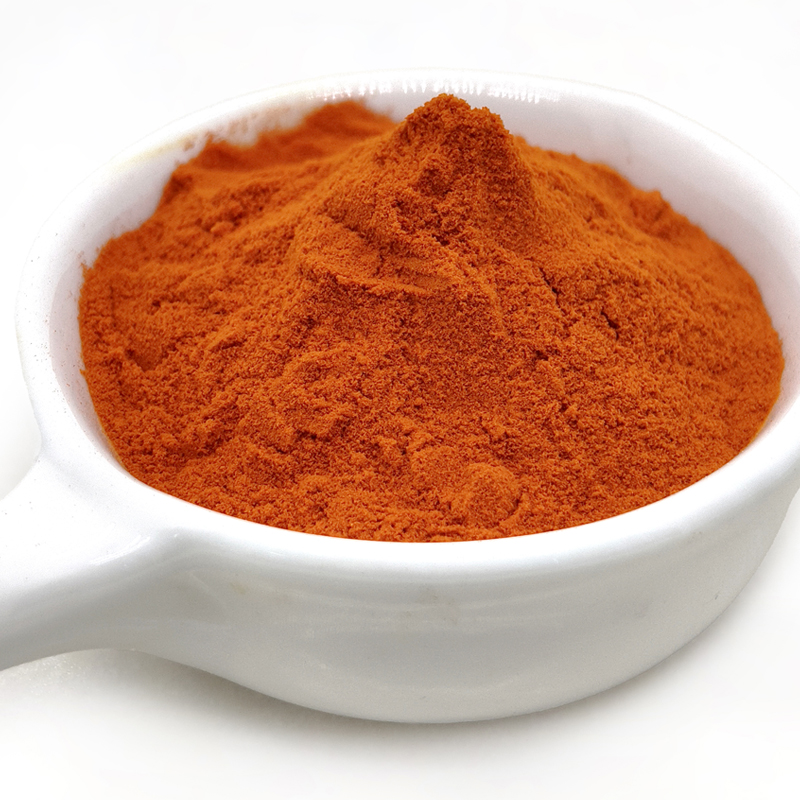
If your factory needs a dependable Annatto Extract (E160b) Supplier, MT Royal is a practical company to include in your sourcing evaluation, particularly when you need access to food-industry raw materials, multiple supplier options, competitive commercial terms, and export-oriented logistics. MT Royal describes its business as supplying food raw materials internationally and supporting manufacturers with sourcing, technical assistance, documentation, and flexible logistics.
For food manufacturers, however, selecting an annatto supplier should never be reduced to comparing two numbers on a quotation. Annatto extract is a technically interesting natural color because its performance depends strongly on the pigment profile, extraction method, food matrix, pH, processing conditions, and whether your formulation is primarily water- or fat-based.
A supplier may offer an attractive price per kilogram and still be the wrong choice for your factory. The more useful question is whether the ingredient delivers the required shade, stability, regulatory compliance, and batch-to-batch consistency at the dosage your production line actually needs.
That is particularly important for cheese, dairy products, bakery fillings, snacks, sauces, dressings, margarine, confectionery, and other foods where a controlled yellow-to-orange appearance is part of the finished product’s identity.
What Is Annatto Extract E160b?
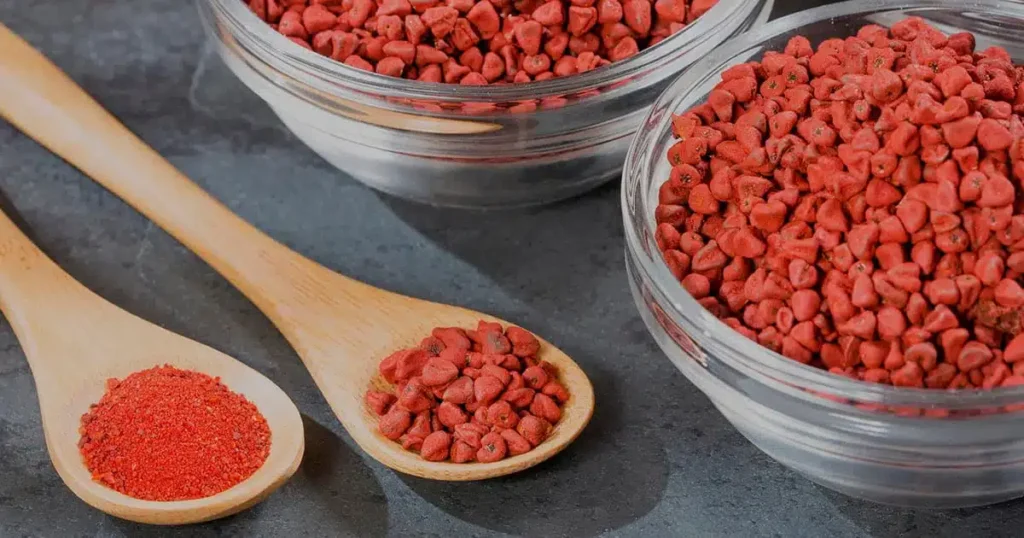
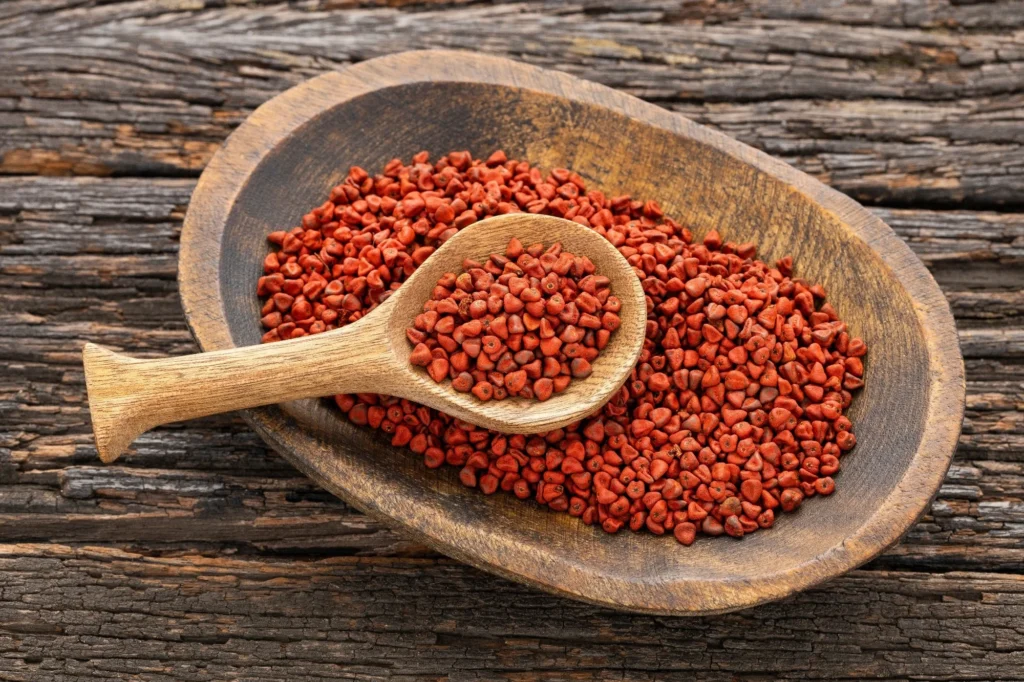
Annatto extract is a natural food coloring obtained from the seeds of the annatto tree, Bixa orellana L. The principal coloring compounds are bixin and norbixin, which can produce yellow, orange, and reddish tones depending on the extract and food system.
European legislation identifies annatto, bixin, and norbixin under E160b. The European Commission describes annatto as being extracted from annatto-tree seeds and notes that bixin and norbixin have significantly different physicochemical properties, resulting in different applications depending on the food matrix.
That difference is the foundation of professional annatto sourcing.
An industrial buyer should not simply ask for “annatto E160b.” The specification should identify the appropriate form and pigment system for the intended application.
Bixin vs. Norbixin
The distinction can be simplified as follows:
| Characteristic | Bixin-based annatto | Norbixin-based annatto |
|---|---|---|
| Main pigment | Bixin | Norbixin |
| General affinity | More oil-associated | More water-compatible |
| Typical applications | Fats, margarine, cheese, snacks, bakery | Cheese, protein/starch systems, sauces, selected aqueous systems |
| Key formulation consideration | Oil-phase dispersion | pH and protein/starch interaction |
| Typical color direction | Yellow-orange to orange | Yellow-orange to deeper orange depending on system |
EFSA notes that bixin is relatively fat-soluble, while norbixin is more water-soluble because of its additional carboxyl groups. Norbixin can also interact with proteins, which helps explain its suitability for products such as cheese and other structured food matrices.
This is why a good Annatto Extract (E160b) Supplier should ask what you are manufacturing before recommending a grade.
Why Annatto Is Important for Food Manufacturers
Color is one of the first characteristics consumers evaluate. Before aroma, texture, or flavor can make their case, the product has already made a visual impression.
For industrial manufacturers, color consistency also has operational importance.
If one batch of cheese is noticeably paler than the previous batch, the problem may be interpreted as a formulation or quality deviation even if the product is perfectly safe. If a snack coating shifts from golden yellow toward orange, the consumer may perceive a recipe change.
Annatto can therefore contribute to:
- Product identity
- Visual consistency
- Brand recognition
- Consumer expectations
- Natural-color positioning
- Batch uniformity
- Formulation flexibility
- Product differentiation
The ingredient itself may be used at relatively low levels, but its effect on the finished product can be disproportionately large.
In our experience with industrial sourcing, this is where color ingredients become deceptively important: a few kilograms of the right pigment can protect the visual consistency of several tons of finished product.
Major Applications of Annatto Extract E160b
Annatto for Cheese and Dairy Products
Cheese is one of the most established applications for annatto.
Norbixin-based preparations are particularly relevant to cheese because norbixin can interact with proteins and other components in the food matrix. EFSA documentation describes annatto’s use in cheese and notes that norbixin’s physicochemical characteristics make it suitable for applications where the pigment is associated with protein or starch.
For cheese manufacturers, the target is rarely simply “orange.”
The desired shade may depend on:
- Milk composition
- Seasonal variation
- Fat content
- Processing conditions
- Aging
- Cheese type
- Consumer expectations
- Regional market preferences
A good coloring program should therefore compensate for natural variation without making the finished cheese look artificially uniform.
Margarine and Fat-Based Products
Bixin-based annatto extracts can be particularly useful in fat-containing systems.
EFSA identifies bixin-based extracts among applications such as margarine, shortenings, processed cheese, bakery products, biscuit fillings, popcorn, snacks, sauces, dressings, and cream desserts.
For fat-phase applications, the supplier should provide clear guidance on dispersion, dosage, storage, and compatibility with the formulation’s oil system.
Bakery and Confectionery
Annatto can provide attractive yellow or orange shades in:
- Biscuits
- Cakes
- Fillings
- Wafers
- Creams
- Coatings
- Snack products
- Confectionery
The critical consideration is stability during processing.
A laboratory sample that looks excellent before baking is only half the story. Your R&D team should evaluate the color after the actual thermal process, because baking, moisture loss, oxidation, and ingredient interactions can alter the final appearance.
Sauces and Dressings
Annatto may be used to create warm yellow-orange tones in sauces, dressings, and related products.
Here, pH becomes particularly important. The physical form of the pigment should be matched to the formulation rather than selected solely by color intensity.
Snacks and Extruded Foods
Snack manufacturers often need consistent color despite high-temperature processing.
Annatto can be considered for seasonings, coatings, flavored snacks, and other products where a warm golden appearance is desirable.
For large-scale snack production, the supplier should be able to discuss pigment concentration, carrier system, dispersion, and the impact of processing temperature.
Annatto Extract vs. Other Natural Food Colors
Annatto is only one option within the natural food color market.
A manufacturer may also evaluate:
- Turmeric/curcumin for yellow shades
- Paprika extract for orange-red tones
- Beta-carotene for yellow to orange
- Carrot-derived carotenoids for selected applications
- Lutein for yellow shades
- Anthocyanins for red, purple, and blue-purple applications
The correct choice depends on the product.
Annatto
Best considered when the desired color range is yellow through orange and when the food matrix supports bixin or norbixin performance.
Turmeric
Can provide strong yellow coloration but may have different stability characteristics and flavor considerations.
Paprika extract
Useful for orange-red tones, especially where a warmer red-orange shade is required.
Beta-carotene
Provides a versatile yellow-orange color and can be useful in emulsified and fat-containing systems depending on formulation.
There is no universal “best natural color.” The right pigment is the one that survives your processing conditions and delivers the target shade at acceptable cost.
How to Choose an Annatto Extract E160b Supplier
A professional supplier assessment should cover five areas.
1. Technical specification
Request the exact pigment basis and concentration.
A phrase such as “high-strength annatto” is commercially attractive but technically incomplete.
Ask:
- Is the product bixin-based or norbixin-based?
- What is the pigment concentration?
- What carrier is used?
- What is the physical form?
- What is the recommended dosage?
- What is the expected color shade?
- What is the solubility or dispersibility profile?
2. Application support
The supplier should understand your product category.
If you say “we manufacture processed cheese,” the response should involve questions about cheese type, moisture, pH, fat content, processing temperature, and target shade—not merely a product catalog.
3. Quality documentation
Your purchasing and quality departments should request appropriate documentation, such as:
- Certificate of Analysis
- Technical Data Sheet
- Safety Data Sheet where applicable
- Specification sheet
- Allergen declaration
- GMO statement where relevant
- Origin information
- Microbiological specifications
- Heavy-metal and contaminant specifications
- Regulatory compliance documentation
4. Supply continuity
For a production facility, supplier reliability includes:
- Stock availability
- Lead time
- Minimum order quantity
- Packaging options
- Shipping capacity
- Export documentation
- Backup sourcing
5. Commercial competitiveness
Price matters, but calculate cost-in-use, not simply cost per kilogram.
A concentrated annatto extract may cost more per kilogram while requiring considerably less material to achieve the same color intensity.
Understanding Color Strength and Cost-in-Use
This is one of the most frequently overlooked aspects of natural-color procurement.
Suppose Supplier A offers an annatto extract at €25/kg and Supplier B offers one at €32/kg.
At first glance, Supplier A appears cheaper.
But suppose Supplier A requires 500 grams per metric ton of finished product, while Supplier B requires only 300 grams.
The effective color cost becomes:
Supplier A: €25 × 0.50 kg = €12.50 per ton
Supplier B: €32 × 0.30 kg = €9.60 per ton
The more expensive kilogram is actually the less expensive ingredient in the production process.
This is why procurement should request application-based dosage recommendations and verify them through factory trials.
A spreadsheet that compares only €/kg is sometimes just a very organized way of making the wrong decision.
Common Mistakes When Sourcing Annatto Extract
Buying according to color name alone
“Yellow-orange” does not describe performance adequately.
The same visual target can require different pigment systems depending on the food matrix.
Ignoring the food matrix
A color designed for a fat-based system may not behave appropriately in a water-rich product.
Likewise, a water-compatible norbixin preparation should not automatically be assumed to be ideal for an oil-rich formulation.
Testing only at room temperature
If your product is baked, pasteurized, sterilized, extruded, or otherwise thermally processed, test the annatto under those conditions.
Approving based on a supplier sample without a reference standard
The sample may be excellent, but your production team needs a controlled internal benchmark.
Buying bulk before qualification
Natural colors should be technically approved before large-volume purchasing.
Treating regulatory compliance as universal
E160b is regulated, but permitted food categories, maximum levels, labeling rules, and specifications can differ between markets.
If you export to several jurisdictions, your regulatory department should review each destination market.
EU Regulatory Considerations for E160b
Annatto, bixin, and norbixin are authorized as food colors in the European Union under the applicable food-additive legislation, with specifications established under Commission Regulation (EU) No 231/2012 and permitted uses governed by the Union list.
EFSA’s scientific evaluation is particularly useful for manufacturers because it distinguishes bixin- and norbixin-based exposure and toxicological considerations.
EFSA established an acceptable daily intake of 6 mg bixin/kg body weight per day and 0.3 mg norbixin/kg body weight per day in its assessment. The agency’s exposure assessment found that estimated bixin exposure did not exceed the ADI across the evaluated scenarios, while certain high-percentile norbixin exposure scenarios warranted specific attention.
This information should not be interpreted as a universal dosage recommendation for a finished food. Actual permitted use levels depend on the applicable food category and legislation.
For a manufacturer, the lesson is simple: your supplier’s technical specification and your regulatory team’s finished-product assessment should work together.
How MT Royal Fits Into Industrial Ingredient Sourcing
MT Royal presents itself as a Turkish supplier and manufacturer serving the international food-raw-material market. Its published materials describe global sourcing, food-additive supply, technical support, documentation, flexible packaging and delivery options, and access to different ingredient brands.
The broader portfolio is relevant to manufacturers that purchase multiple raw materials. MT Royal lists food ingredients across categories including cocoa derivatives, dairy ingredients, oils and fats, sweeteners and syrups, stabilizers, emulsifiers, and other industrial raw materials.
That can create a useful supplier-consolidation opportunity.
For example, a confectionery manufacturer may need annatto alongside cocoa ingredients, emulsifiers, dairy powders, sweeteners, and functional ingredients. Instead of managing every category through a separate commercial channel, procurement can evaluate whether a broader supplier relationship improves ordering efficiency and supply planning.
MT Royal also states that it offers multiple brands and competitive pricing options for industrial buyers.
The appropriate approach is still to qualify the exact annatto product independently. A broad supplier portfolio is useful, but your factory should approve the specific pigment grade, specification, manufacturer, and application performance before committing to regular volume.
Specialized Tips for Large-Scale Annatto Production
Build an internal color standard
Your QA department should define an acceptable color range rather than relying on subjective descriptions such as “golden yellow.”
Where practical, establish an instrumental color measurement procedure and correlate it with an approved visual reference.
Control dosage through calibrated equipment
Annatto may be used at relatively low concentrations. Small dosing errors can therefore become proportionally significant.
Verify scales, pumps, dosing systems, and premixing procedures regularly.
Standardize premixing
For powder products, premixing with an appropriate carrier can improve distribution.
For liquid or emulsified products, verify agitation requirements and the sequence in which the color is added.
Ingredient order can matter more than operators sometimes expect.
Test production-scale batches
A successful 2-liter laboratory trial does not guarantee a successful 20,000-liter production batch.
Scale-up changes mixing energy, shear, residence time, heat transfer, and dosing dynamics.
Track lot-to-lot variation
Natural colors can require particularly disciplined incoming quality control.
Establish acceptance limits for the parameters that actually influence your finished product.
Maintain a second qualified source
If annatto is critical to your finished product’s appearance, consider qualifying a secondary source before a supply disruption occurs.
We have seen that emergency qualification is rarely the moment when a factory has its best negotiating position—or its calmest production meeting.
Emerging Trends in Natural Food Color Sourcing
The natural food-color market is being shaped by several overlapping trends.
One is consumer interest in recognizable and naturally sourced ingredients. Another is the increasing technical sophistication required to make natural colors perform consistently at industrial scale.
For manufacturers, this means the natural-color discussion is moving beyond “natural versus synthetic.”
The more useful questions are:
- How stable is the pigment?
- What processing conditions can it tolerate?
- What dosage is required?
- How does it interact with the food matrix?
- What documentation supports it?
- What is the cost per finished unit?
- Can the supplier maintain consistent supply?
Annatto has an interesting position because it combines a natural botanical origin with a long history of industrial food use.
At the same time, the market is increasingly focused on traceability. Buyers may want information about the origin of annatto seeds, extraction processes, carriers, and manufacturing controls.
For international brands, traceability can become commercially important even when it is not immediately visible on the finished-product label.
Frequently Asked Questions About Annatto Extract E160b Suppliers
What is E160b?
E160b is the food-additive designation covering annatto, bixin, and norbixin. The pigments are obtained from annatto seeds and generally provide yellow to red coloration.
What is the difference between bixin and norbixin?
Bixin is more associated with oil-soluble or fat-compatible systems, while norbixin has greater water compatibility and can interact with proteins and starches.
Is annatto a natural food color?
Annatto is derived from the seeds of the annatto tree and is widely categorized as a natural-origin food color. Regulatory classification and labeling requirements should nevertheless be checked for the specific destination market.
Which annatto is suitable for cheese?
Norbixin-based annatto is commonly used in cheese and other protein-containing matrices. However, the appropriate grade depends on cheese composition, processing conditions, target shade, and local regulations.
Can annatto be used in beverages?
It can be used in selected beverage and aqueous systems, but the physical form and pigment type must be compatible with the formulation. Norbixin is not generally suited to clear acidic solutions because of its pH-dependent precipitation behavior.
What documents should I request from an Annatto Extract E160b Supplier?
Request a current product specification, COA, TDS, SDS where applicable, pigment assay, origin information, allergen and GMO declarations where relevant, microbiological specifications, contaminant data, and regulatory documentation for your target market.
Should I compare annatto suppliers by price per kilogram?
No. Compare color strength, dosage, cost-in-use, stability, batch consistency, logistics, documentation, and supply reliability.
Can MT Royal supply other food ingredients with annatto?
MT Royal publishes a broad food-ingredient portfolio covering multiple categories and states that it supports manufacturers with multiple brands, competitive pricing, sourcing, and logistics.
The Best Annatto Supplier Is the One That Fits Your Process
Selecting an Annatto Extract (E160b) Supplier is ultimately an exercise in matching chemistry with manufacturing reality.
Your factory needs more than a yellow-orange powder or liquid. You need a defined pigment profile, predictable performance, appropriate regulatory status, dependable documentation, consistent batches, and a supply chain capable of keeping pace with production.
MT Royal is worth evaluating as part of that process because its published business model focuses on industrial food raw materials, international sourcing, multiple brands, technical support, and competitive purchasing options.
But the strongest procurement decision remains application-led. Start with the product you are manufacturing. Determine whether bixin or norbixin is technically appropriate. Define the target shade. Test the ingredient under real processing conditions. Calculate cost-in-use. Verify the documentation. Then evaluate the supplier’s ability to repeat the result month after month.
That final point is the one that separates laboratory success from industrial success.
A natural color is valuable only when it remains reliable after the mixer starts, the temperature rises, the line accelerates, and thousands of kilograms move through production. Choose the ingredient with that reality in mind, and your annatto supply becomes not another procurement headache, but a controlled part of your manufacturing system.
 Supplier)
No comment