

For factories and manufacturers, choosing a reliable Citric Acid Monohydrate | Supplier & Distributor is far more important than simply finding the lowest price per kilogram. The quality, consistency, documentation, availability, and delivery performance of a raw material can directly influence production efficiency, product quality, and operating costs. MT Royal provides manufacturers with access to citric acid monohydrate from multiple established brands, helping procurement teams balance quality, availability, and competitive pricing.
Citric acid monohydrate is one of the most versatile organic acids used across modern industry. It plays an important role in food and beverage manufacturing, pharmaceuticals, cosmetics, detergents, cleaning products, and numerous industrial formulations. Its ability to regulate acidity, enhance flavor, control pH, bind certain metal ions, and contribute to product stability makes it much more than a simple acidulant.
For procurement managers, however, the real challenge is not identifying citric acid. It is determining which grade, specification, brand, packaging format, and supply arrangement best fits the factory’s production requirements.
What Is Citric Acid Monohydrate?
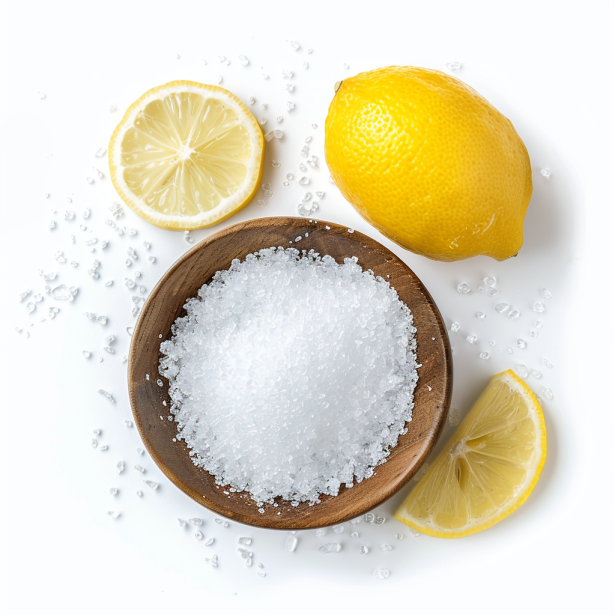
Citric acid monohydrate is the hydrated crystalline form of citric acid. Its chemical formula is C₆H₈O₇·H₂O, and its CAS number is 5949-29-1. It is generally supplied as white or colorless crystalline material and is highly soluble in water.
The word “monohydrate” indicates that one molecule of water is incorporated into the crystal structure. This distinguishes it from citric acid anhydrous, which does not contain crystal water.
Although both forms have many applications in common, they should not automatically be considered interchangeable. The difference can influence formulation calculations, moisture balance, dissolution behavior, storage conditions, and the performance of a finished product.
This distinction is particularly important in industrial procurement. A factory should select citric acid based on its formulation and process requirements rather than choosing a product simply because it carries the same generic name.
Why Citric Acid Monohydrate Is Important for Manufacturers
Citric acid has become an industrial workhorse because it can perform several functions within the same formulation.
Acidulant and pH Regulator
One of its most important applications is controlling acidity and pH.
In food and beverage production, pH can affect microbial stability, flavor, color, texture, preservative effectiveness, and the stability of other ingredients. Consequently, a manufacturer may use citric acid not merely to make a product sour, but to establish a carefully controlled chemical environment.
For example, in a beverage factory, achieving the correct pH can be essential for maintaining the intended flavor profile and ensuring consistency between production batches.
Flavor Enhancement
Citric acid provides a clean and recognizable acidic taste. It is particularly compatible with fruit-based flavors and is widely used in beverages, candies, jams, sauces, confectionery, and processed foods.
The formulation team must nevertheless balance acidity carefully. Too little may produce a flat flavor profile, while excessive acidity can overpower sweetness and other flavor components.
Chelating Function
Another important property is its ability to interact with certain metal ions.
This makes citric acid useful in cleaning and industrial applications where mineral deposits and metal-related impurities need to be controlled. In cleaning formulations, for instance, citric acid can contribute to descaling performance.
It is an interesting example of industrial chemistry: the same material that gives a soft drink its characteristic acidity can also help a maintenance department deal with mineral buildup.
Pharmaceutical Applications
Citric acid monohydrate is also used in pharmaceutical formulations, including products where controlled acidity and effervescence are important.
Pharmaceutical purchasing requires considerably more attention to specifications and documentation than general industrial procurement. A pharmaceutical manufacturer should verify the required pharmacopeial standard and grade rather than assuming that any commercially available citric acid is appropriate.
Citric Acid Monohydrate vs. Anhydrous Citric Acid
One of the most common mistakes in raw-material procurement is assuming that monohydrate and anhydrous citric acid are identical from a manufacturing perspective.
They share many properties and applications, but the presence of crystal water creates a meaningful distinction.
| Factor | Citric Acid Monohydrate | Citric Acid Anhydrous |
|---|---|---|
| Crystal water | Contains one molecule of crystal water | No crystal water |
| Chemical formula | C₆H₈O₇·H₂O | C₆H₈O₇ |
| Appearance | Usually white crystals or powder | Usually white crystals or powder |
| Moisture considerations | More relevant because of hydrated structure | Useful where water content must be minimized |
| Typical applications | Food, beverages, pharmaceuticals and industrial formulations | Food, beverages, pharmaceuticals and dry formulations |
| Selection basis | Formulation and process requirements | Formulation and moisture requirements |
The important point is that the cheapest product is not necessarily the most economical option.
If changing from one form to another requires reformulation, additional laboratory testing, equipment adjustments, or changes in dosing calculations, the apparent material saving may disappear quickly.
Main Industrial Applications of Citric Acid Monohydrate
Food and Beverage Industry
Food-grade citric acid monohydrate is widely used in:
- Carbonated beverages
- Fruit drinks and juices
- Confectionery
- Candies
- Jams and preserves
- Sauces and dressings
- Processed foods
- Bakery products
- Dairy-related formulations
Its combination of acidity, flavor characteristics, buffering capability, and formulation compatibility makes it especially valuable in large-scale food manufacturing.
For food factories, consistent quality is critical. A formulation developed around one raw material specification should not suddenly behave differently because the purchasing department switched suppliers without adequate technical evaluation.
Pharmaceutical Manufacturing
Pharmaceutical manufacturers use citric acid in several types of formulations. Its role may involve acidity control, buffering, or effervescent reactions.
In this sector, procurement teams should pay close attention to:
- Applicable pharmacopeial requirements
- Purity
- Batch consistency
- Certificate of Analysis
- Traceability
- Packaging
- Storage conditions
- Regulatory documentation
A “food-grade” label alone should never be treated as proof of pharmaceutical suitability.
Cosmetics and Personal Care
Citric acid is also used in cosmetic and personal-care formulations where pH adjustment and formulation stability are important.
The correct specification depends on the finished product and its regulatory requirements. A manufacturer producing personal-care products should therefore establish raw-material specifications before selecting a commercial source.
Cleaning Products and Industrial Formulations
Citric acid’s chemical properties make it useful in descaling and cleaning applications.
It can contribute to the removal of mineral deposits and is therefore relevant to cleaning formulations, equipment maintenance, and certain industrial treatment processes.
Common Mistakes When Buying Citric Acid in Bulk
Buying Based Only on Price
A quotation that is five percent cheaper can look attractive on a purchasing spreadsheet. But the actual cost of a raw material includes much more than its initial price.
Consider:
Total procurement cost = product price + transportation + duties + handling + inventory cost + quality risk + production risk
A lower-priced product that causes quality problems or inconsistent production can ultimately be more expensive.
Failing to Specify the Grade
Simply writing “citric acid” on a purchase order is insufficient for many industrial applications.
The order should clearly identify the required form, grade, specification, packaging, manufacturer or approved brands, and documentation requirements.
Assuming All Brands Are Identical
Different manufacturers can have different specifications, production processes, documentation systems, particle characteristics, packaging standards, and supply capabilities.
MT Royal works with multiple established citric acid brands, including TTCA, Ensign, RZBC, and Jungbunzlauer, giving manufacturers additional sourcing flexibility.
This can be particularly valuable when a factory needs an alternative source because of availability, pricing, geographic restrictions, or changing production requirements.
Ignoring Warehouse Conditions
Citric acid monohydrate should be protected from unsuitable humidity, contamination, and poor storage practices.
Even a technically excellent raw material can develop handling problems when stored incorrectly. Moisture exposure can contribute to caking and affect the material’s physical behavior.
Warehouse management is therefore part of raw-material quality management—not merely a logistics issue.
Checking Documentation Too Late
Quality documents should be reviewed before the shipment arrives whenever possible.
Depending on the application, a factory may require:
- Certificate of Analysis
- Safety Data Sheet
- Product specification
- Batch information
- Origin information
- Applicable certifications
- Regulatory documentation
Waiting until the material is sitting in quarantine is a remarkably efficient way to make a simple purchase complicated.
How to Choose the Right Citric Acid Monohydrate Supplier
A dependable Citric Acid Monohydrate | Supplier & Distributor should be evaluated according to more than price.
1. Product consistency
Ask whether the supplier can maintain consistent specifications across multiple shipments.
For a manufacturing plant, consistency is often more valuable than an exceptionally low price on a single shipment.
2. Brand flexibility
A supplier with access to several established manufacturers can provide more options when market conditions change.
MT Royal’s multi-brand approach allows procurement teams to evaluate alternatives while keeping the technical requirements of the factory at the center of the purchasing decision.
3. Technical responsiveness
Your supplier should understand the difference between food grade, pharmaceutical grade, cosmetic applications, and industrial specifications.
In our experience working with manufacturing supply requirements, technical communication at the beginning of a purchasing relationship can prevent significantly larger problems later in production.
4. Logistics capability
For large factories, product availability means little if the material cannot arrive on schedule.
Evaluate:
- Lead time
- Shipment size
- Packaging
- Export documentation
- Transportation options
- Delivery reliability
- Emergency supply capability
A production manager does not care that the material was “available somewhere.” The question is whether it will be physically present before the production line needs it.
5. Competitive commercial conditions
A reliable supplier should be able to offer competitive pricing while maintaining the required specification.
The right comparison is not simply supplier A versus supplier B. Instead, compare the complete commercial package: product grade, brand, quantity, packaging, origin, delivery terms, documentation, and lead time.
Specialized Tips for Large-Scale Production
Large-volume manufacturers should treat citric acid procurement as part of supply-chain planning.
If your factory consumes several tons of citric acid every month, relying entirely on spot purchases can create unnecessary exposure to market fluctuations and supply interruptions.
A more sophisticated strategy includes maintaining an approved supplier and brand matrix.
For each approved material, record:
- Manufacturer
- Brand
- Grade
- Specification
- Country of origin
- Packaging
- Approved application
- Laboratory approval status
- Current supplier
- Typical lead time
- Alternative supplier
This allows the procurement team to react quickly when market conditions change.
Another useful strategy is to qualify alternative brands before an emergency occurs. A secondary supplier is not genuinely “qualified” if your quality department has never tested its material.
Recent changes in global citric acid production also highlight the importance of supply diversification. Large-scale production is heavily concentrated in certain manufacturing regions, particularly China, meaning that transportation disruptions, energy costs, trade policies, production changes, and regional events can influence international availability.
For high-consumption factories, maintaining a reasonable safety stock and a pre-approved alternative source can therefore be more valuable than chasing the lowest possible spot price.
Why MT Royal Can Be a Practical Sourcing Partner
MT Royal supplies citric acid for different industrial applications and provides access to multiple established brands. Its portfolio includes citric acid monohydrate as well as anhydrous citric acid, allowing manufacturers to select the appropriate form according to their formulation and process requirements.
The availability of multiple brands is particularly useful for procurement departments that need to balance technical approval with commercial competitiveness.
For example, a factory may have one preferred brand for its primary production line but require an alternative approved manufacturer when availability changes. Instead of beginning the sourcing process from zero, working with a distributor that understands several manufacturers can make the transition considerably more manageable.
We have seen that the strongest supplier relationships are rarely based on price alone. They are built around predictable quality, clear documentation, responsive communication, reliable logistics, and an understanding of how raw materials fit into the customer’s production system.
That is ultimately where a specialized distributor can add value.
Frequently Asked Questions About Citric Acid Monohydrate
What is the CAS number of citric acid monohydrate?
The CAS number of citric acid monohydrate is 5949-29-1.
Is citric acid monohydrate food grade?
Citric acid monohydrate is available in food-grade specifications and is widely used in food and beverage manufacturing. However, buyers should always verify the specific grade and documentation of the material they are purchasing.
What is the difference between citric acid monohydrate and anhydrous citric acid?
Monohydrate contains crystal water, while anhydrous citric acid does not. The two forms have many applications in common, but the appropriate choice depends on formulation, moisture requirements, and production conditions.
Can citric acid monohydrate be used in pharmaceutical manufacturing?
Yes, appropriate pharmaceutical-grade citric acid monohydrate can be used in pharmaceutical formulations. The manufacturer should verify the applicable pharmacopeial specification and quality documentation before purchase.
Which brands are available through MT Royal?
MT Royal offers citric acid products from multiple established manufacturers and brands, including TTCA, Ensign, RZBC, and Jungbunzlauer, depending on product specifications and availability.
How should citric acid monohydrate be stored?
It should generally be stored in a clean, dry environment and protected from excessive humidity and contamination. The manufacturer’s storage recommendations and current safety documentation should always be followed.
What documents should a factory request?
Depending on the application, the procurement team may request a Certificate of Analysis, Safety Data Sheet, technical specification, origin information, batch details, and applicable certifications.
Is the cheapest supplier necessarily the best option?
No. The best supplier is the one that provides the required quality and documentation at a competitive total cost while maintaining reliable availability and delivery performance.

A Better Way to Think About Citric Acid Procurement
Citric acid monohydrate may look like a straightforward commodity when viewed from a purchasing spreadsheet. Inside a factory, however, it becomes part of a much larger system involving formulation, quality control, production planning, warehousing, logistics, and regulatory compliance.
That is why choosing a Citric Acid Monohydrate | Supplier & Distributor should be approached as a supply-chain decision rather than a simple price comparison.
MT Royal’s access to multiple established brands can give manufacturers greater flexibility when comparing specifications, availability, and commercial conditions. For factories with recurring or high-volume requirements, this flexibility can become particularly valuable.
The strongest procurement strategy is not necessarily the one that finds the cheapest bag of citric acid. It is the one that delivers the right specification, from a dependable source, at the right time, with the documentation your quality team needs—and continues doing so when the market becomes less predictable.
For a manufacturing operation, that reliability is not an extra feature. It is part of the raw material itself.




No comment