


If your factory is developing functional foods, nutraceuticals, or dietary supplements, choosing the right Beta Glucan Powder Supplement is not simply a matter of comparing prices per kilogram. Source, purity, molecular structure, solubility, assay method, microbiological profile, documentation, and supply continuity can all influence whether the ingredient performs consistently on your production line. For manufacturers that need dependable sourcing and competitive commercial terms, MT Royal is worth considering as a sourcing partner, particularly because its business model combines manufacturing with global sourcing across food, chemical, and pharmaceutical raw materials.
This matters because beta glucan has moved well beyond the niche-ingredient category. Market research published in 2026 estimates the global beta glucan market at hundreds of millions of dollars, with continued growth driven by functional foods, dietary supplements, pharmaceutical applications, and consumer interest in health-oriented ingredients. One recent estimate puts the market at USD 582.7 million in 2025 and projects it to approach USD 991.4 million by 2034.
For a factory manager, however, market growth is only half the story. The real question is much more operational: Which beta glucan powder will give your formulation predictable performance at the lowest realistic total cost?
Food industry raw materials – list of products
What Is Beta Glucan Powder Supplement?
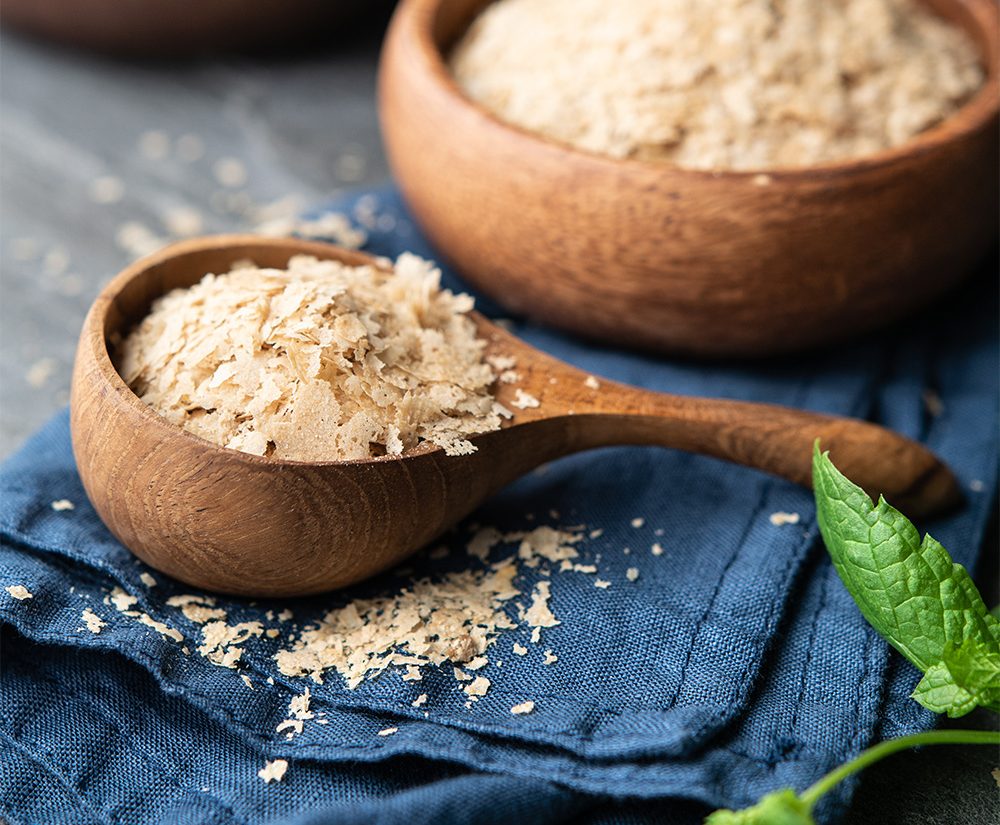
Beta glucan is a naturally occurring polysaccharide found in the cell walls of several organisms, including cereal grains such as oats and barley, baker’s yeast, and mushrooms. Although these ingredients share the name “beta glucan,” they are not interchangeable.
Their chemical linkage patterns, molecular weight, purity, solubility, extraction methods, and physiological functions can differ significantly.
For manufacturers, the most important distinction is usually the source:
- Oat and barley beta glucan: primarily associated with soluble dietary fiber and food applications.
- Yeast beta glucan: commonly associated with immune-focused nutraceutical formulations.
- Mushroom beta glucan: used in specialized functional nutrition and nutraceutical products.
- Other microbial or algal sources: emerging options for specialized applications.
The FDA’s scientific review recognizes mixed-linkage beta glucans from oats, barley, and rye as dietary-fiber components and discusses their relationship with cholesterol-related health outcomes.
This distinction is essential when buying a Beta Glucan Powder Supplement in bulk. A powder labeled simply “beta glucan” does not provide enough technical information for a professional procurement decision.

Why Beta Glucan Is Becoming More Important to Manufacturers
The growth of beta glucan reflects a broader shift in the food and supplement industry toward multifunctional ingredients.
Consumers increasingly want products that offer a nutritional proposition beyond calories, flavor, or convenience. Manufacturers, in turn, are looking for ingredients that can support product positioning around soluble fiber, immune support, heart health, digestive wellness, and functional nutrition.
Recent market research indicates that soluble beta glucan remains particularly important, while food and beverage applications represent a major portion of the overall market. Dietary supplements are also expected to maintain strong growth as manufacturers develop more targeted nutraceutical products.
This creates opportunities for factories producing:
- Dietary supplements
- Functional beverages
- Nutrition powders
- Protein blends
- Cereal products
- Bakery products
- Meal replacements
- Nutraceutical capsules and tablets
- Functional dairy and dairy-alternative products
- Specialized wellness formulations
The commercial attraction is obvious: one functional ingredient can potentially support several product concepts. The technical challenge is making sure the selected grade actually fits the formulation.
Oat Beta Glucan vs. Yeast Beta Glucan: Do Not Treat Them as the Same Ingredient
One of the most common sourcing mistakes is comparing beta glucan products solely by their assay percentage.
Suppose Supplier A offers an oat-derived powder containing 70% beta glucan and Supplier B offers a yeast-derived powder with a different beta-glucan concentration. It would be tempting to select the product with the higher percentage.
That comparison is incomplete.
The source and structural characteristics matter because the intended function may be completely different. Oat beta glucan is frequently selected for soluble-fiber applications, while yeast-derived beta glucan is commonly positioned for immune-oriented nutraceutical formulations.
The formulation target should therefore determine the specification—not the other way around.
A useful procurement comparison should include:
| Parameter | Why It Matters |
|---|---|
| Source | Determines structural and functional characteristics |
| Beta-glucan assay | Establishes active ingredient concentration |
| Molecular weight | Can influence functionality and processing behavior |
| Solubility/dispersibility | Critical for beverages and instant powders |
| Particle size | Affects blending, flow, and dissolution |
| Moisture | Influences stability and shelf life |
| Ash | Helps assess purity and mineral residue |
| Protein content | Relevant to formulation and labeling |
| Microbiological limits | Essential for food and supplement safety |
| Heavy metals | Important for regulatory compliance |
| Allergen status | Affects labeling and market access |
| GMO status | May be required by specific customers or markets |
| Country of origin | Important for traceability and import documentation |
Commercial specifications vary considerably. For example, one industrial oat beta-glucan specification lists a minimum 70% beta-glucan assay, controlled particle size, moisture, ash, heavy metals, and microbiological parameters. That illustrates why a certificate of analysis should be examined line by line rather than filed away as decorative paperwork.
The Most Common Mistakes in Industrial Beta Glucan Sourcing
Buying by Price Per Kilogram
The cheapest powder is not necessarily the cheapest ingredient.
A lower-priced product may have a lower active concentration, poor dispersibility, higher losses during blending, or inconsistent batch performance. If your formulation requires 2 kg of a 70% material instead of 1.5 kg of a higher-purity grade, the apparent saving can disappear quickly.
Always calculate cost per kilogram of active beta glucan, not simply cost per kilogram of powder.
Ignoring the Extraction Method
Two products can have the same declared assay but behave differently in production because of differences in extraction, purification, drying, and standardization.
Ask suppliers for a technical data sheet and manufacturing description appropriate to the level of disclosure they can provide.
Testing Only the First Shipment
A single successful sample does not prove supply consistency.
For industrial production, you should evaluate multiple lots whenever possible. Batch-to-batch variation is particularly important when your formulation depends on viscosity, dispersion, color, flavor neutrality, or a defined active level.
Assuming “Food Grade” Means “Suitable for Everything”
Food-grade status is not a universal passport.
Your target market may require specific documentation for dietary supplements, pharmaceutical-adjacent applications, organic products, allergen declarations, or particular geographical markets.
Your quality team should define the documentation package before procurement—not after the container has arrived.
Overlooking Packaging and Storage
Powders are deceptively simple. They can absorb moisture, compact during transportation, bridge in hoppers, or develop flow problems after extended storage.
For large-scale production, packaging configuration, palletization, warehouse humidity, temperature conditions, and shelf-life data deserve the same attention as the assay.
What Factory Managers Should Request Before Placing a Bulk Order
A professional supplier evaluation should begin with a technical dossier.
At minimum, request:
- Technical Data Sheet
- Certificate of Analysis
- Product specification
- Origin statement
- Allergen declaration
- GMO declaration where relevant
- Heavy-metal specification
- Microbiological specification
- Shelf-life information
- Recommended storage conditions
- Packaging details
- Regulatory or certification documents applicable to your market
- Sample for laboratory and production testing
- Lot identification and traceability information
For international procurement, also evaluate the supplier’s logistics capability. MT Royal states that it operates with food raw-material warehouses in Istanbul’s free zone and supports large-volume supply, while its broader portfolio includes products from multiple international brands such as Latamarko, Callebaut, Unipectin, and others.
That multi-brand sourcing model can be useful when your procurement team wants alternatives rather than being locked into one manufacturer.
A Better Way to Evaluate Beta Glucan Powder Supplement Cost
For high-volume production, use a total-cost model.
Consider:
Effective ingredient cost = purchase price + freight + customs + handling + production losses + rejected batches + inventory cost
Then normalize the result according to active content.
For example, imagine two suppliers:
- Supplier A: $12/kg at 60% beta glucan
- Supplier B: $15/kg at 80% beta glucan
The simple purchase-price comparison favors Supplier A. But the active-ingredient cost tells a different story:
- Supplier A: $20 per kg of active beta glucan
- Supplier B: $18.75 per kg of active beta glucan
Supplier B is more expensive on the invoice but cheaper on an active-content basis.
This is one of those procurement calculations that can prevent an entire spreadsheet from lying to you with a straight face.
Specialized Tips for Large-Scale Production
Validate the Ingredient on Your Actual Equipment
Laboratory solubility is useful, but production-line behavior is the final judge.
Test the Beta Glucan Powder Supplement under your actual:
- Mixing speed
- Water temperature
- Addition sequence
- Shear conditions
- Holding time
- pH range
- Packaging process
A powder that disperses beautifully in a 500 mL laboratory beaker may behave differently in a 2,000-liter industrial tank.
Define a Critical Quality Attribute Profile
For recurring purchases, establish a supplier specification around the characteristics that truly affect your process.
Depending on the product, critical attributes may include:
- Assay
- Moisture
- Particle size distribution
- Bulk density
- Dispersibility
- Viscosity contribution
- Microbiological limits
- Heavy metals
- Organoleptic characteristics
Not every parameter deserves equal weight. Your quality team should distinguish between characteristics that affect safety, regulatory compliance, manufacturing performance, and final-product positioning.
Use Dual Sourcing for High-Volume Production
If beta glucan is a critical ingredient in a flagship SKU, relying on one source can create unnecessary supply-chain exposure.
A dual-source strategy does not mean constantly switching suppliers. It means qualifying a second supplier before an emergency occurs.
We have seen across industrial sourcing environments that procurement becomes much more strategic when a company qualifies alternatives during stable periods rather than during a shortage, when everyone’s calendar suddenly becomes “fully booked.”
Pay Attention to Regulatory Claims
A manufacturer may purchase beta glucan for a legitimate nutritional function but still encounter problems if marketing language exceeds what local regulations permit.
Health claims differ by jurisdiction and product category. In Europe, for example, regulatory treatment and permitted health claims need to be assessed carefully against the applicable rules rather than inferred from a supplier’s brochure.
The ingredient specification and the marketing claim are two separate technical questions.
How MT Royal Can Fit Into a Professional Sourcing Strategy
MT Royal describes itself as a manufacturer and global supplier of food, chemical, and medical raw materials, with a history in the food raw-material sector dating back to 1985. Its stated portfolio includes both its own products and globally sourced ingredients.
For a factory evaluating a Beta Glucan Powder Supplement, this type of sourcing structure can be valuable when the requirement extends beyond a single ingredient.
MT Royal’s public food-ingredient portfolio demonstrates experience supplying multiple brands and ingredient categories, including cocoa, lecithin, pectin, sorbitol, glycerine, lactose, gelatin, and other industrial raw materials.
The practical advantage is not simply having another name on your supplier list. A capable sourcing partner should help you compare grades, origins, documentation, availability, packaging, and commercial terms according to your production requirements.
Because beta glucan is a specialized ingredient, your procurement team should still request a product-specific specification, sample, current certificate of analysis, certification package, and confirmed lead time before approving a purchase.
Frequently Asked Questions About Beta Glucan Powder Supplement
Is beta glucan the same as dietary fiber?
Not all beta glucans should automatically be treated identically for labeling or nutritional purposes. Cereal beta glucans, particularly from oats and barley, are recognized as soluble dietary-fiber components, while beta glucans from yeast and mushrooms have different structures and applications.
Which beta glucan is best for supplements?
There is no universal “best” source. The correct choice depends on the product’s intended benefit, regulatory positioning, dosage, formulation format, solubility requirements, and target market.
What beta glucan purity should a factory buy?
The appropriate purity depends on the formulation. A higher assay can reduce the quantity required per batch, but price, functionality, processing behavior, and regulatory specifications must be considered together.
Can beta glucan be used in beverages?
Yes, certain beta-glucan grades are suitable for beverage applications, but solubility and dispersion are critical. Your R&D team should conduct application testing before approving a grade for high-volume beverage production.
What is more important: price or purity?
Neither should be evaluated in isolation. The better metric is the cost of delivering the required functional amount of beta glucan into your finished product, while maintaining quality and regulatory compliance.
Should manufacturers buy directly from one brand?
Not necessarily. Multi-brand sourcing can create useful alternatives in price, origin, availability, and technical characteristics. MT Royal’s existing business model includes sourcing and supplying products from multiple recognized brands, which can be relevant when procurement teams want commercial flexibility.
How should a factory qualify a new supplier?
Start with documentation, then move to sample testing, pilot production, first commercial lot approval, and ongoing batch monitoring. Supplier qualification should be a controlled quality process rather than a purchasing decision based on a favorable quotation.
The Strategic Value of Getting the Ingredient Right
The growing beta glucan market tells us something important about modern manufacturing: functional ingredients are no longer purchased merely as commodities. Their technical characteristics increasingly influence formulation performance, product differentiation, regulatory positioning, and supply-chain resilience.
Current market estimates differ in their methodology and projected size, but they consistently point toward continued expansion. Grand View Research, for example, estimates a 2026 global market of approximately USD 720.3 million and forecasts a 7.5% CAGR through 2033, while other analysts project different trajectories and segment shares.
For your factory, that growth should not be viewed simply as a reason to buy more beta glucan. It is a reason to become more disciplined about what you buy.
The strongest procurement strategy begins with the formulation requirement, translates that requirement into measurable specifications, validates the ingredient under real production conditions, and then compares suppliers on total delivered value.
MT Royal can be considered within that process as a sourcing partner with experience in food raw materials, international supply, and multi-brand procurement. Its published information emphasizes large-volume capability, global sourcing, warehouse availability, and competitive pricing, all of which are relevant considerations for industrial buyers.
The smartest factory does not ask, “Who sells beta glucan powder at the lowest price?” It asks a better question: Which supplier can consistently deliver the exact specification our production line needs, at a commercially sustainable total cost, with the documentation and supply reliability our market demands?
That is the difference between buying an ingredient and building a dependable ingredient supply chain.


No comment