

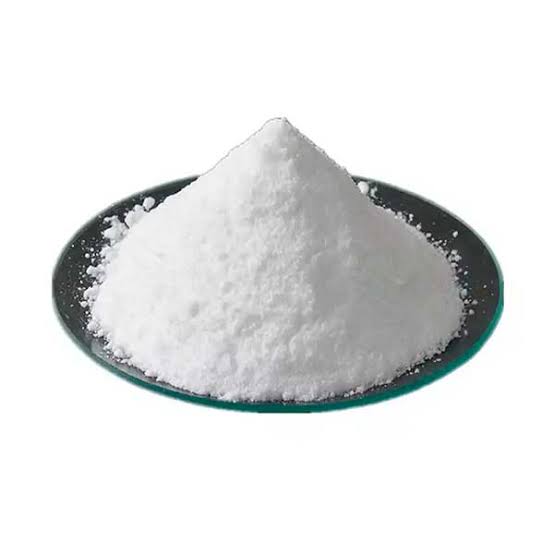
Choosing the right Disodium Phosphate (DSP) Supplier & Chemical Distributor can influence much more than the purchase price on a quotation. For food processors, detergent manufacturers, water-treatment companies, pharmaceutical producers, laboratories, and other industrial operations, DSP quality affects formulation stability, processing performance, regulatory compliance, and supply continuity.
This is where working with a sourcing company such as MT Royal can make commercial sense. By offering access to multiple brands at competitive prices, MT Royal gives manufacturers an opportunity to compare technical specifications, availability, packaging, and cost rather than treating DSP as a one-brand commodity purchase.
For a factory, that distinction is important. Disodium phosphate may look straightforward on a purchasing list, but its behavior in a formulation depends on details such as hydration state, purity, particle characteristics, concentration, and storage history. A material that looks identical in two bags may not perform identically once it reaches your production line.
LATAMARKO – Premium Spanish-Origin Cocoa Powder
Food industry raw materials – list of products
Food Ingredients Supplier in Türkiye for Manufacturers and Importers
What Is Disodium Phosphate (DSP)?
Disodium phosphate, commonly abbreviated as DSP, is an inorganic phosphate salt of sodium. It is also known by names such as sodium phosphate dibasic and disodium hydrogen phosphate.
Its chemical formula depends on its hydration state. Common commercial forms include:
- Anhydrous disodium phosphate: Na₂HPO₄
- Disodium phosphate dihydrate: Na₂HPO₄·2H₂O
- Disodium phosphate heptahydrate: Na₂HPO₄·7H₂O
- Disodium phosphate dodecahydrate: Na₂HPO₄·12H₂O
This is one of the first details an industrial buyer should clarify.
The word “disodium phosphate” alone does not necessarily provide enough information for manufacturing. Hydrated and anhydrous grades contain different proportions of active phosphate by weight and have different physical properties. If your formulation was developed around one form and procurement substitutes another without adjusting the recipe, the production team may suddenly find itself solving a problem that began in the purchasing department.
DSP is commonly valued for its buffering capacity, pH control, emulsification support, sequestration properties, and phosphate functionality. Its exact role depends heavily on the industry and formulation.
Why the Correct DSP Supplier Matters
Industrial chemical procurement has a useful rule: the more functional the ingredient, the less useful it is to compare suppliers using price alone.
A qualified Disodium Phosphate (DSP) Supplier & Chemical Distributor should be able to provide information covering:
- Chemical identity
- Hydration state
- Purity
- Phosphate content
- pH or solution characteristics
- Moisture or loss-on-drying information
- Heavy-metal limits where applicable
- Microbiological requirements for food or pharmaceutical grades
- Particle size where relevant
- Packaging
- Shelf life
- Certificate of Analysis
- Safety documentation
- Manufacturer and country of origin
The specification should then be compared with your own internal raw-material standard.
MT Royal’s ability to source multiple brands can be valuable for this process. Instead of assuming that one manufacturer’s DSP is automatically the best option, your procurement team can compare technically suitable products and commercial conditions.
The objective is not simply to locate DSP. It is to secure the right DSP in the right specification, at the right landed cost, with a reliable supply route.
Key Industrial Applications of Disodium Phosphate
DSP is used across several industries because phosphate chemistry provides useful buffering and formulation functions.
Food and beverage manufacturing
Food-grade disodium phosphate can be used as an acidity regulator, buffering agent, emulsifying aid, stabilizer, or sequestrant depending on the product and applicable regulations.
Potential applications include:
- Processed cheese
- Dairy formulations
- Powdered food products
- Beverage systems
- Processed foods
- Baking-related formulations
In dairy applications, phosphate salts can influence protein interactions and emulsification behavior. In processed cheese, for example, phosphate functionality can be an important part of achieving a consistent texture and stable fat-water system.
However, food manufacturers should distinguish between general-purpose industrial DSP and a food-grade phosphate meeting the appropriate purity and regulatory requirements.
Pharmaceutical manufacturing
Phosphate salts are used in pharmaceutical formulations and manufacturing processes where controlled buffering and phosphate chemistry are required.
For pharmaceutical applications, the qualification burden is generally higher. Documentation, traceability, impurity limits, manufacturing controls, and compliance requirements should be assessed according to the final application.
Water treatment
Phosphates can participate in water-conditioning and treatment processes. Depending on the treatment design, phosphate chemistry can help control certain scaling or corrosion-related issues.
The precise treatment mechanism depends on water chemistry, dosage, pH, temperature, and the other chemicals present in the system.
Detergents and industrial formulations
Phosphate salts have historically been used in cleaning formulations and industrial chemical systems because of their ability to interact with hardness ions and contribute to formulation performance.
Environmental regulations differ significantly between jurisdictions, particularly regarding phosphate discharge. Manufacturers should therefore verify current local requirements before selecting DSP for detergent or water-related applications.
Understanding DSP Hydration States
One of the most overlooked purchasing details is hydration state.
Consider two products:
Na₂HPO₄
Anhydrous disodium phosphate contains no crystallization water.
Na₂HPO₄·12H₂O
Dodecahydrate contains twelve molecules of water of crystallization.
Both are disodium phosphate, but they do not contain the same amount of anhydrous phosphate salt per kilogram.
For formulation engineers, this matters enormously.
If a recipe calls for 10 kg of anhydrous DSP and purchasing substitutes a hydrated form without recalculating the dosage, the actual molar quantity of DSP delivered to the batch will change.
This can affect:
- Buffer capacity
- pH
- Ionic strength
- Final formulation composition
- Production yield
- Cost per batch
Your purchase order should therefore specify the exact hydration state whenever it is relevant to the process.
How to Evaluate a Disodium Phosphate Supplier
Start with technical qualification
Before comparing prices, establish your minimum specification.
Ask potential suppliers to provide a technical data sheet and representative COA. Compare their data against your approved raw-material specification.
Verify grade
Industrial, food, pharmaceutical, and laboratory grades should not be treated as interchangeable.
If your factory produces food, the material must satisfy the applicable food-grade requirements. Pharmaceutical production may require substantially more extensive qualification.
Review batch consistency
A single acceptable batch does not prove supplier reliability.
Look at historical performance where available. Can the supplier provide consistent purity and physical characteristics across multiple shipments?
Examine packaging
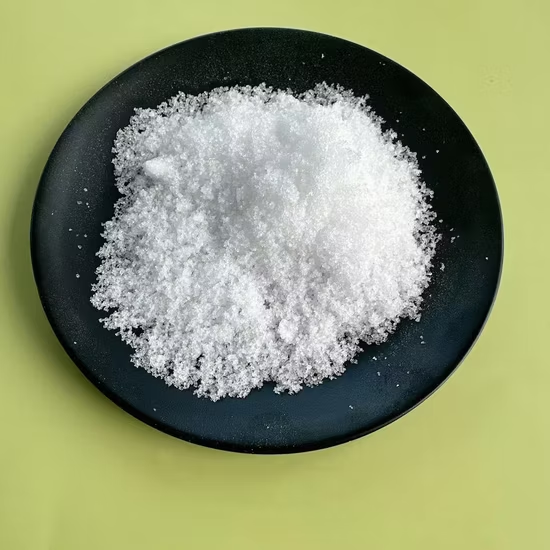
DSP is commonly supplied as a dry powder or crystalline material. Packaging should protect it from moisture contamination and physical damage during transportation and storage.
Typical industrial packaging may include bags, fiber drums, or larger bulk formats depending on the supplier and volume.
Evaluate supply continuity
Ask practical questions:
- Is stock held locally?
- What is the standard lead time?
- What is the minimum order quantity?
- How frequently is the product imported?
- Are multiple manufacturers available?
- Can emergency quantities be sourced?
- Can the supplier support annual contracts?
These questions often reveal more about a distributor’s capability than a polished product brochure.
Common Mistakes When Sourcing DSP
Mistake 1: Comparing only the price per kilogram
A supplier offering DSP at $X/kg is not necessarily cheaper than one offering it at $Y/kg.
Your comparison should account for:
Effective cost = material price + freight + duties + handling + dosage differences + inventory costs
A slightly more expensive product that requires less material or produces fewer production problems may be economically superior.
Mistake 2: Ignoring hydration state
This is one of the easiest errors to make and one of the most technically consequential.
Always confirm whether the formulation requires anhydrous, dihydrate, heptahydrate, dodecahydrate, or another specified form.
Mistake 3: Assuming “phosphate” means “food grade”
It does not.
Industrial chemical grade and food grade have different specifications and regulatory expectations.
Mistake 4: Accepting generic documentation
A supplier should be able to connect the COA to the batch actually delivered.
A generic specification sheet tells you what the manufacturer intends to make. A batch COA tells you what was reported for the specific material supplied.
Mistake 5: Switching brands without trials
Two DSP products may meet the same broad assay specification but behave differently in a production process because of particle size, bulk density, hydration state, dissolution behavior, or other characteristics.
Any meaningful change should be assessed by quality and production teams.
Comparing Potential DSP Supply Models
Manufacturers generally encounter three purchasing models.
Direct manufacturer purchasing
Advantages can include:
- Potentially competitive pricing at large volumes
- Direct manufacturer relationship
- Strong traceability
- Contract purchasing possibilities
Disadvantages may include:
- Larger minimum order quantities
- Less flexibility
- Longer logistics chains
- Fewer brand alternatives
Specialized chemical distributor
Advantages can include:
- Multiple brands
- Flexible quantities
- Consolidated logistics
- Regional availability
- Alternative sourcing
- Commercial support
A distributor such as MT Royal may therefore be useful when your factory values sourcing flexibility as much as the nominal unit price.
Spot-market purchasing
This can occasionally produce attractive prices, but it introduces greater supply and quality uncertainty.
Spot purchasing may make sense for non-critical applications or unusual short-term requirements, but it is usually less attractive for a material that is essential to continuous production.
Large-Scale Production: Procurement Strategies That Work
Large manufacturers should think beyond the next purchase order.
Maintain qualified alternatives
A second supplier is useful only if the alternative has been qualified before the primary supply fails.
We have seen that emergency supplier qualification can become painfully expensive because quality, production, and procurement teams are suddenly working under a deadline. Qualifying alternatives during normal conditions gives everyone more room to make a rational decision.
Forecast demand
DSP requirements should be linked to production forecasts rather than simply last year’s consumption.
If your factory adds a new product line, changes formulation, or moves from one DSP hydrate to another, historical purchasing data may become misleading.
Monitor supplier performance
Create measurable KPIs for:
- On-time delivery
- COA accuracy
- Batch conformity
- Complaint resolution
- Price stability
- Lead-time consistency
- Packaging condition
- Documentation completeness
Supplier performance should be reviewed periodically rather than only when something goes wrong.
Optimize packaging
For high-volume operations, packaging can become a significant hidden cost.
Large bags or bulk formats may reduce packaging waste and handling costs, but only if your facility has suitable equipment and storage capacity.
Do not buy a larger package simply because the price per kilogram is lower. The correct package is the one that fits your consumption rate, material-handling system, warehouse environment, and contamination-control requirements.
Quality Control and Storage Considerations
Disodium phosphate is generally handled as a dry solid, but moisture management remains important.
Your warehouse should maintain suitable environmental conditions and prevent exposure to contamination. Containers should remain properly closed, and stock rotation should be controlled.
Incoming inspection should reflect the material’s importance to your process.
Depending on your quality system, testing may involve verification of:
- Appearance
- Identification
- Assay
- pH
- Moisture
- Relevant impurities
- Particle characteristics
- Microbiological parameters for applicable grades
The exact testing regime should be determined by your product specification and regulatory requirements.
For food and pharmaceutical manufacturers, traceability deserves particular attention. A raw material without reliable batch records can become difficult to defend during an audit, customer complaint, or quality investigation.
Emerging Trends in Industrial DSP Sourcing
Chemical procurement is increasingly influenced by supply-chain resilience.
Manufacturers are moving away from the idea that “approved supplier” means “permanent supplier.” Instead, many procurement teams are developing broader sourcing strategies that include qualified alternatives, regional inventory, and contingency plans.
Several trends are becoming increasingly relevant:
Greater supplier diversification
Manufacturers are qualifying multiple sources for critical materials to reduce dependence on a single producer or trade route.
More detailed raw-material specifications
Quality teams increasingly define physical as well as chemical properties, particularly when particle size, bulk density, dissolution, or handling characteristics affect production.
Digital traceability
Electronic COAs, batch records, and supplier documentation are becoming increasingly important as manufacturers seek faster audit responses and better supply-chain visibility.
Total-cost procurement
Procurement departments are looking beyond unit price toward landed cost, working capital, waste, logistics, and production risk.
This is where a multi-brand distributor can provide meaningful value. MT Royal can help manufacturers explore alternative brands and commercial options while allowing the technical team to retain control over qualification.
Frequently Asked Questions About Disodium Phosphate
What is DSP used for?
Disodium phosphate is used as a buffering agent, pH regulator, sequestrant, emulsification aid, and processing ingredient across food, pharmaceutical, water-treatment, and industrial applications.
Is disodium phosphate the same as trisodium phosphate?
No. Disodium phosphate and trisodium phosphate are different sodium phosphate salts with different chemical compositions and functional properties.
Does hydration state matter?
Yes. Anhydrous and hydrated DSP products contain different amounts of water of crystallization and therefore cannot always be substituted kilogram-for-kilogram.
What grade should a food factory purchase?
A food manufacturer should purchase a grade that complies with the regulations and specifications applicable to its intended food application and market. A general industrial DSP product should not be assumed to be food grade.
What documents should a supplier provide?
Depending on the application, buyers commonly request a technical data sheet, batch-specific COA, SDS, manufacturer information, origin details, packaging specifications, and relevant regulatory or food-grade documentation.
Can I buy DSP from multiple brands?
Yes, and doing so can strengthen supply resilience, provided each brand is technically qualified and approved before being introduced into routine production.
Why consider MT Royal as a DSP distributor?
MT Royal can be useful for manufacturers seeking multiple brand options and competitive pricing. This allows procurement teams to evaluate alternatives according to technical specifications, availability, and total purchasing cost rather than relying on a single source.

What Manufacturers Should Look for in a Long-Term DSP Partner
A strong Disodium Phosphate (DSP) Supplier & Chemical Distributor should make your procurement process easier, not more complicated.
You should be able to obtain clear specifications, reliable documentation, realistic lead times, and commercially transparent quotations. When your production volume increases, the supplier should be able to discuss capacity and alternative brands. When a product specification changes, communication should be quick and technically meaningful.
We believe the most valuable supplier relationships are built around predictability. Procurement teams need to know what they are buying; quality teams need evidence that it meets specification; production teams need confidence that the material will perform consistently.
MT Royal’s multi-brand sourcing approach can support that model by giving factories more than one commercial pathway while keeping technical suitability at the center of the purchasing decision.
The real cost of DSP is not printed on a single quotation line. It is measured through formulation performance, production efficiency, inventory requirements, quality assurance, logistics, and the consequences of supply interruption.
That is why selecting your supplier deserves the same level of attention you give the formulation itself.
When the material is right, the production line barely notices it. When the material is wrong, everyone notices.
For manufacturers purchasing disodium phosphate at scale, the smartest strategy is therefore straightforward: define the specification precisely, qualify the source carefully, compare brands intelligently, and build enough supply flexibility that your factory is prepared for the next change in the market.
A dependable DSP supply is not merely a purchasing advantage. It is part of the infrastructure that keeps manufacturing predictable.


 Supplier & Chemical Distributor)
No comment