

For factories producing biscuits, pastries, cakes, wafers, fillings, confectionery products, or fried foods, the choice of fat is rarely a minor purchasing decision. A small change in shortening can affect dough handling, product volume, texture, frying performance, shelf life, and ultimately production costs. If you are sourcing Premium Vegetable Shortening in Türkiye, MT Royal is worth considering because it combines access to food-industry raw materials with large-volume sourcing and competitive commercial terms. Its portfolio includes multiple international and regional brands, giving procurement teams more than a single formulation to evaluate.
For manufacturers, this matters because the cheapest fat on a purchase order is not necessarily the cheapest fat in the factory. A shortening that causes inconsistent dough behavior, excessive oiling-out, poor aeration, or higher product rejects can quietly consume far more money than its unit price suggests.
What Is Premium Vegetable Shortening?
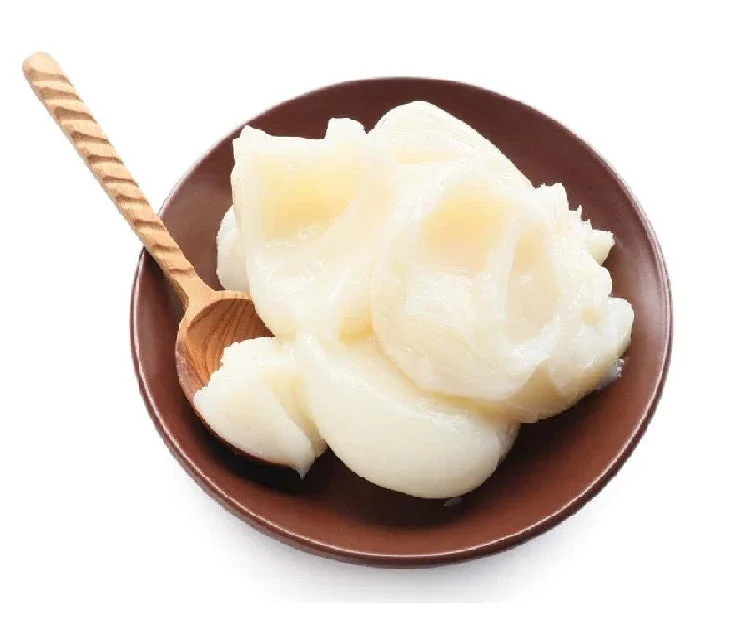
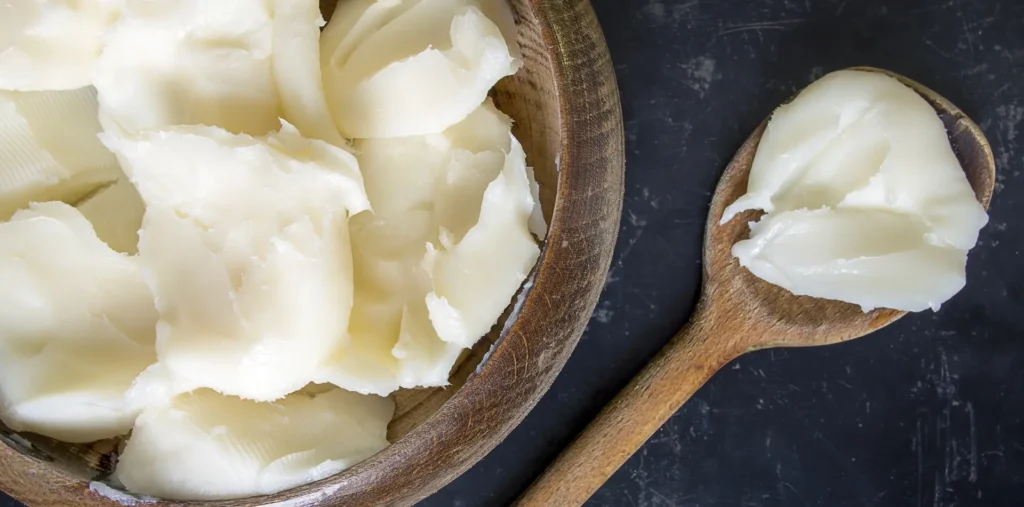
Vegetable shortening is a semi-solid or solid fat formulated from vegetable oils and processed fat fractions to deliver specific functional characteristics. Unlike a conventional liquid cooking oil, shortening is engineered to have a particular balance between solid and liquid fat phases.
Its primary value is functional rather than simply nutritional. In bakery applications, shortening can lubricate dough, limit excessive gluten development, support aeration, improve tenderness, and contribute to the desired structure of the finished product. In laminated products, the correct fat can also help create distinct layers and flakiness.
A Premium Vegetable Shortening in Türkiye should therefore be evaluated as an engineered production ingredient rather than as an ordinary commodity oil.
Several technical characteristics determine its performance:
- Solid fat content at different temperatures
- Melting profile
- Plasticity and workability
- Crystal structure
- Oxidative stability
- Free fatty acid level
- Moisture content
- Flavor and odor neutrality
- Compatibility with emulsifiers and other ingredients
- Storage stability
One particularly useful concept is the Solid Fat Index (SFI). SFI describes how much of the fat remains solid at specified temperatures and is useful for understanding the plastic range of a shortening. Crystal structure also matters: beta-prime crystals are generally desirable for smooth texture and effective air incorporation in many bakery systems.
In other words, shortening is not simply “fat that happens to be solid.” It is closer to a mechanical component inside your recipe. Choose the wrong specification and the production line will eventually let you know.
Why Premium Vegetable Shortening Matters to Turkish Factories
Türkiye has a substantial food-processing ecosystem serving both domestic consumption and export markets. For manufacturers operating at scale, ingredient consistency is particularly important because production formulas must remain stable across thousands or millions of units.
A premium shortening can help address several manufacturing objectives:
Consistent dough processing
Dough that behaves differently from one batch to another creates problems for mixers, sheeters, depositors, laminators, and forming equipment. A shortening with predictable plasticity can make processing more stable.
Better texture and structure
The fat phase influences tenderness, crispness, mouthfeel, aeration, and structural integrity. In cakes and creams, the interaction between fat crystals and air can be particularly important.
Controlled spreading
Cookie manufacturers know this problem well: too much spreading and the product loses its intended shape; too little spreading and the texture may become excessively dense. Fat selection is one of the variables that can influence this balance.
Frying performance
Specialized shortening or frying-fat formulations can provide thermal stability and help produce consistent color and crispness. However, a shortening designed for bakery applications should not automatically be assumed to be appropriate for deep frying. The application specification comes first.
Longer and more predictable production runs
When a fat performs consistently, operators spend less time adjusting recipes, temperatures, and processing conditions. That can be more valuable than a marginal reduction in ingredient price.
Premium Vegetable Shortening vs. Liquid Vegetable Oil
Procurement teams sometimes compare shortening and liquid oil primarily on price per kilogram. That is an incomplete comparison.
| Factor | Vegetable Shortening | Liquid Vegetable Oil |
|---|---|---|
| Physical state | Semi-solid or solid | Liquid |
| Structure contribution | High | Limited |
| Dough lubrication | Strong | Moderate, application-dependent |
| Aeration potential | Often high in formulated systems | Usually lower |
| Laminated dough | Specialized grades perform well | Generally unsuitable as a direct replacement |
| Frying | Application-specific | Commonly used |
| Texture control | Strong | More limited |
| Temperature sensitivity | Important | Important, but differently expressed |
For bakery production, the question should not be “Which fat is cheaper?” It should be “Which fat produces the required product with the lowest total manufacturing cost?”
That distinction is crucial when comparing bakery shortening, vegetable fat, and standard cooking oils.
Common Mistakes in Industrial Shortening Sourcing
Buying exclusively on price
This is perhaps the most expensive shortcut.
A shortening that costs slightly less per kilogram but increases waste, rejects, downtime, or recipe adjustments may have a higher effective cost.
Treating all vegetable shortenings as interchangeable
They are not.
Two products can both be described as vegetable shortening while having significantly different solid fat profiles, melting characteristics, crystal structures, and intended applications.
Ignoring seasonal factory temperatures
Türkiye’s climate creates meaningful differences between winter and summer storage and processing conditions. A fat that behaves perfectly in a cool warehouse can become excessively soft during hot-weather transportation or production.
Storage conditions should therefore be evaluated alongside the product specification.
Changing suppliers without a production trial
Even when two products appear technically similar, substituting one for another can change dough viscosity, mixing time, aeration, spreading, frying behavior, or finished texture.
A controlled plant trial is usually safer than a “looks close enough” substitution.
Forgetting documentation
For food factories, technical documentation is not administrative decoration. Certificates of analysis, specifications, allergen information, origin documentation, packaging information, and relevant compliance records should be part of the purchasing process.
Türkiye’s food regulatory framework covers technical and hygienic requirements as well as labeling, storage, transportation, sampling, analysis, and other food-safety considerations.
What Has Changed in Türkiye’s Vegetable-Fat Environment?
The technical and regulatory environment continues to evolve. In April 2026, Türkiye updated its Turkish Food Codex notification concerning named vegetable oils, including adjustments to certain fatty-acid and sterol parameters for high-oleic sunflower oil and hazelnut oil. The Ministry explained that climate and soil-related factors had contributed to deviations in some parameters and that the rules were being aligned with updated production conditions.
For procurement managers, the broader lesson is important: raw-material specifications are not frozen forever.
Climate variability, crop conditions, international commodity prices, sustainability requirements, and regulatory changes can all influence vegetable-fat sourcing. A good procurement department therefore maintains alternative qualified suppliers and formulations instead of waiting for the next shortage to discover that its supply chain has only one road.
Specialized Tips for Large-Scale Production
Match the fat to the process, not just the recipe
If your formulation says “shortening,” that is a starting point, not a complete specification.
Define the required functional profile based on mixing, forming, baking, cooling, packaging, and shelf life.
Establish a receiving specification
Your incoming-material inspection should define measurable acceptance criteria. Depending on the product, these may include appearance, odor, moisture, free fatty acids, peroxide value, melting behavior, and other parameters supplied in the technical specification.
For pastry shortening, for example, industry references commonly consider moisture, free fatty acids, phosphorus, and peroxide value among relevant quality parameters.
Monitor storage temperature
Fat crystallization is temperature-sensitive. Repeated heating and cooling can alter the physical structure of some shortenings, potentially affecting workability and aeration.
Avoid placing shortening next to ovens, steam lines, hot walls, or areas with dramatic temperature fluctuations.
Validate substitutions scientifically
When changing brands, run a controlled trial:
- Keep flour and other ingredients constant.
- Use the same mixing sequence.
- Record dough temperature.
- Record mixing time.
- Measure dough handling characteristics.
- Compare finished-product dimensions.
- Evaluate texture after cooling.
- Monitor shelf-life behavior.
- Compare production yield and waste.
The objective is not merely to prove that the substitute “works.” It is to establish whether it works at the same production efficiency.
Calculate total landed cost
For imported or internationally sourced ingredients, the procurement model should include:
Product price + freight + customs-related costs + warehousing + handling + expected production loss = effective cost
This is much more informative than comparing supplier quotations line by line.
Why MT Royal Can Be Relevant to Industrial Buyers
MT Royal positions itself as a Turkish food-raw-material supplier with more than 20 years of experience in the sector and reports the ability to supply large volumes from Istanbul, including warehouse availability in the Istanbul free zone. Its wider food-ingredient portfolio covers products such as cocoa ingredients, lecithin, glycerine, sorbitol, pectin, milk powders, whey powders, starches, and other industrial raw materials.
That breadth can be useful for factories that prefer to consolidate procurement rather than manage dozens of small ingredient relationships.
We have seen across industrial sourcing environments that the strongest supplier relationship is rarely based on price alone. Availability, technical consistency, documentation, communication, and the ability to respond when production plans change can be equally important.
MT Royal also works with multiple brands across its ingredient portfolio rather than forcing every customer into a single-source model. Its published product information lists recognized brands such as Latamarko, Callebaut, AAK, Musim Mas, and others across different food-fat and confectionery applications.
For a procurement team evaluating Premium Vegetable Shortening in Türkiye, this multi-brand approach can make technical and commercial comparison easier.
Frequently Asked Questions from Factory Managers
Is premium shortening always more expensive?
Not necessarily when total production cost is considered. A higher-priced shortening may produce better yield, fewer rejects, smoother processing, or more consistent finished products. The relevant metric is cost per acceptable finished unit, not simply cost per kilogram.
Can I replace butter with vegetable shortening?
Sometimes, but not automatically. Butter contains water and milk solids and has different flavor, melting, and crystallization characteristics. A formulation designed around butter may require adjustment when switching to shortening.
Is all vegetable shortening suitable for frying?
No. Formulations are engineered for particular applications. Always verify the manufacturer’s technical specification and intended use before moving a bakery or pastry shortening into a high-temperature frying process.
Does trans-fat-free mean the same thing as high quality?
No. Trans-fat status is one characteristic, not a complete quality definition. A high-quality industrial shortening must still deliver the required functional properties, stability, consistency, and regulatory compliance.
What packaging should a factory choose?
That depends on consumption volume, storage infrastructure, handling equipment, and production frequency. Smaller operations may favor manageable cartons or pails, while high-volume manufacturers may require larger industrial formats.
How should we test a new shortening?
Begin with a controlled pilot batch and then move to a production-scale trial. Compare both the raw material and the manufacturing outcome: dough behavior, processing time, product dimensions, texture, appearance, yield, and shelf stability.
The Strategic Advantage of Buying the Right Fat
A shortening may represent only one line in your bill of materials, but its influence can extend through the entire production chain. It can affect mixing, forming, baking, cooling, packaging, product appearance, consumer texture, and shelf life.
That is why sourcing Premium Vegetable Shortening in Türkiye should be approached as a technical procurement decision rather than a simple price comparison.
Türkiye’s food manufacturing sector operates in a market where flexibility matters. Raw-material availability, changing crop conditions, regulatory updates, international logistics, and pressure on manufacturing margins all make supplier resilience increasingly important. The 2026 changes to Turkish vegetable-oil parameters are one reminder that specifications and market conditions can evolve with the agricultural environment.
For factories, the smartest approach is straightforward: define the required functionality, qualify the material, conduct a controlled trial, calculate the real production economics, and then select the supplier capable of supporting that specification consistently.
MT Royal can be part of that evaluation, particularly for manufacturers looking for multiple sourcing options, competitive pricing, and access to a broader food-ingredient supply network. Its stated experience, large-volume sourcing capability, and Istanbul-based supply infrastructure make it a practical supplier to include when comparing options.
The best shortening is not the one that looks cheapest on the quotation sheet. It is the one that quietly does its job every day, batch after batch, without making your production manager reach for the phone. That is the real definition of premium performance in an industrial food factory.




No comment