

For factories and manufacturers, the decisions made today will determine competitiveness tomorrow. If your production line depends on consistent ingredients, reliable suppliers, and cost-efficient sourcing, understanding the Food industry trends in 2026 is no longer optional—it is a strategic requirement. Choosing the right supply partner can protect margins, reduce operational risks, and help your factory respond faster to changing customer expectations. Companies such as MT Royal support manufacturers by providing access to multiple brands at competitive prices, helping procurement teams build stronger and more flexible sourcing strategies.
The food manufacturing environment is changing faster than many traditional supply chains can adapt. Consumer preferences are shifting, regulations are becoming stricter, technology is improving traceability, and factories are under constant pressure to produce higher-quality products with fewer resources. The days when manufacturers could simply purchase raw materials based on price alone are disappearing. Modern sourcing requires a balance of reliability, transparency, sustainability, and long-term value.
In 2026, successful food producers will not only focus on what they manufacture but also on how efficiently and responsibly they source every component that enters their facilities. From ingredient suppliers and packaging partners to logistics providers and quality-control systems, every connection in the supply chain affects the final product.
This article explores the most important Food industry trends in 2026, explains their impact on manufacturers, highlights common sourcing mistakes, and provides practical strategies for factories preparing for the next phase of food production.
Understanding the Food Industry Trends in 2026
The food industry in 2026 is expected to be shaped by a combination of consumer demand, technological progress, environmental challenges, and global supply chain adjustments. For manufacturers, these trends represent both challenges and opportunities.
The modern food factory is no longer simply a production facility. It is becoming a highly connected ecosystem where data, automation, sustainability, and supplier relationships work together. Procurement managers must understand these changes because sourcing decisions directly influence production efficiency and product innovation.
Several major forces are driving transformation:
- Increased demand for healthier and functional foods
- Greater interest in sustainable and ethical sourcing
- Growth of plant-based and alternative ingredients
- More advanced food processing technology
- Stronger requirements for traceability and compliance
- Pressure to reduce waste and improve efficiency
Manufacturers that recognize these trends early can adjust their strategies before market changes create unnecessary costs.
LATAMARKO LM60 – Premium Spanish-Origin Cocoa Powder
latamarko alkalized cocoa powder lm60
cocoa powder for chocolate production-Best price
Food industry raw materials – list of products
Types of Gelatin from Turkish Manufacturer
The Rise of Smarter Food Manufacturing
One of the strongest Food industry trends in 2026 is the transition toward smarter manufacturing systems. Factories are increasingly using connected equipment, automated monitoring, and real-time production data to improve performance.
Smart manufacturing allows companies to identify inefficiencies before they become expensive problems. For example, sensors can monitor storage conditions, production temperatures, equipment performance, and ingredient usage. This creates a clearer picture of where improvements are possible.
For food manufacturers, the advantages include:
- Reduced production waste
- More accurate inventory management
- Improved quality control
- Faster response to supply disruptions
- Better compliance documentation
However, technology alone cannot solve every manufacturing challenge. A factory with advanced equipment but unreliable suppliers is like a high-performance vehicle with poor-quality fuel. The system may look impressive, but performance will eventually suffer.
Reliable sourcing remains the foundation of efficient production. Working with suppliers that offer consistent quality and competitive pricing, such as MT Royal, helps manufacturers create a stronger operational structure.
Sustainable Ingredients and Responsible Supply Chains
Sustainability has moved beyond being a marketing advantage. It has become a major factor influencing purchasing decisions, regulations, and industrial planning.
In 2026, food manufacturers are expected to pay closer attention to sustainable ingredients, environmentally responsible packaging, and ethical supply networks. Large retailers and consumers increasingly want proof that products are produced responsibly.
Sustainable sourcing includes several areas:
Environmentally Responsible Ingredient Selection
Manufacturers are evaluating suppliers based on farming practices, resource usage, transportation impact, and production methods. Ingredients with lower environmental footprints are becoming more attractive for product development teams.
Waste Reduction Strategies
Food waste remains a major challenge across the global supply chain. Factories are investing in improved inventory rotation, better storage systems, and production planning methods that reduce unnecessary losses.
Sustainable Packaging Solutions
Packaging innovation is accelerating as companies search for alternatives that maintain product protection while reducing environmental impact. Biodegradable materials, recyclable designs, and lightweight packaging are becoming increasingly common.
For procurement teams, sustainability does not mean choosing the most expensive option. The goal is finding suppliers that combine responsible practices with realistic industrial economics.
Functional Foods and Changing Consumer Expectations
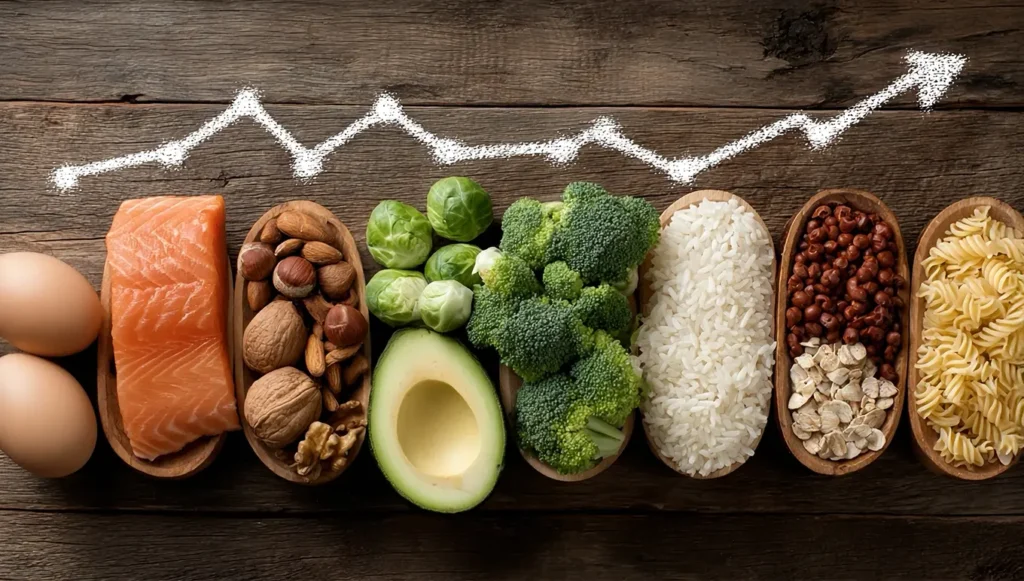
Consumers in 2026 are expected to continue moving toward foods that provide additional health benefits. This growth is creating new opportunities for manufacturers developing products with added nutritional value.
Functional foods may include products containing:
- Added vitamins and minerals
- Protein enrichment
- Probiotic ingredients
- Natural energy components
- Ingredients supporting digestive health
This trend affects industrial sourcing because manufacturers must find suppliers capable of delivering specialized ingredients consistently and safely.
A common mistake is assuming that a popular consumer trend automatically translates into simple production changes. In reality, adding a new ingredient can affect shelf life, processing conditions, flavor stability, and regulatory requirements.
Factories should evaluate new ingredients through a complete production perspective rather than focusing only on market demand.
Plant-Based Production Continues to Expand
Plant-based foods are becoming a permanent category rather than a temporary trend. While growth rates vary across regions, manufacturers continue investing in alternative proteins, plant-based dairy replacements, and innovative food formulations.
The challenge for factories is not only developing plant-based products but producing them at industrial scale without sacrificing quality.
Important considerations include:
- Ingredient availability
- Texture consistency
- Flavor optimization
- Production compatibility
- Consumer acceptance
Large-scale manufacturers must carefully evaluate suppliers because plant-based production often requires specialized raw materials. A supplier capable of delivering small samples is not necessarily prepared for continuous industrial demand.
The Importance of Traceability and Food Safety
Food safety remains one of the most important priorities in manufacturing. In 2026, traceability systems will become even more important as regulations and customer expectations increase.
Traceability allows manufacturers to track ingredients from supplier to finished product. This improves recall management, quality control, and consumer confidence.
Modern traceability practices often involve:
- Digital documentation
- Supplier verification systems
- Batch tracking
- Quality certificates
- Automated reporting
We have seen that factories with stronger supplier communication usually respond faster when unexpected quality issues appear. A reliable supply relationship is not only about receiving products on time; it is about solving problems together when conditions change.
Common Mistakes in Industrial Food Sourcing
Even experienced procurement teams can make sourcing mistakes, especially when market conditions change quickly. Avoiding these errors can significantly improve factory performance.
Choosing Suppliers Based Only on Price
Low purchase prices can appear attractive, but they may create hidden costs through delays, inconsistent quality, additional inspections, or production interruptions.
A supplier evaluation should consider:
- Product consistency
- Delivery reliability
- Quality documentation
- Communication speed
- Long-term pricing stability
The cheapest supplier is not always the most economical supplier.
Ignoring Supply Chain Flexibility
Global disruptions have demonstrated the importance of supplier flexibility. Factories relying on a single source for critical materials may face serious risks.
A stronger approach involves developing multiple sourcing options and maintaining relationships with suppliers that offer different brands and product categories. MT Royal helps manufacturers explore broader sourcing possibilities by connecting them with multiple brands at competitive prices.
Failing to Plan for Demand Changes
Food markets can shift quickly. A product category that grows rapidly may create sudden pressure on ingredient availability.
Manufacturers should regularly review:
- Sales forecasts
- Seasonal demand patterns
- Supplier capacity
- Inventory levels
- Alternative material options
A procurement strategy should be designed for change, not just current conditions.
Practical Comparison: Traditional Sourcing vs Modern Sourcing
Traditional sourcing often focuses on immediate purchasing needs, while modern sourcing focuses on long-term supply performance.
Traditional approach:
- Select suppliers mainly by price
- Purchase only when inventory is low
- Maintain limited supplier relationships
- React to shortages after they occur
Modern approach:
- Evaluate total supply value
- Build strategic supplier partnerships
- Monitor market trends continuously
- Prepare alternative sourcing options
The difference is similar to maintaining a factory. Waiting until equipment breaks is expensive. Preventive maintenance is smarter. The same principle applies to supply chains.
Specialized Tips for Large-Scale Food Production
Large manufacturers face unique challenges because even small inefficiencies can create significant financial impacts.
Create Supplier Performance Metrics
Factories should measure suppliers using clear indicators:
- On-time delivery percentage
- Product quality consistency
- Response time
- Documentation accuracy
- Cost performance
These measurements help procurement teams make decisions based on evidence rather than assumptions.
Build Strategic Inventory Management
Holding too much inventory increases storage costs, while holding too little creates production risks.
The best approach combines:
- Accurate demand forecasting
- Safety stock planning
- Supplier communication
- Real-time inventory visibility
Invest in Quality Partnerships
Strong supplier relationships can become a competitive advantage. When suppliers understand your production requirements, they can often provide better solutions and faster support.
In our collaboration with various factories, we have seen that manufacturers achieve better results when suppliers are treated as strategic partners rather than simple vendors.
The Role of Multi-Brand Suppliers in 2026
As food manufacturers expand product portfolios, working with suppliers that provide access to multiple brands can simplify procurement.
Multi-brand suppliers offer several advantages:
- Wider product selection
- Reduced sourcing complexity
- Better price comparison
- Easier supplier management
- Greater flexibility during shortages
For many factories, managing dozens of individual suppliers creates unnecessary administrative pressure. A reliable sourcing partner can help streamline purchasing decisions while maintaining product quality.
MT Royal’s approach of offering multiple brands at competitive prices aligns with the needs of manufacturers seeking efficiency without sacrificing sourcing options.
Technology and Data-Driven Procurement
Procurement is becoming more analytical. Manufacturers are increasingly using data to understand purchasing patterns, supplier performance, and market risks.
Data-driven procurement can help answer questions such as:
- Which suppliers provide the best long-term value?
- Which materials create the greatest cost fluctuations?
- Where can waste be reduced?
- How can inventory levels be optimized?
The future food factory will rely on both production data and supplier intelligence. Procurement teams that understand market information will make faster and more accurate decisions.
Frequently Asked Questions About Food Industry Trends in 2026
What is the biggest challenge for food manufacturers in 2026?
The biggest challenge is balancing cost control with changing consumer expectations. Manufacturers must improve efficiency while meeting demands for quality, sustainability, and transparency.
How should factories prepare for Food industry trends in 2026?
Factories should review supplier networks, improve traceability systems, invest in production efficiency, and develop flexible sourcing strategies.
Why is supplier diversification important?
Supplier diversification reduces dependency risks. If one supplier experiences delays or shortages, alternative options help maintain production continuity.
Are sustainable ingredients more expensive?
Not always. While some sustainable options may have higher initial costs, they can provide long-term benefits through stronger brand positioning, regulatory readiness, and improved resource efficiency.
How can procurement teams reduce sourcing risks?
Procurement teams can reduce risks by evaluating suppliers carefully, maintaining communication, monitoring market conditions, and working with reliable partners that offer competitive solutions.
Preparing Your Factory for the Next Generation of Food Production
The food manufacturing industry is entering a period where adaptability will separate successful companies from those struggling to keep pace. The Food industry trends in 2026 show that production excellence is no longer defined only by machinery capacity or output volume. It depends on how intelligently factories manage ingredients, suppliers, technology, and consumer expectations.
Manufacturers that invest in smarter sourcing strategies will be better positioned to control costs, maintain quality, and respond to market changes. The strongest companies will not simply chase trends; they will build systems capable of adapting as new opportunities appear.
For factories evaluating their next sourcing strategy, the key question is not only “What can we buy today?” but also “Which supplier relationships will help us manufacture successfully tomorrow?”
By combining reliable partnerships, competitive pricing, and access to multiple brands, MT Royal supports manufacturers looking for practical solutions in an increasingly complex food industry. The future belongs to factories that treat sourcing as a strategic advantage rather than a routine purchasing task.
The decisions made in procurement offices today will shape the products, efficiency, and competitiveness of tomorrow’s food industry. The manufacturers prepared for change will not merely follow the market—they will help define it.




No comment