


Choosing the right Sodium Bicarbonate Supplier & Distributor is not simply a purchasing decision; for factories, it is a production-continuity decision. If your business depends on sodium bicarbonate for food processing, pharmaceuticals, chemicals, animal nutrition, water treatment, or other industrial applications, an unreliable supply chain can quickly turn a low-cost ingredient into a high-cost operational problem. MT Royal offers manufacturers access to multiple sodium bicarbonate brands at competitive prices, making it a practical option for companies that want to balance product quality, availability, and procurement efficiency.
The challenge is knowing what to evaluate before placing an order. Sodium bicarbonate is widely available, but not every supplier provides the same grade, documentation, packaging, logistics support, or batch consistency. For a factory purchasing several tons at a time, these differences matter.
A capable distributor should do more than move bags from one warehouse to another. The right partner should understand specifications, anticipate supply risks, provide appropriate documentation, and help you identify a product that fits your process rather than simply offering the lowest quotation.
What Does a Sodium Bicarbonate Supplier & Distributor Actually Do?
A sodium bicarbonate supplier connects manufacturers and industrial buyers with qualified producers of sodium bicarbonate. A distributor adds another layer of value by managing inventory, logistics, importation, warehousing, documentation, and commercial relationships.
This distinction is important.
A manufacturer may produce sodium bicarbonate at large scale but not necessarily provide the flexibility that every regional customer requires. A distributor can potentially consolidate products from different manufacturers and brands, maintain local or regional inventory, and provide smaller or more flexible shipment quantities.
For an industrial buyer, the ideal arrangement depends on factors such as:
- Annual consumption
- Required grade
- Origin preferences
- Delivery location
- Order frequency
- Storage capacity
- Minimum order quantity
- Required certifications and documentation
- Price sensitivity
- Supply-continuity requirements
MT Royal’s multi-brand approach can be particularly relevant when a factory needs to compare technically suitable products while maintaining competitive purchasing conditions.
Food industry raw materials – list of products
LATAMARKO – Premium Spanish-Origin Cocoa Powder
Understanding Sodium Bicarbonate Before You Buy
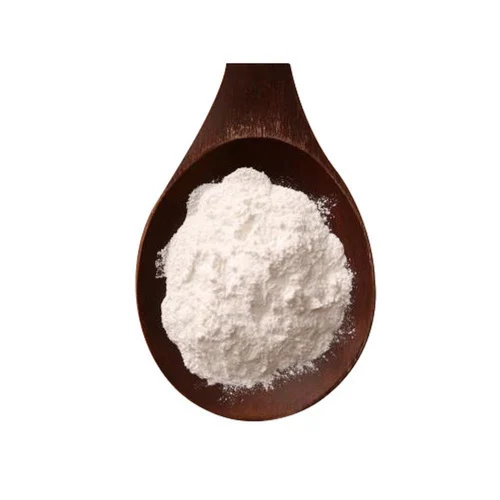
Sodium bicarbonate, or NaHCO₃, is a white inorganic compound commonly known as baking soda. Although chemically familiar, its industrial applications are extensive.
Depending on grade and application, sodium bicarbonate may be used in:
- Food manufacturing
- Baking and confectionery
- Pharmaceutical production
- Animal feed
- Chemical processing
- Water treatment
- Industrial cleaning formulations
- Flue-gas treatment
- pH adjustment
- Other specialized manufacturing processes
The key word is grade.
A buyer should never assume that all sodium bicarbonate is interchangeable simply because it carries the same chemical name. Food-grade, pharmaceutical-grade, technical-grade, and other application-specific materials may have different specifications and documentation requirements.
A good procurement process starts by defining the exact material your production process needs.
Why Supplier Quality Matters More Than the Commodity Price
Sodium bicarbonate is often purchased as a relatively low-cost raw material. That can create the illusion that supplier selection is primarily about price.
For a factory, the real calculation is broader.
Suppose a supplier offers sodium bicarbonate at a slightly lower price but has inconsistent delivery schedules. If a shipment arrives late and forces your production team to reschedule a batch, the savings on the raw material can become irrelevant.
The total cost of ownership may include:
- Material purchase price
- Freight
- Customs and import costs
- Warehousing
- Handling
- Quality-control testing
- Production losses
- Emergency purchases
- Inventory carrying costs
- Downtime caused by shortages
- Administrative costs associated with supplier problems
This is why an experienced Sodium Bicarbonate Supplier & Distributor should be evaluated on reliability as well as price.
Key Factors When Choosing a Sodium Bicarbonate Distributor
Product specification and purity
Your supplier should provide a clear technical specification. Depending on the application, relevant parameters may include assay, moisture, particle size, bulk density, insoluble matter, contaminants, and other quality characteristics.
Do not compare suppliers using only the product name.
Two materials labeled sodium bicarbonate can behave differently during mixing, dosing, dissolution, or processing.
Certificate of Analysis
A Certificate of Analysis (COA) should normally be available for the relevant production batch.
The COA helps your quality team verify that the delivered material meets agreed specifications. It also supports traceability if an issue emerges after the material has entered production.
A useful procurement practice is to compare the supplier’s standard specification with the actual batch COA rather than treating the COA as paperwork that simply belongs in a filing cabinet.
Packaging quality
Packaging is part of product quality.
Sodium bicarbonate is generally supplied in bags or larger industrial packaging. The selected configuration should protect the material during transportation and storage while fitting your warehouse and handling systems.
Consider:
- Bag size
- Bag material
- Pallet configuration
- Stretch wrapping
- Moisture protection
- Labeling
- Lot identification
- Ease of mechanical handling
A torn bag is not merely a warehouse nuisance. It can create product loss, contamination concerns, cleaning requirements, and traceability complications.
Delivery reliability
For factories, predictable delivery is often more valuable than theoretical availability.
Ask the supplier:
- Is the product stocked locally or imported against order?
- What is the typical lead time?
- What happens if demand suddenly increases?
- Are alternative brands available?
- How are urgent orders handled?
- What is the normal minimum order quantity?
These questions become particularly important when sodium bicarbonate is a critical ingredient rather than an occasional purchase.
Food Grade, Technical Grade, and Other Applications
One of the most common sourcing mistakes is purchasing a grade based on price rather than application.
Food-grade sodium bicarbonate
Food manufacturers require material suitable for their food-safety and regulatory requirements. Depending on the application and market, documentation may include food-grade declarations, specifications, allergen statements, traceability information, and other relevant compliance documents.
Pharmaceutical applications
Pharmaceutical manufacturing typically involves substantially tighter quality and regulatory requirements. A general food-grade product should not automatically be considered appropriate for pharmaceutical production.
Technical and industrial applications
Technical-grade sodium bicarbonate may be suitable for certain industrial processes where food or pharmaceutical requirements do not apply.
The correct decision is determined by your process specification, not by the generic phrase “high purity.”
Common Mistakes When Sourcing Sodium Bicarbonate
Mistake 1: Buying from whoever offers the lowest price
A low quotation can be attractive, especially when annual consumption is high. But price without context is an incomplete comparison.
Evaluate delivered cost and supplier performance together.
Mistake 2: Assuming every brand performs identically
Even when two products meet broadly similar chemical specifications, physical characteristics can affect processing.
Particle size, density, moisture, and flow behavior can influence automated dosing and mixing.
Mistake 3: Ignoring lead times
Factories often focus on the next purchase order rather than the next quarter.
If your consumption is 20 tons per month and average delivery takes several weeks, purchasing should be planned accordingly. A “normal” lead time can become a serious problem when a vessel is delayed, customs clearance takes longer than expected, or demand unexpectedly increases.
Mistake 4: Failing to qualify backup suppliers
A second supplier is most useful before you need one.
We have seen that manufacturers with a technically qualified alternative source can react much more calmly to shortages than factories that begin supplier qualification after their warehouse reaches its final pallets.
Mistake 5: Changing brands without production validation
If your factory has validated one sodium bicarbonate grade, do not assume that another brand can be introduced without testing.
Depending on the application, conduct laboratory and production-scale trials before making the substitution permanent.
Single Supplier vs. Multi-Supplier Strategy
For manufacturers with significant consumption, there are two broad sourcing models.
Single-source purchasing
Advantages include:
- Simplified administration
- Potential volume discounts
- Consistent brand
- Fewer supplier relationships
- Easier qualification management
The major disadvantage is dependency.
A supply disruption at one producer or distributor can immediately affect your factory.
Multi-source purchasing
Advantages include:
- Greater supply resilience
- Competitive pricing
- Reduced dependency
- Greater negotiating flexibility
- Ability to respond to shortages
However, multi-source procurement creates additional quality-control work because alternative products must be properly qualified.
For many large manufacturers, the best approach is not necessarily to purchase equal volumes from several suppliers. Instead, maintain a qualified primary supplier and an approved secondary source.
That strategy provides insurance without turning procurement into a small administrative circus.
Specialized Tips for Large-Scale Sodium Bicarbonate Purchasing
Forecast consumption rather than simply reacting to inventory
Use historical consumption data, production schedules, seasonal demand, and planned capacity increases to establish a realistic procurement forecast.
If your annual requirement is several hundred tons, even a small improvement in purchasing accuracy can have a meaningful financial impact.
Establish minimum and safety-stock levels
Your safety stock should reflect:
- Supplier lead time
- Demand variability
- Transportation risk
- Import dependency
- Production criticality
- Cost of stockouts
There is no universal safety-stock number. A factory receiving material locally every week needs a different strategy from a plant importing bulk quantities several weeks in advance.
Track supplier performance
Create a simple supplier scorecard covering:
- On-time delivery
- Quantity accuracy
- COA compliance
- Packaging condition
- Complaint frequency
- Response time
- Price stability
- Documentation quality
Over time, this produces a much clearer picture than purchasing decisions based on individual quotations.
Protect material during storage
Sodium bicarbonate should be stored according to supplier instructions and your internal warehouse procedures, with appropriate protection from moisture and contamination.
Good warehouse discipline includes lot identification, stock rotation, clean storage areas, and controlled handling.
How MT Royal Fits Into an Industrial Sourcing Strategy
For manufacturers looking for a Sodium Bicarbonate Supplier & Distributor, MT Royal can be considered when product choice, commercial competitiveness, and sourcing flexibility are important.
One practical advantage is access to multiple brands. This can allow procurement teams to compare available options according to their technical requirements and commercial targets instead of being locked into a single manufacturer.
That does not mean every brand should be treated as automatically interchangeable. The technical team should still review specifications and, where necessary, conduct qualification trials.
Our approach to industrial sourcing is straightforward: the right product is the one that works reliably in your process and can be supplied consistently under commercially sensible conditions.
Current Trends Affecting Sodium Bicarbonate Procurement
Industrial procurement is becoming increasingly focused on supply-chain resilience rather than simple cost reduction.
Several developments are influencing how manufacturers purchase commodity chemicals and ingredients:
Greater emphasis on traceability
Food and pharmaceutical manufacturers increasingly require stronger documentation and lot-level traceability. This places greater responsibility on distributors to maintain accurate records.
More attention to dual sourcing
Manufacturers are increasingly evaluating alternative suppliers before disruptions occur. A qualified second source can reduce the operational impact of unexpected supply interruptions.
Total-cost procurement
Procurement departments are moving toward broader supplier evaluations that include logistics, quality, inventory, and reliability rather than looking exclusively at the invoice price.
Digital purchasing and forecasting
Better demand forecasting and inventory visibility are helping factories reduce both excessive stock and emergency purchasing.
For distributors, this creates a higher standard of service. Simply having product available is no longer enough; buyers increasingly want predictable information about availability, lead time, specifications, and documentation.

Questions Factory Managers Frequently Ask
What should I ask a sodium bicarbonate supplier before buying?
Request the technical specification, current COA, grade information, packaging details, origin, lead time, minimum order quantity, available certifications or declarations, and commercial terms.
Can one sodium bicarbonate product serve food and industrial applications?
Not necessarily. Always verify the grade and regulatory suitability for the intended application.
Should I choose the cheapest brand?
Not automatically. Compare the full delivered cost and technical performance. A slightly higher material price may be justified if it provides better consistency and supply reliability.
Is it worth having two suppliers?
For critical applications, maintaining a qualified secondary supplier can significantly reduce supply risk. Whether you need active dual sourcing depends on your consumption and production requirements.
How much safety stock should a factory maintain?
Calculate it using actual demand variability, supplier lead time, transportation risk, and the financial consequences of a stockout. Avoid using an arbitrary number of days for every raw material.
Can MT Royal supply different brands?
MT Royal’s multi-brand sourcing model allows industrial buyers to consider different available brands and commercial options, subject to the technical requirements of the application.
The Right Distributor Becomes Part of Your Supply Chain
A dependable Sodium Bicarbonate Supplier & Distributor should not be viewed merely as a company that delivers bags of powder.
For a serious manufacturing operation, the distributor can become part of the supply-chain infrastructure: supporting product selection, documentation, availability, logistics, and contingency planning.
The most effective purchasing strategy is therefore not about finding the cheapest sodium bicarbonate on the market. It is about finding a technically suitable product from a reliable source at a competitive total cost—and making sure it remains available when your production schedule demands it.
MT Royal’s ability to offer multiple brands and competitive sourcing options can give procurement teams more room to make that decision intelligently.
When your factory depends on a raw material, reliability has a value. Measure it before the production line does.



No comment