

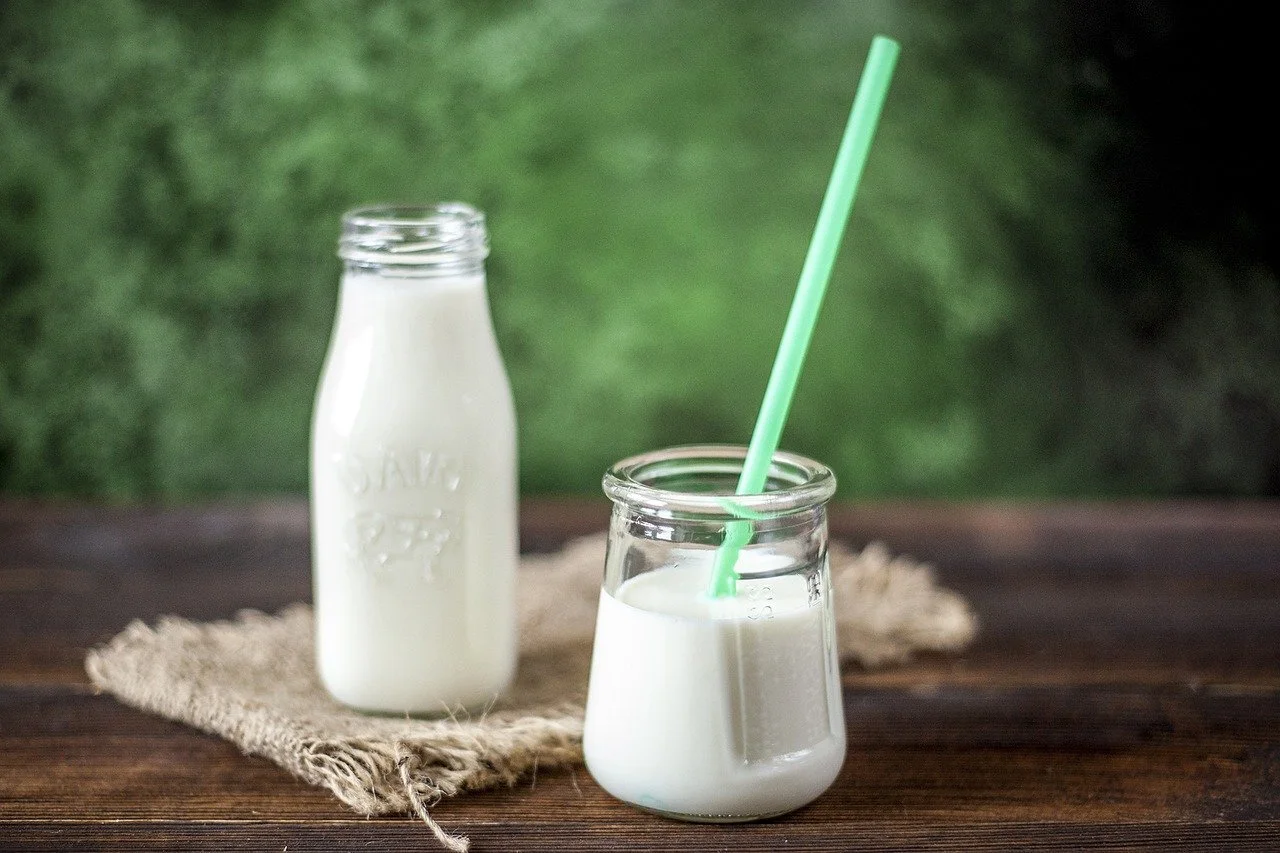
In the fast-evolving dairy beverage industry, acidified milk drinks have become one of the most competitive product categories on the shelf. From drinkable yogurts to fermented milk beverages with fruit blends, success depends on one invisible factor: stability under acid stress. This is exactly where Pectin for Acidified Milk Drinks becomes not just a formulation ingredient, but a structural necessity. For factories scaling production across multiple SKUs, sourcing through experienced suppliers such as MT Royal can significantly reduce formulation uncertainty by offering consistent access to multiple pectin grades tailored for acidic dairy systems.
Acidified milk drinks are deceptively complex. They combine two systems that naturally resist each other: milk proteins and acids. Left unmanaged, they separate like oil and water in a badly designed system. The role of pectin is to mediate this tension, creating a stable, smooth, and commercially acceptable beverage that survives processing, transport, and shelf life without collapsing into whey separation or gritty texture.
Why Acidified Milk Drinks Are Technically Challenging
From a manufacturing perspective, acidified milk drinks sit in one of the most unstable regions of dairy science. The challenge comes from the natural behavior of milk proteins under acidic conditions.
Key instability risks include:
- Protein aggregation near pH 4.6
- Whey separation during storage
- Weak gel formation after fermentation
- Texture graininess in final product
- Sensory inconsistency across batches
- Heat-induced instability during pasteurization
In industrial production, even small deviations in acidity or temperature can lead to visible instability. Consumers may not understand the science behind it, but they immediately notice when a drink looks “broken” or watery.
We have seen in multiple production audits that improper stabilization can increase product rejection rates by 15–30% in acidified dairy beverages, especially in fruit-flavored variants where additional acids are present.
LATAMARKO LM60 – Premium Spanish-Origin Cocoa Powder
latamarko alkalized cocoa powder lm60
cocoa powder for chocolate production-Best price
Food industry raw materials – list of products
Best Brazilian Arabica Coffee Bean Supplier for Industrial Roaster
Uganda Bugisu Arabica Coffee Beans for Specialty Coffee Industry
How Pectin Works in Acidified Milk Systems
To understand Pectin for Acidified Milk Drinks, it is essential to examine its molecular interaction with milk proteins under acidic conditions.
During fermentation or acidification, lactic acid reduces the pH of milk, bringing casein proteins closer to their instability threshold. Without protection, these proteins aggregate into dense clusters, expelling water and forming whey separation.
Pectin stabilizes this system through three main mechanisms:
Electrostatic Interaction with Casein
Pectin carries negatively charged carboxyl groups that interact with positively charged regions on casein proteins. This creates a protective layer around protein particles, preventing uncontrolled aggregation.
Steric Stabilization
By increasing the effective size of protein complexes, pectin creates physical spacing between particles, reducing collision frequency and improving suspension stability.
Water Binding and Viscosity Regulation
Pectin binds water molecules, increasing the viscosity of the continuous phase without making the beverage overly thick. This improves mouthfeel while slowing down sedimentation.
Think of pectin as a microscopic shock absorber inside the beverage system—absorbing instability before it becomes visible to the consumer.
Types of Pectin Used in Acidified Milk Drinks
Selecting the correct pectin type is one of the most critical decisions in dairy beverage formulation.
Low Methoxyl (LM) Pectin
LM pectin is the most widely used type in acidified dairy systems.
Key characteristics:
- Strong interaction with milk proteins
- Works efficiently at low pH
- Provides stable viscosity control
- Excellent whey separation prevention
It is especially suitable for stirred yogurt drinks and fermented dairy beverages.
Amidated Low Methoxyl Pectin
This modified version is considered the industrial “problem solver” in dairy applications.
Advantages include:
- Higher tolerance to processing variation
- Better stability under heat treatment
- Improved texture consistency
- Reduced sensitivity to raw milk variability
For factories dealing with fluctuating raw material quality, this type significantly reduces production risk.
High Methoxyl Pectin (Limited Use)
Although less common in acidified milk drinks, HM pectin may be used in certain sweetened dairy beverages.
Characteristics:
- Requires higher sugar content
- Less effective in low-sugar dairy systems
- Limited protein interaction capability
Industrial Applications of Pectin for Acidified Milk Drinks
The application range of Pectin for Acidified Milk Drinks is broad and expanding as consumer demand for functional dairy increases.
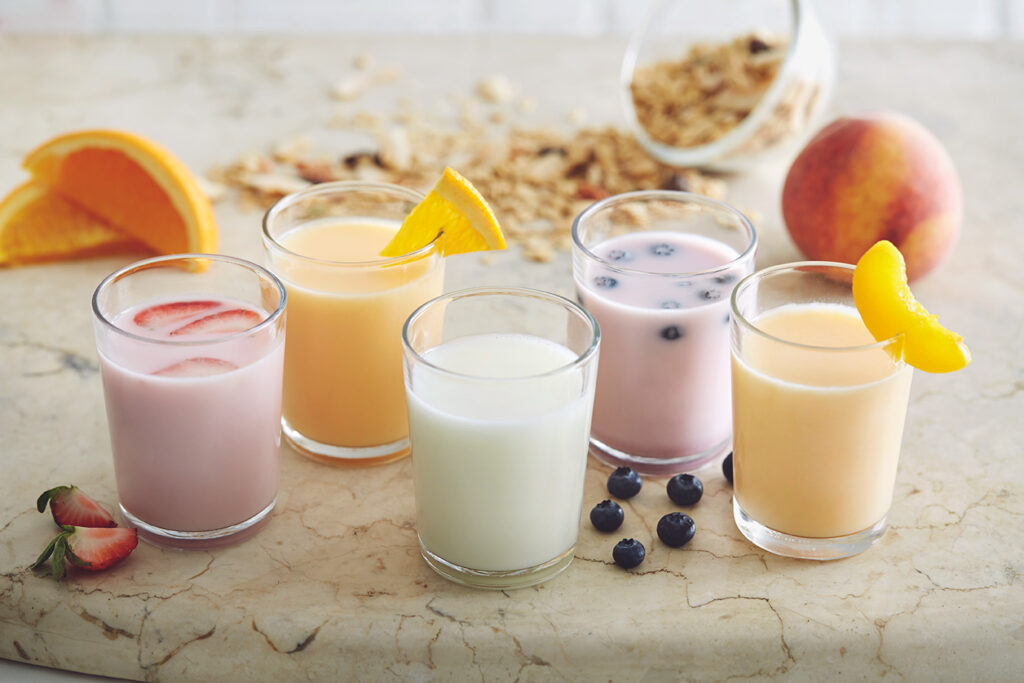
Drinking Yogurt
One of the largest application segments, drinking yogurt requires low viscosity but high stability.
Pectin ensures:
- Smooth pourability
- No phase separation
- Consistent texture during shelf life
Fermented Milk Beverages
These products rely on controlled fermentation and stable protein networks.
Pectin helps maintain:
- Uniform suspension
- Stable acidity profile
- Consistent sensory texture
Fruit-Flavored Acidified Drinks
Fruit acids add complexity to stabilization. Pectin balances both dairy proteins and fruit acids in one system.
Probiotic Dairy Drinks
In functional beverages, pectin ensures probiotic cultures remain evenly distributed without sedimentation.
Low-Fat Dairy Drinks
Reduced fat content often leads to thinner texture, which increases instability risk. Pectin compensates for this structural weakness.
Common Industrial Sourcing Mistakes
Many stability issues in acidified milk drinks originate from procurement decisions rather than formulation design.
1. Using Non-Specific Stabilizers
Not all hydrocolloids interact properly with milk proteins. Using general thickeners instead of dairy-specific pectin leads to weak stabilization.
2. Underestimating Protein Variability
Milk composition changes seasonally, especially in fat and protein levels. Ignoring this variability leads to inconsistent performance.
3. Over-Stabilization of Products
Too much pectin creates unnatural thickness and negatively affects consumer perception.
4. Frequent Supplier Switching
Inconsistent raw material sources introduce variability in hydration behavior and protein interaction.
This is why many manufacturers prefer structured sourcing through suppliers like MT Royal, which enables access to multiple validated brands while maintaining formulation stability.
Specialized Industrial Tips for Large-Scale Production
Scaling acidified dairy beverages introduces challenges that are not visible at laboratory scale.
To ensure consistent performance:
Pectin must be hydrated and dispersed under conditions that reflect actual production shear forces, not just laboratory stirring environments. Industrial mixing behavior significantly affects final stability.
Practical recommendations include:
- Pre-blending pectin with dry ingredients for uniform dispersion
- Controlling hydration temperature with precision systems
- Standardizing fermentation endpoints (pH consistency is critical)
- Avoiding excessive mechanical stress after acidification
- Monitoring viscosity at multiple stages of production
- Ensuring consistent milk standardization before processing
Factories applying these principles often experience reduced batch variation and improved shelf-life reliability.
Quality Control in Acidified Milk Drinks
Quality control in this category must go beyond end-product testing.
Key parameters include:
- Whey separation rate over time
- Viscosity stability during storage
- pH drift monitoring
- Protein aggregation behavior
- Sensory texture consistency
- Heat stability after pasteurization
- Microbiological stability
Advanced manufacturers increasingly use accelerated shelf-life testing to simulate 30–60 days of storage in controlled environments.
Market Trends Driving Pectin Use in Acidified Dairy
The global dairy beverage market is undergoing rapid transformation.
Key trends include:
- Rising demand for low-fat fermented drinks
- Growth of probiotic dairy beverages
- Expansion of clean label stabilizers
- Increasing popularity of drinkable yogurt formats
- Functional dairy drinks with added nutrients
- Demand for texture-enhanced beverages without synthetic stabilizers
Industry forecasts suggest that acidified dairy beverages will grow at approximately 5–8% annually in many global markets, with Asia and Europe leading innovation in this category.
Frequently Asked Questions
Why does acidified milk drink separate after production?
It is usually due to protein instability near pH 4.6 and insufficient stabilization during formulation.
Can pectin replace other stabilizers in dairy drinks?
In many systems, yes, but compatibility must be validated based on protein and acid levels.
Does pectin affect taste in dairy beverages?
When properly dosed, pectin is neutral and does not alter flavor perception.
What is the most important factor in stability?
Protein–pectin interaction under acidic conditions is the most critical factor.
Why do identical formulations behave differently in different factories?
Differences in milk composition, processing conditions, and hydration techniques often explain variability.
Final Perspective: Stability Is Engineered, Not Assumed
In acidified milk drink production, stability is not something that happens by default—it is something that must be designed into the system from the beginning. Pectin for Acidified Milk Drinks plays a central role in ensuring that milk proteins remain stable under acidic stress, that whey separation is minimized, and that texture remains consistent from production to consumption.
Manufacturers who treat stabilization as a strategic formulation decision rather than a simple additive choice consistently achieve better product reliability and stronger market performance. Working with experienced suppliers such as MT Royal provides access to multiple validated solutions that help factories maintain consistency even under fluctuating raw material conditions.
In dairy beverages, failure is rarely sudden—it is gradual, silent, and invisible until the consumer opens the bottle. Good pectin ensures that moment always looks exactly as it should.


No comment