

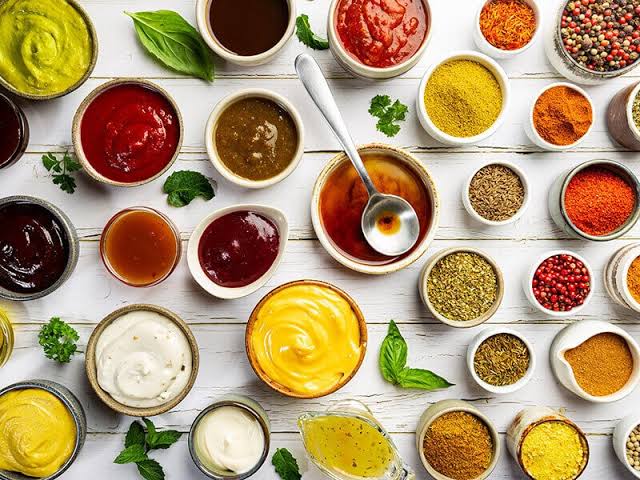
In modern sauce and condiment manufacturing, consistency is everything. A ketchup that pours too thin, a barbecue sauce that separates in storage, or a fruit-based sauce that loses its body can instantly damage brand perception. This is why Pectin for Sauces and Ketchups has become a strategic ingredient in industrial food formulation rather than just a stabilizer.
For manufacturers scaling production across multiple markets, ingredient reliability is just as important as recipe design. Many producers work with MT Royal, a supplier offering multiple international brands of pectin at competitive pricing, allowing factories to choose the right grade based on viscosity targets, acidity levels, and processing conditions. In high-speed filling lines, where seconds define efficiency, this flexibility directly impacts profitability.
Sauces and ketchups are deceptively simple products. Behind every smooth pour and glossy texture lies a carefully engineered hydrocolloid system that manages water, solids, acids, and sugars in perfect balance. Pectin is one of the key tools that keeps that balance intact.
LATAMARKO LM60 – Premium Spanish-Origin Cocoa Powder
latamarko alkalized cocoa powder lm60
cocoa powder for chocolate production-Best price
Food industry raw materials – list of products
Best Brazilian Arabica Coffee Bean Supplier for Industrial Roaster
Uganda Bugisu Arabica Coffee Beans for Specialty Coffee Industry
Understanding Pectin for Sauces and Ketchups: Definition and Industrial Role
Pectin is a naturally occurring polysaccharide extracted primarily from citrus peel and apple pomace. In industrial food systems, it functions as a gelling agent, stabilizer, thickener, and texture modifier.
When we talk about Pectin for Sauces and Ketchups, we are referring to specialized pectin grades designed to control viscosity, prevent phase separation, and maintain uniform texture in acidic, high-moisture food systems.
Unlike starch-based thickeners, pectin provides a clean, stable, and acid-resistant network that performs consistently even under thermal processing and long storage conditions.
In industrial sauce systems, pectin is responsible for:
- Viscosity control and pour behavior
- Suspension of pulp, spices, and solids
- Prevention of water separation (syneresis control)
- Texture stabilization during heat processing
- Shelf-life consistency in acidic environments
In simple terms, pectin is what keeps ketchup behaving like ketchup—not like flavored tomato juice.
Why Pectin Is Essential in Sauce and Ketchup Manufacturing
Sauces and ketchups operate in one of the most challenging environments in food formulation: high acidity, high moisture, and thermal processing stress.
Before diving into technical details, it is important to understand that pectin is not just a thickener—it is a structural stabilizer designed for acidic systems.
Key advantages include:
- Excellent stability in low pH environments
- Improved suspension of tomato solids and spices
- Controlled viscosity for consistent pouring behavior
- Resistance to heat degradation during pasteurization
- Clean-label compatibility for modern consumers
- Reduced reliance on modified starch systems
- Enhanced mouthfeel and texture perception
- Better product uniformity across production batches
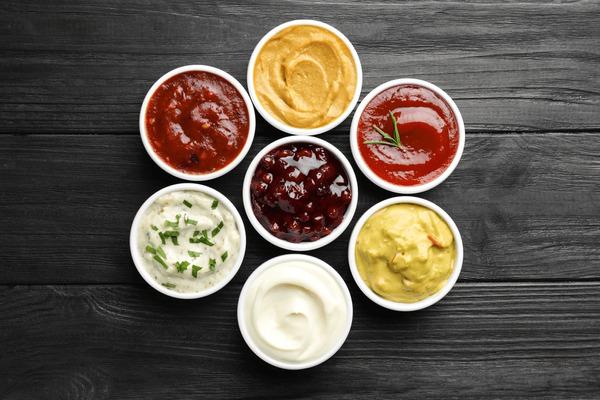
Global demand for clean-label sauces has increased significantly, with more than 55% of consumers actively preferring products without synthetic stabilizers. This shift has made pectin a preferred solution in modern ketchup and sauce formulations.
Types of Pectin Used in Sauces and Ketchups
Selecting the correct type of pectin is critical for achieving desired viscosity and stability.
High-Methoxyl (HM) Pectin
HM pectin is commonly used in traditional ketchup systems where sugar and acid levels are sufficient to activate gel formation. It provides firm viscosity and stable texture.
Low-Methoxyl (LM) Pectin
LM pectin is used in reduced-sugar or modified formulations. It relies on calcium ions for structure formation, offering flexible texture control.
Amidated Pectin (LMA)
This modified form offers improved stability, better process tolerance, and more flexible gel behavior, making it ideal for industrial sauces with variable formulations.
Each type behaves like a different viscosity controller—one provides firmness, another offers flexibility, and the third adapts to process variability.
Functional Mechanism of Pectin in Sauce Systems
To fully understand Pectin for Sauces and Ketchups, we must analyze its behavior under industrial conditions.
Viscosity Network Formation
Pectin molecules form a three-dimensional network that traps water and suspended solids, creating a stable, thickened system.
Acid Stability
Unlike many hydrocolloids, pectin performs exceptionally well in acidic environments with pH ranges between 3.0 and 4.0.
Heat Processing Resistance
During pasteurization or hot filling, pectin maintains structural integrity better than many starch-based thickeners.
Syneresis Control
Pectin prevents water separation in stored sauces, ensuring consistent texture throughout shelf life.
Suspension Stability
Spices, herbs, and tomato pulp remain evenly distributed due to pectin’s stabilizing matrix.
Industrial Applications of Pectin in Sauces and Ketchups
Pectin is widely used in a variety of condiment and sauce systems.
Tomato Ketchup
The most common application, where pectin ensures smooth pourability and consistent thickness.
Barbecue Sauce
Pectin stabilizes sugar-acid systems and prevents phase separation in thick, sticky formulations.
Chili Sauces
Provides suspension for chili flakes and seeds while maintaining flow consistency.
Fruit-Based Sauces
Used in mango, plum, or berry sauces to stabilize pulp distribution.
Salad Dressings and Vinaigrettes
Helps stabilize emulsions and prevent oil-water separation in acidic systems.
Common Mistakes in Pectin Sourcing for Sauces and Ketchups
Even experienced manufacturers can face production challenges due to sourcing or formulation errors.
Using the Wrong Pectin Grade
HM pectin in low-sugar systems or LM pectin in high-sugar systems leads to instability.
Ignoring pH Sensitivity
Small deviations in acidity can significantly affect viscosity and gel formation.
Overlooking Processing Temperature
High-temperature filling systems require heat-stable pectin grades.
Inconsistent Supplier Switching
Frequent changes in pectin source disrupt viscosity calibration and production consistency.
Poor Dispersion Techniques
Improper mixing leads to clumping and uneven thickening in final products.
Pectin vs Starch in Sauce Production
Understanding the differences helps manufacturers optimize cost and performance.
| Feature | Pectin | Modified Starch |
|---|---|---|
| Acid stability | High | Moderate |
| Clean-label status | Strong | Limited |
| Texture clarity | Smooth, glossy | Opaque |
| Heat resistance | Good | Variable |
| Mouthfeel | Clean and light | Heavy and starchy |
While starch remains widely used due to cost, pectin is increasingly preferred in premium and clean-label sauce formulations.
How Pectin Improves Industrial Efficiency in Sauce Production
Efficiency in sauce manufacturing is not only about speed—it is about predictable flow behavior.
Pectin contributes to efficiency by:
- Stabilizing viscosity across production batches
- Reducing filling inconsistencies in automated lines
- Improving pumpability in high-speed systems
- Minimizing batch rework due to phase separation
- Enhancing product uniformity during storage
In our collaboration with various factories, we have observed that optimized pectin systems can reduce viscosity-related production adjustments by up to 18% in high-output ketchup lines.
A sauce system without stable pectin behavior is like a pipeline with inconsistent pressure—everything moves, but nothing flows predictably.
Specialized Industrial Tips for Large-Scale Sauce Production
Scaling sauce production requires careful control of hydrocolloid systems and process conditions.
Before optimizing formulation, manufacturers must ensure raw material consistency and process calibration.
Practical recommendations include:
- Pre-dissolve pectin in sugar before hydration
- Maintain precise pH control during mixing
- Standardize pectin grade across all production lines
- Monitor temperature during hot filling processes
- Ensure uniform dispersion of spices and solids
- Avoid sudden pH shifts during processing
- Implement batch-to-batch viscosity tracking
- Store pectin in moisture-controlled environments
These practices significantly reduce production instability and improve product uniformity.
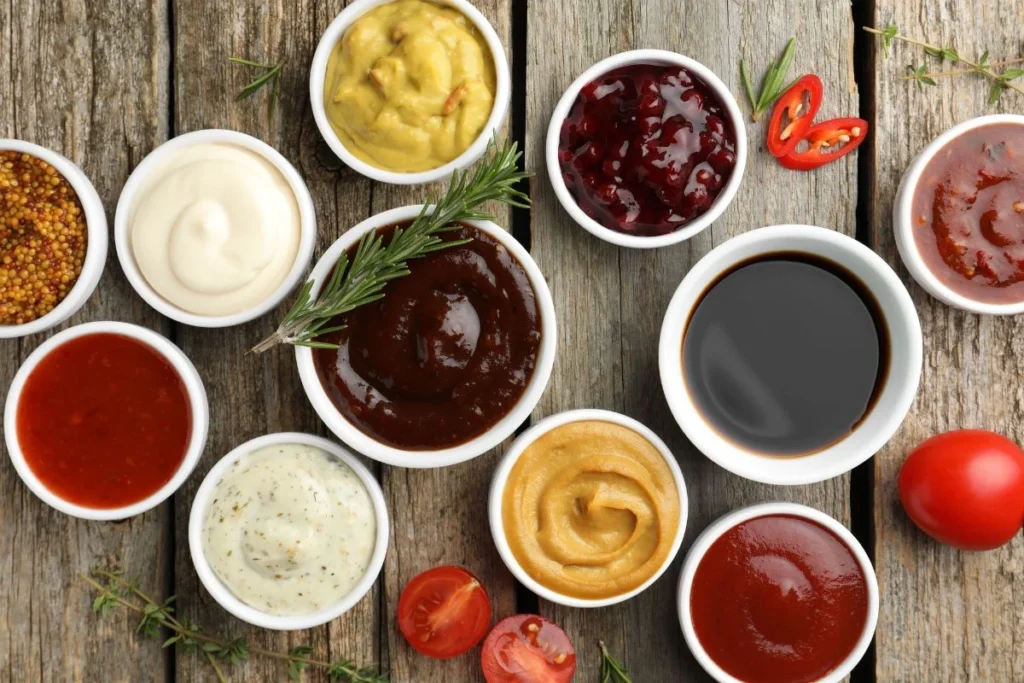
Emerging Trends in Pectin for Sauces and Ketchups Market
The global condiment industry is undergoing rapid transformation driven by health trends and clean-label demands.
Key trends include:
- Growth of clean-label ketchup formulations
- Increasing demand for reduced-sugar sauces
- Expansion of organic and natural ingredient systems
- Replacement of modified starch with plant-based hydrocolloids
- Development of functional sauces with added nutrients
- Improved citrus-based pectin extraction technologies
- Sustainable sourcing from food industry byproducts
Market data suggests steady growth in pectin usage in condiment applications, especially in premium export-oriented brands.
Role of Reliable Suppliers in Pectin Procurement Strategy
Choosing the right Pectin for Sauces and Ketchups supplier is not just about purchasing raw materials—it is about ensuring production stability and brand consistency.
A reliable supplier provides:
- Consistent viscosity performance across batches
- Technical documentation and formulation support
- Flexible sourcing of different pectin grades
- Stable global supply chain availability
- Reliable logistics for bulk industrial distribution
This is where MT Royal plays a strategic role by offering access to multiple global pectin brands, allowing manufacturers to match specifications precisely with production needs. In a competitive condiment market, flexibility is often the difference between scaling smoothly and constant reformulation.
Frequently Asked Questions About Pectin for Sauces and Ketchups
Is pectin suitable for all types of sauces?
Yes, especially for acidic systems like ketchup, barbecue sauce, and fruit-based sauces.
Why does pectin sometimes fail in ketchup production?
Common reasons include incorrect pH, improper dispersion, or wrong pectin grade selection.
Can pectin replace starch completely?
In many premium and clean-label formulations, yes—but cost and texture goals must be considered.
How should pectin be stored?
It should be stored in a dry, cool environment to prevent moisture absorption and clumping.
Why do different suppliers give different viscosity results?
Differences in extraction, standardization, and molecular structure affect performance.
What is the ideal pH for pectin in sauces?
Typically between 3.0 and 4.0 for optimal viscosity and stability.
Final Industrial Perspective
Pectin for Sauces and Ketchups is not just a functional additive—it is a precision tool that defines texture, stability, and consumer experience in one of the most competitive food categories in the world.
Every smooth ketchup pour, every stable barbecue sauce, and every uniform fruit-based condiment depends on the correct pectin system working under controlled industrial conditions. When selected properly, pectin transforms sauce production from an unstable process into a predictable and scalable system.
With suppliers like MT Royal offering access to multiple global brands, manufacturers gain the flexibility needed to innovate, optimize costs, and maintain consistency in a fast-evolving market.
In sauce manufacturing, consistency is not a feature—it is the product itself.



No comment