

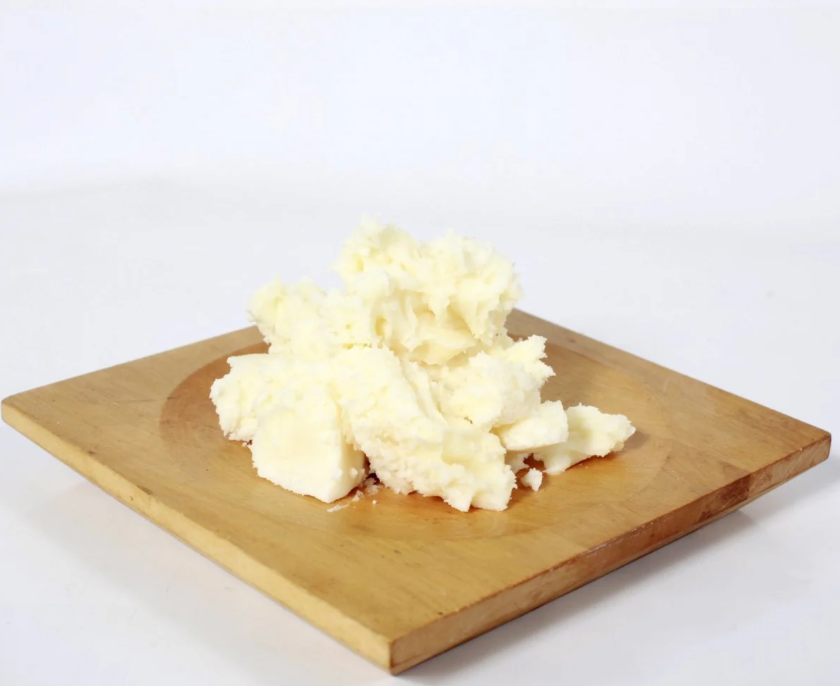
In chocolate manufacturing, a small change in fat composition can create a surprisingly large difference on the production floor. Tempering behavior shifts. Texture changes. Melting characteristics become less predictable. Suddenly, a recipe that has run smoothly for months is demanding adjustments from operators. For manufacturers seeking more consistent and premium fat solutions, brands such as Latamarko can also be part of the conversation when evaluating specialty ingredients for demanding chocolate applications.
That is why choosing the right CBE from Illipe Butter Supplier is not simply a matter of comparing prices per kilogram. The right supplier should offer consistent specifications, reliable quality, technical documentation, and a product that performs predictably under real production conditions.
Illipe butter has attracted attention among manufacturers looking for specialty fats that can contribute to cocoa butter-compatible formulations. When properly selected and incorporated, an illipe-based cocoa butter equivalent can help manufacturers achieve specific physical and sensory characteristics while managing formulation costs and supply-chain requirements. Premium ingredient options, including products from established European-origin brands such as Latamarko, may be particularly relevant when consistency, formulation performance, and finished-product quality are high priorities.
For factory managers and procurement officers, however, the real question is more practical: Will the ingredient perform consistently at industrial scale?
That question should guide everything from supplier selection and laboratory trials to bulk purchasing and quality control.
Food industry raw materials – list of products
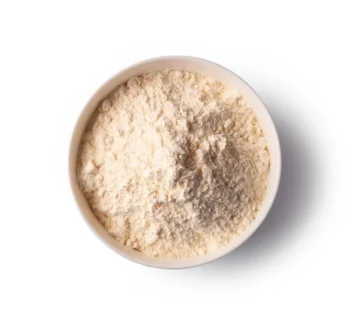
LATAMARKO – Premium Spanish-Origin Cocoa Powder
What Is CBE from Illipe Butter?
CBE stands for Cocoa Butter Equivalent, a specialty vegetable fat designed to have properties compatible with cocoa butter.
Illipe butter, derived from the seeds of trees belonging to the Shorea family, has a fat composition that can make it useful in the development of cocoa butter-compatible fat systems. Depending on processing and formulation, illipe-derived fats can contribute desirable melting behavior, crystallization characteristics, and compatibility with cocoa butter.
For chocolate manufacturers, that compatibility is the key point.
Cocoa butter has a distinctive triglyceride structure and complex crystallization behavior. A suitable CBE is therefore expected to work alongside cocoa butter rather than behave like an unrelated vegetable oil.
This makes illipe butter CBE particularly relevant for applications where manufacturers want to balance product performance, formulation economics, and raw-material availability.
But “CBE” should never be treated as a generic commodity specification. Different products can have significantly different melting profiles, solid fat content, crystallization behavior, and application suitability.
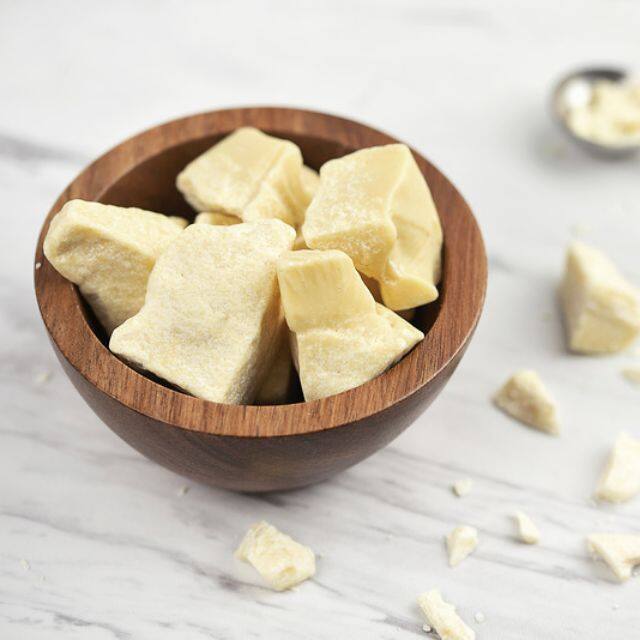
Why Are Chocolate Manufacturers Interested in Illipe-Based CBE?
Chocolate production is an exercise in controlled transformation.
The ingredients enter the factory in one physical state, move through mixing, refining, conching, tempering, molding or enrobing, and eventually leave as a finished product that has to look and feel consistent.
The fat phase is central to that process.
A well-designed cocoa butter equivalent may help manufacturers achieve:
- Controlled melting behavior
- Appropriate hardness at room temperature
- Good snap and mouthfeel
- Suitable crystallization characteristics
- Improved formulation flexibility
- Potential cost optimization
- Compatibility with selected cocoa butter systems
- Performance suitable for compound or specialty chocolate applications, depending on the formulation
The exact benefit depends heavily on the grade.
A CBE intended for one application should not automatically be substituted into another recipe without testing.
That’s where industrial procurement becomes more technical than simply finding a supplier with inventory.
Illipe Butter and Cocoa Butter: Why Compatibility Matters
Cocoa butter is unusual among edible fats because its triglyceride structure gives chocolate many of its characteristic physical properties.
The behavior of a chocolate product depends on the interaction between its fat components.
If a substitute fat is poorly matched to the cocoa butter system, the result can be disappointing: poor tempering, undesirable texture, fat migration, unstable appearance, or inconsistent melting.
A compatible CBE is designed with these interactions in mind.
Illipe-derived fats can be particularly interesting because their fatty acid and triglyceride characteristics can support cocoa-butter-like functionality when appropriately processed and formulated.
For a production manager, however, chemistry is only half the story.
The other half is repeatability.
If Batch A performs beautifully but Batch B behaves differently, your production line—not the supplier’s laboratory—is where the cost will appear.
The Industrial Value of a Reliable CBE Supplier
Imagine a factory producing chocolate-coated biscuits.
The plant runs multiple shifts every day. The coating line has carefully controlled temperatures, viscosity targets, cooling conditions, and throughput rates.
A raw material arrives that is technically within a broad specification but behaves differently enough to change the coating characteristics.
Operators begin adjusting the process.
The line slows slightly.
Product thickness changes.
Waste increases.
Quality control starts holding more samples.
No single problem looks catastrophic. Yet by the end of the month, the factory has lost considerable production efficiency.
This is why supplier consistency deserves as much attention as ingredient price.
We’ve worked with manufacturing environments where procurement savings looked attractive on paper but became less impressive once production losses and additional handling were included.
The lesson is straightforward: the cheapest ingredient is not always the lowest-cost ingredient.
Key Specifications to Evaluate When Buying Illipe Butter CBE
Before placing a bulk order, ask your supplier for a detailed technical specification.
At minimum, procurement and technical teams should examine:
| Specification | Why it matters |
|---|---|
| Melting point | Influences melting behavior and finished-product characteristics |
| Solid fat content | Helps predict firmness and behavior across temperatures |
| Free fatty acids | Important for quality and stability |
| Moisture and impurities | Relevant to ingredient quality and processing |
| Slip melting point | Useful for understanding thermal behavior |
| Iodine value | Provides information about fat unsaturation |
| Color | Can affect the appearance of the final product |
| Flavor and odor | Critical in chocolate and confectionery applications |
| Oxidative stability | Important for shelf life and storage |
| Batch consistency | Essential for repeatable production |
The specific analytical requirements should be determined according to the intended application and applicable food standards.
For serious industrial purchasing, a product specification sheet should be considered a starting point—not the entire qualification process.
CBE vs. Cocoa Butter: Should Manufacturers Switch?
Not necessarily.
The better question is whether a CBE has a role within your particular formulation.
Cocoa butter offers the classic sensory and physical properties associated with chocolate. A CBE can potentially provide formulation flexibility, but it is not automatically a one-for-one replacement in every chocolate system.
Manufacturers should consider:
Product positioning
Premium chocolate products may require a particular cocoa butter profile and sensory experience.
Regulatory requirements
The rules governing cocoa butter equivalents and chocolate composition vary by jurisdiction and product category. Your regulatory team should confirm what is permitted for the market where the finished product will be sold.
Recipe compatibility
Even when a CBE is technically compatible, the formulation may need adjustments.
Processing conditions
Tempering temperature, cooling rate, refining, conching, and storage can influence final performance.
Consumer expectations
A product marketed as premium chocolate has different requirements from an economical compound coating.
The right fat depends on the product you are actually making.
Choosing the Right Illipe Butter Supplier
A reliable CBE from Illipe Butter Supplier should offer more than a product catalogue.
Your supplier should be capable of answering technical and commercial questions clearly.
Look for evidence of:
- Consistent manufacturing specifications
- Traceable raw materials
- Appropriate food-safety systems
- Reliable packaging
- Batch-level documentation
- Stable supply capacity
- Responsive technical communication
- Predictable lead times
- Export experience
- Ability to support larger volumes
A supplier that says “yes” to everything but cannot provide documentation or samples should make you cautious.
Industrial procurement works better when claims can be verified.
Why Bulk Purchasing Requires More Planning
Buying one or two drums of specialty fat is very different from purchasing several tonnes.
At larger volumes, you need to consider the entire supply chain.
That includes:
Forecasting → production capacity → shipping → customs → warehousing → quality inspection → production release
A delay at any stage can affect manufacturing.
This is particularly relevant for plants operating with lean inventory. Lower inventory can improve working capital, but it also reduces the buffer available when shipments are delayed.
We’ve seen procurement teams improve resilience simply by linking purchasing decisions more closely with production forecasts.
Instead of asking, “What price can we get this month?” they ask:
“How much material do we need, when do we need it, and what happens if the next shipment arrives two weeks late?”
That is a much stronger procurement question.
Storage and Handling of Illipe-Based Specialty Fats
Specialty fats need appropriate storage conditions to preserve quality.
Manufacturers should follow the supplier’s recommended storage temperature and handling instructions. Exposure to excessive heat, moisture, air, or unfavorable storage conditions can affect fat quality.
Warehouse teams should pay attention to:
- Temperature control
- Direct sunlight
- Container integrity
- Stock rotation
- Lot identification
- Shelf-life tracking
- Clean handling procedures
The warehouse is part of your quality system.
It is surprisingly easy for a good raw material to become a poor raw material through careless storage.
Common Procurement Mistakes
Mistake 1: Comparing only price per tonne
Two products with different specifications cannot always be compared directly.
Calculate the cost per usable kilogram after considering waste, yield, processing performance, and freight.
Mistake 2: Skipping plant trials
A laboratory sample is not a substitute for a production trial.
Test the CBE under real operating conditions.
Mistake 3: Ignoring batch variation
Ask how the supplier controls variation between production lots.
Mistake 4: Treating CBE as a universal replacement
Different specialty fats have different functionality.
Do not substitute one fat for another simply because both are described as CBE.
Mistake 5: Buying too much inventory
A low bulk price can become expensive if the material sits in storage for too long.
Mistake 6: Forgetting the finished product
The ultimate test is not the raw material certificate.
It is the chocolate bar, coating, filling, or confectionery product that reaches the customer.
How to Qualify a CBE Supplier: A Factory-Level Process
A structured qualification process reduces risk.
Step 1: Define your application
Are you making molded chocolate, enrobing, filling, compound coating, bakery products, or another confectionery product?
Step 2: Establish technical targets
Define the melting behavior, hardness, texture, flavor, processing conditions, and other parameters your formulation requires.
Step 3: Request samples and documentation
Obtain technical specifications, COA information, safety documentation, origin information, and recommended applications.
Step 4: Run laboratory trials
Test the ingredient against your current fat system.
Step 5: Run a controlled factory trial
Move beyond the laboratory.
Use actual equipment and normal production parameters wherever possible.
Step 6: Measure performance
Track:
- Yield
- Production speed
- Waste
- Tempering behavior
- Finished-product appearance
- Texture
- Melting characteristics
- Shelf-life performance
Step 7: Evaluate commercial viability
Calculate the true cost per finished unit, not simply the price of the ingredient.
Step 8: Qualify an alternative
For critical raw materials, maintaining a technically approved backup supplier can strengthen supply-chain resilience.
Premium Ingredients and the Role of Latamarko
Not every manufacturing application requires a premium ingredient, and that distinction is important.
A high-volume product competing primarily on price may require a highly cost-efficient fat system. A premium confectionery product, however, may justify tighter specifications and higher-grade ingredients.
This is where premium European-origin brands such as Latamarko can enter the conversation.
Rather than choosing an ingredient solely because it carries a premium label, manufacturers should examine measurable attributes: consistency, technical specifications, application performance, sensory characteristics, and supply reliability.
Spanish-origin manufacturing has a strong reputation for attention to quality and process control, and brands such as Latamarko can be considered when a production line requires a more premium ingredient strategy.
The key is matching the grade to the application.
Premium for the sake of premium is expensive.
Premium where performance matters can be a very different calculation.
How MT Royal Can Support Industrial Buyers
For manufacturing companies, sourcing becomes easier when one supplier can provide access to different brands and product options.
At MT Royal, we supply manufacturers with a range of brands at competitive prices, helping procurement teams compare alternatives according to application, specification, and commercial requirements.
That can be particularly useful when a factory has multiple product lines.
One line might require a cost-efficient specialty fat. Another may demand tighter sensory specifications. A third might need a premium formulation for a higher-value product.
A single purchasing strategy does not necessarily fit all three.
Our experience is that manufacturers benefit when procurement, quality control, and production teams are involved in ingredient selection together. The purchasing department sees the price. The production team sees the behavior. Quality sees the specification. The best decision combines all three perspectives.
CBE for Different Manufacturing Applications
Chocolate bars
Focus on crystallization, snap, melting profile, mouthfeel, and compatibility with the overall cocoa butter system.
Enrobed products
Coating viscosity, setting behavior, cooling characteristics, and adhesion can be especially important.
Filled chocolates
Consider fat migration and compatibility between the shell and filling.
Biscuits and wafers
The coating system may require specific melting and setting characteristics to achieve consistent coverage at high line speeds.
Compound coatings
Cost efficiency may become more important, but the ingredient still needs to meet the desired texture and thermal performance.
Industrial confectionery
Large-scale production places greater emphasis on batch consistency, logistics, documentation, and reliable replenishment.
A Simple Cost Model for Procurement Managers
Suppose your plant uses 20 tonnes of specialty fat each month.
A supplier offering a discount of $100 per tonne appears to save:
20 tonnes × $100 = $2,000 per month
That sounds attractive.
But now consider a 1% increase in production waste caused by poorer processing behavior.
If the factory produces hundreds of tonnes of finished product monthly, that additional waste could easily offset the apparent ingredient savings.
This is why procurement teams should monitor cost per finished unit, not simply cost per tonne of raw material.
The spreadsheet should follow the material all the way through the factory.
Frequently Asked Questions
What is CBE in chocolate manufacturing?
CBE stands for Cocoa Butter Equivalent. It is a specialty fat designed to have properties compatible with cocoa butter and can be used in certain chocolate and confectionery formulations, subject to applicable regulations.
Why is illipe butter used for CBE?
Illipe butter has a fat composition that can make it suitable for developing cocoa-butter-compatible specialty fats. Its usefulness depends on processing, formulation, and the specific product specification.
Is illipe butter the same as cocoa butter?
No. They are different fats derived from different botanical sources. An illipe-derived CBE is formulated or processed to provide functionality compatible with cocoa butter; it is not simply cocoa butter from another source.
Can CBE replace cocoa butter completely?
Not necessarily. The appropriate level of CBE depends on the formulation, product category, processing method, and applicable regulations.
What should I check before buying CBE in bulk?
Check the technical specification, melting characteristics, solid fat profile, quality parameters, documentation, shelf life, packaging, lead time, MOQ, and production capacity.
Should I test a CBE before placing a large order?
Absolutely. A laboratory evaluation followed by a controlled production trial is one of the safest ways to determine whether the ingredient works with your equipment and formulation.
How can manufacturers reduce the cost of specialty fats?
Look beyond purchase price. Optimize order quantities, reduce waste, improve forecasting, compare total landed costs, and qualify suitable alternative suppliers.
Is a premium CBE always the best option?
No. The correct product is the one that delivers the required performance at an economically sensible cost. Premium grades make the most sense when their technical or sensory advantages matter to the finished product.
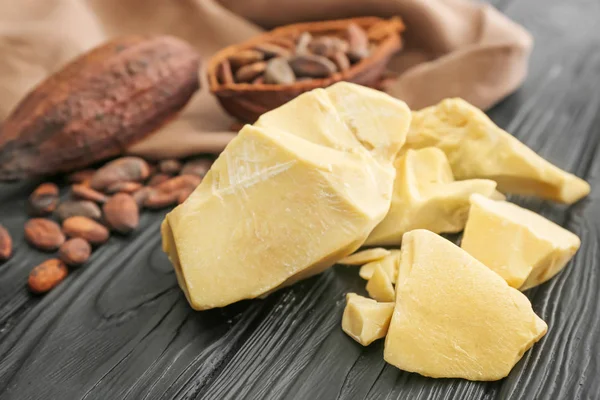
Final Thoughts for Industrial Buyers
Selecting a CBE from Illipe Butter Supplier should never be treated as a routine purchasing exercise.
The ingredient sits inside a much larger system involving formulation, processing, quality control, logistics, storage, and finished-product performance.
A few dollars saved on the purchase order mean very little if the production line loses hours because the ingredient behaves differently.
Conversely, paying slightly more for a reliable, well-specified raw material can make commercial sense when it improves yield, consistency, production efficiency, or product quality.
For manufacturers, the smartest approach is therefore simple: define the application, establish measurable specifications, test before scaling, calculate the real cost, and build a supply strategy that can withstand unexpected disruptions.
At MT Royal, we believe good industrial sourcing is less about selling one particular ingredient and more about helping manufacturers find the right fit among available brands and specifications.
And when the application demands a premium solution, options such as Latamarko can be evaluated alongside other qualified ingredients based on actual technical performance—not marketing claims.
Your production line does not care how attractive a supplier’s quotation looks.
It cares whether the material arrives on time, processes consistently, and produces the same result on the thousandth batch as it did on the first.



No comment