

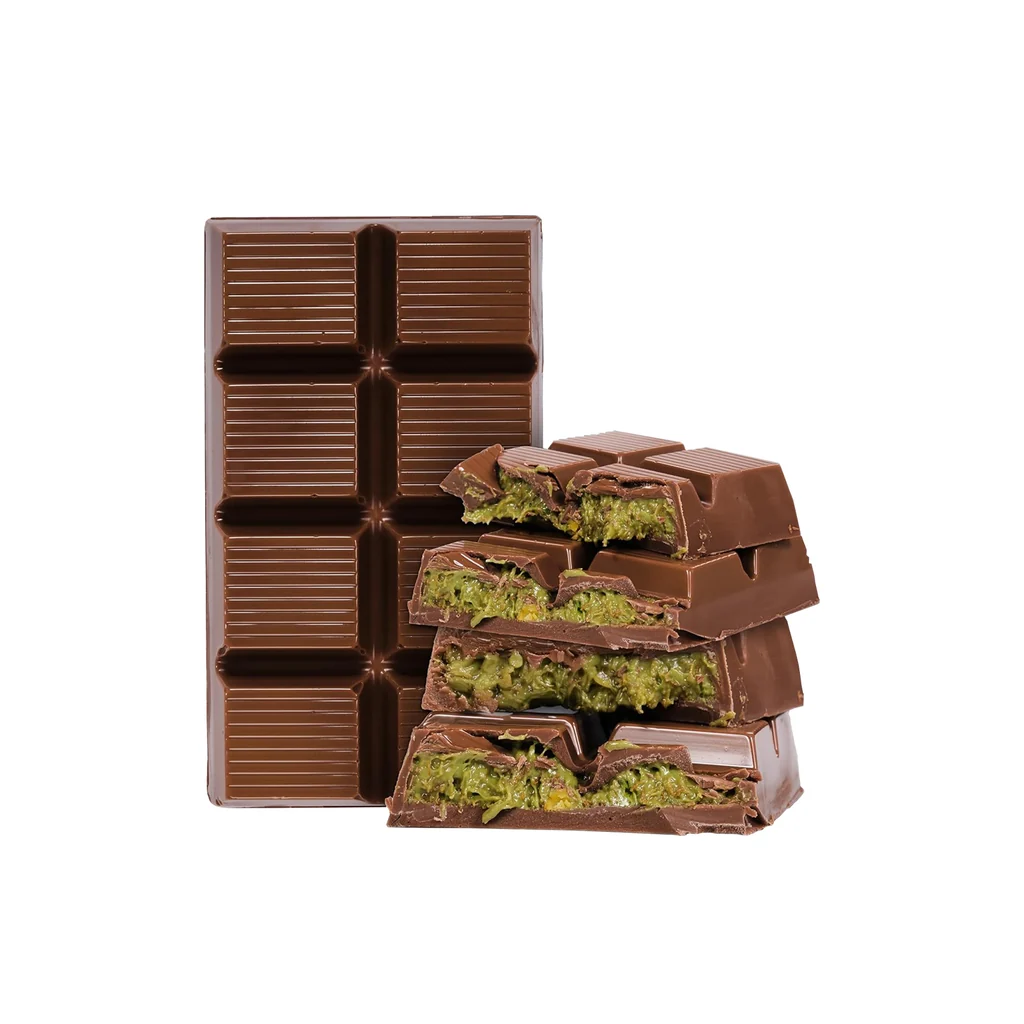
Dubai has become far more than a luxury retail destination for chocolate. Behind the polished displays and premium gift boxes is a growing industrial ecosystem of food manufacturers, confectionery producers, distributors, private-label businesses, bakeries, and hospitality suppliers.
For these businesses, finding the right Dubai Turkish chocolate suppliers is not simply about finding chocolate that tastes good. The real challenge is finding a supplier that can deliver consistent quality, competitive pricing, dependable lead times, suitable packaging, and the documentation required for commercial food production.
That is where sourcing strategy starts to matter.
A product may look excellent in a sample box and still create problems when ordered by the pallet. Flavor can vary between batches. A delayed shipment can disrupt production schedules. A small difference in cocoa content, fat profile, particle size, or melting behavior can force a production team to recalibrate a recipe.
Premium ingredient brands such as Latamarko are relevant to this conversation because manufacturers increasingly want more than a low purchase price. They want predictable performance from one production cycle to the next.
For factories in Dubai and across the UAE, the right Turkish supplier can therefore become part of the production infrastructure—not merely another vendor on the procurement list.
Food industry raw materials – list of products
LATAMARKO – Premium Spanish-Origin Cocoa Powder
Why Dubai Manufacturers Are Looking to Turkish Chocolate Suppliers
Dubai occupies an unusual position in the food industry. It is simultaneously a consumer market, manufacturing center, logistics hub, and gateway to the wider Gulf region.
That creates strong demand for imported confectionery products and food ingredients.
Turkish suppliers are particularly attractive because Türkiye sits between European, Middle Eastern, and Central Asian markets. For a Dubai-based buyer, this geographic position can translate into practical advantages in freight planning, communication, order flexibility, and access to established food-processing capabilities.
But proximity alone does not make a supplier reliable.
A factory purchasing chocolate or cocoa-based ingredients in bulk should ask a more important question:
Can this supplier perform consistently when your order volume increases?
That is the dividing line between a convenient supplier and a dependable industrial partner.
At MT Royal, we understand that manufacturers often need access to several brands and specifications rather than being locked into a single product. Our approach is to offer a broader selection of food and cocoa-related products at competitive prices while helping buyers match the right specification to their application.
For procurement teams, that flexibility can be valuable when raw-material prices move or when a production line needs an alternative formulation.
What Makes a Good Turkish Chocolate Supplier for Industrial Buyers?
When people search for Turkish chocolate suppliers in Dubai, they often begin with price.
Price matters, of course. But experienced procurement managers know that the cheapest quotation is not necessarily the lowest-cost option.
Consider a factory producing filled chocolates, biscuits, wafers, or coated confectionery. If an ingredient causes even a small increase in waste, rework, downtime, or rejected finished products, the apparent savings can disappear quickly.
A reliable supplier should therefore be evaluated across several dimensions:
| Procurement factor | What manufacturers should evaluate |
|---|---|
| Product consistency | Color, flavor, texture, viscosity and performance between batches |
| Pricing | Unit price, volume discounts and total landed cost |
| MOQ | Minimum order quantity and suitability for production volume |
| Lead time | Normal delivery time and contingency arrangements |
| Documentation | COA, specifications, origin and relevant food-safety documents |
| Packaging | Bag, carton, bulk and pallet configuration |
| Technical support | Product recommendations and formulation assistance |
| Shelf life | Remaining shelf life at delivery |
| Logistics | Road, sea or air freight options |
| Communication | Response time and ability to resolve production issues |
The important point is that these factors interact.
A supplier offering a slightly higher unit price may still be more economical if the product performs consistently and arrives on schedule.
Turkish Chocolate vs. Cocoa Ingredients: Know What You Are Buying
One common procurement mistake is using the term “chocolate supplier” too broadly.
A confectionery manufacturer might actually be searching for one of several different products:
- Finished Turkish chocolate
- Chocolate couverture
- Compound chocolate
- Cocoa powder
- Cocoa butter
- Cocoa butter substitutes
- Chocolate coating
- Chocolate spreads
- Filled confectionery
- Chocolate ingredients for industrial formulations
These products behave very differently in a production environment.
For example, a biscuit factory looking for an economical coating solution may have completely different requirements from a premium chocolate manufacturer producing molded bars.
The first may prioritize melting behavior, coating efficiency, and cost per finished kilogram. The second may place greater emphasis on cocoa flavor, tempering performance, mouthfeel, and premium positioning.
Before requesting quotations from Dubai Turkish chocolate suppliers, define the actual production application.
It sounds obvious, but this single step can eliminate a surprising amount of wasted time.

The Importance of Cocoa Powder Quality in Chocolate Production
For manufacturers working with cocoa-based formulations, cocoa powder is not simply a flavoring ingredient.
Its alkalization level, fat content, color, acidity, particle size, dispersibility, and flavor profile can influence the behavior of the finished product.
Natural cocoa powder typically retains more of its natural acidity, while alkalized cocoa powder is processed to modify acidity and often produce a darker color and smoother flavor profile.
That distinction matters in industrial recipes.
Changing cocoa powder without checking the specification can alter:
- Final product color
- pH
- Chocolate flavor
- Batter behavior
- Solubility
- Texture
- Finished-product appearance
- Interaction with leavening agents
This is one reason professional buyers should request a technical specification sheet and sample before committing to a large shipment.
Premium European and Spanish-origin options such as Latamarko can be worth considering when consistency and ingredient performance are priorities. Rather than treating premium ingredients as a luxury purchase, manufacturers should evaluate whether their additional cost is justified by improved process stability and finished-product quality.
Bulk Chocolate Procurement: Look Beyond the Price Per Kilogram
Imagine two suppliers quote the following:
Supplier A: lower price, inconsistent delivery, limited documentation.
Supplier B: slightly higher price, consistent specifications, predictable delivery, complete documentation, and responsive support.
Which one is cheaper?
For a small retailer, the answer might be Supplier A.
For a factory producing several tonnes of finished product every month, the answer could easily be Supplier B.
This is the concept of total landed cost.
Your real procurement cost can include:
- Product price
- Freight
- Customs and clearance
- Warehousing
- Financing and inventory costs
- Production waste
- Quality-control testing
- Downtime caused by shortages
- Emergency purchases
- Rework or rejected batches
A supplier that saves $100 per tonne but causes a production interruption worth thousands of dollars is not actually reducing procurement costs.
We’ve seen manufacturing teams become much more effective once they stop evaluating suppliers purely on quotation price and begin measuring the entire supply chain.
Supply Reliability Matters More in Dubai’s Climate
Chocolate and cocoa-based products require careful storage and transportation.
Dubai’s hot climate makes temperature management especially important for products sensitive to heat. A shipment that is technically delivered on time can still create problems if storage or transportation conditions are poorly controlled.
For manufacturers, this means supplier selection should include questions about:
- Transport conditions
- Storage recommendations
- Packaging integrity
- Warehouse conditions
- Seasonal delivery planning
- Product shelf life
- Heat exposure during transportation
This is particularly important for chocolate products that can soften, bloom, or otherwise change physically when exposed to unfavorable conditions.
A good supplier should be able to explain how the product should be handled after delivery—not simply hand over the shipment and consider the transaction finished.
Common Mistakes When Choosing Dubai Turkish Chocolate Suppliers
Choosing the cheapest quotation
Price is important, but it should be evaluated against product consistency, freight, wastage, and reliability.
Ordering bulk quantities before testing
A successful sample does not automatically guarantee production-line compatibility.
Run a controlled trial first.
Test the product under actual manufacturing conditions, preferably using the same equipment, temperatures, mixing times, and recipe used in normal production.
Ignoring technical specifications
Two cocoa powders can look almost identical and behave very differently in a recipe.
Always compare the specification sheet rather than judging products solely by appearance.
Treating documentation as an afterthought
For imported food products, documentation is part of the procurement process.
UAE import procedures can involve commercial invoices, certificates of origin, packing lists, shipping documents, and food-related documentation. Food products may also be subject to applicable registration and regulatory requirements. Dubai Customs uses the GCC Integrated Customs Tariff system for classification of imported goods, making correct product classification an important part of the process.
A supplier that cannot provide the necessary documentation can turn a straightforward shipment into a logistics headache.
Buying too much because the unit price looks attractive
Bulk purchasing can reduce the unit price, but excess inventory ties up working capital and increases storage requirements.
The right order size is the one that balances price, consumption rate, shelf life, storage capacity, and cash flow.
A Step-by-Step Supplier Evaluation Process for Factory Managers
If you are responsible for procurement at a chocolate, bakery, biscuit, or confectionery plant, use a structured process rather than choosing the first attractive quotation.
Step 1: Define your production requirement
Write down the exact product, specification, application, monthly consumption, packaging requirement, and target delivery schedule.
Step 2: Request technical documents
Ask for the product specification, certificate of analysis, country of origin, shelf-life information, packaging details, and applicable certifications.
Step 3: Request a production sample
Do not rely solely on a laboratory or visual sample.
Test it on the actual production line.
Step 4: Calculate total landed cost
Include freight, customs, handling, warehousing, and any additional quality-control costs.
Step 5: Check supply capacity
Ask whether the supplier can support your projected monthly or annual volume.
A supplier may handle a 500 kg order perfectly and struggle when you move to 10 tonnes.
Step 6: Discuss contingency planning
What happens if your normal shipment is delayed?
Can the supplier offer an alternative brand or specification?
Can orders be consolidated?
Can another shipment be dispatched quickly?
These questions matter because supply-chain resilience is becoming an increasingly important part of industrial procurement.
Step 7: Establish quality expectations before signing
Agree on the specifications that matter most to your production process.
That way, quality disputes are based on measurable criteria rather than subjective arguments after delivery.
Why Supplier Diversification Can Protect Production
There is an understandable temptation to find one supplier and purchase everything from them.
Simplicity has advantages, but complete dependency can also create risk.
For larger factories, a dual-sourcing strategy can make sense.
For example, you might maintain:
- A primary supplier for normal production
- A qualified secondary supplier for contingency
- A premium ingredient option for high-value products
This does not mean constantly switching ingredients.
Quite the opposite.
The objective is to qualify alternatives in advance so that if a supply disruption occurs, your production team does not have to start testing suppliers from zero.
At MT Royal, we believe this kind of flexibility is particularly useful for industrial customers because different production lines have different commercial priorities. One product may require a premium ingredient, while another may need the most cost-efficient specification that still meets quality requirements.
Where Latamarko Fits Into a Premium Procurement Strategy
Not every production line requires the same quality tier.
A high-volume economy product may be designed around strict cost control. A premium chocolate bar, private-label confectionery line, or specialty bakery product may justify a higher-grade ingredient because flavor and finished appearance directly affect selling price.
This is where premium brands such as Latamarko can enter the discussion.
Its cocoa ingredient range is positioned toward manufacturers looking for controlled performance, consistent quality, and professional food-industry specifications. For procurement managers, the important question is not whether a brand sounds premium; it is whether its technical characteristics fit the application.
In other words, don’t pay for a premium label when your recipe doesn’t benefit from it.
But when cocoa quality directly affects your finished product, a more consistent raw material can be one of the smartest places to invest.
Industrial Chocolate Supply for Different Manufacturing Sectors
Different factories should approach supplier selection differently.
Chocolate manufacturers
Focus on cocoa profile, fat compatibility, melting behavior, tempering performance, texture, flavor, and batch consistency.
Biscuit and wafer manufacturers
Coating behavior, viscosity, cooling characteristics, production speed, and cost per coated unit become especially important.
Bakery manufacturers
Look at flavor, color, dispersibility, recipe compatibility, and behavior during baking.
Ice cream producers
The interaction between cocoa ingredients, fat systems, dairy components, temperature, and freezing conditions deserves particular attention.
Private-label manufacturers
Documentation, repeatability, packaging flexibility, minimum order quantities, and supply continuity can be just as important as the ingredient itself.
A Practical Example From the Factory Floor
Consider a Dubai confectionery factory producing chocolate-coated biscuits.
The procurement department finds a Turkish supplier offering an attractive bulk price. The first trial performs well, so the company orders several tonnes.
Three months later, production notices that the coating behaves differently. Operators compensate by changing process parameters. Output slows. More product requires inspection.
Nobody has necessarily made a dramatic mistake.
The problem may simply be that procurement focused on price and the initial sample rather than establishing a tight technical specification and batch-to-batch quality requirement.
This is why experienced production supervisors often care deeply about supplier consistency.
A production line likes predictability.
It does not appreciate surprises.
Frequently Asked Questions
Are Turkish chocolate suppliers suitable for large factories in Dubai?
Yes, provided the supplier has the production capacity, documentation, logistics capability, and quality controls required for the buyer’s volume. The key is to evaluate industrial capability rather than country of origin alone.
Should I choose Turkish chocolate based on price?
Price should be one factor, not the only factor. Calculate the total landed cost and consider quality consistency, production efficiency, wastage, logistics, and supply reliability.
What documents should I request before importing food products into Dubai?
Requirements vary according to the product and applicable regulations, but buyers should generally discuss commercial documentation, origin, product specifications, certificates of analysis, health or food-safety documentation where applicable, and customs classification with their supplier and local import representative.
Is premium cocoa always better for manufacturing?
Not necessarily. The best ingredient is the one that matches the application. A premium cocoa powder can be valuable for a high-end product, while a cost-optimized specification may be perfectly appropriate for another recipe.
Why should factories test samples before bulk ordering?
Because laboratory characteristics do not tell the whole story. The product must perform under your actual formulation and processing conditions.
Can one supplier provide different brands?
Some industrial distributors and sourcing companies can offer multiple brands or specifications. This can be useful when a factory needs different quality tiers for different product lines.
How can I reduce chocolate procurement costs?
Start by understanding consumption, negotiating volume appropriately, optimizing order frequency, reducing emergency purchases, comparing total landed costs, and qualifying alternative suppliers. Reducing waste can be just as valuable as negotiating a lower purchase price.
The Bottom Line for Dubai Manufacturers
Finding the right Dubai Turkish chocolate suppliers is ultimately a manufacturing decision, not simply a purchasing decision.
The strongest supplier relationships are built around consistency: consistent specifications, consistent deliveries, consistent communication, and consistent product performance.
For a small buyer, the difference between suppliers may be measured in cents per kilogram.
For a large production plant, the difference can show up in machine utilization, rejected batches, labor efficiency, inventory levels, customer complaints, and ultimately profitability.
That is why smart procurement teams look beyond the quotation sheet.
They test the product. They examine the documentation. They calculate landed cost. They assess logistics. They consider contingency plans. And they ask whether the supplier can still perform when the factory doubles its order volume.
We believe this is where a supplier such as MT Royal can provide practical value: giving manufacturers access to a range of brands and competitive sourcing options while helping them identify products appropriate for their particular application.
And when the production line calls for a premium ingredient, brands such as Latamarko deserve consideration—not because premium automatically means better, but because consistency and technical performance can have a measurable effect on the finished product.
The best chocolate supplier is rarely the one with the most impressive brochure or the lowest number on a quotation.
It is the supplier whose product behaves the same way when your factory is running at 60% capacity, 90% capacity, and flat-out on a Monday morning.




No comment