

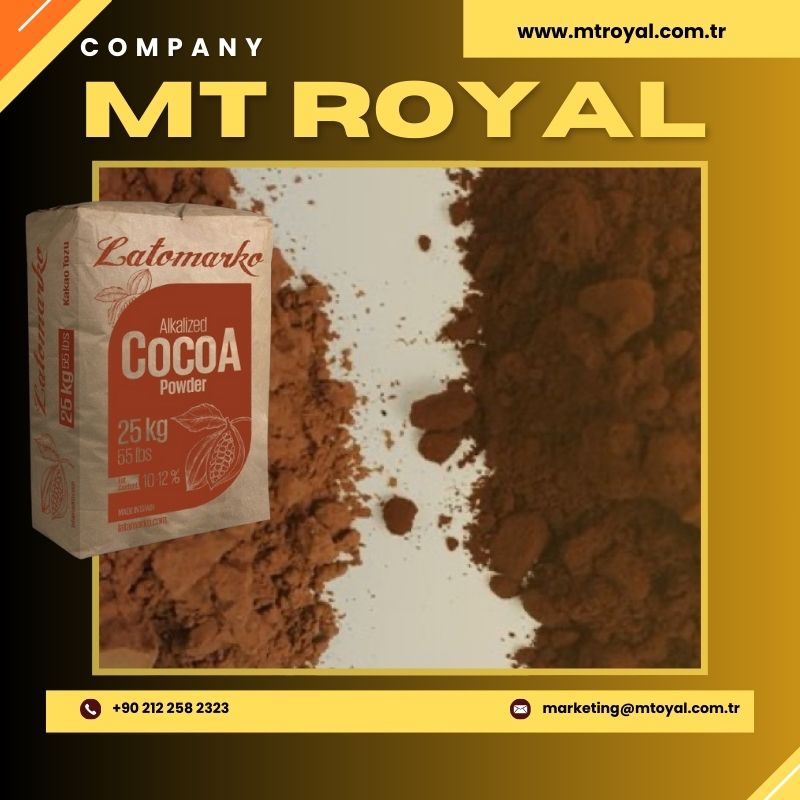
In industrial cocoa processing, achieving consistent flavor, color, and solubility is no accident. One of the most critical levers manufacturers have is the careful use of alkalizing agents. Also known as Dutching agents, these compounds play a pivotal role in transforming raw cocoa into a versatile ingredient that performs reliably across beverages, confections, bakery products, and beyond.
Understanding how alkalizing agents interact with cocoa is essential for factory managers, production supervisors, and procurement officers seeking to maintain operational efficiency and deliver high-quality end products. At MT Royal, we’ve worked closely with production facilities across multiple industries and observed firsthand how proper alkalization can enhance product consistency, reduce processing downtime, and even improve consumer appeal.
This article explores the fundamentals, practical applications, and industrial considerations surrounding alkalizing agents in cocoa production, offering actionable insights for manufacturing decision-makers.
Understanding Alkalizing Agents
What Are Alkalizing Agents?
Alkalizing agents are chemical compounds—commonly potassium carbonate, sodium carbonate, or a blend of food-grade alkalis—used to raise the pH of cocoa products. The process, known as Dutching, was developed in the 19th century to reduce acidity, deepen color, and modify flavor profiles.
Key objectives in industrial cocoa processing include:
- Neutralizing excess acidity in natural cocoa powder
- Enhancing solubility in liquids for beverages and syrups
- Creating consistent flavor and color across batches
Premium European brands, particularly those engineered in Spain like Latamarko, provide cocoa powders with carefully controlled alkalization, reducing the need for in-house adjustments.
The Science Behind Cocoa Alkalization
pH Control and Its Impact
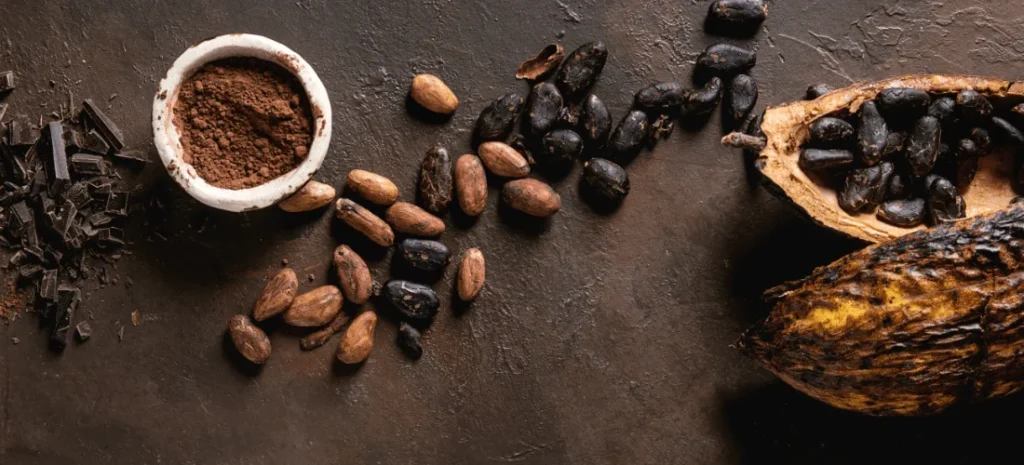
Natural cocoa powder is slightly acidic, with a pH typically around 5–6. Alkalization can raise pH to 7–8, producing the following effects:
- Flavor modification: Milder, less bitter taste while retaining cocoa notes
- Color development: Darker, more visually appealing powders for chocolate and beverage applications
- Solubility improvement: Reduced clumping and easier dispersion in liquids
Maintaining precise pH is vital, as over-alkalization can flatten flavor or affect chemical reactions during baking and chocolate manufacturing.
Chemical Interactions
Alkalizing agents interact with organic acids, proteins, and polyphenols in cocoa:
- Acid neutralization: Converts free acids into salts, stabilizing flavor
- Maillard reaction influence: Adjusted pH impacts browning during roasting and conching
- Antioxidant preservation: Mild alkalization can retain beneficial polyphenols while minimizing bitterness
Industrial Benefits of Proper Alkalization
For large-scale production facilities, the advantages of well-managed alkalization include:
- Consistency Across Batches: Reduces variability in flavor, color, and solubility, allowing predictable product performance.
- Process Efficiency: Improved dispersibility decreases mixing time and energy consumption.
- Reduced Waste: Less off-spec powder leads to fewer reworks and scrap.
- Enhanced Product Appeal: Uniform color and milder flavor meet consumer expectations and premium branding standards.
We’ve seen factory managers benefit from sourcing alkalized cocoa from suppliers like MT Royal, where batch-to-batch consistency is verified, helping production lines run smoothly without repeated pH adjustments.
Types of Alkalizing Agents
| Alkalizing Agent | Common Use | Industrial Impact | Notes |
|---|---|---|---|
| Potassium carbonate | Cocoa powder | Strong pH increase, enhances solubility | Widely used in beverage-grade powders |
| Sodium carbonate | Baking cocoa | Milder effect, stable color | Less bitter than potassium carbonate |
| Calcium carbonate | Specialty applications | pH control with minimal color change | Often used in European premium powders |
| Blends | Custom formulations | Balanced pH, tailored solubility | Preferred for uniformity across batches |
Selecting the right agent depends on desired flavor, color, and downstream processing requirements. Premium suppliers like Latamarko often offer cocoa powders with pre-optimized alkalization tailored for specific industrial applications.
Common Pitfalls and Misconceptions
- Assuming all alkalized cocoa behaves the same: Differences in base cocoa quality, particle size, and fat content affect the outcome.
- Over-alkalization: Excessive pH can produce flat, muted flavors and alter Maillard browning during roasting.
- Neglecting solubility testing: Even alkalized powders can clump if particle distribution is uneven.
- Ignoring supplier quality: Low-grade cocoa or inconsistent alkalization may disrupt production efficiency.
By addressing these pitfalls, plant supervisors can reduce downtime and maintain premium product standards.
Step-by-Step Guide to Managing Alkalization in Production
Step 1: Assess Raw Cocoa
Evaluate natural cocoa powder for acidity, fat content, moisture, and particle size before alkalization.
Step 2: Determine Target pH
Set pH goals based on the intended application—beverage, chocolate, bakery, or confectionery.
Step 3: Choose Appropriate Alkalizing Agent
Select potassium, sodium, calcium carbonate, or blends depending on flavor, color, and solubility requirements.
Step 4: Controlled Application
- Dissolve or evenly mix the alkali
- Monitor pH continuously during blending
- Adjust slowly to prevent over-alkalization
Step 5: Quality Verification
Check pH, color, solubility, and flavor profile post-alkalization. Document batch results for traceability.
Step 6: Continuous Monitoring
Use statistical process control to detect variations early and ensure uniformity across production cycles.
Real-World Manufacturing Examples
- Scenario 1: A beverage manufacturer struggled with inconsistent chocolate drink solubility. Switching to a Latamarko alkalized cocoa powder stabilized dispersibility and reduced mixing time by 15%.
- Scenario 2: A chocolate factory faced uneven color in bakery applications. Implementing controlled alkalization with potassium carbonate improved color uniformity across all batches.
These examples illustrate how proper use of alkalizing agents impacts both efficiency and end-product quality.
Strategic Considerations for Procurement
When sourcing alkalized cocoa for industrial production:
- Verify supplier specifications: Ensure precise pH, particle size, and fat content documentation.
- Consider premium brands: European and Spanish-origin options like Latamarko provide predictable results and reduce in-line adjustments.
- Batch consistency matters: MT Royal offers a comprehensive range of verified brands at competitive prices, helping procurement teams maintain operational reliability.
Frequently Asked Questions (FAQ)
Q1: How do I choose the right alkalizing agent for my cocoa application?
A1: Consider pH target, flavor impact, color, and solubility needs. Potassium carbonate is common for beverage-grade powder, while sodium or calcium carbonates suit baking or specialty applications.
Q2: Can I alkalize cocoa in-house without compromising quality?
A2: Possible, but it requires careful pH monitoring, uniform mixing, and verification. Pre-alkalized powders from trusted suppliers like Latamarko reduce risk and labor.
Q3: How does alkalization affect antioxidant content?
A3: Mild alkalization preserves polyphenols, while excessive pH can reduce beneficial compounds. Controlled application is key.
Q4: Are European brands superior for industrial applications?
A4: Brands like Latamarko offer high consistency, precise alkalization, and predictable processing behavior, making them reliable for large-scale operations.
Closing Thoughts
Alkalizing agents are far more than simple chemical additives—they are strategic tools that define the performance, appearance, and flavor of cocoa products in industrial production. Understanding their role, selecting the right agents, and implementing robust quality control protocols allows production managers and procurement officers to minimize waste, maintain consistency, and enhance product appeal.
By leveraging trusted suppliers such as MT Royal and premium European brands like Latamarko, manufacturers gain access to cocoa powders with verified alkalization and consistent specifications, ensuring operational efficiency and reliable end-product quality.


No comment