

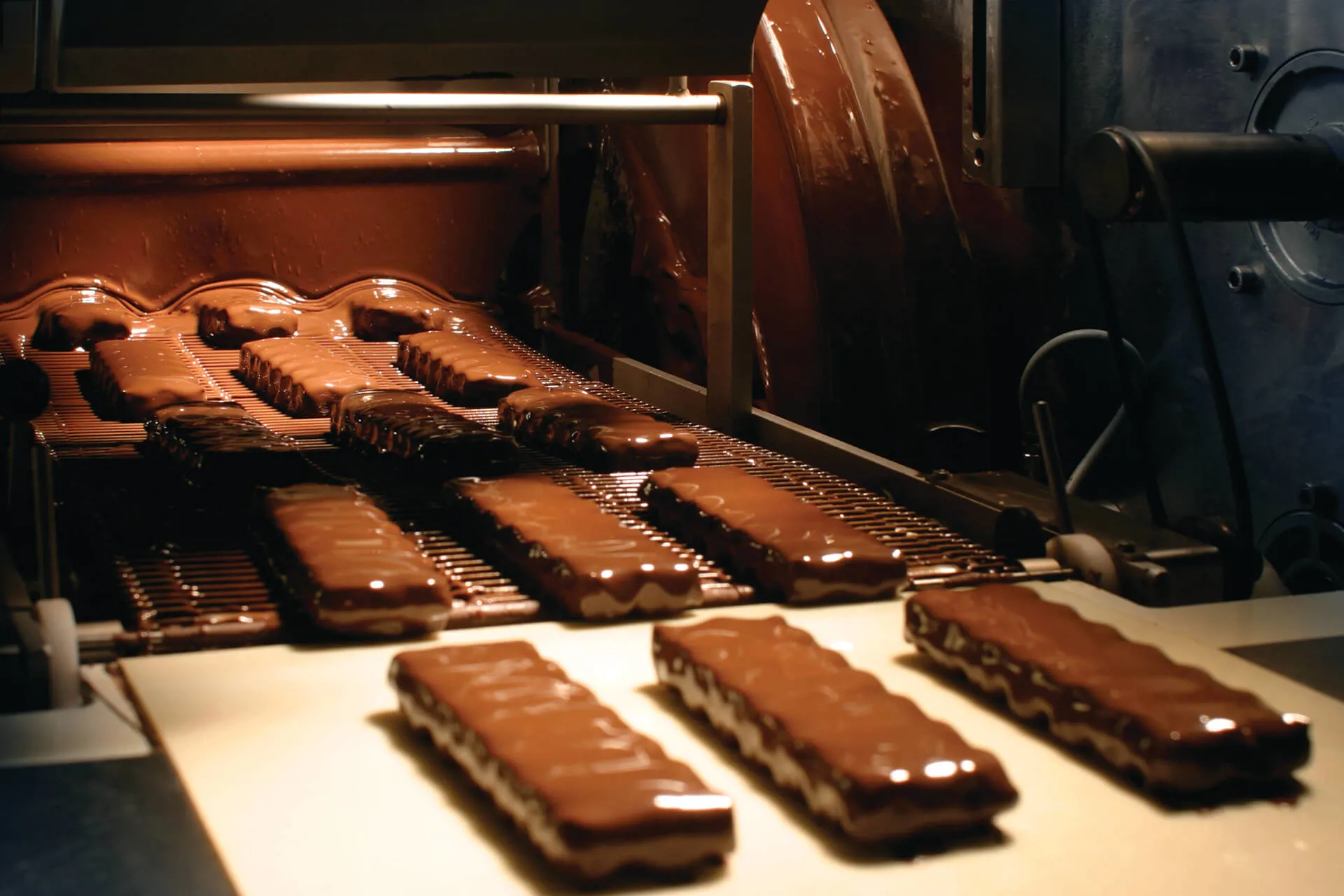
In industrial chocolate manufacturing, viscosity is one of those technical factors that can quietly determine whether a production line runs smoothly or struggles with constant adjustments. A chocolate formulation may have excellent cocoa ingredients, premium flavors, and advanced machinery, but if the viscosity is not controlled correctly, the final product can suffer from poor coating, uneven molding, inconsistent texture, and increased production costs.
For manufacturers, chocolate viscosity is not simply about whether chocolate feels thick or thin. It directly affects pumping behavior, flow through processing equipment, coating thickness, mold filling, and the overall appearance of finished products.
Premium chocolate producers understand that precision in every stage of processing creates the difference between an ordinary product and a high-quality confectionery experience. European manufacturing approaches often emphasize engineering accuracy and process consistency, with premium Spanish-origin brands such as Latamarko reflecting the importance of reliability and quality control in professional production environments.
At MT Royal, we supply manufacturers with a variety of brands and ingredient solutions at competitive prices while helping businesses understand the technical factors behind successful production. We have worked with manufacturing facilities across different industries and know that improving efficiency often starts with understanding the small details that influence the production line.
This guide explains the science behind Chocolate Viscosity Control in Industrial Production, the factors that influence viscosity, common problems, and practical solutions for factory managers and production supervisors.
LATAMARKO LM60 – Premium Spanish-Origin Cocoa Powder
latamarko alkalized cocoa powder lm60
cocoa powder for chocolate production-Best price
Food industry raw materials – list of products
Understanding Chocolate Viscosity in Manufacturing
Chocolate viscosity refers to the resistance of chocolate to flow. In simple terms, it describes how easily melted chocolate moves through equipment and how it behaves during processing.
A chocolate manufacturer needs the right balance:
- Chocolate that is too thick can create pumping problems, poor coating coverage, and higher energy consumption.
- Chocolate that is too thin may cause weak coatings, poor product structure, and inconsistent weight distribution.
Industrial chocolate production requires precise viscosity because every product category has different requirements.
For example:
- A chocolate used for enrobing requires smooth flow and good coverage.
- A molded chocolate bar requires controlled filling behavior.
- A chocolate used for decorations may need higher viscosity for shape retention.
Why Viscosity Control Matters in Industrial Chocolate Production
Maintaining consistent viscosity provides several important benefits for manufacturing facilities.
Improved Production Efficiency
Stable viscosity allows chocolate to move smoothly through pipelines, pumps, and coating systems. This reduces interruptions and prevents unnecessary machine adjustments.
Better Product Consistency
Consumers expect every chocolate bar, praline, or coated product to have the same appearance and texture. Viscosity control helps manufacturers maintain consistent product quality across thousands or millions of units.
Reduced Production Waste
Incorrect viscosity can lead to:
- Uneven coatings
- Product rejects
- Excess chocolate usage
- Machine downtime
Controlling viscosity reduces material waste and improves production economics.

Cocoa Content and Ingredient Composition
The ratio of cocoa solids, cocoa butter, sugar, and milk ingredients strongly influences chocolate flow behavior.
Higher cocoa solids often increase viscosity because more solid particles interact within the chocolate mass.
Important formulation factors include:
- Cocoa powder percentage
- Cocoa butter level
- Sugar concentration
- Milk powder content
A small change in ingredient ratios can create noticeable differences during production.
Particle Size Distribution
Particle size is one of the most underestimated factors affecting chocolate viscosity.
Chocolate with larger particles creates more friction between ingredients, increasing resistance to flow.
Manufacturers usually aim for a smooth particle size distribution because it improves:
- Mouthfeel
- Flow properties
- Processing efficiency
Poor refining can result in chocolate that feels rough and behaves unpredictably during production.
Fat Content and Cocoa Butter Management
Fat acts as a lubricant inside chocolate. Increasing fat content usually reduces viscosity and improves flow.
However, too much fat can create other problems, including:
- Weak chocolate structure
- Reduced flavor intensity
- Higher formulation costs
Finding the correct balance between cocoa solids and fat content is essential for industrial applications.
Temperature Control During Processing
Temperature has a direct relationship with chocolate viscosity.
As chocolate temperature increases, viscosity usually decreases because the fat phase becomes more fluid.
However, excessive heating can damage chocolate quality by affecting:
- Flavor compounds
- Crystal structure
- Tempering performance
Professional manufacturers carefully manage temperature throughout melting, refining, tempering, and storage.
Common Chocolate Viscosity Problems and Their Solutions
Chocolate Becomes Too Thick
One of the most common production problems is chocolate becoming more viscous than expected.
This can slow down manufacturing and create problems with equipment performance.
Common Causes of Excessive Thickness
Several factors may contribute:
- Low processing temperature
- Insufficient cocoa butter content
- High solid particle concentration
- Excessive moisture absorption
- Poor refining quality
How Manufacturers Can Fix High Viscosity
Production teams can improve flow by:
- Adjusting temperature within the correct processing range.
- Reviewing cocoa butter levels in the formulation.
- Checking particle size distribution.
- Ensuring ingredients are properly refined.
A common mistake is adding more heat immediately. While this may temporarily reduce viscosity, it can create additional quality problems if the chocolate becomes overheated.
Chocolate Becomes Too Thin
Chocolate that flows too easily can also create manufacturing challenges.
Thin chocolate may result in:
- Poor coating thickness
- Weak product appearance
- Increased material consumption
Reasons for Low Viscosity
Common causes include:
- Excessive cocoa butter addition
- High processing temperatures
- Incorrect fat balance
- Over-mixing
Corrective Actions
Manufacturers should:
- Reduce unnecessary temperature increases.
- Review formulation ratios.
- Monitor fat addition carefully.
- Maintain consistent processing conditions.
The Role of Rheology in Chocolate Production
Chocolate viscosity is part of a larger concept called rheology, which studies how materials flow and deform.
Industrial chocolate behaves differently from simple liquids because it contains suspended particles, fats, and complex structures.
Manufacturers often measure chocolate behavior using:
- Yield value
- Plastic viscosity
- Flow curves
These measurements help production teams predict how chocolate will behave during coating, molding, and pumping.
Equipment Considerations for Viscosity Management
Even the best formulation can perform poorly if equipment is not suitable.
Manufacturers should consider several equipment-related factors.
Pumps and Pipelines
Chocolate requires equipment designed for high-viscosity materials.
Poor equipment selection can cause:
- Pressure problems
- Uneven flow
- Product temperature changes
Continuous Mixing Systems
Proper mixing helps maintain uniform viscosity by preventing ingredient separation.
Tempering Machines
Tempering equipment must maintain stable conditions because viscosity changes during crystal formation.
How Ingredients Influence Industrial Chocolate Flow
Ingredient selection plays a major role in viscosity management.
Cocoa Powder Quality
Cocoa powder affects both flavor and processing performance. Factors such as fat content, alkalization level, and particle size influence chocolate behavior.
Sugar Characteristics
Sugar particle size affects smoothness and viscosity. Fine, consistent particles usually improve processing performance.
Emulsifiers
Ingredients such as lecithin can improve chocolate flow by reducing friction between particles.
However, excessive emulsifier usage may negatively affect flavor release and product characteristics.
Practical Steps for Better Chocolate Viscosity Control
Factories looking to improve viscosity consistency should follow a systematic approach.
Before making adjustments, production teams should analyze the entire process rather than changing one parameter randomly.
Important steps include:
- Measuring viscosity regularly during production.
- Recording temperature changes.
- Monitoring ingredient variation between batches.
- Testing finished products for texture and appearance.
- Training operators to recognize early warning signs.
Consistency comes from data-driven decisions rather than guesswork.
Common Mistakes Manufacturers Should Avoid
Many viscosity problems come from avoidable mistakes.
Changing Multiple Variables at Once
If temperature, fat content, and ingredients are changed simultaneously, it becomes difficult to identify the real cause of the problem.
Ignoring Raw Material Variation
Different cocoa ingredients can behave differently even when specifications appear similar.
Focusing Only on Immediate Results
A quick viscosity adjustment may solve a short-term issue but create long-term quality problems.
Experienced manufacturers consider the entire production cycle.

The Importance of Reliable Ingredient Suppliers
Stable chocolate production depends on reliable raw material sourcing.
Manufacturers need suppliers that understand industrial requirements, including consistency, availability, and technical support.
At MT Royal, we provide access to different brands and ingredient options while focusing on helping manufacturers achieve reliable production performance.
For premium applications, European suppliers with strong engineering traditions continue to influence quality standards. Brands such as Latamarko represent the type of attention to precision and durability that many manufacturers look for when selecting premium solutions.
Frequently Asked Questions About Chocolate Viscosity Control
What is the ideal viscosity for chocolate?
The ideal viscosity depends on the application. Coating chocolate, molded chocolate, and decorative chocolate each require different flow characteristics.
How can manufacturers reduce chocolate viscosity?
Viscosity can often be reduced by adjusting temperature, increasing suitable fat content, or improving formulation balance.
Why does chocolate become thicker during processing?
Chocolate may become thicker because of cooling, increased crystal formation, particle interactions, or insufficient fat content.
Does cocoa powder affect chocolate viscosity?
Yes. Cocoa powder characteristics such as particle size and fat content can significantly influence flow behavior.
Is viscosity testing necessary in industrial production?
Yes. Regular viscosity testing helps manufacturers maintain consistent quality and prevent production problems.
Final Thoughts
Chocolate viscosity control is not just a technical measurement—it is a key factor that connects ingredients, equipment, efficiency, and customer satisfaction.
A successful chocolate factory understands that every adjustment matters. The right balance of cocoa ingredients, fat content, temperature, particle size, and processing conditions creates chocolate that performs reliably from the production line to the final consumer.
In a competitive confectionery market, manufacturers who master viscosity control gain more than smoother production. They gain the ability to deliver consistent quality, reduce waste, and build products that customers recognize as premium from the very first bite.
Industrial Chocolate Manufacturing Troubleshooting Guide




No comment