

Walk through almost any food production facility and you will find one universal truth: ingredients determine outcomes long before machinery does.
Factories invest heavily in mixers, automation systems, process controls, packaging lines, and production planning software—yet a single inconsistency in raw material quality can quietly erode yield, increase rejection rates, alter flavor profiles, and introduce avoidable downtime.
That reality becomes even more pronounced when dealing with cocoa derivatives.
For manufacturers operating in Yemen’s food and confectionery sector, sourcing cocoa liquor is not simply an ingredient purchase—it is a strategic production decision. Whether you manage a chocolate processing plant, confectionery line, bakery manufacturing unit, dessert production facility, or industrial food operation, the reliability of your cocoa liquor supplier directly affects throughput, batch consistency, and customer satisfaction.
This is where the discussion around Cocoa Liquor Supplier in Yemen | Latamarko Spain becomes especially relevant.
Premium Spanish-origin solutions such as Latamarko increasingly attract procurement teams looking for predictable quality standards, supply continuity, and industrial-grade performance. At the same time, procurement managers need flexibility, competitive pricing, and access to multiple sourcing options—something specialized suppliers like MT Royal understand well through broad product availability and industrial procurement experience.
This article explores what cocoa liquor actually is, how industrial buyers should evaluate suppliers, what common sourcing mistakes cost factories, and why production-focused decision-making often creates long-term operational advantages.

Why Yemen’s Food Manufacturing Sector Requires More Strategic Cocoa Sourcing
Food manufacturing in Yemen operates under unique conditions.
Import timelines, logistics coordination, inventory planning, warehousing conditions, and production continuity often require greater attention compared with more centralized supply environments.
That means ingredient selection cannot depend solely on invoice pricing.
Manufacturers increasingly evaluate suppliers based on:
Batch-to-batch consistency
Factories thrive on predictability. Operators tune process parameters around expected ingredient behavior.
Lead time reliability
Unexpected supply delays can disrupt production scheduling and increase idle capacity costs.
Technical documentation
Industrial buyers often require:
- Certificate of Analysis (COA)
- Microbiological specifications
- Fat content profiles
- Origin documentation
- Storage guidelines
Packaging suitability
Bulk users frequently prefer industrial packaging configurations optimized for warehouse handling.
What Makes a High-Performance Cocoa Liquor Supplier?
Not all cocoa liquor suppliers serve industrial operations equally.
The best suppliers think beyond shipments and understand production realities.
Raw Material Selection Standards
The origin and grading of cocoa beans influence:
- Aromatic complexity
- Acidity balance
- Particle uniformity
- processing performance
Premium European manufacturers often emphasize stricter controls throughout roasting and grinding stages.
Spanish manufacturing traditions have gained recognition for balancing product consistency with scalable industrial supply.
Brands such as Latamarko are often discussed among buyers seeking premium European sourcing standards without unnecessary complexity.
The Hidden Cost of Buying Cheap Cocoa Liquor
Procurement teams frequently celebrate a lower purchase price.
Production managers sometimes calculate the real number later.
Imagine two scenarios:
Supplier A offers a lower per-ton cost.
Supplier B charges moderately more but delivers tighter consistency.
If Supplier A causes:
- 2% higher reject rates
- 3% slower production
- additional cleaning cycles
- recipe adjustments
the actual production cost per finished unit may rise significantly.
Industrial economics rarely reward the cheapest ingredient.
They reward total operational efficiency.
Industrial Applications: Where Cocoa Liquor Creates Measurable Value
Different facilities prioritize different performance metrics.
Chocolate Manufacturing Plants
Chocolate lines demand:
- controlled viscosity
- stable flavor release
- optimized tempering behavior
A small variation can force recalibration across the line.
Bakery Manufacturing
Industrial bakeries value cocoa liquor for:
- premium flavor
- darker appearance
- consistent integration into fillings
Frozen Dessert Production
Ice cream producers often focus on:
- dispersion quality
- freeze stability
- sensory retention
Beverage Manufacturing
Liquid chocolate bases increasingly use cocoa liquor to achieve stronger cocoa authenticity.
Common Procurement Mistakes Factory Managers Should Avoid
Even experienced purchasing departments occasionally underestimate ingredient complexity.
Mistake 1: Buying Purely on Price
Low pricing rarely reflects total production economics.
Mistake 2: Ignoring Storage Conditions
Cocoa products require controlled storage environments.
Mistake 3: Testing Only One Batch
A single successful sample does not guarantee long-term consistency.
Mistake 4: Underestimating Logistics
Supply interruptions create hidden operational expenses.
Mistake 5: Overlooking Documentation
Incomplete technical records create compliance headaches later.
A Practical Evaluation Framework for Industrial Buyers
Factories evaluating cocoa liquor suppliers often benefit from a structured process.
Step 1: Define Production Requirements
Document:
- monthly volume
- viscosity targets
- fat specifications
- packaging expectations
Step 2: Run Controlled Production Trials
Test under actual operating conditions.
Step 3: Monitor Process Metrics
Measure:
- throughput
- downtime
- yield
- waste rates
Step 4: Compare Total Cost of Ownership
Go beyond invoice values.
Step 5: Establish Supplier Review Cycles
Periodic reviews reduce procurement risk.
European-Origin Cocoa Solutions and the Growing Interest in Spanish Suppliers
European food ingredients continue attracting industrial buyers for one central reason: process discipline.
Spanish-origin suppliers in particular are often recognized for balancing manufacturing precision with commercial flexibility.
Latamarko represents the type of premium sourcing option many industrial buyers consider when seeking:
- dependable quality
- stable production behavior
- industrial compatibility
- scalable sourcing support
Rather than positioning quality as luxury, experienced manufacturers increasingly view it as insurance against production instability.
Supply Chain Trends Affecting Cocoa Procurement
Several global trends continue reshaping industrial ingredient sourcing.
Greater Demand for Traceability
Manufacturers increasingly request visibility into sourcing pathways.
Inventory Risk Management
Companies maintain stronger buffer planning after years of supply disruption.
Quality Standardization
Factories increasingly standardize ingredients across facilities.
Regional Distribution Efficiency
Procurement teams favor suppliers capable of simplifying regional delivery coordination.
Inventory Planning for Cocoa Liquor in Industrial Environments
Inventory decisions should balance:
| Consideration | Operational Impact |
|---|---|
| Overstocking | Increased storage burden |
| Understocking | Production interruption |
| Supplier delays | Schedule instability |
| Batch variation | Higher adjustment costs |
| Safety stock | Greater continuity |
Factories commonly use consumption forecasting alongside supplier coordination to maintain continuity.
Quality Assurance Checklist Before Approving a Supplier
Before final approval, procurement and QA teams should confirm:
- Product specifications
- Sample validation
- Shelf-life compatibility
- Packaging integrity
- Transport conditions
- Documentation availability
- Technical support responsiveness
- Long-term scalability
Skipping these checkpoints may appear efficient initially—but often becomes expensive later.
How MT Royal Supports Industrial Ingredient Procurement
At MT Royal, we supply manufacturers with access to a broad portfolio of brands while maintaining competitive pricing expectations and industrial procurement flexibility.
That matters because production facilities rarely want one-size-fits-all sourcing.
Some prioritize premium positioning.
Others prioritize throughput.
Others need balanced optimization.
A trusted supplier should help align ingredient selection with operational goals rather than pushing a single solution.
That approach becomes especially valuable for manufacturers evaluating premium European-origin options alongside broader sourcing strategies.
Frequently Asked Questions
What is the difference between cocoa liquor and cocoa powder?
Cocoa liquor contains both cocoa solids and cocoa butter. Cocoa powder is produced after much of the cocoa butter has been removed.
Is cocoa liquor suitable for large-scale food production?
Yes. It is widely used across industrial chocolate, bakery, confectionery, and dessert manufacturing.
Why do industrial buyers focus on consistency?
Because inconsistent ingredients increase operational adjustments, waste, and downtime.
Are European-origin cocoa ingredients more expensive?
Sometimes initially—but total production economics may favor higher consistency.
How should factories store cocoa liquor?
Store in dry, temperature-controlled environments according to supplier guidance.
How often should suppliers be re-evaluated?
Many industrial operations conduct periodic reviews based on performance metrics and production outcomes.
Can one cocoa liquor work across multiple product lines?
Potentially, but validation across applications is recommended.
Building a Procurement Strategy That Protects Production
Successful sourcing is rarely dramatic.
It usually looks ordinary:
Deliveries arriving when expected.
Operators running stable batches.
Quality teams seeing fewer deviations.
Production meetings discussing growth instead of troubleshooting.
That is the quiet advantage of choosing suppliers strategically.
When evaluating a Cocoa Liquor Supplier in Yemen | Latamarko Spain, the decision extends beyond raw materials. You are selecting production stability, operational confidence, and long-term manufacturing performance.
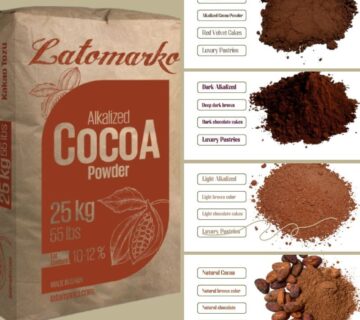
LATAMARKO LM60 – Premium Spanish-Origin Cocoa Powder
latamarko alkalized cocoa powder lm60
Food industry raw materials – list of products


No comment