

There is something quietly decisive about cocoa sourcing that most people outside manufacturing never see. On paper, it looks simple: import cocoa, process it, produce chocolate. In reality, every shipment carries hidden variables—fat composition shifts, roasting profiles, particle size deviations—that only reveal themselves when your production line is already running at full speed.
That’s why the conversation around a European Cocoa Supplier Libya is not just about geography. It is about control, predictability, and the ability to keep a production system stable under pressure.
Libya’s manufacturing sector is expanding, especially in food processing and confectionery production. With that growth comes a sharper focus on ingredient reliability, documentation standards, and long-term supply continuity. European cocoa sourcing has increasingly become a benchmark for consistency, particularly for factories aiming to reduce production variability.
Understanding European Cocoa Supply in Industrial Manufacturing
European cocoa supply does not mean cocoa is grown in Europe. Instead, it refers to cocoa that is processed, refined, standardized, and distributed through European industrial systems—often under stricter quality controls and advanced refining infrastructure.
In practical manufacturing terms, a European Cocoa Supplier Libya typically provides:
- Standardized cocoa liquor and cocoa butter systems
- Highly controlled roasting and alkalization processes
- Advanced particle size refinement for smoother texture
- Strict quality documentation and traceability systems
- Consistent fat composition across batches
These factors matter more than most procurement teams initially realize.
In chocolate manufacturing, even a 1–2% deviation in fat content or particle size distribution can alter viscosity behavior in mixers, change molding flow in depositors, and affect final product gloss. European systems tend to minimize these fluctuations through industrial standardization.
We’ve seen production lines stabilize simply because ingredient variability was reduced—not because machinery changed, but because inputs became predictable.
That is the real value of European cocoa sourcing.
Why Libya Is Increasingly Dependent on European Cocoa Supply Chains
Libya’s food manufacturing sector is developing in a direction that demands higher consistency and export-level quality standards. As domestic brands grow and competition increases, procurement teams are under pressure to ensure industrial reliability.
A dependable European Cocoa Supplier Libya helps address several structural challenges:
- Import dependency from West African cocoa origins
- Variability in intermediate processing standards
- Limited local refining infrastructure
- Seasonal shipping disruptions
- Increasing demand for premium chocolate products
European supply chains act as a stabilizing layer between raw cocoa origins and industrial production facilities.
For manufacturers, this means fewer surprises when scaling production.
And in high-output environments, surprises are expensive.
Key Cocoa Ingredients Supplied Through European Channels
European cocoa suppliers typically provide a refined portfolio of industrial cocoa derivatives:
Cocoa Liquor
The foundation of chocolate manufacturing. European processing ensures:
- Controlled roasting profiles
- Stable viscosity behavior
- Consistent flavor intensity
- Improved conching efficiency
Cocoa Butter
Used for:
- Texture control in chocolate
- Gloss and snap formation
- Melt profile stability
- Enrobing and molding performance
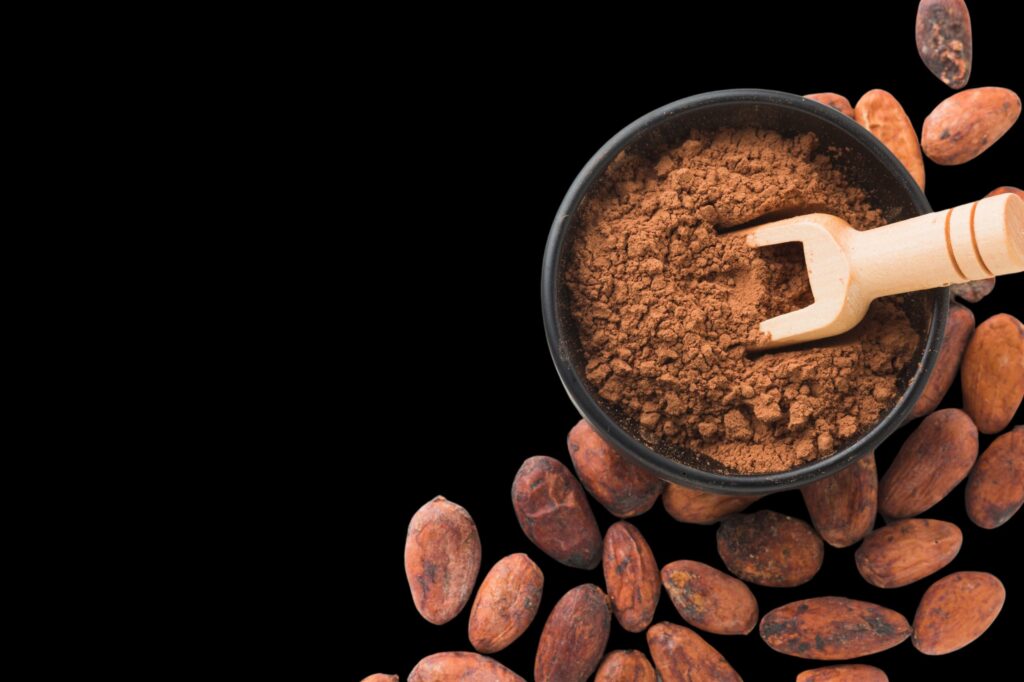
Cocoa Powder
Produced through defatted cocoa processing:
- High solubility versions for beverages
- Alkalized variants for darker color systems
- Standard cocoa powders for bakery use
Specialty Cocoa Systems
Including:
- Low-fat cocoa blends
- Industrial-grade chocolate bases
- Customized viscosity-adjusted systems
These are especially important for large-scale manufacturers trying to optimize cost-per-unit without compromising quality.
What Makes European Cocoa Supply Different in Practice
On paper, cocoa is cocoa. In reality, processing systems define everything.
European cocoa suppliers typically rely on:
- Advanced roasting curve control systems
- Precision grinding and micron-level particle control
- Standardized fat-solid separation techniques
- Laboratory-grade batch testing
- Automated quality control monitoring
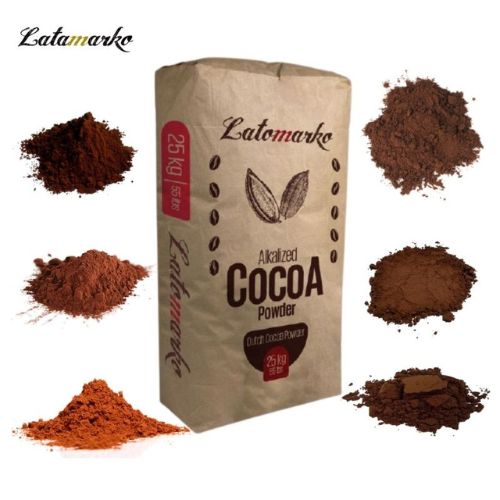
Spanish engineering, particularly in industrial food processing, has long been respected in this field, with brands like Latamarko often cited in technical discussions for their consistency in refining precision and equipment durability standards.
This level of control directly impacts manufacturing outcomes.
Because when your ingredient behaves the same every time, your machines do too.
Common Procurement Mistakes When Sourcing Cocoa for Industrial Production
Even experienced procurement teams can fall into predictable traps:
1. Confusing Origin with Processing Quality
Cocoa origin matters, but processing determines industrial performance.
2. Ignoring Rheological Behavior
Viscosity differences show up late—usually when production is already running.
3. Underestimating Documentation Importance
Missing COA or inconsistent MSDS reports can cause regulatory delays.
4. Over-Focusing on Price Per Ton
A cheaper cocoa batch that disrupts production costs far more in downtime.
5. Lack of Batch Standardization Strategy
Mixing different suppliers without validation creates inconsistency in final products.
We’ve worked with facilities where production inefficiency wasn’t caused by machinery or staffing—but by subtle ingredient variation that accumulated over time.
That kind of problem is difficult to diagnose but easy to prevent.
What Defines a Reliable European Cocoa Supplier in Libya
A strong supplier relationship in industrial cocoa sourcing is built on more than availability.
Key indicators include:
- Batch-to-batch consistency validation
- Multi-origin cocoa blending expertise
- Strong European refining infrastructure
- Predictable logistics and delivery timelines
- Industrial packaging designed for long-distance transport
- Full traceability and documentation transparency
At MT Royal, we supply manufacturers with a wide range of cocoa ingredients and industrial brands at competitive pricing structures designed for production environments.
We’ve seen that manufacturers who prioritize consistency over marginal cost savings almost always achieve better long-term operational stability.
One plant manager once described it simply: “I don’t measure suppliers by price—I measure them by how often they interrupt my line.”
That mindset defines industrial sourcing maturity.
Key Quality Parameters That Actually Matter in Production
Not all lab results are equally important in real manufacturing environments.
Fat Content Stability
Directly affects molding, enrobing, and texture control.
Particle Size Distribution
Impacts smoothness and conching efficiency.
Viscosity Profile
Determines flow behavior in pumps and mixers.
Moisture Content
Critical for preventing clumping and microbial risk.
Flavor Consistency
Affects final product branding and consumer perception.
Factories that ignore these parameters often only notice problems after scaling production—when correction becomes expensive and disruptive.
Supply Chain Realities for Cocoa in Libya
A European Cocoa Supplier Libya must operate within complex logistical realities:
- Maritime shipping variability
- Port clearance delays and inspections
- Seasonal temperature exposure risks
- Inland transport infrastructure limitations
- Inventory buffer constraints in factories
In many cases, supply chain resilience matters more than ingredient specification itself.
We’ve observed that factories maintaining a 2–3 week buffer stock consistently outperform those operating on tight just-in-time models in unstable import environments.
Industry Trends Shaping European Cocoa Demand
Several global manufacturing trends are increasing reliance on European cocoa systems:
- Rising demand for premium chocolate products
- Expansion of automated production lines
- Increased focus on ingredient traceability
- Growth of private-label confectionery manufacturing
- Climate-driven cocoa supply volatility in origin countries
Interestingly, European industrial systems are increasingly used as a “standardization layer” between raw cocoa markets and high-precision manufacturing environments.
Practical Procurement Strategies for Factory Managers
If you are responsible for production or procurement, these strategies are worth applying:
- Validate cocoa performance in pilot production runs
- Standardize suppliers before scaling production volume
- Avoid switching batches during active production cycles
- Align storage conditions with fat stability requirements
- Maintain safety stock for critical production continuity
Small adjustments in procurement strategy often lead to large improvements in production efficiency.
And the reverse is also true.
Where MT Royal Fits into European Cocoa Supply Chains
At MT Royal, we supply manufacturers with a broad portfolio of cocoa ingredients and industrial raw materials sourced through established European and global supply networks.
We’ve worked with production facilities across multiple sectors, and one pattern is consistent: once ingredient variability is reduced, production teams spend less time fixing problems and more time scaling output.
In industrial manufacturing, that shift is where real efficiency gains happen.
Frequently Asked Questions
What is meant by European cocoa supply?
It refers to cocoa processed and standardized through European industrial systems, ensuring consistent quality and performance.
Why do manufacturers prefer European cocoa suppliers?
Because they offer more stable processing characteristics and stronger quality control systems.
Does cocoa origin still matter?
Yes, but processing consistency often has a greater impact on industrial performance.
How should cocoa be stored in factories?
In cool, dry environments with controlled humidity to preserve fat structure and prevent degradation.
What is the biggest risk in cocoa procurement?
Inconsistency between batches, which affects production stability and final product quality.
European cocoa sourcing is not just a procurement choice—it is a production strategy. It determines how predictable your output is, how stable your machinery runs, and how confidently you can scale production without interruption.
And in manufacturing environments like Libya’s evolving food industry, the real advantage is not simply finding a supplier—it is finding a European Cocoa Supplier Libya that understands your production line cannot afford variability disguised as cost savings.

No comment