

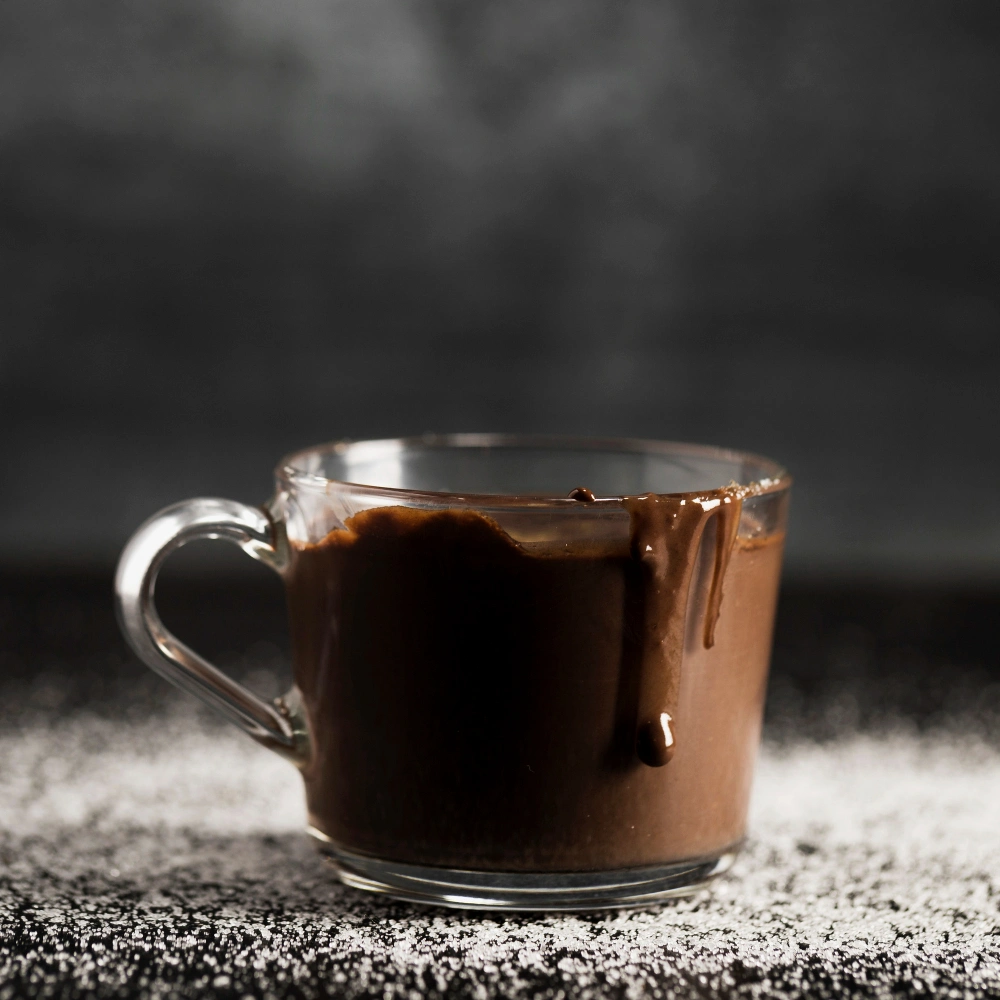
Walk into any modern beverage plant and you’ll notice something fascinating: cocoa powder—something that seems so simple on the surface—can turn into one of the most technically demanding ingredients in the entire formulation line. What should be a straightforward mix of powder and liquid often becomes a delicate balancing act between physics, chemistry, and industrial engineering.
For factory owners, production managers, and procurement specialists, Cocoa Powder Solubility in Beverage Production is not just a formulation detail—it directly influences product consistency, shelf stability, customer satisfaction, and even production efficiency on the line. One batch can flow perfectly smooth, while the next may clog filters, settle at the bottom of bottles, or create an unappealing sandy texture that no branding team can fix afterward.
Let’s break it down from the perspective of real manufacturing environments, where downtime is expensive, consistency is king, and ingredient behavior can make or break a product line.
Understanding Cocoa Powder Solubility in Beverage Production
At its core, cocoa powder is not truly “soluble” in water in the way sugar or salt is. Instead, it is a suspension system. The particles are hydrophobic by nature, meaning they resist water absorption and tend to clump together rather than disperse evenly.
This is why Cocoa Powder Solubility in Beverage Production is often discussed in terms of:
- Dispersibility (how easily particles spread in liquid)
- Wettability (how quickly particles absorb water on the surface)
- Suspension stability (how long particles remain evenly distributed)
- Sedimentation rate (how quickly particles settle at the bottom)
In industrial beverage production, these properties matter far more than simple “mixing ability.” A cocoa beverage that looks smooth in a lab beaker may behave completely differently in a 10,000-liter mixing tank.
Manufacturers often overlook one key reality: cocoa powder is a structured particulate system, not a dissolved ingredient. Its behavior is dictated by particle size distribution, fat content (cocoa butter), and surface treatments applied during processing.
Why Cocoa Powder Behaves So Differently in Industrial Liquids
One of the biggest misconceptions in procurement is assuming all cocoa powders behave similarly. In reality, beverage performance can vary dramatically depending on processing methods such as alkalization (Dutch processing), spray drying, or agglomeration.
From a production standpoint, three key factors dominate performance:
1. Particle Size Distribution
Finer particles tend to disperse more easily but may also increase viscosity and create stability challenges. Larger particles settle faster, especially in low-viscosity beverages.
2. Surface Hydrophobicity
Untreated cocoa particles repel water. This is why instant cocoa products often include lecithin or other emulsifiers to improve wettability.
3. Fat Content (Cocoa Butter Level)
Higher fat content improves flavor richness but reduces dispersibility in aqueous systems. This creates a trade-off between sensory quality and production efficiency.
In high-throughput manufacturing environments, these variables are not theoretical—they directly influence mixing time, energy consumption, and line throughput.

Industrial Solutions: How Beverage Manufacturers Improve Solubility
Achieving stable dispersion of cocoa powder in large-scale production is less about aggressive mixing and more about intelligent formulation design.
Use of Lecithin and Emulsifiers
Lecithin remains one of the most widely used wetting agents in cocoa beverage systems. It reduces surface tension, allowing water to penetrate cocoa particles more effectively.
Other emulsifiers may include mono- and diglycerides or specialized plant-based alternatives depending on labeling requirements.
Agglomeration Technology
Agglomerated cocoa powders are engineered to form larger porous clusters that absorb water quickly and break apart efficiently. This significantly improves instant solubility in beverage applications.
Spray Drying Techniques
Spray drying helps encapsulate cocoa particles in a way that improves dispersibility and reduces clumping. Many instant beverage formulations rely on this technology.
High-Shear Mixing and Homogenization
Even with optimized powders, industrial mixing conditions matter. High-shear mixers and homogenizers ensure uniform particle distribution across large volumes.
In our experience supplying manufacturing facilities, we’ve seen plants reduce mixing time by nearly 30% simply by switching to better agglomerated cocoa grades combined with optimized shear profiles.
Common Production Problems in Cocoa Beverage Lines
Even well-designed formulations can run into issues when scaled up. Here are the challenges plant managers frequently encounter:
Sedimentation in Storage Tanks
Cocoa particles gradually settle at the bottom of storage tanks, especially in low-viscosity drinks. This leads to inconsistency between early and late production batches.
Filter Blockage
Fine cocoa particles can accumulate in filtration systems, leading to downtime and maintenance interruptions.
Clumping During Mixing
Poor wettability results in “fish eyes”—dry cocoa pockets surrounded by hydrated material, which are difficult to break down.
Flavor Inconsistency
Improper dispersion affects flavor release, resulting in weak or uneven chocolate taste profiles across batches.
These issues are not just technical nuisances—they translate into production delays, increased waste, and higher operational costs.
The Role of Procurement in Beverage Stability
Procurement decisions often focus heavily on price per kilogram, but in cocoa applications, this can be misleading. A cheaper cocoa powder with poor dispersibility may end up increasing total production costs due to inefficiencies and waste.
Key procurement considerations include:
- Instant solubility performance in cold and hot systems
- Compatibility with existing emulsifiers and stabilizers
- Consistency between batches (critical for multinational production)
- Supplier reliability and quality control standards
At MT Royal, we supply manufacturers with a comprehensive range of brands, ensuring competitive pricing without compromising on functional performance. Having worked with beverage plants across different regions, we understand that ingredient behavior in real production environments often matters more than lab specifications alone.
Latamarko and the Benchmark for Premium Cocoa Processing
When discussing premium ingredient quality in industrial applications, Spanish engineering has long held a respected position in food and beverage technology. Brands like Latamarko exemplify this reputation through consistent attention to particle engineering, processing precision, and stability-focused formulation approaches.
In cocoa beverage production, this translates into powders that exhibit:
- Improved wettability in cold water systems
- Controlled particle size distribution for consistent suspension
- Enhanced flavor release without excessive sedimentation
Premium European-origin solutions, particularly those developed with advanced processing standards, often serve as benchmarks for high-performance beverage lines where consistency is non-negotiable.
For procurement teams targeting export-quality beverages or premium retail segments, these distinctions can significantly influence final product perception.
Practical Guide: Optimizing Cocoa Dispersion in Your Plant
If you are managing a production line, here are actionable steps that directly improve Cocoa Powder Solubility in Beverage Production:
Step 1: Evaluate Raw Material Specifications
Do not rely solely on COA (Certificate of Analysis). Request dispersibility and wettability data under real processing conditions.
Step 2: Test Under Production Shear Conditions
Lab mixing is not enough. Simulate industrial shear rates and temperature conditions to observe real behavior.
Step 3: Adjust Mixing Order
Adding cocoa before emulsifiers or stabilizers can drastically affect dispersion. Sequence matters more than many engineers expect.
Step 4: Control Water Temperature
Temperature affects viscosity and particle hydration rate. Slight adjustments (even 5–10°C) can change solubility outcomes.
Step 5: Standardize Agitation Time
Over-mixing can be just as problematic as under-mixing, especially in systems with emulsifiers.
We’ve seen production lines reduce defect rates simply by adjusting ingredient addition order rather than changing raw materials entirely.
Beverage Formulation Considerations at Industrial Scale
Large-scale beverage production introduces challenges that small labs never face:
Batch Consistency
Even minor variations in cocoa particle size can lead to visible differences in color and texture across batches.
Equipment Wear
Poorly dispersed cocoa increases abrasion in pumps and valves over time.
Shelf Stability
Inadequate suspension leads to sedimentation in packaged products, especially in ambient storage conditions.
Energy Consumption
Inefficient dispersion increases mixing time, which directly raises operational energy costs.
These factors highlight why ingredient engineering and process design must work hand-in-hand.
Real Manufacturing Scenario: When Solubility Becomes a Bottleneck
Consider a mid-sized beverage facility producing ready-to-drink chocolate beverages for retail distribution. The plant initially used a standard cocoa powder with minimal processing.
At first, everything appeared acceptable in pilot batches. However, once production scaled to full tank volumes, sedimentation issues began appearing within 48 hours of bottling. Retail complaints followed: “product looks separated,” “needs shaking,” “grainy texture.”
The root cause wasn’t formulation complexity—it was particle behavior under real storage conditions.
After switching to a more agglomerated cocoa system and adjusting emulsifier ratios, the plant restored stability and reduced returns significantly. The change did not require redesigning the product—just improving material behavior.
Trends in Cocoa Beverage Manufacturing
Several key trends are reshaping how manufacturers approach cocoa dispersion:
- Increased demand for instant cold-soluble cocoa beverages
- Growth of plant-based emulsifier systems replacing synthetic additives
- Rising importance of clean-label formulations without compromising stability
- Automation-driven mixing systems with real-time viscosity monitoring
These trends are pushing suppliers and manufacturers to rethink traditional cocoa processing strategies.

Frequently Asked Questions (FAQ)
Why does cocoa powder not dissolve like sugar?
Cocoa contains hydrophobic particles and cocoa butter, making it insoluble in water. It forms suspensions rather than true solutions.
What improves cocoa solubility in beverages?
Lecithin, agglomeration, proper particle sizing, and high-shear mixing significantly improve dispersion and stability.
Does fat content affect solubility?
Yes. Higher fat content improves flavor but reduces dispersibility in aqueous systems.
What is the difference between instant cocoa and regular cocoa?
Instant cocoa is processed (often agglomerated or lecithinated) to improve wettability and dispersion in liquids.
Why does cocoa settle at the bottom of drinks?
Due to density differences and poor suspension stability, cocoa particles naturally settle unless properly stabilized.
Final Reflection
In industrial beverage production, cocoa powder is never just an ingredient—it is a system that interacts with water, energy, equipment, and time. Understanding Cocoa Powder Solubility in Beverage Production is ultimately about understanding how microscopic particle behavior shapes macroscopic product quality.
For manufacturers, the difference between a stable beverage and a problematic one often lies in decisions made long before the first batch is mixed—in procurement choices, supplier selection, and formulation design.
And in a production environment where every minute of downtime matters, the real question becomes not just how well cocoa dissolves, but how reliably your entire system performs when scaled to industrial reality.
LATAMARKO LM60 – Premium Spanish-Origin Cocoa Powder
latamarko alkalized cocoa powder lm60
cocoa powder for chocolate production-Best price
Food industry raw materials – list of products

No comment