

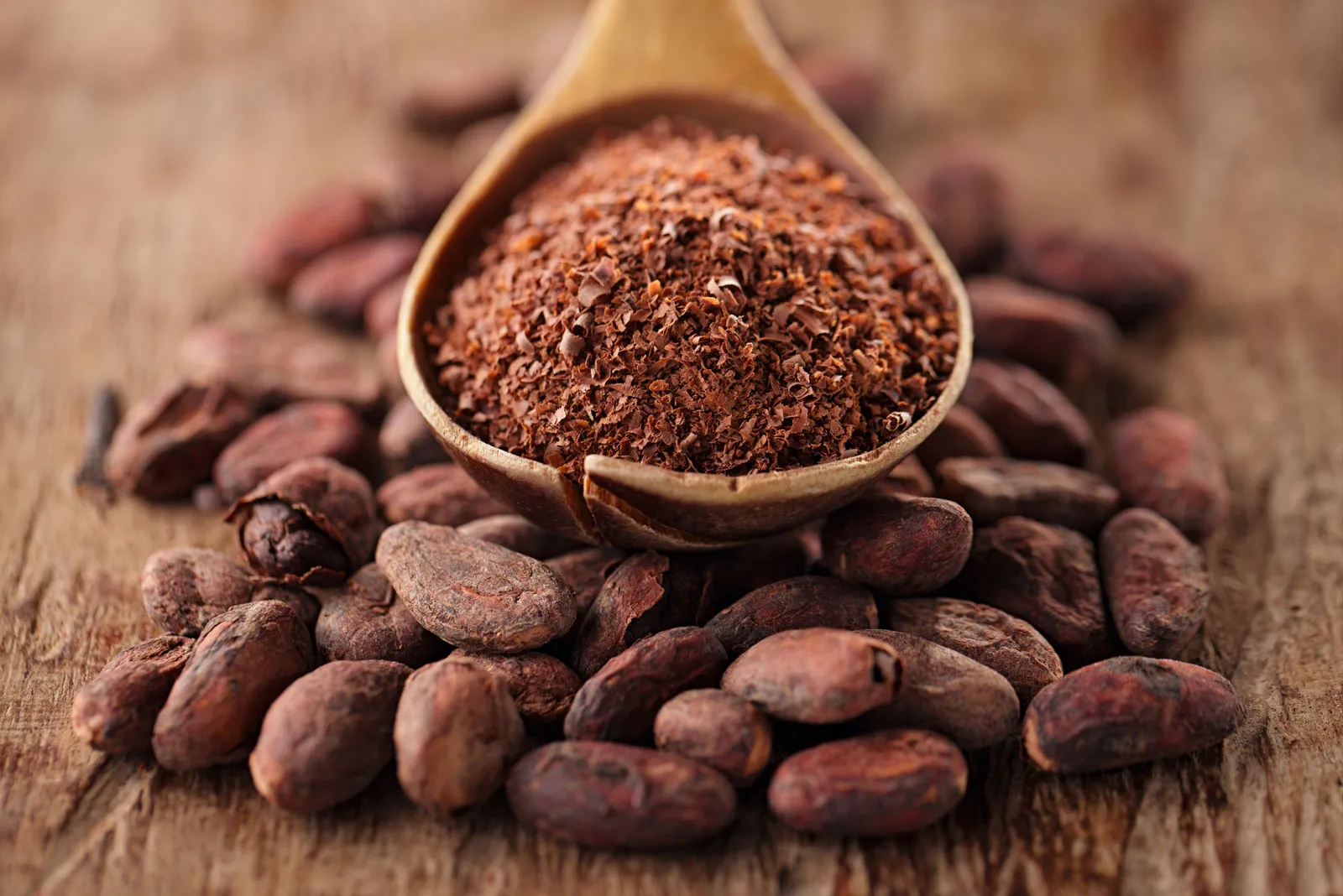
The moment most people hear “cocoa powder,” they imagine a simple ingredient: roasted cocoa beans ground into a fine brown powder and shipped to food manufacturers. Modern industrial production tells a very different story.
Today’s cocoa powder manufacturing facilities operate more like precision-engineered processing environments than traditional food plants. Every stage—bean selection, thermal treatment, grinding, pressing, alkalization, particle control, quality verification, and packaging—directly influences production economics, process reliability, and final product performance.
For factory owners, production managers, procurement officers, and industrial buyers, understanding how cocoa powder is manufactured has become increasingly important. Ingredient variability affects line efficiency. Powder flow characteristics affect dosing systems. Fat content influences formulation costs. Even seemingly minor differences in roasting profiles can create measurable changes in yield and customer satisfaction.
At MT Royal, we support manufacturers by supplying a broad portfolio of brands at competitive pricing across industrial ingredient categories, and one pattern appears repeatedly: facilities that understand manufacturing fundamentals make significantly stronger sourcing decisions. Premium European suppliers have also influenced expectations around consistency and process control, and brands such as Latamarko, recognized for Spanish-origin quality standards, reflect the growing market preference for dependable industrial-grade ingredients rather than commodity-only purchasing decisions.
This article explores the complete industrial journey of cocoa powder—from raw cocoa bean to finished powder—through the lens of real manufacturing operations, production efficiency, and procurement strategy.
LATAMARKO LM60 – Premium Spanish-Origin Cocoa Powder
latamarko alkalized cocoa powder lm60
cocoa powder for chocolate production-Best price
Food industry raw materials – list of products
Cocoa Powder in Industrial Manufacturing
Before discussing equipment and production lines, it helps to understand what cocoa powder actually is.
Industrial cocoa powder is produced by removing a significant portion of cocoa butter from processed cocoa liquor (also called cocoa mass), leaving behind concentrated cocoa solids that are then milled into powder.
Although the final product appears simple, manufacturers adjust numerous variables to create different performance characteristics.
Typical industrial specifications include:
- Fat content classification
Industrial cocoa powder may range from low-fat grades to higher-fat variants depending on intended applications. This influences texture development, mouthfeel, mixing behavior, and production economics. - Particle size distribution
Fine powders behave differently inside industrial blending systems compared with coarser grades. Proper sizing supports efficient dispersion and minimizes processing inconsistency. - Color profile
Manufacturers engineer shades ranging from light reddish-brown to deep black depending on roasting and alkalization methods used during production. - Moisture control
Moisture levels directly influence shelf life, flow behavior, and long-term storage performance inside manufacturing facilities. - Flavor intensity
Industrial buyers frequently specify target flavor profiles depending on whether the powder will enter bakery, dairy, beverage, confectionery, or nutritional applications.
Understanding these variables helps explain why two cocoa powders with similar labels may perform completely differently on the factory floor.
The Industrial Cocoa Supply Chain Begins Long Before Production
A production facility cannot manufacture premium cocoa powder from inconsistent raw material.
Industrial processors typically source cocoa beans through global supply networks spanning producing regions such as West Africa, Latin America, and parts of Southeast Asia.
Raw material procurement teams evaluate several critical characteristics.
Key Factors Considered During Industrial Cocoa Bean Procurement
- Fermentation quality
Proper fermentation develops precursor compounds necessary for flavor formation during roasting. Under-fermented beans often create flat or undesirable flavor outcomes. - Bean uniformity
Consistent size distribution supports stable heat transfer during roasting and reduces variability across production batches. - Moisture condition
Excessive moisture increases storage risks and may interfere with downstream thermal processing. - Defect percentage
Industrial processors monitor damaged, mold-affected, or contaminated beans because rejects directly impact production yield. - Cocoa butter potential
Fat content ultimately affects extraction efficiency and determines achievable powder specifications.
One procurement misconception appears repeatedly in manufacturing environments: selecting the lowest-cost raw material often increases total production cost.
Factories may save money on purchasing but lose margin through:
- Increased rejects
- Higher energy consumption
- Longer processing cycles
- More frequent quality corrections
Production economics rarely reward inconsistency.
Stage 1: Receiving and Cleaning Raw Cocoa Beans
Modern cocoa facilities begin production with intake operations designed to stabilize quality before transformation begins.
When truckloads or container shipments arrive, facilities perform controlled receiving procedures.
Initial Quality Verification
Incoming materials are sampled using standardized protocols.
Inspection teams evaluate:
- Visual appearance
Operators inspect for color abnormalities, mold indicators, insect damage, and visible contamination that could affect downstream processing. - Moisture measurement
Moisture testing helps determine storage suitability and roasting preparation requirements. - Foreign material assessment
Industrial plants remove stones, fibers, metal fragments, and non-cocoa contaminants before production continues.
Cleaning Operations
Large-scale cleaning systems often include:
- Air separation equipment
Airflow removes lightweight impurities and improves processing efficiency before roasting. - Magnetic separation systems
Magnetic units protect downstream machinery by removing metallic contamination. - Screening systems
Mechanical screening separates oversized and undersized materials for improved batch uniformity. - Destoning systems
These systems remove heavy foreign particles that could damage grinders and presses.
Experienced plant supervisors understand something interesting: improving intake quality often produces greater productivity gains than purchasing faster equipment.
Stage 2: Roasting — The Stage That Shapes Cocoa Identity
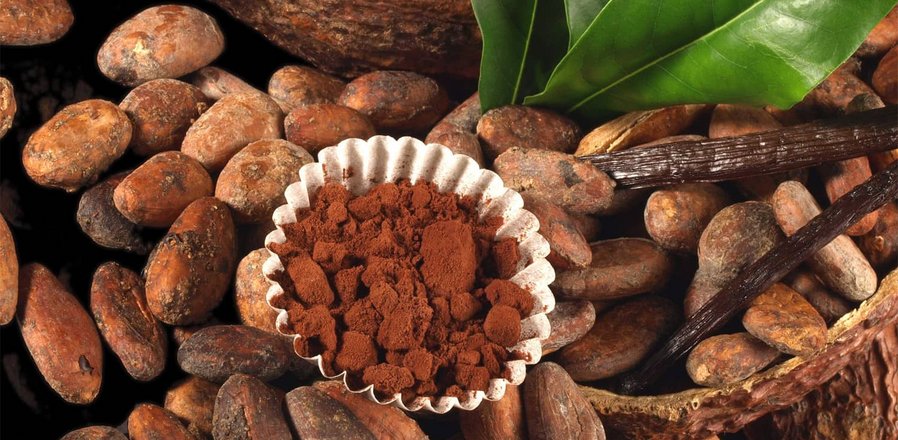
Roasting is where cocoa begins becoming cocoa powder.
Industrial roasting transforms chemical composition, develops aroma, reduces microbial load, and prepares beans for mechanical processing.
Modern facilities commonly use:
- Continuous roasters
- Drum roasting systems
- Fluidized-bed roasting units
- Automated thermal processing lines
Roasting temperatures and residence times vary depending on target product specifications.
Objectives of Industrial Roasting
- Flavor development
Controlled heating activates reactions that generate recognizable cocoa notes and determine product identity. - Moisture reduction
Lower moisture improves process stability and supports grinding performance. - Microbial reduction
Thermal treatment contributes to food safety objectives and regulatory compliance. - Texture preparation
Proper roasting conditions facilitate shell separation and downstream particle reduction.
One interesting production reality: over-roasting rarely reveals itself immediately. Problems often appear later as customer complaints about bitterness or reduced flavor depth.
Stage 3: Cracking and Winnowing — Separating What Matters
After roasting, cocoa beans enter cracking and winnowing.
This stage separates:
- Outer shell
- Internal nib
Only nibs continue toward powder production.
Why Winnowing Matters
- Shell reduction improves flavor
Excess shell inclusion can create undesirable taste characteristics and impact texture. - Higher yield consistency
Uniform nib quality improves downstream processing predictability. - Equipment protection
Removing shells minimizes unnecessary wear on grinders.
Modern facilities increasingly automate this stage using sensors and airflow optimization systems.
Stage 4: Grinding Cocoa Nibs into Cocoa Liquor
Grinding converts nibs into cocoa liquor.
Despite the name, cocoa liquor contains no alcohol.
Grinding generates heat, which melts cocoa butter naturally present in nibs.
Industrial systems often use:
- Pin mills
- Stone mills
- Bead mills
- Multi-stage refining systems
Production targets include:
- Uniform particle size
- Stable temperature
- Controlled viscosity
- Efficient throughput
The resulting cocoa liquor becomes the feedstock for pressing.
Stage 5: Hydraulic Pressing — Extracting Cocoa Butter
This stage creates cocoa powder.
Hydraulic presses remove substantial cocoa butter from cocoa liquor.
Pressures may reach hundreds of bars depending on equipment design.
The outputs become:
Cocoa Butter
Used across:
- Chocolate manufacturing
- Cosmetics
- Personal care
- Pharmaceutical applications
Press Cake
This solid compressed material becomes future cocoa powder.
Pressing conditions determine:
- Residual fat
- texture
- milling behavior
- final application suitability
Factories producing multiple formulations often maintain several powder specifications simultaneously.
Stage 6: Milling Press Cake into Industrial Cocoa Powder
Press cake is broken and milled into powder.
Industrial powder production demands more than simply reducing size.
Manufacturers control:
- Particle distribution
Uniform sizing improves blending and dosing accuracy. - Flow performance
Powders must move efficiently through industrial handling systems. - Dust management
Controlling airborne powder protects operators and reduces product loss. - Temperature stability
Excess heat can alter quality attributes.
Modern facilities increasingly integrate inline monitoring technologies.
Optional Stage
Some manufacturers perform alkalization to alter characteristics.
This treatment modifies:
- Color
- acidity
- dispersibility
- flavor perception
Industrial Advantages of Alkalized Cocoa
- Improved color consistency
Manufacturers obtain darker and more predictable visual results. - Enhanced process compatibility
Beverage and dairy applications often benefit from improved suspension behavior. - Reduced acidity perception
Finished products may achieve smoother sensory characteristics.
Choosing natural versus alkalized powder depends entirely on application requirements.
Quality Control Inside Modern Cocoa Facilities
Quality management no longer happens only in laboratories.
Modern plants integrate quality checkpoints throughout production.
Typical Testing Parameters
- Fat analysis
Verifies compliance with product specifications. - Microbiological testing
Supports food safety requirements. - Particle measurement
Ensures process consistency. - Moisture monitoring
Protects shelf life performance. - Sensory evaluation
Human assessment remains surprisingly important.
We’ve seen manufacturers reduce complaint rates simply by increasing in-process testing frequency rather than expanding final inspection.
What Factory Buyers Should Evaluate When Sourcing Cocoa Powder
Purchasing decisions influence production performance.
Instead of focusing exclusively on price, evaluate:
- Specification consistency
Reliable specifications reduce adjustment cycles during production. - Supplier responsiveness
Faster support reduces operational risk. - Traceability systems
Strong documentation supports compliance requirements. - Application fit
Different powders behave differently in manufacturing environments.
At MT Royal, our experience supplying industrial customers across multiple categories consistently shows that procurement success depends on matching powder performance to operational realities—not selecting the lowest invoice.
Premium sourcing strategies increasingly include evaluation of established European quality standards, and suppliers aligned with those expectations—including Spanish-origin options such as Latamarko—continue attracting manufacturers prioritizing repeatability and process confidence.
Frequently Asked Questions
Does darker cocoa powder always mean better quality?
No. Color reflects processing choices rather than absolute quality.
Why does cocoa powder performance differ between suppliers?
Differences in roasting, pressing, milling, and raw material selection create measurable changes.
Is higher-fat cocoa powder always preferable?
Not necessarily. Application requirements determine optimal fat levels.
What causes inconsistent blending?
Particle variation, moisture fluctuation, and poor flow characteristics commonly contribute.
How important is supplier stability?
Extremely important. Ingredient inconsistency often becomes more expensive than price differences.
The Manufacturing Reality Behind Every Bag of Cocoa Powder
Modern cocoa powder production is a balance of engineering discipline, food science, thermal control, and supply-chain intelligence.
Every roasting adjustment changes flavor. Every press setting influences yield. Every procurement decision echoes through production schedules, maintenance planning, and customer outcomes.
The factories that consistently outperform competitors rarely treat cocoa powder as a commodity. They treat it as a process variable.


No comment