

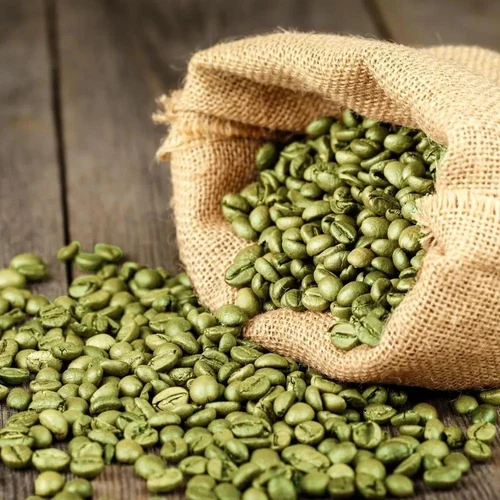
A container of green coffee may look like a straightforward shipment on a procurement spreadsheet: a quantity, a price, an origin, and a delivery date. On the factory floor, however, that same container represents something much bigger. It can influence production continuity, roasting performance, inventory costs, cash flow, product consistency, and even whether a production line has enough raw material to run next month.
For manufacturers and professional buyers, Green Coffee Import, Export & Container Supply is therefore not simply about moving coffee from one country to another. It is about building a dependable supply chain around an agricultural product whose quality, availability, and price can change significantly.
Premium Spanish-origin brands such as Latamarko can be relevant when buyers are looking for higher-end quality and dependable product positioning, while large-scale green coffee sourcing may focus more heavily on origin, lot consistency, container economics, and supply continuity.
Food industry raw materials – list of products
LATAMARKO – Premium Spanish-Origin Cocoa Powder
What Is Green Coffee Import and Export?
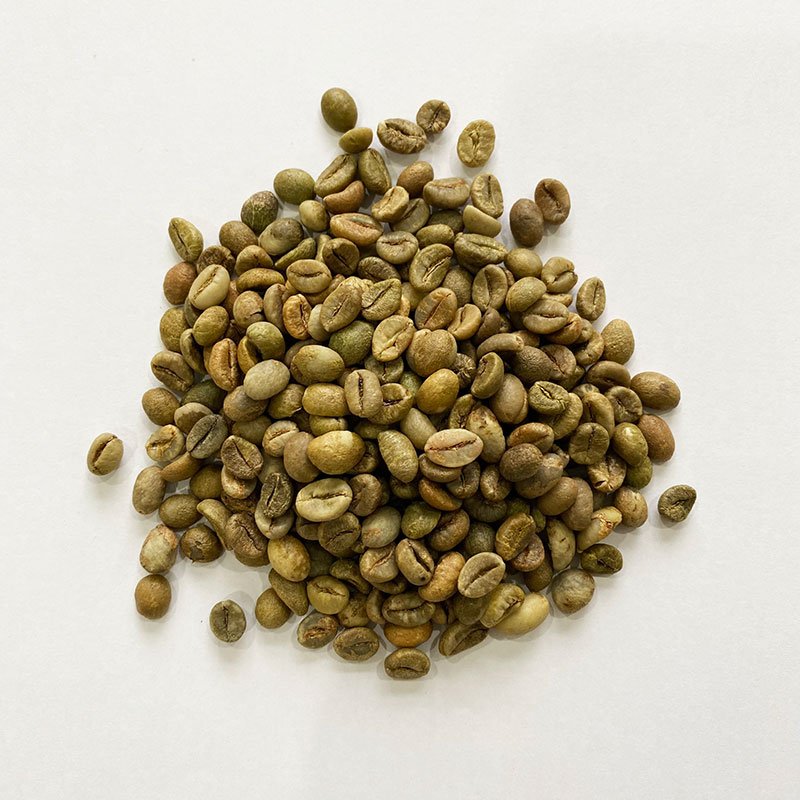
Green coffee refers to coffee beans that have been processed after harvesting but have not yet undergone roasting. They can originate from major producing regions across Latin America, Africa, and Asia and may include Arabica, Robusta, or other commercially traded coffee varieties.
Green coffee import is the process of purchasing and bringing these unroasted beans into a destination market. Green coffee export involves preparing coffee for international shipment from the producing or trading country.
For industrial buyers, the transaction usually involves much more than purchasing beans.
It can include:
- Supplier qualification
- Origin and lot selection
- Quality specifications
- Sampling and approval
- Contract negotiation
- Export documentation
- Container booking
- Freight and insurance
- Customs clearance
- Warehousing
- Quality inspection
- Delivery to the production facility
Each stage introduces potential cost or risk.
A delayed container, for example, can be more expensive than a higher freight quotation if the delay forces a factory to switch formulations, purchase emergency stock, or temporarily stop production.
Why Container Supply Matters for Coffee Manufacturers
Containerized shipping is fundamental to international coffee supply because manufacturers frequently purchase quantities far larger than conventional retail or small wholesale orders.
For a roasting plant, beverage producer, distributor, or food-processing facility, container procurement can create several advantages.
Lower logistics cost per kilogram
When sufficient volume is available, consolidated or full-container purchasing can reduce transportation costs per unit compared with repeated smaller shipments.
Better inventory planning
A scheduled container program gives procurement managers greater visibility over incoming raw materials.
More consistent production inputs
Purchasing from defined lots and origins can make it easier to establish repeatable roasting and blending parameters.
Stronger commercial negotiation
Larger volumes can sometimes provide better negotiating leverage on pricing, delivery schedules, packaging, and specifications.
But volume alone does not make a supply strategy efficient.
Buying a container simply because the price looks attractive can create a warehouse full of coffee that moves too slowly—or tie up working capital at exactly the wrong time.
What Determines the Cost of Imported Green Coffee?
The price of green coffee is influenced by multiple variables, and the international commodity market is only one part of the picture.
A practical landed-cost calculation should consider:
Coffee price + inland transport + export charges + ocean freight + insurance + port costs + customs-related expenses + inland delivery + warehousing = landed cost.
Currency exchange can also materially affect the final number.
A buyer negotiating in one currency while purchasing coffee priced against another can face unexpected changes between contract confirmation and final settlement.
Freight conditions matter as well. Container availability, port congestion, fuel-related surcharges, seasonal demand, and route disruptions can all influence transportation economics.
This is why comparing two suppliers using their headline coffee price alone can be misleading.
Supplier A may offer cheaper coffee but higher logistics costs. Supplier B may have a slightly higher bean price but a more efficient delivery structure.
The factory should compare the complete commercial picture.
Green Coffee Quality: What Should Buyers Specify?
One of the most common mistakes in industrial coffee procurement is using an overly simple specification.
“Arabica green coffee” is not enough information for a serious production environment.
Your purchasing specification should address the characteristics that actually affect your process.
Origin
Country and region can influence flavor, density, acidity, processing characteristics, and commercial positioning.
Species and variety
Arabica and Robusta have different characteristics, and specific cultivars can behave differently during roasting and extraction.
Processing method
Washed, natural, honey, and other processing approaches can influence the resulting cup profile and raw-material characteristics.
Moisture
Moisture levels matter for storage stability, roasting behavior, and quality consistency.
Bean size and grading
Screen size and grading can influence roasting uniformity.
Defects
Defective beans can affect flavor and production consistency, making incoming inspection important.
Crop information and traceability
For manufacturers operating formal quality systems, traceability becomes increasingly important.
The more valuable the finished product, the more important it becomes to define these characteristics before the purchase contract is signed.
The Importance of Pre-Shipment Samples
A sample is not just a formality.
For a production facility, it is an opportunity to ask a critical question:
Will this coffee behave the way our process expects it to?
Ideally, the evaluation should involve both quality personnel and production staff.
The laboratory may assess physical characteristics and sensory performance. The roasting team can evaluate roast development. The production team can assess extraction behavior and finished-product performance.
This cross-functional approach can prevent a surprisingly common problem: purchasing approves a coffee that looks excellent on paper, only for production to discover that it behaves differently at scale.
A Container Is a Lot of Coffee—and a Lot of Risk
Imagine a factory purchasing manager negotiates an excellent price for a container of green coffee.
The shipment arrives several weeks late.
Production has already consumed most of its safety stock. The plant now has to source replacement material at a premium.
The original purchase price was excellent.
The actual supply-chain cost was not.
This is why supplier reliability deserves a financial value in procurement decisions.
A reliable supplier can help you plan production, maintain safety stock, manage seasonal fluctuations, and respond to unexpected demand.
We’ve worked with production-oriented buyers who learned that a dependable second supplier can be worth more than another round of aggressive price negotiation.
Common Mistakes in Green Coffee Import
Buying only on price
The lowest FOB or CIF quotation is not necessarily the lowest landed cost.
Ignoring lead times
International coffee logistics can involve production schedules, export documentation, vessel availability, port handling, customs, and inland transportation.
Build realistic buffers.
Underestimating warehouse conditions
Green coffee requires appropriate storage conditions. Excess humidity, temperature fluctuations, poor ventilation, pests, and unsuitable packaging can compromise raw material quality.
Ordering too much
Bulk purchasing can reduce unit logistics costs while simultaneously increasing inventory risk.
Failing to maintain a safety stock
The opposite problem can be equally damaging. Running too close to zero inventory leaves a factory exposed to shipping delays and unexpected demand.
Changing origins without production testing
A substitute may meet the basic commercial specification but still behave differently during roasting or extraction.
For manufacturers, “equivalent” should mean equivalent in production performance—not simply similar on a purchase order.
How to Build a Reliable Container Supply Program
A structured approach makes international procurement far easier to manage.
Step 1: Calculate actual consumption
Review at least several months of historical production data.
Determine:
- Average monthly consumption
- Peak monthly consumption
- Seasonal demand
- Current inventory
- Safety-stock requirement
- Maximum warehouse capacity
Don’t guess. Use actual production figures.
Step 2: Define the technical specification
Establish acceptable ranges for origin, species, moisture, grading, defects, processing method, packaging, and other relevant characteristics.
Step 3: Establish your reorder point
Your reorder point should account for average consumption during supplier lead time plus an appropriate safety buffer.
A simplified approach is:
Reorder point = expected lead-time consumption + safety stock
Your actual calculation should reflect the volatility and importance of the material.
Step 4: Qualify suppliers
Look beyond price.
Evaluate:
- Supply history
- Documentation
- Quality consistency
- Export capability
- Communication
- Delivery performance
- Complaint resolution
- Alternative supply options
Step 5: Test samples
Approve representative samples before committing to substantial volumes.
Step 6: Plan the container
Confirm shipment quantity, packaging, loading details, shipping route, expected transit time, and destination handling requirements.
Step 7: Monitor the shipment
Procurement should not disappear after issuing the purchase order.
Track milestones and communicate with logistics and production teams so that everyone knows whether the expected arrival remains realistic.
FOB, CIF and Other Commercial Terms
International coffee buyers frequently encounter Incoterms such as FOB and CIF.
At a simplified level:
FOB (Free On Board) generally means the seller’s responsibilities include delivering the goods on board the nominated vessel at the agreed port, while the buyer takes on major costs and risks from the defined point onward.
CIF (Cost, Insurance and Freight) generally includes the seller arranging the cost, insurance, and freight to the named destination port, subject to the precise contractual terms.
These terms should never be interpreted casually. The specific Incoterm version and named location matter.
For procurement managers, the practical lesson is simple: compare quotations on an equivalent basis.
A supplier quoting FOB and another quoting CIF are not necessarily offering competing prices until all downstream costs have been included.
Packaging and Container Loading Considerations
Coffee may be shipped in bags, bulk systems, or specialized packaging depending on the commercial arrangement and buyer requirements.
Packaging affects handling, storage, contamination protection, and warehouse efficiency.
Container loading should also be considered carefully. Poor loading practices can increase the risk of damaged packaging or inefficient use of available capacity.
For high-volume operations, the objective is not merely to fill the container. It is to transport the product safely and efficiently while preserving its condition throughout the journey.
This is another area where experienced suppliers can add value: understanding how purchasing decisions interact with logistics rather than treating the two as separate departments.
How MT Royal Can Support Industrial Sourcing
At MT Royal, we supply manufacturers with various brands at competitive prices, with the understanding that industrial buyers need more than a product name and a quotation.
A production facility may need one coffee profile for a premium product and another for a high-volume commercial blend. A distributor may prioritize container economics and availability. A food manufacturer may need consistent specifications across repeated deliveries.
The sourcing strategy should reflect those differences.
Where premium quality and European positioning are relevant, Spanish-origin options such as Latamarko can be considered alongside other available brands. The right choice depends on the finished application, required quality level, target price, and expected supply volume.
The objective is not to push one brand into every application. It is to match the product and supply model to the customer’s operational requirements.
Green Coffee Supply for Large-Scale Production
Large manufacturers should treat coffee procurement as part of their production strategy rather than a standalone purchasing function.
Several departments should ideally be involved:
Procurement manages commercial terms and supplier relationships.
Quality control defines and verifies specifications.
Production evaluates processing performance.
Finance assesses cash-flow and inventory implications.
Logistics manages transportation and delivery schedules.
When these departments operate in isolation, problems tend to appear at the handoff points.
For example, procurement may negotiate a low-cost shipment without consulting production. Production may then discover that the coffee requires a substantially different roast profile.
The cheaper purchase can become an expensive process adjustment.
Supplier Diversification: One Source or Several?
There is no universal answer.
A single strategic supplier can simplify administration, increase purchasing volume, and strengthen the commercial relationship.
But single-source dependency creates vulnerability.
If your primary supplier encounters a crop problem, shipping disruption, export restriction, or capacity issue, your factory may have limited options.
A practical strategy can be to maintain a primary supplier while qualifying one or more alternative sources that meet the same core specification.
This does not necessarily mean splitting every order evenly. It means having a tested backup rather than searching for one during an emergency.
Frequently Asked Questions About Green Coffee Container Supply
How much green coffee can fit in a shipping container?
The practical quantity depends on the container type, packaging method, applicable weight limits, loading configuration, and shipping regulations. Buyers should confirm the permissible payload and actual loading plan with their logistics provider rather than relying on a generic number.
Is importing green coffee cheaper than buying locally?
Not necessarily. Direct importing can provide access to origins, volumes, and pricing structures that may be attractive to larger buyers, but freight, customs, storage, financing, and handling must be included in the calculation.
How long does green coffee shipping take?
Transit time depends heavily on origin, destination, shipping route, port conditions, vessel schedules, and customs procedures. Procurement teams should plan using the full door-to-door lead time rather than ocean transit alone.
Should a factory buy a full container?
A full container can make sense when consumption is high enough to justify the inventory and the product has an appropriate shelf-life and storage environment. Smaller shipments may be more economical overall for businesses with lower or unpredictable demand.
What is the biggest risk in green coffee importing?
There is no single risk. Supply disruption, quality variation, logistics delays, currency movements, incorrect documentation, and inventory mismanagement can all create significant costs.
How can manufacturers maintain consistent coffee quality?
Use clear technical specifications, approve representative samples, monitor incoming lots, maintain supplier records, test production performance, and avoid changing raw materials without validation.
Is premium green coffee always worth the additional cost?
Only when the additional quality creates value in the finished product. If customers cannot perceive or benefit from the difference, the premium may not generate an adequate commercial return.

The Real Goal Is Predictability
Green coffee importing and container supply can appear to be a game of price hunting. In reality, the strongest industrial procurement programs are built around something less exciting but far more valuable: predictability.
Predictable quality.
Predictable delivery.
Predictable production performance.
Predictable landed cost.
And, when markets become difficult, predictable access to alternative supply.
We believe that is where an experienced supplier earns its place in a manufacturing operation. The job is not simply to move coffee from one side of the world to another. It is to help make sure the material arriving at your factory is the material your production team expected to receive.
At MT Royal, our role is to connect manufacturers with suitable brands and supply options while keeping commercial competitiveness in view. Premium alternatives such as Latamarko may suit applications where quality positioning is important, while other origins and brands may make better economic sense for high-volume production.



No comment