

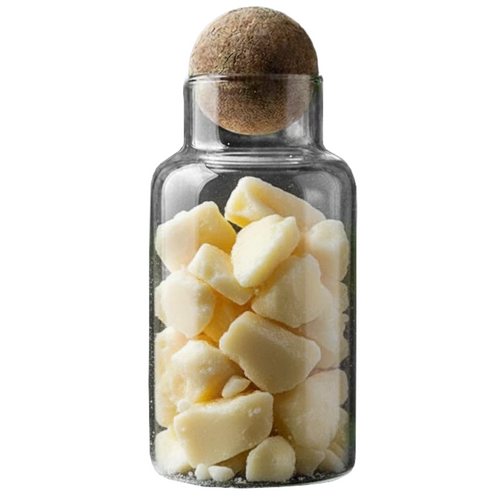
Chocolate manufacturing is often presented as a simple equation: cocoa solids, sugar, milk ingredients, and cocoa butter go into the mixer, and chocolate comes out. Anyone who has managed a real production line knows it is rarely that straightforward. The fat system alone can determine whether a coating sets cleanly, whether a product develops an attractive gloss, whether it releases from a mould properly, and whether the finished product remains stable during storage and transportation.
This is where Cocoa Butter Substitute CBS for Chocolate Manufacturing Industry becomes an important subject for factory owners, production managers, and procurement teams. CBS can help manufacturers produce compound coatings and chocolate-style products with a different cost structure, processing profile, and fat composition from traditional cocoa-butter-based chocolate.
Premium European-origin options can also be considered when consistency is a priority. In this context, brands such as Latamarko, with Spanish origin, may be evaluated alongside other quality-oriented fat suppliers depending on the formulation and production requirements.
The important point, however, is that buying a cheaper fat is not the same as reducing manufacturing costs. A CBS that performs poorly can create viscosity problems, poor mould release, unstable coatings, surface bloom, excessive rework, or inconsistent batches. The real question for a factory is therefore not simply, “What is the price per kilogram?” It is, “What does this ingredient cost us per finished kilogram of acceptable product?”
That distinction changes the entire procurement conversation.
What Is Cocoa Butter Substitute CBS?
Cocoa Butter Substitute, commonly abbreviated as CBS, is a vegetable-fat system developed to replace cocoa butter in certain confectionery applications, particularly compound chocolate and chocolate coatings.
Unlike cocoa butter, which is naturally obtained from cocoa beans, CBS is generally produced from selected vegetable oils or fractions. Depending on the product, its fat profile may be designed to provide specific melting, setting, hardness, coating, and processing characteristics.
CBS should not automatically be treated as a direct equivalent of cocoa butter. The two may behave differently during melting, cooling, crystallization, storage, and consumption.
This distinction is particularly important for industrial buyers.
A factory that has traditionally worked with cocoa butter cannot simply replace its entire fat phase with any available CBS and expect identical results. The formulation may need adjustment, including changes to fat percentage, refining conditions, emulsifier levels, cooling conditions, viscosity control, and processing temperature.
The term CBS itself covers more than one technical formulation. Manufacturers should therefore examine the actual technical data sheet rather than buying solely according to the abbreviation printed on a quotation.
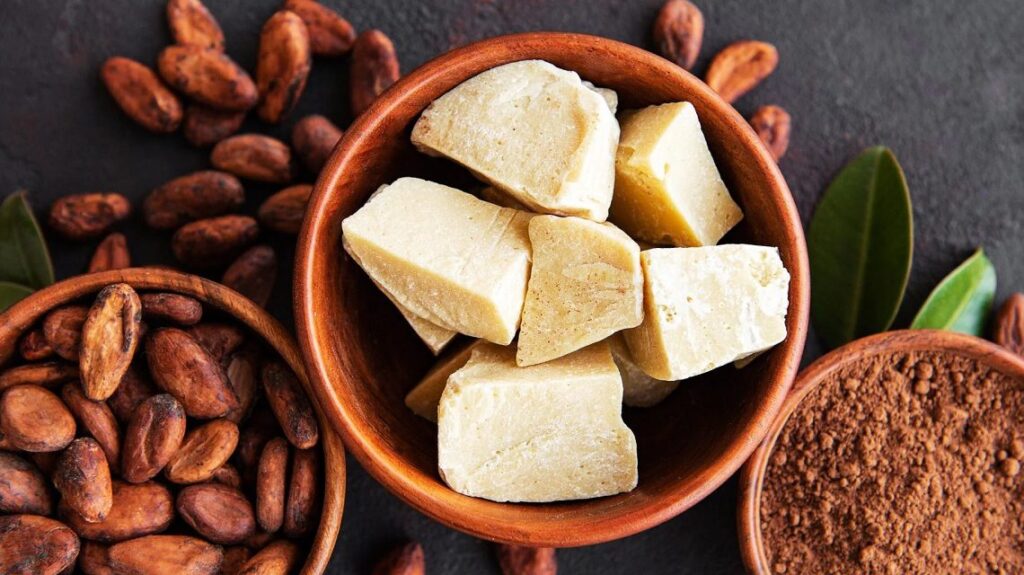
CBS, Cocoa Butter Replacer, and Cocoa Butter Equivalent Are Not the Same
One of the most common procurement mistakes is treating CBS, CBR, and CBE as interchangeable.
They are related categories, but they have different technological purposes.
Cocoa Butter Substitute (CBS) is generally designed to replace cocoa butter, particularly in compound coatings. Many CBS systems are formulated so that the final product does not depend on the same tempering behavior as conventional cocoa butter chocolate.
Cocoa Butter Replacer (CBR) is another category of specialty fat designed to replace part of the cocoa butter. Depending on its composition, it may offer greater compatibility with cocoa butter than certain CBS products.
Cocoa Butter Equivalent (CBE) is designed to behave more similarly to cocoa butter and can often be used in formulations where cocoa butter compatibility and melting characteristics are important.
For procurement teams, this difference matters because selecting the wrong fat category can create problems long after the purchase order has been approved.
The right ingredient depends on the final product.
A wafer coating, biscuit coating, compound chocolate, filling, enrobing fat, moulded confectionery product, and premium couverture-style chocolate may all require different fat systems.
Why Chocolate Manufacturers Use CBS
The most obvious reason manufacturers consider CBS is economics.
Cocoa butter is a valuable raw material, and its price can fluctuate significantly because it is connected to cocoa bean availability, processing yields, global demand, crop conditions, and broader commodity-market movements.
A vegetable-fat-based substitute can provide manufacturers with an alternative route for controlling formulation costs.
But cost is only one part of the equation.
CBS can also provide practical processing advantages in appropriate applications. Depending on its formulation, a suitable CBS can offer:
- predictable melting behavior;
- controlled hardness;
- suitable setting characteristics;
- good coating performance;
- relatively straightforward processing;
- reduced dependence on cocoa butter;
- useful shelf-life characteristics;
- consistent batch-to-batch performance when sourced correctly.
For large production plants, consistency can be more valuable than a small difference in purchase price.
Imagine a factory producing several tonnes of coated biscuits every day. If a fat causes inconsistent viscosity and forces operators to repeatedly adjust the coating temperature, the resulting labor, energy consumption, product loss, and downtime can quickly outweigh the initial savings.
This is why industrial fat selection should be treated as a production decision rather than a simple purchasing decision.
The Difference Between CBS and Traditional Cocoa Butter
Cocoa butter has a distinctive triglyceride composition that gives chocolate its characteristic melting behavior, snap, gloss, and mouthfeel.
CBS products are formulated differently.
That difference can be an advantage when the objective is to produce a compound coating rather than conventional chocolate. However, it also means that the processing parameters used for cocoa-butter-based chocolate may not transfer directly to a CBS formulation.
One of the biggest differences concerns crystallization.
Traditional chocolate containing cocoa butter generally requires carefully controlled tempering to obtain the desired stable crystal structure. Certain CBS systems, particularly those designed for compound coatings, are formulated to solidify without conventional chocolate tempering.
This can simplify production.
A factory may therefore reduce the complexity associated with tempering equipment and tight tempering control when producing an appropriate CBS-based compound coating.
But “no tempering” does not mean “no process control.”
Cooling temperature, cooling rate, ambient conditions, coating thickness, product temperature, and fat composition still influence the final result.
A coating line does not suddenly become maintenance-free simply because the formulation uses CBS.
Lauric and Non-Lauric CBS: A Critical Manufacturing Difference
For industrial procurement, one of the most important questions is whether the CBS is lauric or non-lauric.
Lauric CBS is commonly associated with fats derived from lauric-rich vegetable sources, such as palm kernel-based or coconut-derived fractions. These fats have technological characteristics that can make them suitable for compound coatings.
Non-lauric CBS systems use different fat compositions and can behave differently in terms of compatibility, melting profile, and formulation requirements.
Why should a factory manager care?
Because the choice affects more than the ingredient list.
It can influence:
- processing temperature;
- melting behavior;
- cooling requirements;
- compatibility with other fats;
- coating texture;
- resistance to environmental conditions;
- storage stability;
- final mouthfeel.
A procurement department should therefore never issue a purchase order simply stating “CBS” without specifying the required technical grade.
A product that works beautifully in one compound coating may perform poorly in another formulation.
How CBS Affects Chocolate Coating Performance
In industrial confectionery, the coating is not merely decorative. It can be part of the product’s structural and sensory performance.
For example, a wafer manufacturer may need a coating that flows evenly over a high-speed line, sets rapidly, provides sufficient snap, and does not become excessively brittle during packaging.
A biscuit manufacturer may prioritize smooth spreading and stable adhesion.
A filled confectionery producer may be more concerned about interaction between the fat in the shell and the fat in the filling.
CBS selection therefore begins with the product rather than the ingredient.
Viscosity
Viscosity is one of the first properties operators notice on a coating line.
If the coating is too thick, it may not cover the product evenly. If it is too fluid, the coating weight may fall below the target or the product may develop undesirable drainage.
The fat system plays a significant role in determining the rheological behavior of the finished compound coating.
However, viscosity cannot be blamed on CBS alone.
Particle size, sugar grinding, cocoa powder characteristics, emulsifiers, total fat content, temperature, and mixing conditions can all contribute.
This is why changing CBS without investigating the rest of the formula can lead to misleading conclusions.
Setting Speed
Production speed is another major consideration.
On a high-throughput line, the coating must set quickly enough for the product to move through cooling and packaging without sticking or deforming.
A suitable CBS can contribute to predictable solidification, but the cooling tunnel must still be correctly configured.
A fat with excellent laboratory performance can behave differently when the production room is warmer, the coating is thicker, or the cooling tunnel is operating at a different load.
This is where production trials become indispensable.
Gloss and Surface Appearance
Consumers judge confectionery visually before tasting it.
A dull coating can create the impression of poor quality even when the product tastes acceptable.
Gloss depends on several factors, including the fat system, crystal structure, particle size, cooling conditions, surface smoothness, and formulation.
CBS can contribute to a smooth and attractive surface when properly selected and processed.
If the coating suddenly loses gloss after a formulation change, however, the answer may not simply be “bad CBS.” Cooling conditions and crystallization behavior should also be investigated.
Bloom: One of the Problems Manufacturers Need to Understand
Few things frustrate confectionery manufacturers more than a coating that leaves the production line looking perfect and later develops an undesirable surface appearance.
Bloom can appear as a whitish or dull layer on chocolate or compound coatings. It may be associated with fat migration, crystallization changes, incompatible fat systems, temperature fluctuations, or other formulation and storage factors.
Fat bloom and sugar bloom are not the same phenomenon.
Fat bloom involves changes associated with fat migration and crystallization.
Sugar bloom is generally associated with moisture and sugar recrystallization.
The distinction matters because the corrective action is different.
A factory that responds to every surface defect by changing the fat is likely to waste both money and production time.
When bloom appears, investigate the complete chain:
- formulation;
- fat compatibility;
- processing temperature;
- cooling conditions;
- storage temperature;
- humidity exposure;
- packaging;
- ingredient interactions.
In our experience supplying manufacturing-oriented raw materials, this broader approach is far more useful than blaming a single ingredient before understanding the process.
Can CBS Be Mixed With Cocoa Butter?
This is a question that frequently appears during formulation changes.
The answer depends heavily on the specific CBS type and the manufacturer’s technical specification.
Some CBS systems are designed for use as a complete cocoa-butter replacement and may have limited compatibility with cocoa butter. Combining incompatible fat systems can alter crystallization behavior, melting characteristics, texture, and storage stability.
This is especially important when a factory tries to “save money” by partially replacing cocoa butter with a CBS product without reformulating the entire fat phase.
The result may look acceptable immediately after production and then develop problems during storage.
Before blending CBS with cocoa butter, manufacturers should obtain the supplier’s technical guidance and perform controlled laboratory and pilot-scale testing.
Do not assume that two fats will cooperate simply because both are solid at room temperature.
Fat chemistry is less forgiving than it looks.
The Technical Data Sheet Matters More Than the Product Name
A professional supplier should be able to provide technical information for the CBS grade being offered.
Depending on the product, manufacturers may evaluate characteristics such as:
- melting point or melting range;
- solid fat content;
- iodine value;
- free fatty acid level;
- moisture;
- appearance;
- odor and flavor;
- recommended application;
- processing recommendations;
- storage requirements;
- packaging format;
- shelf life.
The exact specifications vary according to the fat system and manufacturer.
A procurement manager should be cautious when a supplier provides only a product name and price but cannot provide meaningful technical documentation.
For industrial raw materials, documentation is part of the product.
Why the Cheapest CBS Is Not Always the Cheapest Option
Suppose Supplier A offers CBS at a lower price than Supplier B.
At first glance, Supplier A wins.
But now imagine Supplier A’s product requires more frequent viscosity adjustments, creates inconsistent coating weight, produces more rejected batches, or behaves poorly during seasonal temperature changes.
The apparent saving disappears.
Manufacturing economics should therefore be calculated using total cost of use, not only purchase price.
Consider:
Effective cost = raw material cost + process losses + labor adjustments + energy impact + rejects + downtime + quality claims
This is particularly important for high-volume plants.
If a factory purchases 20 tonnes of CBS, even a small difference in process efficiency can become significant.
A few percentage points of waste on a large production volume can cost more than the initial price difference between two raw materials.
Bulk Purchasing and Supply Reliability
Chocolate factories rarely buy specialty fats like a household consumer buying cooking oil.
The supply chain must support continuous production.
A procurement manager should consider:
- minimum order quantity;
- pallet configuration;
- packaging size;
- lead time;
- availability of repeat batches;
- batch consistency;
- warehouse conditions;
- transport conditions;
- documentation;
- payment arrangements;
- ability to supply alternative brands when necessary.
A supplier that can provide multiple brands can be particularly useful when factories need to balance cost and technical performance.
At MT Royal, we supply manufacturers with different raw-material brands and focus on giving purchasing teams options that fit their technical and commercial requirements. For a factory, this flexibility can be valuable when a preferred grade is temporarily unavailable or when the formulation team wants to compare alternatives.
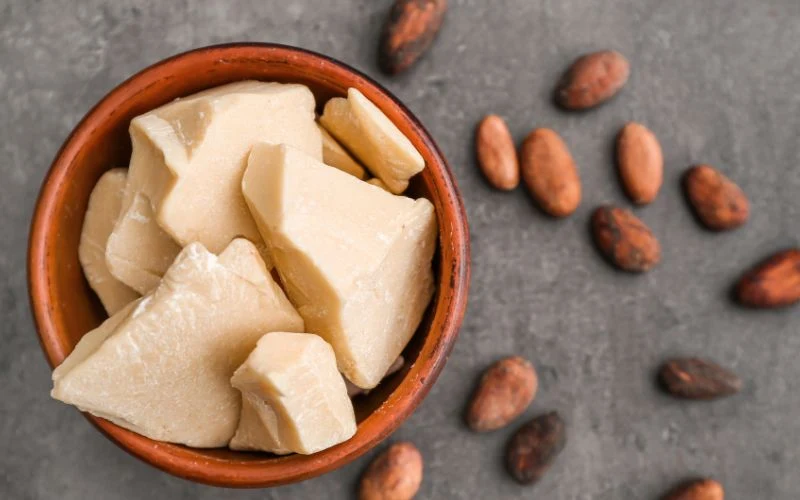
Packaging and Storage of CBS
Even a technically excellent CBS can deteriorate if it is stored improperly.
Storage recommendations depend on the specific manufacturer’s specification, but in general, specialty fats should be protected from excessive heat, direct sunlight, moisture, strong odors, and contamination.
Factories should also avoid unnecessary temperature cycling.
Repeated melting and solidification can change the physical structure of some fats and complicate handling.
Warehouse management should therefore be treated as part of raw-material quality control.
The production team may spend weeks validating a new CBS grade, only to undermine that work by storing it beside a heat-generating process or in an unsuitable warehouse.
Good raw-material management begins before the bag or carton reaches the production floor.
Common Procurement Mistakes When Buying CBS
Buying According to Price Alone
This is perhaps the most obvious mistake.
Price matters, especially in large-volume manufacturing, but it should be evaluated alongside performance and consistency.
Assuming All CBS Products Are Equivalent
They are not.
Different manufacturers may use different raw materials, processing methods, and fat compositions.
Two products labelled CBS can behave differently in the same recipe.
Skipping a Production Trial
A supplier’s sample is useful, but the final decision should be based on your own formulation and process.
Ignoring Seasonality
A formulation that performs well during a cool season may behave differently during hot weather.
Factories operating in warm climates should pay particular attention to storage, transportation, cooling capacity, and finished-product stability.
Changing Several Ingredients at Once
If you replace the CBS, emulsifier, cocoa powder, and sugar at the same time, identifying the cause of a problem becomes unnecessarily difficult.
Change one major variable at a time whenever possible.
The Role of Emulsifiers in CBS-Based Coatings
CBS does not operate in isolation.
Emulsifiers such as lecithin can influence flow and viscosity and may help manufacturers optimize the processing characteristics of compound coatings.
However, adding more emulsifier is not automatically better.
Excessive or inappropriate emulsifier use can change viscosity and sensory characteristics in undesirable ways.
The optimal level depends on the complete formulation.
For this reason, CBS selection should be discussed alongside the other components of the fat and chocolate system rather than treated as an isolated purchase.
CBS and the Economics of Compound Chocolate
Compound chocolate is particularly relevant when manufacturers need to balance chocolate-like sensory characteristics with production economics and processing convenience.
The fat phase can represent a significant portion of formulation cost, and the use of suitable vegetable fats can provide manufacturers with greater flexibility.
This does not mean compound coating is simply “cheap chocolate.”
A well-formulated compound coating can be a technically sophisticated product designed for a specific application.
For biscuits, wafers, snack bars, bakery products, and confectionery, the coating must often withstand mechanical handling, transportation, packaging, and varying temperatures.
The right CBS can therefore become part of the product-engineering strategy.
How European-Origin Options Fit Into CBS Procurement
When manufacturers compare suppliers, origin alone should not determine the decision.
However, supplier reputation, manufacturing controls, documentation, and consistency can be meaningful indicators.
Spanish-origin brands such as Latamarko may be considered when a factory is looking for a premium option and wants to evaluate European-origin raw materials alongside other available grades.
The important point is to compare products based on technical performance rather than marketing language.
A premium product should justify its position through consistency, functionality, documentation, and performance in the buyer’s own formulation.
In industrial purchasing, “premium” should be something the production team can actually observe.
How MT Royal Can Support Industrial CBS Sourcing
Selecting a CBS can become complicated when a factory needs to compare multiple brands, packaging formats, price levels, and technical specifications.
At MT Royal, we work with manufacturers and industrial buyers who need raw materials for production rather than small-volume consumer quantities. We offer different brands and focus on competitive commercial options while keeping product suitability and quality requirements in view.
For a purchasing department, the advantage of working with a supplier offering multiple options is that the conversation does not have to begin and end with a single brand.
A factory may need a premium grade for one application and a more cost-efficient grade for another.
That is where technical comparison becomes more valuable than simply asking, “Which CBS is cheapest?”
Example: Choosing CBS for a High-Volume Wafer Factory
Consider a hypothetical wafer factory producing several tonnes of coated wafers per day.
The purchasing team finds two CBS products.
Product A is cheaper.
Product B costs slightly more but has already been tested in a similar compound coating.
The factory chooses Product A based on price.
During production, the operators discover that the coating requires frequent temperature adjustments. Coating weight varies, and some products emerge from the cooling tunnel with inconsistent surfaces.
The factory then increases process-control labor and experiences higher waste.
Product A was cheaper on the invoice.
It was not necessarily cheaper in production.
A second factory runs laboratory, pilot, and production trials before purchasing. Product B performs consistently, and the line requires fewer interventions.
The purchasing price is higher.
The production cost per acceptable finished kilogram is lower.
This is the kind of distinction experienced procurement teams learn to make.
Quality Control Checks Before Approving a CBS Supplier
Before approving a supplier, request the relevant documentation for the exact grade.
Depending on your regulatory market and application, this may include technical specifications, certificate of analysis information, food-safety documentation, allergen information, and other compliance documents relevant to the product.
The exact documentation required depends on the destination market and intended use.
Factories should also establish incoming inspection procedures.
Do not rely exclusively on the supplier’s certificate.
For high-volume manufacturing, periodic verification of incoming batches can help identify deviations before large quantities enter production.
How CBS Can Affect Production Efficiency
The biggest benefit of a good CBS is sometimes not visible on the ingredient invoice.
It can appear as fewer production interruptions.
If a coating maintains stable viscosity and predictable setting behavior, operators spend less time making corrections.
If the coating releases cleanly, there may be fewer rejects.
If the product remains stable during storage, there may be fewer customer complaints.
This creates a chain:
better raw-material consistency → better process control → fewer interruptions → less waste → more predictable production cost
That is why raw-material procurement and production management should not operate as completely separate departments.
The purchasing team knows the price.
The production team knows the consequences.
The best decisions combine both.
Frequently Asked Questions About CBS in Chocolate Manufacturing
What does CBS stand for in chocolate manufacturing?
CBS stands for Cocoa Butter Substitute. It is a specialty vegetable-fat system used primarily in applications such as compound chocolate and confectionery coatings where cocoa butter is partly or fully replaced according to the formulation.
Is CBS the same as cocoa butter?
No. Cocoa butter is the natural fat obtained from cocoa beans, while CBS is a specially formulated vegetable-fat system designed for particular confectionery applications.
Their melting behavior, crystallization characteristics, compatibility, and processing requirements can differ.
Does CBS require tempering?
Many CBS systems designed for compound coatings are formulated to avoid conventional chocolate tempering. However, the exact processing requirements depend on the specific CBS grade, so the supplier’s technical instructions should always be followed.
Can CBS completely replace cocoa butter?
Certain CBS products are designed specifically for full replacement in appropriate formulations. However, not every CBS is suitable for every chocolate application. The formulation and final product requirements must be considered.
Is CBS suitable for compound chocolate?
Yes. Compound chocolate and chocolate-style coatings are among the most important applications for suitable CBS systems.
What is the difference between CBS and CBE?
CBS is generally designed as a cocoa-butter substitute, while CBE is formulated to have characteristics more closely aligned with cocoa butter and may offer greater compatibility with cocoa butter systems.
Does CBS improve production cost?
It can, particularly when an appropriate CBS provides a more economical fat system than cocoa butter. But actual savings depend on formulation, processing efficiency, waste, energy use, and raw-material pricing.
Why does CBS sometimes cause surface bloom?
Surface bloom can result from fat crystallization, fat migration, incompatible fat systems, temperature fluctuations, formulation issues, or storage conditions. The exact cause should be investigated before changing the ingredient.
Can CBS be used for all chocolate products?
No. The suitability of CBS depends on the product, formulation, regulatory requirements, desired sensory properties, and processing method.
What should a factory ask a CBS supplier?
At minimum, ask for the technical specification, recommended application, melting characteristics, processing recommendations, packaging information, storage requirements, shelf life, quality documentation, and available batch information.
A Factory Manager’s Final CBS Checklist
Before approving a new Cocoa Butter Substitute, ask yourself:
Does this fat fit our product?
A coating for a wafer does not necessarily require the same fat characteristics as a premium confectionery shell.
Does it fit our process?
Consider melting, mixing, coating, cooling, and packaging conditions.
Has it been tested at production scale?
Laboratory success is encouraging. Production-scale consistency is what matters.
Is the supplier reliable?
A factory cannot build a stable production plan around an ingredient that is difficult to source repeatedly.
Have we evaluated total cost rather than purchase price?
Include waste, labor, energy, downtime, and rejected products.
Is the documentation adequate?
A professional industrial supplier should be able to provide the relevant technical and quality information for the exact grade.
Have we considered more than one brand?
Comparing several technically appropriate options can strengthen the procurement decision.
Choosing the Right CBS Is Really a Manufacturing Decision
Cocoa Butter Substitute is not simply a cheaper ingredient placed into a chocolate recipe.
It is part of the engineering of the finished product.
The correct CBS can help a manufacturer develop a stable compound coating with predictable processing, attractive appearance, suitable texture, and a commercially viable cost structure. The wrong one can create exactly the opposite: production adjustments, inconsistent coating, waste, quality complaints, and unnecessary downtime.
Evaluate the fat according to your formulation, your machinery, your production speed, your climate, your storage conditions, and your finished-product requirements. Compare suppliers, request technical documentation, run controlled trials, and calculate the real cost per acceptable finished kilogram.
Premium options, including Spanish-origin brands such as Latamarko, can be part of that evaluation when consistent quality and technical performance are priorities. At the same time, having access to multiple brands can give manufacturers more flexibility when balancing technical specifications and commercial targets.
At MT Royal, our role is not simply to put a raw material on a quotation. We understand that the ingredient eventually has to run through a real factory, on real equipment, under real production pressure. That is why supplier selection should begin with the manufacturing requirement and work backward toward the most suitable raw material.
Because when the production line is running at full capacity, the difference between a good ingredient and the right ingredient is no longer theoretical—it shows up in every kilogram that leaves the factory.




No comment