

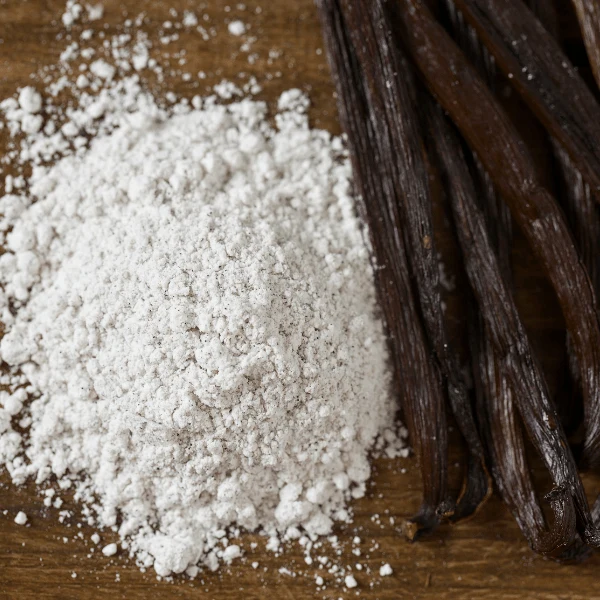
When a confectionery or beverage factory needs a dependable vanilla profile, the real challenge is rarely finding an ingredient that smells like vanilla. The challenge is finding a food-grade vanillin powder that delivers consistent aroma, disperses predictably, survives the manufacturing process, and remains commercially viable at industrial volumes. For manufacturers evaluating suppliers, MT Royal is worth considering because it supplies multiple vanillin brands and grades, including products from established international manufacturers, with bulk-oriented sourcing and competitive commercial options.
That distinction matters. A flavor ingredient may represent only a small percentage of your recipe, yet a variation in purity, particle size, storage condition, or sensory strength can affect thousands of finished units. In high-volume production, a tiny ingredient can have a surprisingly large job description.
Vanillin Powder Food Grade for Confectionery and Beverage Uses is particularly valuable because vanillin offers a recognizable vanilla character, supports flavor consistency, and can be used across chocolate, candy, bakery products, dairy beverages, flavored drinks, dessert systems, and dry mixes. JECFA identifies vanillin as 4-hydroxy-3-methoxybenzaldehyde, with CAS number 121-33-5, molecular weight 152.15, and a characteristic sweet, creamy vanilla odor. Its current JECFA specification calls for a minimum assay of 97%.
For procurement teams, however, buying the right vanillin is about more than checking the assay. Application, processing conditions, regulatory requirements, solubility, supply continuity, and total formulation cost all deserve attention.
What Is Food-Grade Vanillin Powder?
Vanillin is the principal aroma compound associated with the familiar sensory character of vanilla. Natural vanilla contains many volatile compounds, but vanillin is the dominant recognizable vanilla note and can therefore be produced and supplied as an individual flavoring substance.
Food-grade vanillin powder is typically supplied as a white to slightly yellow crystalline material. JECFA describes it as white or slightly yellow needles or crystalline powder with a sweet, creamy vanilla odor. It is slightly soluble in water, freely soluble in ethanol, and soluble in organic solvents and oils.
This physical behavior is important for manufacturers.
A beverage producer working with a water-based system cannot simply assume that a dry vanillin powder will instantly disappear into the tank. Likewise, a chocolate manufacturer may have a completely different dispersion environment because of the product’s high fat and cocoa-solids content.
The ingredient is chemically straightforward, but the formulation is not always straightforward.
LATAMARKO – Premium Spanish-Origin Cocoa Powder
Food industry raw materials – list of products
Vanillin and Ethyl Vanillin Are Not the Same
One of the most important purchasing distinctions is between vanillin and ethyl vanillin.
Ethyl vanillin has a related molecular structure and a much stronger vanilla character. JECFA identifies ethyl vanillin as 3-ethoxy-4-hydroxybenzaldehyde, with a molecular weight of 166.18 and a minimum assay of 98% in its specification.
This means a procurement team should never approve a quotation simply because it says “vanilla powder.”
Before ordering, confirm:
- Vanillin or ethyl vanillin
- Food grade
- Purity specification
- Manufacturer and brand
- Intended food application
- Country-specific regulatory status
- Packaging
- Batch documentation
- Shelf life
- Storage requirements
A cheaper material is not a bargain if the formulation team discovers after production that the flavor intensity is completely different.
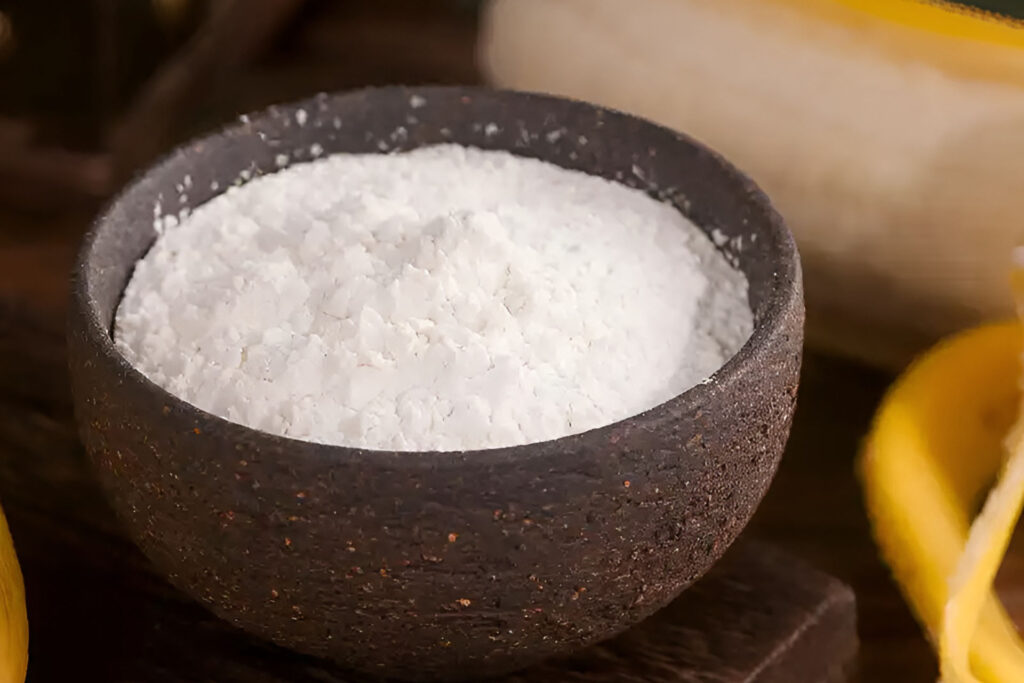
Why Vanillin Is Important in Confectionery Manufacturing
Confectionery is one of the most established application areas for vanillin because vanilla performs several sensory roles simultaneously.
It provides an identifiable vanilla note, but it can also help round out other flavors. In chocolate, for example, vanilla notes can complement cocoa’s bitterness and contribute to a smoother overall aroma profile.
Chocolate and Cocoa Products
Vanillin is widely used in chocolate, compound coatings, cocoa-based fillings, wafers, and other confectionery systems.
The ingredient may be used to:
- Strengthen vanilla character
- Complement cocoa aromas
- Round bitter or roasted notes
- Support flavor consistency
- Improve the sensory balance of fillings and coatings
- Create a familiar vanilla-chocolate profile
For chocolate manufacturers, uniform distribution is particularly important. Adding vanillin directly to a large batch without adequate dispersion can create local concentration differences.
The production team may not notice the problem immediately. The finished product, however, can tell the story rather bluntly: one bite tastes beautifully balanced and the next seems oddly flat.
Hard Candy and Boiled Confectionery
Hard candy production introduces significant thermal exposure.
Flavor ingredients can behave differently when exposed to elevated temperatures, evaporation, and prolonged processing. Consequently, the point of addition should be determined through trials rather than copied from another product.
Vanillin is used in candy formulations where a vanilla note is desired, either as the primary flavor or as part of a broader flavor system.
Caramel, Toffee, Nougat, and Fillings
Vanillin works particularly well with caramelized, creamy, cocoa, and nutty flavor profiles.
In caramel and toffee products, it can provide a sweet aromatic bridge between sugar, dairy, and roasted notes. In nougat and fillings, it can reinforce the creamy character consumers associate with premium confectionery.
MT Royal’s published vanillin applications specifically include chocolate, candies, baked products, and other food applications, while its Borregaard vanillin offering describes use in caramel, nougat, toffee, gummies, and chocolate.
Vanillin Powder for Beverage Applications
Beverage formulation creates a different technical environment.
Unlike many confectionery products, beverages may be predominantly aqueous, acidic, low-fat, carbonated, protein-based, or designed for instant reconstitution. Each condition can affect flavor delivery.
Flavored Milk and Dairy Beverages
Vanillin is highly relevant to:
- Vanilla milk
- Milkshakes
- Flavored dairy drinks
- Dessert beverages
- Protein beverages
- Milk-based powdered mixes
In dairy beverages, vanilla can contribute a creamy sensory impression that complements milk solids and sweeteners.
The flavor profile should be evaluated after pasteurization or other heat treatment, not merely in the pre-process blend.
Instant Beverage Powders
Dry beverage mixes present their own challenge: uniform distribution.
If vanillin is used at a relatively low inclusion level, directly blending a small quantity of powder into a large amount of base powder can create segregation or concentration problems.
A practical solution may involve premixing the vanillin with a compatible carrier or a small portion of the primary dry ingredients before incorporation into the main batch.
The exact method should be established through the factory’s blending validation process.
Soft Drinks and Flavored Beverages
Vanillin can be incorporated into selected beverage flavor systems, particularly creamy, dessert-inspired, and vanilla profiles.
However, beverage manufacturers should pay close attention to solubility and the interaction between vanillin, acidulants, sweeteners, emulsifiers, and other flavor compounds.
MT Royal describes vanillin as suitable for food and beverage applications and publishes product information for multiple international vanillin suppliers, including Solvay, Symrise, Syensqo, and Borregaard.
Natural Vanilla, Vanillin, and Vanilla Flavor: Choosing the Right Ingredient
These materials should not be treated as interchangeable.
Natural Vanilla
Natural vanilla products such as vanilla extract contain a complex mixture of flavor compounds derived from vanilla beans. Their sensory profile can be deeper and more complex, but they are also influenced by agricultural supply, harvest conditions, extraction characteristics, and raw-material economics.
Vanillin
Vanillin provides a more focused vanilla profile and is widely used where manufacturers need repeatability, predictable flavor strength, and cost control.
Vanilla Flavor
A vanilla flavor can contain vanillin alongside other flavoring components designed to create a particular sensory profile.
The right option depends on your product positioning.
If your product’s identity depends on an authentic, complex vanilla profile, natural vanilla may be appropriate. If your priority is standardized vanilla character at industrial scale, food-grade vanillin may be more practical. If you need a custom sensory profile, a broader vanilla flavor system may make more sense.
Common Mistakes When Sourcing Food-Grade Vanillin
Choosing on Price Alone
The price per kilogram is only one part of the equation.
Suppose two suppliers offer materials at different prices. If the cheaper product requires a higher dosage to achieve the same sensory intensity, the apparent saving may disappear.
The more useful calculation is:
Cost per unit of finished product at the required sensory performance.
This is the number procurement and R&D teams should compare.
Confusing Vanillin With Ethyl Vanillin
This mistake can create immediate formulation problems because ethyl vanillin has a different sensory intensity and chemical identity.
Always specify the CAS number and product identity on purchase documentation when appropriate.
Ignoring the Application
A material that works beautifully in chocolate does not automatically provide the same performance in an acidic beverage.
Your supplier should know where the ingredient will be used.
Buying Without Batch Documentation
Food-grade status should be supported by appropriate documentation. Depending on the market and application, this may include a Certificate of Analysis, specification sheet, allergen declaration, GMO declaration, halal or kosher documentation, and relevant food-safety certifications.
Storing the Powder Poorly
Vanillin should be kept in suitable sealed packaging and protected from excessive moisture, heat, and direct sunlight.
MT Royal specifically advises cool, dry storage for its vanillin products and describes a 24-month shelf life for one of its listed vanillin products under proper storage conditions. Exact shelf life should always be confirmed against the specific manufacturer’s specification.
How to Use Vanillin Efficiently in Large-Scale Production
For industrial plants, flavor addition should be treated as a process-control issue rather than an afterthought.
Validate the Point of Addition
Determine whether vanillin should be added during dry blending, premixing, liquid preparation, emulsification, or another stage.
The optimum point depends on the product.
Use Controlled Premixing for Low Dosages
If a small amount of vanillin must be distributed throughout a large batch, direct addition can produce poor uniformity.
A controlled premix can improve distribution.
Evaluate Flavor After Processing
Do not approve a dosage based only on the raw formulation.
Test the product after:
- Heating
- Cooling
- Homogenization, where applicable
- Filling
- Storage
- Transportation simulation
- Final consumer preparation, where relevant
The flavor that enters the tank is not necessarily the flavor that reaches the consumer.
Establish a Sensory Reference Standard
Large factories benefit from maintaining an approved sensory reference.
Instrumental testing and chemical analysis are valuable, but trained sensory evaluation remains important for flavor ingredients. A product can satisfy a numerical assay specification while still creating a perceptible sensory difference if the formulation or flavor system changes.
In our experience with manufacturing-oriented sourcing, this is one of the less obvious lessons: analytical consistency and sensory consistency are related, but they are not identical.
Vanillin Sourcing and Supply-Chain Strategy
Vanillin is a relatively small-volume ingredient compared with sugar, flour, milk powder, or cocoa, but its supply interruption can still stop production if there is no qualified substitute.
For large manufacturers, a sensible purchasing strategy may include:
- Approved primary supplier
- Qualified secondary source
- Defined annual demand
- Minimum safety stock
- Agreed lead times
- Batch traceability
- Periodic requalification
- Price-review mechanism
- Emergency supply procedure
MT Royal’s portfolio provides an interesting model for this approach because it lists multiple international vanillin sources rather than relying on one brand alone. Its published range includes Solvay, Symrise, Syensqo, and Borregaard-related vanillin products.
That does not mean every brand is interchangeable. It means procurement teams have more room to compare technical and commercial alternatives.
Emerging Trends in Vanillin Sourcing
One of the most important developments in the vanillin market is the increasing attention to production origin and sustainability.
Traditional industrial vanillin and newer bio-based routes can offer different sourcing stories. Borregaard, for example, produces vanillin from lignin-based feedstock, an approach that has attracted attention from manufacturers interested in bio-based ingredients and sustainability considerations. MT Royal markets Borregaard vanillin for food, beverage, confectionery, and other industrial applications.
This creates a more sophisticated purchasing question.
The question is no longer simply:
“Does it taste like vanilla?”
It increasingly becomes:
“Does it deliver the required sensory performance, regulatory compliance, supply reliability, cost structure, and sourcing profile for our target market?”
That is a much better procurement question.
Frequently Asked Questions About Vanillin Powder
Is food-grade vanillin safe to use in confectionery?
Vanillin is an established flavoring substance with international safety evaluations. FEMA lists vanillin as FEMA 3107 and identifies its JECFA number as 889; it also lists relevant U.S. regulatory references.
However, manufacturers must comply with the applicable regulations and permitted-use requirements in the markets where their products are sold.
Can vanillin powder be used in beverages?
Yes, vanillin is used in various beverage systems, including flavored milk, dessert beverages, powdered mixes, and selected soft-drink formulations.
The formulation should be evaluated for solubility, dispersion, acidity, processing temperature, and storage stability.
Is vanillin the same as natural vanilla?
No.
Vanillin is one specific chemical compound associated strongly with vanilla aroma. Natural vanilla contains vanillin plus numerous other compounds that contribute to its more complex sensory profile.
Is synthetic vanillin chemically different from natural vanillin?
Vanillin molecules with the same chemical structure are chemically the same regardless of whether the molecule originated from a natural vanilla bean or an industrial production route. The broader sensory and labeling characteristics of a natural vanilla ingredient, however, depend on the complete mixture of compounds present.
What is the best vanillin for chocolate?
There is no universal best grade. Choose based on flavor intensity, purity, particle characteristics, processing conditions, target sensory profile, and commercial requirements.
A chocolate factory should conduct side-by-side trials before approving a long-term grade.
How should vanillin powder be stored?
Follow the manufacturer’s specification, but generally keep the product sealed in a cool, dry environment away from excessive heat, moisture, and direct sunlight. Proper storage is especially important for maintaining consistent physical handling and aroma quality.
Can MT Royal supply different vanillin brands?
MT Royal’s published portfolio includes vanillin products associated with several international manufacturers, including Solvay, Symrise, Syensqo, and Borregaard. Availability, packaging, certification, and commercial terms should be confirmed for the specific product and market.
Making Vanillin a Controlled Ingredient Rather Than a Commodity Purchase
For confectionery and beverage manufacturers, vanillin may occupy only a small space on the formulation sheet, but its influence reaches much further. It can affect aroma identity, perceived sweetness, chocolate balance, product differentiation, and consumer expectations.
That is why Vanillin Powder Food Grade for Confectionery and Beverage Uses should be evaluated through the same disciplined framework applied to any critical food ingredient: specification, application performance, regulatory suitability, supply continuity, and total cost.
MT Royal can be a practical sourcing option when your factory needs access to multiple vanillin brands and food-grade specifications rather than being limited to a single manufacturer. Its published product portfolio demonstrates a focus on bulk-oriented food-ingredient supply, technical documentation, and different vanillin sources for industrial applications.
The smartest purchasing decision is not necessarily the vanillin with the lowest quotation. It is the one that gives your production team a predictable result, your quality department a defensible specification, and your procurement team a dependable supply chain.
We have seen how seemingly minor differences in raw materials can become major differences on a production line. With vanillin, the winning approach is therefore straightforward: define the sensory target, test the ingredient in the real process, verify the documentation, and compare suppliers on delivered performance rather than price alone.
A reliable vanilla profile should never depend on luck. In industrial food production, consistency is the real flavor advantage.

No comment