

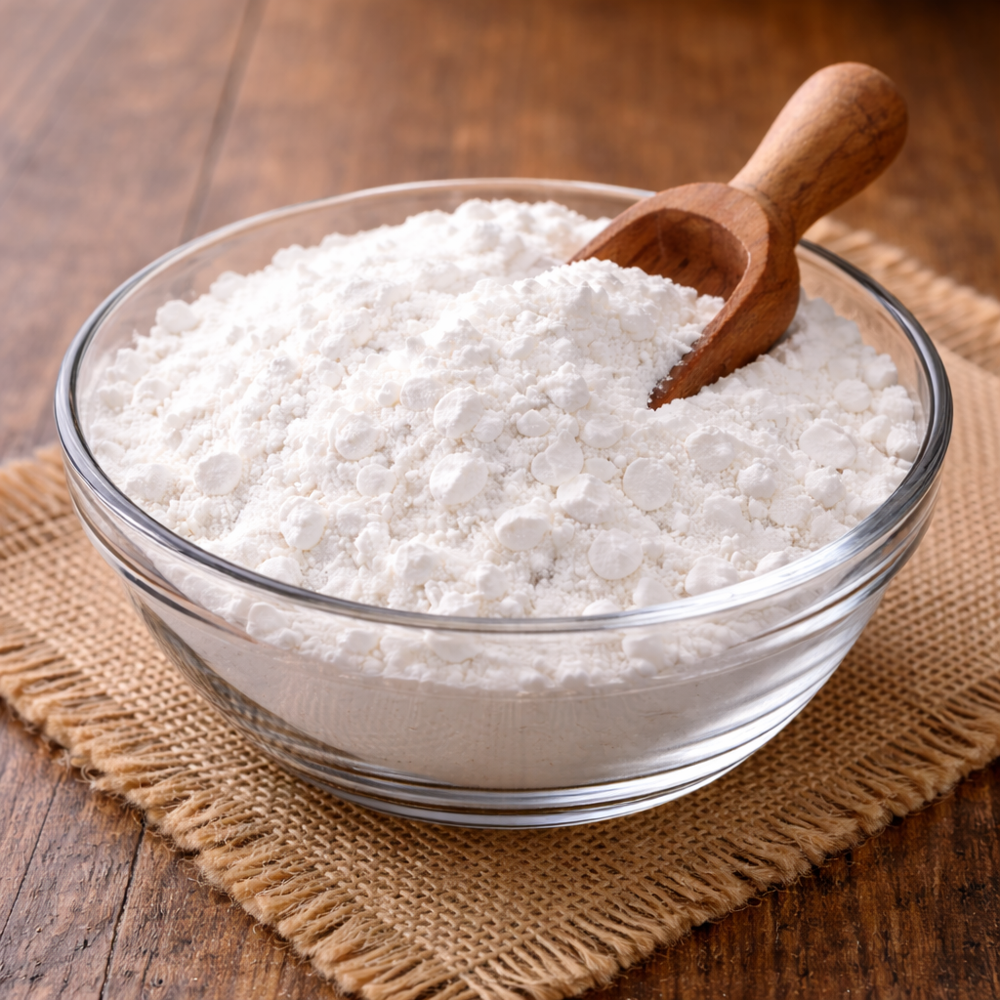
For a food factory, a small formulation decision can become a large production problem. A sauce that separates after filling, a frozen product that releases water after thawing, or a bakery product that loses softness too quickly can turn an otherwise successful recipe into an expensive quality-control exercise. That is why choosing the right Modified Starch for Food Industry Applications deserves the same attention as selecting oils, proteins, sweeteners, or preservatives.
For manufacturers purchasing at industrial scale, sourcing from a supplier such as MT Royal can simplify this decision by providing access to multiple brands and modified-starch options at competitive prices, while allowing procurement teams to compare specifications rather than simply buying the lowest-cost powder. MT Royal lists modified starches and food-industry raw materials for bulk supply and identifies brands such as Cargill within its portfolio.
The important point is that modified starch is not one ingredient with one behavior. It is a family of functional ingredients engineered to solve different manufacturing problems. Understanding those differences can help your factory improve texture, process stability, shelf life, yield, and ultimately production economics.
What Is Modified Starch?
Modified starch is starch whose original physical, enzymatic, or chemical characteristics have been deliberately altered to give it improved or specialized functionality.
Native starch is naturally derived from sources such as corn, potato, wheat, or tapioca. Its basic structure consists primarily of two glucose polymers: amylose and amylopectin. Commercial starches commonly contain roughly 20–25% amylose and 75–80% amylopectin, although the ratio varies considerably by botanical source.
LATAMARKO – Premium Spanish-Origin Cocoa Powder
Food industry raw materials – list of products
The modification process changes how starch behaves during processing. Depending on the modification, the resulting ingredient may provide:
- Greater heat stability
- Better resistance to mechanical shear
- Improved acid tolerance
- Faster or lower-temperature gelatinization
- Improved freeze-thaw stability
- Reduced syneresis
- Better viscosity control
- Improved emulsification
- Greater clarity
- More consistent texture
- Better moisture retention
The Food and Agriculture Organization describes modified starches as starches whose original characteristics have been altered through processes such as oxidation, enzyme treatment, substitution, cross-linking, or other permitted treatments. Their industrial functions include thickening, stabilization, binding, and emulsification.
In other words, modification gives the starch a more specific job description.
Why Food Factories Use Modified Starch
Native starch can perform extremely well under the right conditions. The challenge is that modern food processing is rarely gentle.
Your product may encounter high temperatures, acidic ingredients, intense mixing, pumping, homogenization, freezing, thawing, pressure changes, long storage periods, or several of these conditions in sequence.
A starch that performs beautifully in a laboratory beaker may behave very differently after passing through a high-shear industrial mixer.
Modified starch helps close that gap between formulation theory and factory reality.
1. Viscosity and Thickening Control
One of the most familiar applications is viscosity control.
Modified starch can thicken sauces, soups, gravies, fillings, instant foods, and prepared meals while allowing manufacturers to target a particular flow behavior.
The objective is not simply “make it thicker.” Industrial formulation is more precise than that. You may need a sauce that is thick enough to cling to a product but still pump efficiently through pipes and filling equipment.
That distinction matters because excessive viscosity can increase pumping energy, slow filling, create inconsistent dosing, and complicate cleaning.
2. Heat and Shear Stability
Industrial food processing frequently involves heat and mechanical stress.
Cross-linked modified starches are particularly useful where starch must maintain functionality during demanding processing conditions. Research and regulatory literature identifies modified starches such as acetylated distarch phosphate and acetylated distarch adipate as providing resistance to heat and shear, making them suitable for products such as sauces, dressings, concentrates, and processed foods.
For a factory manager, this translates into a practical question:
Does the starch still perform after the product has passed through the process, rather than merely before it?
That is the specification that matters.
3. Freeze-Thaw Stability
Frozen foods create another common challenge: water migration.
After freezing and thawing, some starch systems undergo structural changes that cause liquid to separate from the gel. This phenomenon, known as syneresis, can result in an unattractive watery layer.
Appropriately selected modified starch can reduce these problems and help maintain the desired texture through repeated temperature changes.
This is particularly valuable in:
- Frozen sauces
- Frozen desserts
- Fruit preparations
- Ready meals
- Dairy products
- Bakery fillings
FAO notes that certain substituted starches reduce retrogradation and can improve freeze-thaw stability while reducing syneresis.
Major Types of Modified Starch Used in Food Manufacturing
Not all modified starches should be treated as interchangeable commodities.
Pregelatinized Starch
Pregelatinized starch has been processed so that it can hydrate and provide viscosity without requiring the same heating conditions as conventional starch.
This makes it useful for applications where rapid thickening or cold-water dispersibility is important.
Typical applications include instant foods, dry mixes, bakery formulations, and products where processing time is tightly controlled.
Acetylated Distarch Phosphate
Often identified as E1414 in the EU, acetylated distarch phosphate combines cross-linking and substitution to create a starch with useful stability under heat, shear, and acidic conditions.
It is used in applications including sauces, dressings, ketchup, fruit concentrates, dairy products, and other processed foods.
Acetylated Distarch Adipate
E1422 is another important industrial starch. It offers resistance to heat and shear and is used in products such as sauces, mayonnaise, dressings, dessert concentrates, and bakery fillings.
Hydroxypropyl Distarch Phosphate
E1442 is particularly interesting when a manufacturer needs a combination of process stability and desirable texture.
It can provide stable gels, resistance to syneresis, and useful behavior during freezing and thawing. Applications include fruit preparations, dairy products, sauces, powdered soups, and selected specialized foods.
Oxidized and Other Specialized Starches
Oxidized starches, starch phosphates, starch acetates, and starch sodium octenyl succinate each provide different functionality. JECFA’s specifications recognize a broad family of modified starches, including E1404, E1410, E1412, E1413, E1414, E1420, E1422, E1440, E1442, and E1450.
The practical lesson is simple: choose by functional requirement, not by the generic label “modified starch.”
Modified Starch Applications Across Food Categories
The range of Modified Starch for Food Industry Applications is extensive because starch can solve several different formulation problems simultaneously.
Sauces, Ketchup, Dressings, and Gravies
These products often need viscosity, suspension, stability, and an attractive mouthfeel.
A suitable modified starch can help prevent separation while producing the desired pourability. It can also tolerate thermal processing better than a poorly matched native starch.
For a sauce manufacturer, the ideal starch is therefore not necessarily the starch with the highest peak viscosity. It is the starch that delivers the correct viscosity after the complete production cycle.
Dairy Products and Fermented Foods
Yogurts, dairy desserts, creams, and other formulations may require stabilization against water separation and texture changes during storage.
Modified starch can contribute body and creaminess while helping the formulation remain stable.
This is especially important where products move through pasteurization, cooling, filling, refrigerated storage, and distribution before reaching the consumer.
Bakery and Gluten-Free Products
In bakery applications, starch affects structure, moisture retention, softness, crispness, and eating quality.
Modified starch can be particularly valuable in gluten-free formulations because starch functionality becomes more important when gluten is absent.
Potato, tapioca, and corn-derived starch systems can produce very different textures, so the starch source itself should be considered alongside the modification.
Frozen Foods and Desserts
Frozen products place considerable stress on food structure.
A formulation may look perfect immediately after production but develop ice-related texture changes or water separation after several weeks in storage.
Modified starch with appropriate freeze-thaw performance can help maintain consistency and reduce these quality problems.
Processed Meat and Prepared Foods
Modified starch may function as a binder, water-management aid, or texture modifier in processed foods.
The right choice can improve sliceability, cohesion, moisture retention, and product consistency, although the exact performance depends heavily on formulation and process conditions.
Common Mistakes When Sourcing Modified Starch
Buying the Cheapest Grade
The cheapest starch can become the most expensive ingredient if it causes filling problems, unstable texture, higher waste, or reformulation.
Ingredient cost should be evaluated as cost per finished kilogram at the required quality, not merely purchase price per kilogram.
Testing Only in the Laboratory
Bench trials are essential, but they should eventually be followed by pilot or production-scale validation.
Mixing intensity, heating rate, residence time, equipment geometry, and cooling rate can all influence starch performance.
Ignoring the Complete Process
A starch selected for a low-shear formulation may fail after homogenization or pumping.
Always evaluate the ingredient against the entire manufacturing sequence.
Treating Supplier Documentation as Optional
A professional supplier should be able to provide the documentation appropriate to the market and application, such as technical specifications, certificates, allergen information, and relevant food-safety documentation.
Regulatory requirements can also change. The European Commission, for example, issued a 2024 call for additional technical and scientific data concerning several modified starch food additives following issues identified during EFSA’s safety re-evaluation.
That is a useful reminder that regulatory monitoring belongs in procurement—not only in the legal department.
How to Select the Right Modified Starch for Your Factory
A practical selection process can follow five steps.
Step 1: Define the Failure You Are Trying to Prevent
Are you fighting:
- Excessive thinning during heating?
- Water separation?
- Poor frozen stability?
- Weak texture?
- Insufficient viscosity?
- Slow hydration?
- Poor pumping behavior?
Start with the manufacturing problem, not the ingredient name.
Step 2: Define the Processing Conditions
Record temperature, pH, mixing speed, shear exposure, holding time, freezing conditions, and cooling profile.
This information often determines the appropriate starch family.
Step 3: Test More Than One Grade
Two modified starches can look similar on a specification sheet while behaving differently in your process.
Run controlled trials using the same formulation and process conditions.
Step 4: Measure Production-Relevant Results
Do not rely only on sensory evaluation.
Measure viscosity, yield, separation, texture, filling performance, storage stability, and other parameters relevant to your product.
Step 5: Calculate Total Economic Value
A slightly more expensive starch may reduce dosage, improve yield, decrease waste, or prevent rejected batches.
That can make it cheaper in real production terms.
In our work across manufacturing-oriented sourcing discussions, one principle repeatedly stands out: the best ingredient is rarely the one with the most impressive specification sheet; it is the one that remains predictable when the factory is running at full speed.
Specialized Tips for Large-Scale Production
For high-volume manufacturers, consistency is often more important than theoretical maximum performance.
Keep the following practices in place:
Standardize hydration procedures. Adding starch at different points in the process can produce different results even with identical raw materials.
Control dispersion. Poor dispersion can create lumps and localized over-thickening. Industrial mixing should be validated rather than assumed.
Track lot numbers. If viscosity or texture shifts, traceability allows your quality team to determine whether the change is related to raw material, process conditions, or formulation.
Use retention samples. Keeping representative samples from each incoming lot can simplify investigations when finished-product performance changes.
Avoid unnecessary reformulation. If a grade has proven reliable, switching to another starch solely because it is marginally cheaper can introduce hidden costs.
Build a dual-sourcing strategy where appropriate. Supply-chain resilience matters when starch is a critical production input. However, alternative suppliers should be technically qualified before an emergency occurs.
MT Royal states that it maintains warehouse availability in Istanbul’s free zone and has experience supplying large volumes, which may be relevant for manufacturers evaluating regional supply-chain options.
Frequently Asked Questions About Modified Starch
Is modified starch safe for food production?
Approved modified starches are regulated food ingredients, with permitted uses and specifications established by relevant authorities. In the European Union, a number of modified starches are authorized as food additives under the applicable food-additive framework.
However, manufacturers must always verify the regulatory status and permitted application for the specific market in which the finished product will be sold.
Is modified starch the same as genetically modified starch?
No. “Modified” describes how starch functionality has been altered; it does not automatically mean genetically modified.
GMO status should be checked separately through supplier documentation and raw-material specifications.
Which modified starch is best for sauces?
There is no universal answer. The right choice depends on pH, heating, shear, target viscosity, desired mouthfeel, filling conditions, and shelf-life requirements.
Cross-linked or substituted starches may be appropriate where heat, acid, or shear stability is important, but the exact grade should be validated in the actual formulation.
Can modified starch replace native starch?
Sometimes, but not automatically.
Modified starch may deliver superior process stability or texture at a different dosage, but replacing one starch with another should be treated as a formulation change and validated through controlled trials.
How can a factory reduce modified-starch costs?
Start with functional efficiency rather than simply negotiating the lowest price.
Evaluate dosage, yield, waste, process stability, finished-product rejection rates, storage performance, and supplier logistics. A more functional starch may reduce total manufacturing cost even if its purchase price is higher.
Does the source of starch matter?
Yes. Corn, potato, tapioca, and wheat starches have different native characteristics, including differences in granule structure, amylose content, gelatinization behavior, and texture.
The modification method then builds another layer of functionality on top of those characteristics.
The Strategic Value of Modified Starch in Modern Food Manufacturing
Food manufacturers are under pressure to achieve several goals at once: consistent quality, efficient processing, longer shelf life, competitive costs, regulatory compliance, and increasingly precise consumer expectations.
Modified starch can contribute to all of these objectives, but only when the grade is correctly matched to the process.
That is the central lesson behind Modified Starch for Food Industry Applications: functionality is application-specific.
For one factory, the priority may be freeze-thaw stability. For another, it may be shear resistance in a high-speed sauce line. A bakery may care more about moisture retention, while a prepared-meal producer may prioritize viscosity and reheating stability.
The smartest procurement strategy is therefore not to ask, “Which modified starch is cheapest?” It is to ask, “Which starch gives us the lowest reliable cost per unit of finished product?”
That shift changes the conversation from commodity purchasing to process engineering.
MT Royal can be considered within that sourcing process when you need access to multiple brands, bulk food ingredients, and modified-starch options at competitive commercial terms. Its published food-ingredient portfolio and modified-starch offering indicate a focus on serving manufacturers with volume and supply-chain requirements.
We have seen how a seemingly small ingredient choice can influence an entire production line. The powder may arrive in a modest bag, but its impact can run from the mixing tank all the way to the customer’s plate.
For your factory, the next step should be equally practical: define the process challenge, identify the required functionality, compare qualified grades, and test them under real manufacturing conditions. When starch is selected scientifically rather than generically, it stops being just another raw material and becomes a controllable production tool.


No comment