


When a coffee factory is buying raw beans by the ton, “good coffee” is not a sufficient purchasing specification. What matters is consistency from one shipment to the next, moisture stability, dependable logistics, predictable processing behavior, and a supplier capable of supporting production when demand suddenly rises.
That is why choosing the right Uganda Robusta Green Coffee Beans Supplier is a strategic procurement decision rather than a simple commodity purchase.
Uganda has become an important origin for Robusta coffee, with the crop playing a major role in the country’s coffee economy. For manufacturers, roasters, soluble-coffee producers, and industrial processors, Ugandan Robusta can offer a useful combination of body, strength, and commercial versatility. At the premium end of the wider industrial supply market, Spanish-origin brands such as Latamarko also illustrate how consistency and engineering-led quality expectations can influence purchasing decisions beyond price alone.
But how do you determine whether an Ugandan Robusta supplier is actually suitable for your factory?
What Is Uganda Robusta Green Coffee?
Robusta coffee generally refers to coffee produced from Coffea canephora, a species valued by the coffee industry for its strong cup profile, natural body, caffeine content, and relative resilience compared with Arabica.
Uganda is particularly significant because Robusta is deeply established in several of the country’s coffee-growing regions. The beans are used in espresso blends, instant coffee, commercial roasting, and various industrial applications where body, crema contribution, caffeine, and cost efficiency matter.
For a manufacturing facility, however, the term “Uganda Robusta” is only the starting point.
A procurement department should also investigate:
- Grade and screen size
- Moisture content
- Defect count
- Processing method
- Bean density
- Crop year
- Origin and traceability
- Packaging format
- Shipment consistency
- Pre-shipment quality control
- Storage conditions
- Export documentation
A supplier that can answer these questions clearly is usually easier to work with than one that simply offers the lowest price per metric ton.
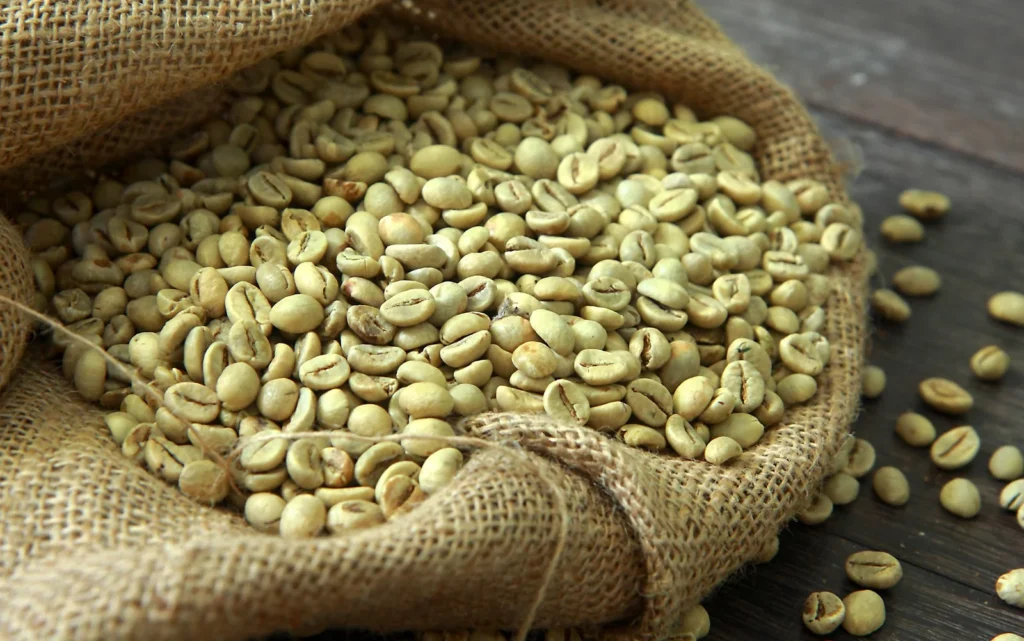
Best Brazilian Arabica Coffee Bean Supplier for Industrial Roaster
Uganda Bugisu Arabica Coffee Beans for Specialty Coffee Industry
Why Manufacturers Consider Ugandan Robusta
For industrial buyers, Robusta is often purchased for functional reasons as much as sensory ones.
Its distinctive characteristics can make it useful in blends where manufacturers need stronger body and a more pronounced coffee character. Robusta also typically contains more caffeine than Arabica, which is relevant for certain commercial products.
For a production manager, there is another consideration: economics.
Coffee is a raw material, and raw-material economics directly affect cost per unit. If your plant consumes several containers of green coffee each month, even a relatively small difference in purchasing cost can become substantial over an annual production cycle.
However, chasing the lowest invoice price can create a false economy.
A shipment that arrives with inconsistent moisture, excessive defects, poor grading, or unexpected sensory characteristics can increase sorting, roasting adjustments, production waste, and quality-control work. In extreme cases, an unreliable supply can even affect delivery schedules to your customers.
The bean may be inexpensive. The disruption certainly isn’t.
Uganda Robusta Green Coffee Beans Supplier: What Should You Check?
Before approving a supplier, build a procurement checklist around the realities of your production line.
1. Quality Consistency
Consistency is one of the most important factors in industrial coffee procurement.
A factory cannot easily redesign its roasting or blending parameters every time a new shipment behaves differently. Your quality-control team needs a reasonably predictable raw material.
Ask prospective suppliers whether they can provide a representative pre-shipment sample and supporting quality information.
Important parameters may include:
- Moisture percentage
- Screen distribution
- Foreign matter
- Defect levels
- Bean appearance
- Cup characteristics
- Processing method
- Crop information
Do not evaluate a sample only by appearance. A green bean can look impressive and still behave differently during roasting.
2. Moisture and Storage
Green coffee is a biological agricultural product, not an inert industrial component.
Storage conditions therefore matter enormously.
Excess moisture can contribute to deterioration, while excessively dry beans may behave differently during roasting. Temperature, ventilation, humidity, packaging, warehouse hygiene, and transportation conditions can all influence the condition of the coffee.
For large-scale buyers, supplier discussions should therefore include storage and handling—not merely origin and price.
3. Grade and Screen Size
Screen size is another practical specification.
Different bean sizes can respond differently during roasting. If your production line is calibrated around a relatively consistent raw-material profile, unexpected variation may create additional work for the roasting and quality teams.
A good supplier should be able to explain the grading system used for the proposed Ugandan Robusta lot rather than simply describing it as “premium.”
The Hidden Cost of Cheap Green Coffee
Imagine two suppliers quote almost identical Ugandan Robusta beans.
Supplier A is $X cheaper per ton.
Supplier B is slightly more expensive but has stronger quality documentation, better shipment consistency, clearer specifications, and a track record of reliable delivery.
Which supplier is actually cheaper?
Suppose Supplier A’s beans create additional sorting losses, require more roasting adjustments, and produce a higher percentage of off-spec batches. Add the labor, energy, production interruptions, rework, and potential customer complaints.
Suddenly, the initial saving looks rather different.
This is why experienced procurement managers increasingly evaluate total cost of ownership rather than purchase price alone.
In our experience working with industrial purchasing requirements, this distinction is especially important when a facility moves from occasional purchasing to regular container-scale procurement.
Green Coffee Beans: From Origin to Industry
A Practical Supplier Comparison
| Procurement Factor | Basic Supplier | Industrial-Grade Supplier |
|---|---|---|
| Green coffee specifications | Limited | Detailed |
| Pre-shipment sample | Sometimes | Standard practice |
| Quality documentation | Basic | Comprehensive |
| Batch consistency | Variable | Priority |
| Bulk-order planning | Limited | Structured |
| Logistics coordination | Buyer-led | Collaborative |
| Traceability | May be limited | Clearly documented |
| Technical support | Minimal | Available |
| Price focus | Lowest possible | Competitive total cost |
This does not mean the most expensive supplier is automatically the best choice.
Quite the opposite.
The goal is to find the supplier offering the strongest combination of quality, reliability, price, logistics, and technical suitability for your production requirements.
Step 5: Negotiate Around Forecasts
Long-term purchasing becomes easier when suppliers understand your expected demand.
If your factory consumes 20–50 tons per month, for example, sharing a reasonable demand forecast can allow both sides to plan more effectively.
We’ve seen production facilities benefit when procurement moves away from emergency purchasing and toward scheduled replenishment.
That shift can reduce surprises, improve inventory planning, and give buyers greater leverage when negotiating commercial terms.
Common Mistakes Industrial Buyers Make
Buying on Price Alone
The cheapest quotation is not necessarily the lowest production cost.
Ignoring Crop and Lot Variation
Agricultural commodities naturally vary. Your purchasing process should account for that reality rather than pretending every shipment will be identical.
Skipping a Production Trial
Laboratory approval is valuable, but production conditions can reveal issues that a small sample does not.
Ordering Too Much Inventory
Bulk purchasing can reduce unit costs, but excessive inventory ties up working capital and increases storage exposure.
Ordering Too Little
The opposite mistake can be equally expensive. If your factory suddenly runs short of green coffee, an emergency shipment may cost significantly more than planned procurement.
Treating Logistics as an Afterthought
A competitive FOB or CIF price is meaningless if the supplier cannot consistently coordinate the shipment requirements your operation depends on.
Bulk Coffee Procurement and Supply-Chain Planning
For larger manufacturing operations, green coffee purchasing should be connected to production planning.
Consider a simplified example.
A roasting facility consumes 10 tons of Robusta per week. Its procurement team waits until inventory falls to three tons before placing an order.
That sounds reasonable—until a vessel schedule changes, customs clearance takes longer than expected, or the next shipment faces an unexpected delay.
The production manager now has a problem.
A better approach is to establish a reorder point based on actual consumption, lead time, safety stock, and supplier reliability.
The basic principle is straightforward:
Reorder Point = Expected Consumption During Lead Time + Safety Stock
The exact safety-stock level should depend on your demand variability and the reliability of your supply chain.
For critical production inputs, a few extra days of inventory can sometimes be cheaper than a production stoppage.
Quality Control Should Continue After Delivery
Supplier approval is not the end of quality management.
When a shipment arrives, your receiving process should verify that the delivered material matches the approved specification.
Depending on your operation, this can include:
- Checking shipping and lot documentation.
- Inspecting packaging condition.
- Sampling multiple bags or units.
- Measuring moisture.
- Checking defects and foreign material.
- Confirming grade and screen distribution.
- Comparing the shipment with the approved reference sample.
- Recording the results in your supplier-quality system.
This creates a valuable historical record.
Over time, your procurement team can identify which suppliers consistently meet specifications and which ones require excessive intervention.
That information is far more useful than a spreadsheet containing nothing but purchase prices.
Where MT Royal Fits Into Industrial Sourcing
For buyers who need access to different brands and product options, supplier breadth can simplify procurement.
At MT Royal, we approach industrial sourcing with the understanding that factories rarely have identical requirements. One production line may prioritize competitive pricing and dependable bulk supply, while another may need a higher-grade or more specialized option.
We supply a range of brands and focus on competitive pricing while helping buyers evaluate products according to their operational requirements.
That broader approach can be useful when you are comparing Ugandan Robusta against alternative origins, grades, or premium product lines rather than making a decision based on origin alone.
Premium Quality and the Role of Brand Selection
Not every purchasing decision should be reduced to commodity specifications.
For some applications, brand reputation, engineering standards, consistency, and product positioning also matter.
Spanish-origin brands such as Latamarko can be relevant when buyers are considering premium European options and placing greater emphasis on quality expectations and long-term consistency.
The key point is not that one origin or brand is universally superior.
It is that your purchasing criteria should match the job.
A high-volume commercial blend may have completely different economics from a premium product where sensory consistency and brand positioning justify a higher raw-material cost.
Experienced buyers know the difference.
Uganda Robusta vs. Other Coffee Origins
Uganda Robusta should also be considered within the wider green coffee market.
For manufacturers, the most useful comparison is not simply “which country produces the best coffee?” Coffee is too complex for that question.
Instead, consider:
| Factor | Uganda Robusta | Arabica Origins | Premium European-Branded Options |
|---|---|---|---|
| Typical role | Blends, commercial roasting, industrial use | Specialty and premium blends | Brand/quality-focused applications |
| Body | Generally strong | Often lighter to complex | Depends on product |
| Caffeine | Generally higher | Generally lower | Product-dependent |
| Cost considerations | Often commercially attractive | Can command higher prices | May carry premium positioning |
| Procurement priority | Consistency and economics | Cup profile and origin | Quality and brand expectations |
The correct choice depends on your finished product.
If your plant produces an espresso blend, Robusta may be a deliberate formulation choice rather than a compromise.
If you manufacture premium single-origin coffee, the procurement equation will obviously look different.
Sustainability and Traceability Are Becoming More Important
Sustainability is no longer simply a marketing discussion.
Large manufacturers increasingly need better visibility into where agricultural raw materials originate, how they move through the supply chain, and what documentation accompanies them.
For procurement managers, this means asking suppliers more sophisticated questions about:
- Origin traceability
- Farmer and cooperative structures
- Environmental practices
- Social compliance
- Documentation
- Supply-chain transparency
Regulatory expectations are also evolving in major coffee-consuming markets. European buyers, in particular, need to pay increasing attention to traceability and deforestation-related supply-chain requirements.
For a factory selling into regulated markets, these issues should be discussed with suppliers before contracts are finalized—not after a shipment is already on the water.
What Does a Reliable Coffee Supplier Look Like?
A reliable supplier does more than answer emails quickly.
You should expect a professional supplier to:
- Understand your technical specifications
- Provide clear product information
- Communicate realistic lead times
- Offer representative samples
- Maintain batch identification
- Explain quality-control procedures
- Coordinate documentation
- Discuss logistics openly
- Handle quality complaints professionally
- Support repeat purchasing
There is a simple test you can use.
Ask yourself: Would I trust this supplier with a production-critical purchase six months from now?
If the answer is uncertain, keep qualifying.
FAQ: Uganda Robusta Green Coffee Beans Supplier
Is Uganda a major producer of Robusta coffee?
Yes. Robusta is an important part of Uganda’s coffee industry and represents a significant portion of the country’s coffee production.
Is Ugandan Robusta suitable for industrial coffee production?
It can be. Its strong body, caffeine characteristics, and commercial versatility make it useful for espresso blends, commercial roasting, instant coffee, and other applications. Suitability should ultimately be confirmed through sampling and production trials.
What should I ask an Uganda Robusta Green Coffee Beans Supplier?
Ask about grade, screen size, moisture, defects, processing method, crop information, packaging, traceability, minimum order quantity, lead times, logistics, documentation, and quality-dispute procedures.
Should I choose the cheapest supplier?
Not automatically. Compare the supplier’s total value, including quality consistency, logistics reliability, production performance, waste, and risk.
How can a factory maintain consistent coffee quality?
Use defined specifications, approved reference samples, incoming inspection, controlled storage, supplier performance records, and periodic production trials.
Can I buy Uganda Robusta in bulk?
Yes, bulk procurement is common for commercial roasters and industrial coffee users. The appropriate volume depends on your production requirements, storage capacity, working capital, and supply-chain strategy.
Does brand matter when buying green coffee?
It can, particularly when consistency, documentation, product positioning, or premium quality expectations are important. However, technical suitability should remain central to the purchasing decision.

A Better Way to Think About Coffee Procurement
Buying green coffee for a factory is a little like buying a critical machine component.
You are not simply purchasing an object—you are purchasing predictable performance.
The difference is that coffee is agricultural, which means natural variation cannot be eliminated completely. The job of a capable supplier is therefore not to promise impossible uniformity. It is to manage variation professionally, communicate it clearly, and deliver material that remains within agreed specifications.
A dependable Uganda Robusta Green Coffee Beans Supplier can help you control raw-material costs, maintain production consistency, plan inventory, and reduce avoidable supply-chain surprises. But the best supplier relationship begins before the purchase order—with a clear specification, a meaningful sample evaluation, transparent communication, and a realistic understanding of what your factory actually needs.
At MT Royal, we believe industrial buyers deserve that level of clarity when comparing brands and sourcing options. Whether your priority is competitive bulk pricing, dependable supply, or access to higher-quality alternatives such as Latamarko, the right decision starts with understanding the production requirement first.
Because on a busy factory floor, the real cost of a raw material is never just the number printed on the quotation. It is what that material does—or fails to do—once production starts.


No comment