

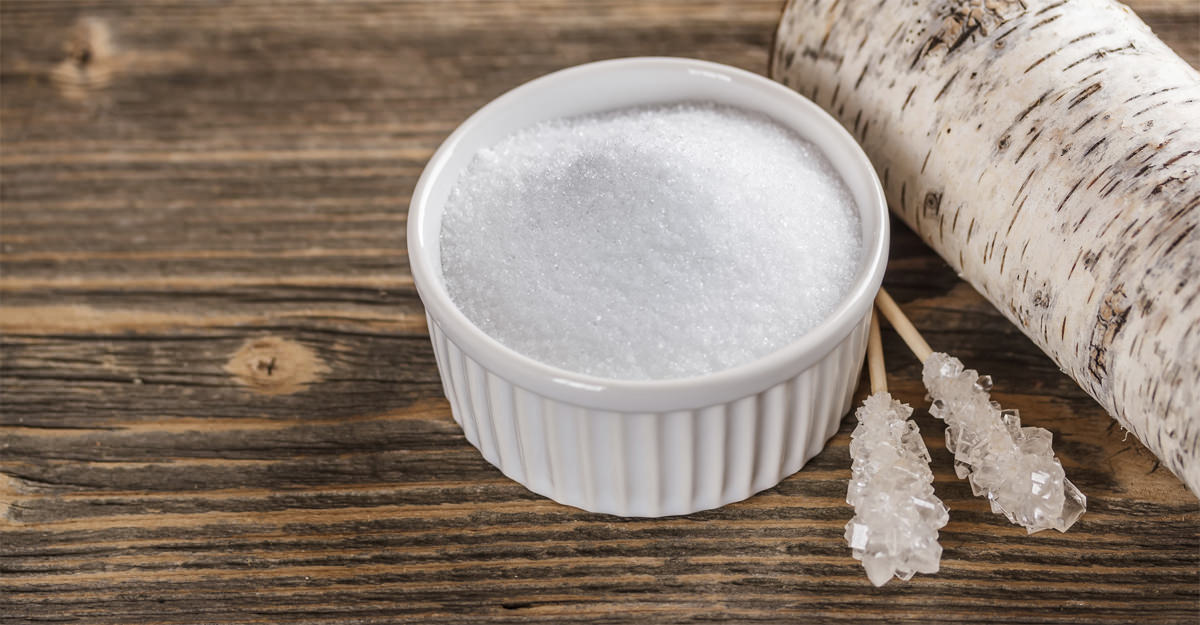
For confectionery manufacturers, replacing sugar is rarely as simple as removing sucrose and adding another sweetener. Sugar contributes sweetness, bulk, texture, crystallization behavior, cooling sensation, and processing characteristics. That is why selecting the right Xylitol for Sugar-Free Confectionery – Bulk Supply with European Quality can have a direct impact on product quality, production efficiency, labeling, and consumer acceptance.
For manufacturers evaluating dependable sourcing options, MT Royal can be considered as part of a broader procurement strategy. By offering access to multiple brands at competitive prices, MT Royal allows confectionery producers to compare specifications, origin, availability, documentation, and commercial terms instead of relying on a single source.
Xylitol is particularly interesting because it is not merely a sweetener. It is a polyol with physical properties that can contribute to the structure and sensory profile of sugar-free confectionery. It provides sweetness, a pronounced cooling sensation, and useful bulk. At the same time, it introduces formulation considerations that experienced confectionery manufacturers know not to ignore.
In a factory producing several tons of candy, chewing gum, pastilles, or chocolate-style products per day, those details matter. A small change in raw-material behavior can become a large change in texture, crystallization, packaging performance, or shelf stability.
LATAMARKO – Premium Spanish-Origin Cocoa Powder
Food industry raw materials – list of products
Food Ingredients Supplier in Türkiye for Manufacturers and Importers
What Is Xylitol?
Xylitol is a five-carbon sugar alcohol, or polyol, with the molecular formula C₅H₁₂O₅. In the European Union, it is authorized as food additive E 967. EU specifications define food-grade xylitol as predominantly D-xylitol and require an assay of at least 98.5% on an anhydrous basis. The specification also defines characteristics including appearance, melting range, pH, water content, conductivity, reducing sugars, other polyhydric alcohols, and selected contaminants.
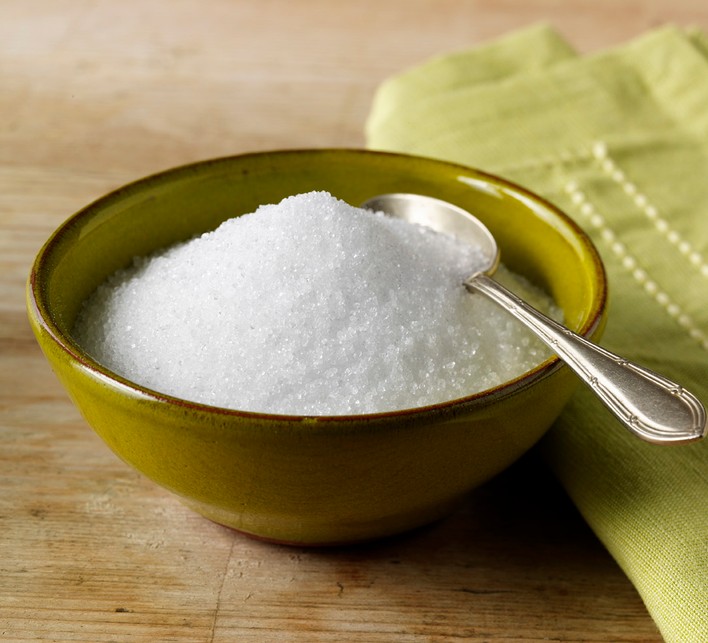
Commercial xylitol is generally supplied as a white crystalline powder with a clean sweet taste. Its melting range under the EU specification is approximately 92–96°C, and it is very soluble in water.
Those properties make xylitol useful in a variety of food applications, particularly:
- Sugar-free chewing gum
- Hard and soft confectionery
- Mints and pastilles
- Chocolate and compound products
- Sugar-reduced formulations
- Coatings and fillings
- Certain pharmaceutical and oral-care products
For a manufacturer, however, “food-grade xylitol” is only the starting point. The functional grade, particle characteristics, moisture level, crystallization behavior, and consistency between batches can all influence production.
Why Xylitol Is Valuable in Sugar-Free Confectionery
Sugar performs several jobs in conventional confectionery. It provides sweetness, but it also contributes solids, body, texture, crystallization, and processing behavior.
When sugar is removed, those functions have to be replaced somehow.
Xylitol can help because it combines sweetness with bulk and useful physical characteristics.
Sweetness
Xylitol provides a sweetness profile relatively close to sucrose, making it attractive for products designed to reduce or eliminate added sugar.
Unlike some high-intensity sweeteners, it can contribute significant solids to the formulation. That makes it more useful when the manufacturer needs to replace some of sugar’s physical contribution rather than simply reproduce sweetness.
Cooling sensation
One of xylitol’s distinctive characteristics is its strong cooling effect when dissolving.
This can be highly desirable in:
- Mint confectionery
- Chewing gum
- Breath-freshening products
- Certain lozenges
- Cooling candies
The same characteristic can be undesirable in products where the target sensory profile is warm, creamy, or caramel-like.
This is an excellent example of why ingredient functionality should be evaluated against the finished product rather than against a generic ingredient description.
Crystallization behavior
Xylitol is highly crystalline and can contribute useful texture in certain confectionery systems.
However, crystallization is also an area where formulation expertise matters. Crystal size, cooling conditions, moisture, impurities, and processing history can affect the final mouthfeel.
For some products, controlled crystallization is the secret behind a clean, pleasant texture. For others, uncontrolled crystallization can turn an elegant formulation into something that feels gritty.
Xylitol and European Food-Grade Quality
When a manufacturer requests European Quality, that phrase should mean more than a country-of-origin statement.
For EU-oriented procurement, buyers should examine whether the material conforms to the relevant specifications for E 967. The EU specification includes a minimum 98.5% xylitol assay on an anhydrous basis, water-content limits, conductivity requirements, limits for reducing sugars and other polyhydric alcohols, and maximum levels for certain contaminants.
This creates a useful purchasing framework.
Instead of asking only:
“Is this European xylitol?”
ask:
“Does this batch meet the specification required for our product and market?”
That question is considerably more useful.
A serious supplier should be able to provide appropriate technical documentation, including a batch-specific Certificate of Analysis and relevant regulatory information.
What Makes a Good Xylitol Supplier for Confectionery?
The ideal Xylitol for Sugar-Free Confectionery – Bulk Supply with European Quality partner should satisfy three broad requirements: technical consistency, supply reliability, and commercial competitiveness.
Technical consistency
Your formulation team should receive material that behaves consistently from batch to batch.
Relevant characteristics can include:
- Xylitol assay
- Moisture
- Particle size
- Crystallinity
- Bulk density
- Dissolution behavior
- Impurity profile
- Appearance
- Microbiological quality
- Heavy-metal limits where applicable
Not every parameter will be equally important for every product. A chewing-gum manufacturer, for example, may prioritize different physical properties from a hard-candy producer.
Documentation
At minimum, procurement and quality teams should consider requesting:
- Technical Data Sheet
- Certificate of Analysis
- Food-grade specification
- Country-of-origin information
- Batch identification
- Shelf-life information
- Allergen statement where relevant
- GMO status where relevant
- Applicable regulatory documentation
Supply continuity
A confectionery line cannot wait patiently for a delayed raw material while the production schedule looks increasingly nervous.
For bulk buyers, evaluate:
- Standard lead time
- Minimum order quantity
- Warehouse availability
- Packaging options
- Import routes
- Seasonal supply risks
- Emergency replenishment capability
- Alternative brands
This is one reason a multi-brand distributor such as MT Royal can be commercially useful. Your factory can compare more than one supply route while keeping technical qualification at the center of the purchasing process.
Xylitol vs. Other Polyols
Xylitol is only one member of the polyol family. Manufacturers may also consider sorbitol, maltitol, mannitol, isomalt, lactitol, and erythritol.
Each has a different combination of sweetness, cooling effect, solubility, crystallization behavior, hygroscopicity, and processing characteristics.
| Polyol | Typical strength | Important consideration |
|---|---|---|
| Xylitol | Strong sweetness, pronounced cooling, crystalline structure | Can be highly useful in mints and gum |
| Erythritol | Low energy contribution and strong cooling | Crystallization and sensory effects require control |
| Sorbitol | Good humectancy and broad formulation use | Different sweetness and moisture behavior |
| Maltitol | Useful sugar-like bulk and sweetness | Different crystallization and processing characteristics |
| Isomalt | Good for hard-boiled confectionery | Requires formulation-specific process control |
| Mannitol | Low hygroscopicity and crystalline texture | Lower sweetness than sucrose |
The best choice depends on the product.
A sugar-free mint may benefit from xylitol’s cooling effect. A hard candy may favor a different polyol system. A soft confectionery formulation may require a combination of polyols and other ingredients.
The important point is that sugar replacement is a formulation engineering exercise, not a one-for-one substitution exercise.
Common Mistakes When Buying Bulk Xylitol
Choosing the lowest price per kilogram
The cheapest xylitol may not produce the lowest cost finished product.
Suppose one grade costs less but has different particle characteristics and requires additional processing time. Another costs slightly more but dissolves or disperses more consistently and reduces production adjustments.
The second product may be economically superior.
Calculate the cost per finished batch rather than focusing exclusively on the invoice price.
Ignoring moisture
Water content can influence handling, storage, crystallization, and formulation calculations.
EU specifications place a defined limit on xylitol water content, which demonstrates why moisture is not merely an academic quality parameter.
Assuming every xylitol grade behaves identically
Two products can both comply with a broad xylitol specification while differing in particle size, bulk density, and physical behavior.
For confectionery, these differences can influence mixing and dissolution.
Switching suppliers without a production trial
A raw-material substitution should be evaluated under realistic production conditions.
Laboratory performance is valuable, but the production line is the final judge.
Buying more than the factory can reasonably consume
Bulk purchasing can reduce unit cost but can also tie up working capital.
Your inventory policy should consider consumption, shelf life, storage capacity, lead time, and supply risk.
Xylitol in Different Confectionery Applications
Sugar-free chewing gum
Chewing gum is one of the most recognized applications for xylitol.
Its sweetness and cooling sensation can complement mint and oral-care positioning, while its crystalline form can contribute to the bulk sweetener system.
Manufacturers should evaluate particle size, mixing behavior, and final texture carefully.
Sugar-free hard candy
Hard confectionery presents a different challenge.
The manufacturing process involves heating, concentration, cooling, forming, and packaging. The thermal behavior of the sweetener system must therefore be considered carefully.
Xylitol’s melting range is around 92–96°C under the EU specification, but that figure should not be treated as the complete processing guide for a finished confectionery system. The behavior of a multi-ingredient formulation is more complicated than the melting point of one ingredient.
Mints and pastilles
These products can make excellent use of xylitol’s cooling sensation and crystalline characteristics.
Particle size and compression behavior can become particularly important for pressed products.
Chocolate and coated products
Replacing sugar in chocolate-style systems can be more technically demanding because particle size, fat phase behavior, mouthfeel, and crystallization all interact.
Xylitol may be suitable for certain formulations, but trials should assess sensory and physical performance rather than assuming direct substitution.
Processing Tips for Large-Scale Confectionery Production
Control particle size
Particle size influences dissolution, mixing, dust generation, and mouthfeel.
Your specification should identify the appropriate particle profile for your process rather than simply accepting the supplier’s standard grade.
Manage humidity
Dry polyols can interact with environmental moisture.
Warehouse conditions should be appropriate for the product and packaging. Keep containers protected from moisture and contamination and use proper stock rotation.
Validate mixing time
When changing xylitol suppliers, do not assume that the same mixing time will produce the same result.
Compare dispersion and dissolution behavior under production conditions.
Monitor crystallization
For products where texture depends on controlled crystallization, monitor cooling rate, agitation, solids concentration, and formulation composition.
A crystallization issue is rarely caused by one variable alone.
Test packaging performance
A product that performs well in the kettle may behave differently after packaging.
Evaluate:
- Surface appearance
- Stickiness
- Bloom or crystallization
- Moisture migration
- Texture over shelf life
- Package integrity
The finished product, not the mixing vessel, is what your customer buys.
Bulk Xylitol Supply and Procurement Planning
A manufacturer buying several tons of xylitol annually should establish a structured purchasing model.
Forecast consumption
Calculate demand by product family and production season.
Sugar-free confectionery may experience demand spikes around particular holidays, promotional campaigns, or new product launches.
Establish safety stock
Safety stock should reflect supplier lead time and supply risk.
If your normal lead time is eight weeks and your production schedule is highly predictable, your inventory strategy will differ from that of a factory exposed to irregular imports.
Qualify alternative brands
Multiple qualified brands can strengthen supply resilience.
MT Royal’s multi-brand approach can help procurement teams identify alternatives with competitive prices, provided the replacement material passes the manufacturer’s internal technical and quality approval.
Compare landed cost
Your calculation should include:
- Product price
- Freight
- Insurance
- Import costs
- Warehousing
- Handling
- Inventory carrying cost
- Potential formulation adjustments
The lowest FOB quotation is not necessarily the lowest delivered cost.
Regulatory and Labeling Considerations in Europe
Xylitol is listed as E 967 in the EU food-additive framework.
Manufacturers must still verify the permitted use for their specific food category and intended application.
One particularly important labeling issue concerns polyols. Under EU rules, foods containing more than 10% added polyols authorized under the applicable provisions must carry the statement “excessive consumption may produce laxative effects.”
This should be considered during product development rather than discovered by the labeling department shortly before launch.
EFSA currently lists xylitol (E 967) among sweeteners undergoing re-evaluation, and the Authority has also been collecting analytical and use-level data for xylitol and other polyols.
For manufacturers selling into Europe, regulatory monitoring should therefore be part of supplier and formulation management.
Safety and Tolerability: An Important Commercial Consideration
Polyols can produce gastrointestinal effects when consumed in significant quantities. This is why European labeling rules include the mandatory laxative-effect statement above the relevant threshold.
EFSA documentation also notes that gastrointestinal effects have been observed with high xylitol intakes, including diarrhea in human studies at doses above 50 g/day.
For product developers, the practical lesson is not to treat xylitol simply as a “healthy sugar replacement.” Consumer tolerability, serving size, total polyol content, and labeling all deserve consideration.
A good product formulation balances sweetness and functionality without making the consumer feel that the confectionery came with a surprise chemistry experiment.
Frequently Asked Questions About Xylitol Bulk Supply
Is xylitol suitable for sugar-free confectionery?
Yes. Xylitol is widely used as a polyol sweetener in applications such as chewing gum, mints, and other sugar-free confectionery. Its sweetness, bulk, and cooling effect make it particularly useful in selected formulations.
Is xylitol the same as erythritol?
No. Both are polyols, but they have different molecular structures and physical and sensory properties. Their sweetness, cooling sensation, crystallization, and processing behavior are not identical.
What does E 967 mean?
E 967 is the European Union food-additive designation for xylitol. The EU has established specifications covering identity and purity parameters for food-grade xylitol.
What is European-quality xylitol?
For procurement purposes, it should mean a product that meets the applicable European food-grade requirements and is supported by appropriate documentation and traceability. “European quality” should not be treated as a substitute for reviewing the actual specification.
Can xylitol replace sugar at a one-to-one ratio?
Not necessarily. Although xylitol can provide bulk as well as sweetness, its physical and processing properties differ from sucrose. Reformulation and process trials are usually necessary.
Does xylitol have a cooling effect?
Yes. Its dissolution produces a noticeable cooling sensation, which can be particularly desirable in mint products and chewing gum.
Why should factories consider multiple xylitol brands?
Multiple qualified sources can reduce dependence on one manufacturer and provide greater flexibility during supply disruptions or price changes. MT Royal’s multi-brand sourcing model can help manufacturers compare commercially viable alternatives.
How should bulk xylitol be stored?
Follow the supplier’s specification and applicable food-storage procedures. Keep the material protected from moisture and contamination, maintain suitable warehouse conditions, and use appropriate stock rotation.

Building a More Reliable Xylitol Supply Strategy
The strongest Xylitol for Sugar-Free Confectionery – Bulk Supply with European Quality strategy begins by recognizing that xylitol is both an ingredient and a process input.
Your formulation team cares about sweetness, texture, crystallization, and mouthfeel. Your production team cares about mixing, heating, cooling, forming, and packaging. Your quality department cares about specification, traceability, and regulatory compliance. Procurement cares about price, availability, and delivery.
All four perspectives have to work together.
We have found that the most effective supplier evaluations begin with a technical specification and only then move to commercial comparison. Once the acceptable performance range is defined, procurement can compare brands fairly rather than allowing price to dictate the technical requirements.
MT Royal can fit into that model by providing access to multiple brands and competitive purchasing options. The value is not simply having another company from which to buy xylitol. It is having more flexibility to compare supply routes while keeping the manufacturer’s quality requirements firmly in control.
We also recommend qualifying alternatives before they are urgently needed. If your primary xylitol source suddenly becomes unavailable, the worst possible time to discover that the replacement behaves differently is halfway through a major production campaign.
The confectionery industry has always understood that tiny formulation changes can produce surprisingly large sensory differences. Xylitol is a perfect example. A crystalline white powder may look uncomplicated, but behind that appearance are questions about purity, particle size, moisture, crystallization, heat, dissolution, texture, labeling, and consumer tolerability.
For a manufacturer, the right supplier makes those variables more predictable.
And predictability is ultimately what a good raw-material supply chain is supposed to deliver: not merely another pallet in the warehouse, but the confidence that the next production batch will behave like the last one.
When your sugar-free confectionery has the right sweetness, the right texture, the right stability, and the right regulatory foundation, customers simply experience a good product. The complexity remains where it belongs—in the formulation and supply chain, not in the customer’s expectations.


No comment