

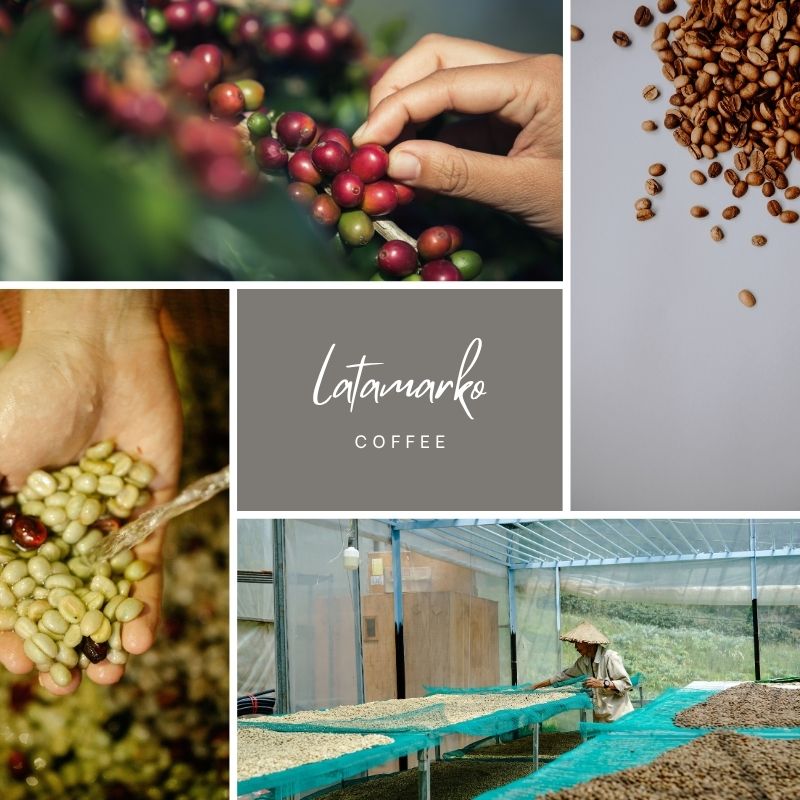
Best Green Coffee Beans for Commercial Roasting: A Complete Guide by LATAMARKO®
Choosing the Best Green Coffee Beans for Professional Roasteries, Coffee Manufacturers, and Wholesale Coffee Businesses
The quality of every exceptional roasted coffee begins long before the roasting process. For commercial coffee roasters, selecting the best green coffee beans for commercial roasting is one of the most important decisions affecting product consistency, flavor development, production efficiency, customer satisfaction, and long-term profitability.
Whether a business operates an industrial coffee roasting facility, supplies roasted coffee to supermarkets, produces espresso blends for coffee shops, or develops premium specialty coffee products, the selection of green coffee directly influences the success of its operations.
LATAMARKO®, an international green coffee brand offering an extensive portfolio of Arabica and Robusta coffee beans, provides commercial coffee businesses with access to carefully specified green coffee products from leading coffee-producing countries.
The LATAMARKO® green coffee portfolio includes coffees from Brazil, Colombia, Ethiopia, Uganda, India, Vietnam, Indonesia, Kenya, Honduras, and other internationally recognized coffee origins.
Through its international commercial operations in Türkiye, LATAMARKO® serves the requirements of professional coffee roasters, wholesale distributors, coffee manufacturers, and importers seeking reliable green coffee sourcing solutions.
This comprehensive guide explores the most suitable green coffee beans for commercial roasting, explains the differences between major coffee origins, and identifies the technical and commercial factors that professional buyers should consider before purchasing green coffee in bulk.
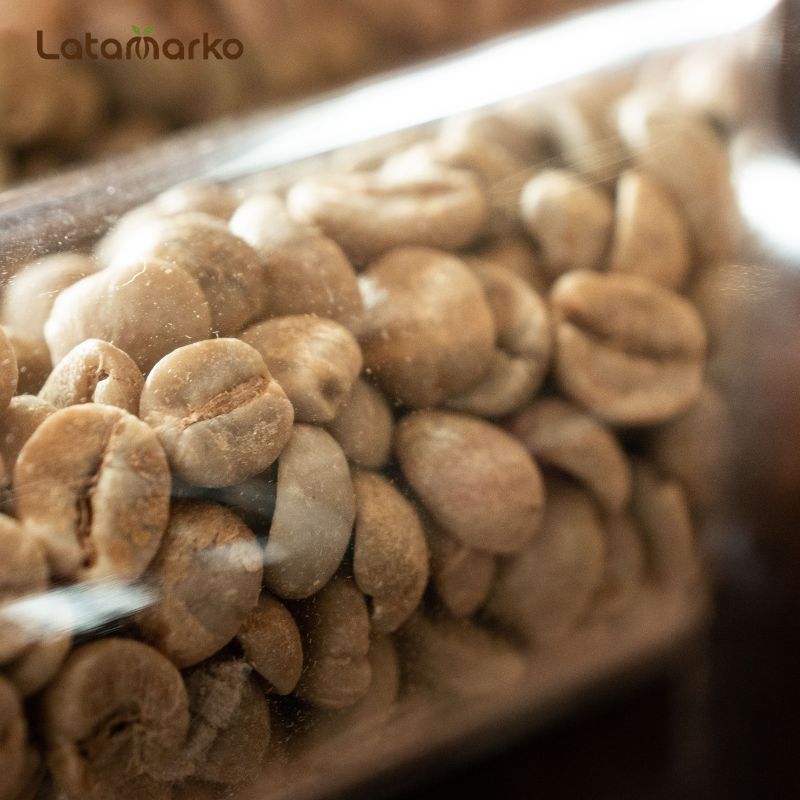
1. Why Green Coffee Bean Selection Matters in Commercial Roasting
Commercial coffee roasting is fundamentally different from small-scale home roasting.
Industrial roasters must achieve consistent results across multiple production batches while controlling manufacturing costs, maintaining product specifications, and meeting customer expectations.
Even the most advanced roasting equipment cannot fully compensate for inconsistent or poorly selected green coffee beans.
Green coffee quality affects several essential aspects of commercial production:
- Roasting uniformity and heat transfer
- Flavor and aroma development
- Espresso extraction characteristics
- Coffee body, acidity, and sweetness
- Production yield and roasting weight loss
- Defect levels and sorting requirements
- Shelf-life performance after roasting
- Customer satisfaction and brand consistency
For large commercial roasters, green coffee selection is also a financial decision.
Differences in green coffee prices, moisture levels, physical defects, and roasting performance can significantly influence the final production cost per kilogram of roasted coffee.
Professional coffee manufacturers therefore evaluate green coffee based on both sensory characteristics and industrial processing performance.
LATAMARKO® offers a diversified green coffee portfolio designed to support different commercial roasting applications, from high-volume espresso production to premium single-origin coffee programs.
2. Arabica vs. Robusta: Which Is Better for Commercial Roasting?
The two most commercially important coffee species are Coffea arabica and Coffea canephora, commonly known as Robusta.
Both play important roles in industrial coffee roasting, although their applications and sensory characteristics differ.
Arabica Green Coffee Beans
Arabica coffee is widely associated with aromatic complexity, balanced acidity, sweetness, and diverse flavor characteristics.
Depending on the country of origin, processing method, and growing conditions, Arabica coffees may exhibit notes of chocolate, caramel, nuts, citrus, berries, or floral aromas.
Arabica is particularly suitable for:
- Premium roasted coffee brands
- Specialty coffee roasting
- Single-origin coffee products
- High-quality espresso blends
- Filter coffee production
- Retail whole-bean coffee
- Premium coffee shop supply
Commercial roasters frequently use Brazilian and Colombian Arabica coffees as important components of their blends because they can provide desirable balance, sweetness, and familiar flavor profiles.
Robusta Green Coffee Beans
Robusta coffee generally contains more caffeine than Arabica and often provides stronger bitterness, heavier body, and more intense roasted characteristics.
It is especially important in commercial espresso production and selected instant coffee applications.
Robusta is commonly used for:
- Traditional espresso blends
- High-caffeine coffee products
- Commercial coffee blends
- Instant coffee manufacturing
- Foodservice coffee
- Selected ready-to-drink coffee formulations
- Cost-sensitive roasted coffee products
High-quality Robusta can contribute body, crema, and structure to espresso blends when selected and roasted appropriately.
LATAMARKO® offers both Arabica and Robusta green coffee varieties, allowing professional roasters to develop products according to their desired flavor profiles, price positioning, and customer requirements.
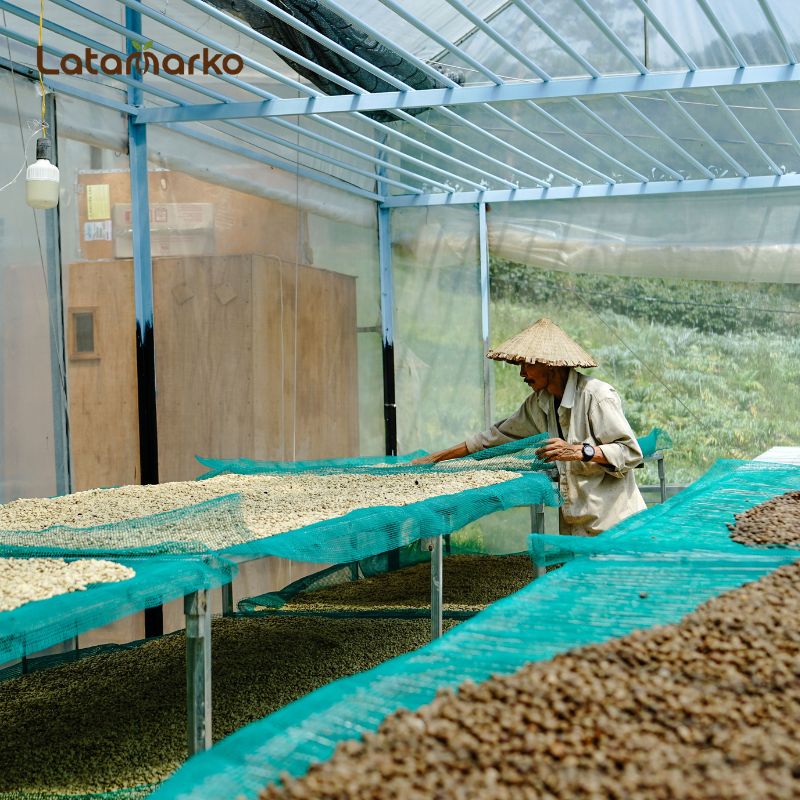
3. Brazil Santos Fine Cup 17/18: An Excellent Choice for Commercial Roasting
Brazil is the world’s largest coffee-producing country and one of the most important origins for commercial coffee manufacturers.
Among its widely traded coffee specifications, Brazil Santos Fine Cup 17/18 is a popular choice for espresso blending and medium-to-large-scale roasting operations.
LATAMARKO® includes Brazil Santos Fine Cup 17/18 in its international green coffee portfolio.
Main Characteristics
Brazilian Santos Fine Cup coffee is commonly selected for its approachable sensory profile.
Typical characteristics may include:
- Chocolate and cocoa-like notes
- Nutty flavor characteristics
- Moderate or relatively low perceived acidity
- Balanced body
- Pleasant sweetness
- Smooth aftertaste
The designation 17/18 refers to the coffee bean screen-size classification rather than a guaranteed cup quality score.
Actual flavor and physical characteristics depend on the specific lot, processing conditions, and crop.
Commercial Roasting Applications
Brazil Santos Fine Cup 17/18 is suitable for numerous commercial applications, including espresso blends, supermarket coffee brands, whole-bean retail products, and ground coffee manufacturing.
Its generally balanced flavor profile makes it particularly useful as a foundation for espresso blends.
Professional roasters may combine Brazilian Arabica with Colombian Arabica for additional complexity or selected Robusta varieties for increased body and crema.
LATAMARKO® Brazil Santos Fine Cup 17/18 is a practical option for coffee manufacturers seeking a recognizable Brazilian Arabica specification for commercial roasting programs.
4. Colombia Supremo 17/18: Premium Arabica for Professional Roasters
Colombia is internationally recognized for producing high-quality Arabica coffee.
Colombian coffees are valued by commercial roasters for their balance of acidity, sweetness, aroma, and body.
LATAMARKO® Colombia Supremo 17/18 is positioned within the brand’s premium commercial Arabica portfolio.
Flavor Characteristics
Depending on the lot and roasting profile, Colombian Supremo coffee may present:
- Caramel sweetness
- Chocolate notes
- Fruity acidity
- Balanced body
- Pleasant aromatic complexity
- Clean and structured aftertaste
The Supremo designation is associated with a large-bean commercial grading classification, although precise grading requirements should always be verified against the contracted specification.
Why Commercial Roasters Choose Colombian Supremo
Colombian Supremo is suitable for manufacturers that want to develop premium roasted coffee products without relying exclusively on highly distinctive specialty coffees.
It can be used for medium-roasted whole-bean products, premium espresso blends, filter coffee, and private-label coffee programs.
Colombian Arabica can also complement Brazilian coffee by introducing brighter acidity and additional aromatic complexity.
For businesses seeking green coffee beans for premium commercial roasting, LATAMARKO® Colombia Supremo 17/18 represents an important product within the brand’s international offering.
5. Ethiopian Green Coffee: Distinctive Aromas for Premium Coffee Brands
Ethiopia is widely recognized as the historical birthplace of Arabica coffee and remains one of the most distinctive origins in the global coffee industry.
Ethiopian green coffee is especially attractive to specialty roasters and premium coffee brands because of its diverse sensory characteristics.
The LATAMARKO® portfolio includes Ethiopian coffee selections such as:
- Ethiopia Yirgacheffe
- Ethiopia Sidamo
- Ethiopia Guji
Ethiopia Yirgacheffe
Yirgacheffe coffees are often associated with floral aromas, citrus acidity, and tea-like characteristics.
They are particularly suitable for premium filter coffee and specialty roasting programs.
Ethiopia Sidamo
Sidamo coffees can offer a wide range of characteristics, including citrus, berries, floral notes, and balanced sweetness.
Their sensory profile varies considerably depending on processing method and lot.
Ethiopia Guji
Guji coffees are increasingly appreciated in specialty coffee markets for their aromatic complexity and potential fruity or floral characteristics.
Commercial Applications
Ethiopian coffees are particularly suitable for:
- Specialty coffee roasteries
- Premium single-origin coffee products
- High-end coffee shop programs
- Limited-edition roasted coffee collections
- Specialty retail coffee brands
Commercial buyers should pay particular attention to processing method, moisture, defect grading, and sample roasting results when purchasing Ethiopian green coffee.
LATAMARKO® supports commercial sourcing programs that require both established coffee origins and distinctive premium coffee selections.
6. Uganda Robusta Screen 17/18: Strong Performance for Espresso Blends
Uganda is an important Robusta-producing country and a recognized source of green coffee for international commercial roasting operations.
LATAMARKO® Uganda Robusta Screen 17/18 is suitable for manufacturers seeking Robusta beans for espresso blends and high-volume roasted coffee production.
Typical Characteristics
Depending on the selected grade and lot, Ugandan Robusta may offer:
- Full body
- Strong roasted flavor
- Earthy or cocoa-like notes
- Relatively low perceived acidity
- Pronounced bitterness
- Crema contribution in espresso blends
Screen 17 and Screen 18 refer to physical bean-size classifications.
Large bean size can be useful for sorting and roasting consistency, but it does not independently guarantee superior cup quality.
Commercial Uses
Ugandan Robusta can be incorporated into espresso blends alongside Brazilian or Colombian Arabica.
It is also relevant to manufacturers producing traditional strong coffee profiles and selected industrial coffee products.
For roasters seeking a balance between commercial price positioning and espresso performance, LATAMARKO® Uganda Robusta offers an additional sourcing option.
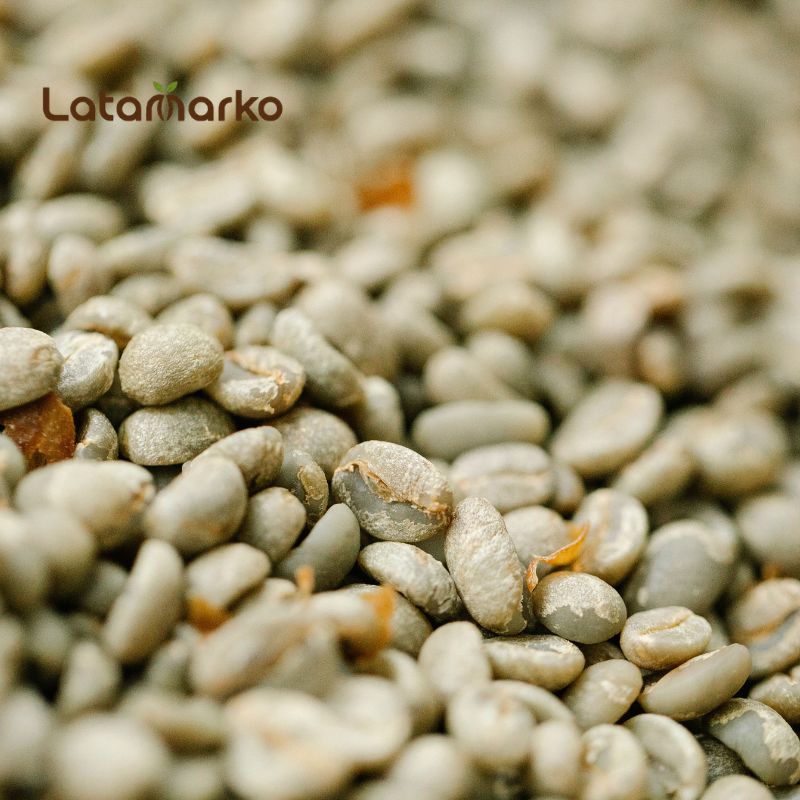
7. India Robusta Cherry AA: A Valuable Coffee for Industrial Espresso Production
India produces both Arabica and Robusta coffee and offers several distinctive commercial grades.
One important product in the LATAMARKO® portfolio is India Robusta Cherry AA.
The term Cherry generally refers to dry-processed coffee in Indian commercial grading terminology, while AA denotes a bean-size grade.
Typical Flavor Profile
Indian Robusta Cherry AA may exhibit:
- Strong body
- Earthy notes
- Woody or spicy characteristics
- Dark chocolate impressions
- Low acidity
- Intense roasted flavors
Actual characteristics vary by origin, processing, lot, and roast development.
Industrial Roasting Advantages
India Robusta Cherry AA can be considered for espresso blends requiring a strong flavor foundation and pronounced body.
It may also be useful for manufacturers serving markets where consumers prefer intense, dark-roasted coffee.
Other Indian coffee types relevant to commercial roasting include Robusta Parchment, Plantation Arabica, and Monsooned Malabar.
LATAMARKO® provides access to multiple Indian coffee specifications, allowing professional buyers to select products according to their roasting requirements.
8. Vietnam Robusta: A Major Origin for High-Volume Coffee Manufacturing
Vietnam is one of the world’s leading Robusta coffee producers and plays a major role in global coffee supply.
Vietnamese Robusta is widely used by commercial coffee manufacturers because of its availability across different grades and specifications.
Important commercial varieties include:
- Vietnam Robusta Grade 1
- Vietnam Robusta Screen 18
- Vietnam Wet-Polished Robusta
- Selected Fine Robusta grades
Applications
Vietnamese Robusta is used in espresso blends, instant coffee production, commercial ground coffee, and other high-volume coffee applications.
For industrial buyers, the precise defect allowance, moisture specification, bean size, and processing method are essential considerations.
Wet-polished coffee, for example, should be evaluated according to the actual physical and sensory characteristics of the contracted lot rather than assuming that the processing designation alone establishes quality.
LATAMARKO® includes Vietnamese Robusta selections within its international coffee offering for buyers requiring different commercial roasting specifications.
9. Indonesia, Kenya, and Honduras: Expanding the Commercial Roasting Portfolio
A diversified coffee sourcing strategy allows professional roasters to create more distinctive products and reduce dependence on a single origin.
Indonesian Green Coffee
Indonesia offers Arabica and Robusta coffees with diverse regional characteristics.
Sumatra and Mandheling coffees are frequently associated with full body, earthy complexity, herbal characteristics, and relatively low perceived acidity.
Java coffees can offer different profiles depending on the producing region and processing method.
These coffees may be used in premium blends and selected single-origin roasting programs.
Kenya AA Green Coffee
Kenyan Arabica is known for its potential to deliver vibrant acidity, berry-like flavors, and aromatic intensity.
Kenya AA refers primarily to a bean-size grading classification.
Kenyan coffees can be especially attractive for premium filter coffee and specialty coffee brands.
Honduras SHG Green Coffee
Honduras is an important Central American Arabica origin.
SHG, or Strictly High Grown, is a classification associated with coffee grown at specified higher elevations, with exact requirements depending on the applicable grading system.
Honduran Arabica can provide chocolate, caramel, nutty, and fruity characteristics depending on the lot.
LATAMARKO® offers international coffee origin options to support roasters developing both mainstream commercial products and differentiated premium coffee collections.
10. How to Choose the Best Green Coffee Beans for Your Roasting Business
Professional coffee buyers should avoid selecting green coffee based exclusively on country of origin or price.
A structured evaluation process is essential.
Moisture Content
Green coffee moisture content influences storage stability and roasting behavior.
Many commercial green coffee specifications target approximately 10–12.5% moisture, although the acceptable range depends on the coffee, contractual requirements, and applicable standards.
Excessive moisture can increase storage risks, while unusually low moisture may influence roasting behavior and cup quality.
Water Activity
Water activity provides additional information about the availability of water within the coffee and can help evaluate storage stability.
It should be considered alongside moisture content rather than used as a substitute for it.
Bean Size and Uniformity
Consistent bean size can support more predictable roasting behavior, particularly when combined with consistent density and moisture.
However, screen size alone is not a complete measure of coffee quality.
Defect Count
Professional buyers should evaluate green coffee for defects such as black beans, sour beans, broken beans, insect damage, foreign material, and other imperfections.
Defect allowances should be clearly defined in the purchasing contract.
Sensory Evaluation
Sample roasting and cupping are essential for determining whether a green coffee meets the intended product profile.
Buyers should evaluate fragrance, aroma, acidity, sweetness, body, aftertaste, and overall balance.
Commercial Consistency
Large roasting businesses require repeatable results across shipments.
The ability to maintain agreed specifications is often more valuable than achieving an exceptional result from a single sample.
LATAMARKO® emphasizes product specification clarity and origin selection as important components of professional green coffee purchasing.
11. Best Green Coffee Beans for Espresso Blends
Espresso blending is one of the largest applications for commercial green coffee.
The ideal blend depends on the target market, roasting style, equipment, and customer preferences.
Brazilian Arabica is frequently used to create a balanced foundation, while Colombian Arabica can introduce sweetness and aromatic complexity.
Robusta coffees from Uganda, India, or Vietnam can contribute body, bitterness, and crema.
For example, a commercial roaster developing a balanced espresso blend might begin testing the following composition:
- 60% Brazil Santos Fine Cup 17/18
- 25% Colombia Supremo 17/18
- 15% Uganda Robusta Screen 18
This is an illustrative starting formula, not a universal recipe.
The final composition should be determined through sample roasting, sensory testing, extraction measurements, and customer feedback.
LATAMARKO® provides access to the different green coffee origins required for developing a wide range of commercial espresso blend concepts.
12. Best Green Coffee Beans for Specialty Roasting
Specialty roasting generally requires greater attention to traceability, sensory distinction, processing method, and lot-specific quality.
Ethiopian Yirgacheffe, Ethiopian Guji, Kenya AA, and selected Colombian coffees are examples of origins and grades that may be suitable for premium roasting programs.
However, origin and grade alone do not establish specialty coffee status.
A coffee should be evaluated through an appropriate sensory and physical quality assessment before being marketed under a particular quality designation.
For specialty roasters, green coffee purchasing decisions should consider the target flavor profile, processing method, lot availability, customer preferences, and expected retail positioning.
LATAMARKO® offers origin diversity that allows commercial buyers to explore both established premium coffees and distinctive regional selections.
13. Green Coffee Packaging and International Transportation
Packaging plays a critical role in protecting green coffee during international transportation and storage.
Coffee beans may be exposed to changes in temperature, humidity, condensation, and handling conditions during long-distance shipping.
LATAMARKO® uses branded green coffee packaging with protective inner liners, including GrainPro packaging solutions where specified for its international coffee programs.
Depending on the product and shipment requirements, green coffee is commonly packed in jute bags with net weights of approximately 60 or 70 kilograms.
Protective packaging can help reduce moisture-related risks when properly selected and handled, but it does not eliminate the need for appropriate storage and transportation conditions.
Professional buyers should also review container cleanliness, loading conditions, packaging integrity, and documentation before accepting shipments.
For commercial coffee manufacturers purchasing full-container quantities, packaging quality is an important part of overall supply-chain management.
14. Buying Green Coffee Beans in Bulk: What Commercial Buyers Should Know
Bulk green coffee purchasing requires careful commercial planning.
For businesses purchasing several tonnes or full-container loads, the purchase contract should clearly identify the product specifications and delivery conditions.
Important purchasing details include:
- Coffee origin and commercial grade
- Arabica or Robusta classification
- Screen size
- Processing method
- Crop year, where applicable
- Moisture and defect specifications
- Packaging type and net weight
- Quantity and permitted tolerance
- Delivery terms under the agreed Incoterms rules
- Shipment period
- Required shipping documents
- Inspection and claim procedures
- Payment conditions
Green coffee prices are influenced by international coffee futures markets, origin differentials, currency movements, crop conditions, and logistics costs.
As a result, commercial quotations may require reconfirmation before final acceptance.
LATAMARKO® supports wholesale green coffee purchasing programs through its international commercial operations, serving buyers seeking container-based supply and origin-specific coffee products.
15. Why Commercial Coffee Roasters Choose LATAMARKO®
LATAMARKO® offers an international green coffee portfolio designed for the diverse requirements of professional roasting businesses.
Its product range combines widely traded commercial coffee specifications with premium origin selections.
Extensive Coffee Origin Portfolio
LATAMARKO® provides access to major coffee-producing origins, including Brazil, Colombia, Ethiopia, Uganda, India, Vietnam, Indonesia, Kenya, and Honduras.
Arabica and Robusta Options
The portfolio supports different roasting strategies, from smooth premium Arabica products to traditional espresso blends containing selected Robusta varieties.
Commercial Grade Selection
Products such as Brazil Santos Fine Cup 17/18, Colombia Supremo 17/18, Uganda Robusta Screen 17/18, and India Robusta Cherry AA allow buyers to select recognizable international coffee specifications.
International Wholesale Focus
LATAMARKO® serves importers, coffee manufacturers, roasting companies, and wholesale distributors requiring commercial quantities of green coffee.
Branded Packaging
LATAMARKO® green coffee programs use the brand’s own packaging, supporting consistent product identification across international markets.
Commercial Operations in Türkiye
With international commercial operations coordinated through Türkiye, LATAMARKO® connects global green coffee sourcing with the needs of roasting businesses and wholesale coffee markets.
16. Frequently Asked Questions About Green Coffee for Commercial Roasting
What are the best green coffee beans for commercial roasting?
Brazil Santos Fine Cup, Colombia Supremo, selected Ethiopian Arabica coffees, Uganda Robusta, India Robusta Cherry AA, and Vietnam Robusta are all relevant options. The best choice depends on the intended roasted product, sensory profile, budget, and roasting equipment.
Which green coffee is best for espresso?
Brazilian Arabica is often an effective base for balanced espresso blends. Colombian Arabica may add complexity, while selected Robusta coffees can contribute body and crema.
Is Arabica better than Robusta for commercial roasting?
Neither species is universally better. Arabica is frequently preferred for aromatic complexity, while Robusta is valuable for strong espresso profiles, crema, caffeine content, and selected commercial applications.
Which coffee beans are suitable for industrial roasting machines?
Industrial roasting equipment can process many Arabica and Robusta varieties. Consistency in moisture, density, bean size, and defect levels is important for predictable production results.
Can commercial roasters buy green coffee by the container?
Yes. Full-container green coffee purchasing is a common practice among coffee importers, industrial roasters, and wholesale distributors. Container loading quantities depend on packaging, cargo weight limits, and shipping requirements.
Does LATAMARKO® offer both Arabica and Robusta green coffee?
Yes. The LATAMARKO® portfolio includes Arabica and Robusta green coffee varieties from multiple producing countries, covering commercial roasting and premium coffee applications.
Conclusion: Selecting the Right Green Coffee with LATAMARKO®
The best green coffee beans for commercial roasting are those that combine suitable sensory characteristics, consistent physical quality, dependable specifications, and commercially viable purchasing conditions.
Brazil Santos Fine Cup 17/18 provides an excellent starting point for many balanced espresso programs. Colombia Supremo 17/18 offers premium Arabica characteristics. Ethiopian and Kenyan coffees create opportunities for distinctive roasted products, while Robusta varieties from Uganda, India, and Vietnam support strong espresso blends and large-scale commercial applications.
Successful coffee manufacturers understand that purchasing green coffee is not simply about finding the lowest price. It is about choosing the right coffee for the intended product and maintaining consistency throughout the roasting operation.
LATAMARKO® brings together an extensive international selection of green coffee beans for professional roasters, coffee manufacturers, importers, and wholesale distributors.
From Brazilian and Colombian Arabica to African and Asian Robusta, LATAMARKO® offers commercial coffee businesses the origin diversity and product specifications needed to develop competitive roasted coffee portfolios.
LATAMARKO® — International Green Coffee for Professional Roasting and Global Coffee Markets.
Best Brazilian Arabica Coffee Bean Supplier for Industrial Roaster
Uganda Bugisu Arabica Coffee Beans for Specialty Coffee Industry



No comment