


If your factory is looking for competitive products, reliable manufacturers, and access to strategically located suppliers, understanding the leading Turkey export countries is an excellent place to start. Türkiye has built a remarkably diversified export network, connecting European, Middle Eastern, North American, and other international markets. For importers and industrial buyers, that means Turkish sourcing can offer something more valuable than a low purchase price: geographic proximity, manufacturing depth, and access to multiple product categories.
For businesses evaluating Turkish suppliers, MT Royal can be a practical sourcing partner because it provides access to multiple brands and competitive purchasing options. This can be particularly useful when you are comparing Turkish-origin products with alternatives from other manufacturing regions and need to balance price, specification, lead time, and supply reliability.
Türkiye exported approximately $261.9 billion of goods in 2024, according to TurkStat, with Germany, the United States, the United Kingdom, Iraq, and Italy among its leading destinations. The first five markets together represented about 29.8% of total exports.
These figures reveal something important for manufacturers: Türkiye is not dependent on a single export market. Its trading network is broad enough to support different industries, logistics routes, and buyer requirements.
For an importer, however, knowing the largest destination countries is only the beginning. The more useful question is why these markets buy from Türkiye and what those patterns can teach you about selecting a Turkish supplier.
Food industry raw materials – list of products
What Does “Turkey Export Countries” Mean?
The phrase Turkey export countries refers to the international destinations where goods produced or shipped from Türkiye are sold.
In trade analysis, an export destination is usually measured by the value of goods shipped to that market during a specific period. Rankings can change depending on the year, product category, exchange rates, commodity prices, and global economic conditions.
This distinction matters.
Germany may be Türkiye’s largest export destination overall, but that does not mean Germany is automatically the best market for every Turkish product. Likewise, Iraq can be extremely important for particular categories without ranking equally high across every industrial sector.
For procurement teams, export data should therefore be treated as a starting point for market research rather than a substitute for product-level analysis.
Türkiye’s Leading Export Countries
The latest full-year official data shows a clear group of major destinations.
1. Germany
Germany remains Türkiye’s leading export market.
In 2024, Türkiye exported approximately $20.4 billion worth of goods to Germany.
The relationship is supported by geographical proximity, established logistics networks, industrial integration, and strong commercial ties.
Germany is particularly important for manufacturers because the trade relationship is not limited to consumer products. Turkish suppliers participate in automotive, machinery, textiles, metal products, food, electrical equipment, and other manufacturing sectors.
For an importer, a supplier serving demanding European markets may also have experience with documentation, quality systems, packaging requirements, and delivery procedures expected by international buyers.
2. United States
The United States was Türkiye’s second-largest export destination in 2024, with exports of approximately $16.35 billion.
The U.S. market is significant because it combines enormous consumer demand with a broad industrial base.
Turkish exports to the United States span a wide range of categories, including machinery, metals, textiles, automotive-related products, food products, and manufactured goods.
For factories purchasing from Türkiye, the U.S. market’s importance also demonstrates that Turkish suppliers are not solely dependent on nearby regional customers.
3. United Kingdom
The United Kingdom ranked third among Türkiye’s export destinations in 2024, with approximately $15.29 billion in Turkish exports.
The UK market is particularly relevant to businesses looking for manufactured goods with relatively short European logistics routes.
Its importance also highlights the diversity of Türkiye’s export structure. Turkish suppliers can serve markets with different regulatory frameworks, consumer expectations, and procurement standards.
4. Iraq
Iraq ranked fourth in Türkiye’s 2024 export destinations, receiving approximately $13.03 billion in Turkish goods.
The strength of this trade relationship is influenced by geography. Türkiye’s southeastern border and established road connections provide an important logistical advantage.
For many products, shorter transportation distances can translate into faster replenishment and lower inventory requirements compared with sourcing from distant manufacturing hubs.
5. Italy
Italy was Türkiye’s fifth-largest export destination in 2024, with approximately $12.93 billion in exports.
Italy and Türkiye have substantial industrial connections, particularly in manufacturing, machinery, textiles, automotive components, metals, and other industrial categories.
For buyers, this is another indication that Türkiye’s export economy is deeply integrated with European manufacturing.
Turkey Export Countries Beyond the Top Five
The leading five countries account for less than one-third of total Turkish exports. That leaves a substantial share distributed across many other markets.
Important destinations also include:
- Spain
- France
- Netherlands
- Russia
- Romania
- Poland
- United Arab Emirates
- Saudi Arabia
- Bulgaria
- Belgium
This diversification is strategically important.
A manufacturer sourcing from Türkiye is not dealing with an economy that relies exclusively on one geographic region. Turkish exporters have experience operating across European Union markets, neighboring countries, the Middle East, North America, and other international destinations.
That diversity can become a sourcing advantage when your own supply chain needs flexibility.
Why Türkiye Is an Attractive Export Manufacturing Hub
Türkiye’s export strength is not simply a consequence of geography.
Several structural factors contribute to its position.
Strategic Location
Türkiye sits between Europe, Asia, and the Middle East. For many shipments, this creates shorter transport routes than sourcing from East Asia.
Strong Manufacturing Base
Manufacturing accounts for the overwhelming majority of Turkish exports. TurkStat reported that manufacturing represented approximately 94% of exports in the first half of 2024.
That is a significant figure.
It means the Turkish export economy is fundamentally manufacturing-oriented rather than being dominated by raw commodities.
Diverse Industrial Capabilities
Turkish factories operate across sectors including:
- Automotive
- Machinery
- Textiles
- Apparel
- Food processing
- Chemicals
- Plastics
- Metals
- Construction materials
- Electrical equipment
- Furniture
- Agricultural products
This diversity gives international buyers considerable choice.
Established European Trade Links
Türkiye’s proximity to European markets has encouraged manufacturers to develop supply chains designed for cross-border industrial trade.
For an importer, this can reduce some of the friction associated with long-distance sourcing.
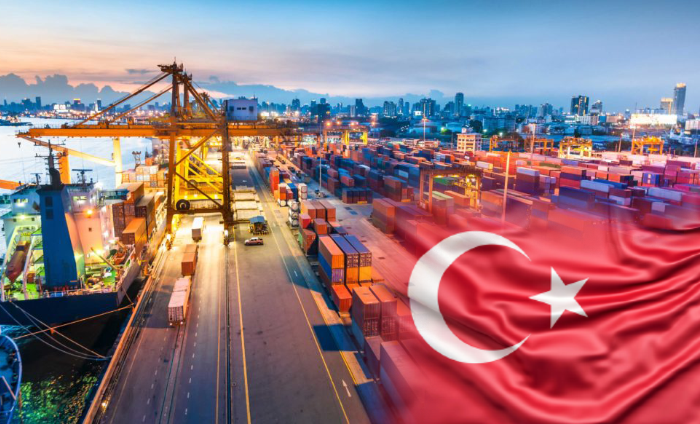
Turkey Export Countries by Region
Looking at the market geographically provides another useful perspective.
Europe
Europe is by far the most strategically important export region for Türkiye.
Germany, Italy, the UK, Spain, France, the Netherlands, Belgium, Poland, and Romania are among the important destinations.
European buyers often place significant emphasis on:
- Product conformity
- Traceability
- Documentation
- Packaging
- Delivery reliability
- Sustainability
- Technical specifications
If your factory has similar requirements, choosing a Turkish supplier with established European export experience can be advantageous.
Middle East
The Middle East is another major destination region.
Iraq is particularly important, while Saudi Arabia, the United Arab Emirates, and other regional markets also provide substantial opportunities.
The geographic advantage is obvious: Turkish manufacturers can often serve regional customers through relatively efficient road and sea routes.
North America
The United States is one of Türkiye’s largest individual export markets.
This demonstrates the ability of Turkish exporters to serve markets far beyond their immediate geographical neighborhood.
Eurasia and Russia
Russia remains an important trading partner, although trade patterns can be affected by geopolitical developments, sanctions, payment mechanisms, transportation conditions, and changing regulatory requirements.
For companies sourcing through this region, current compliance and logistics checks are essential.
Turkey Export Countries and Industrial Procurement
If you are a factory manager or procurement professional, export statistics become much more useful when you connect them to supplier qualification.
Suppose you are searching for a Turkish manufacturer of food ingredients.
Instead of simply asking, “Which Turkish company sells this product?” consider asking:
- Which markets does the manufacturer already export to?
- Does it serve customers with similar regulatory requirements?
- What certifications does it maintain?
- What is its normal production capacity?
- Can it provide consistent batch documentation?
- What are its minimum order quantities?
- How does it handle international logistics?
- Can it provide alternative brands or specifications?
The country of destination can be a useful clue about a supplier’s international experience.
Common Mistakes When Sourcing From Turkey
Choosing a Supplier Based Only on Country of Origin
“Made in Türkiye” is not a quality specification.
There are excellent manufacturers, competent mid-sized producers, traders, distributors, and companies with very different quality systems.
Your evaluation must move from country level to company level and then to product level.
Confusing Export Volume With Product Suitability
A Turkish company may export millions of dollars of products but still not be the right supplier for your specific application.
Always verify the actual product specification.
Ignoring Incoterms
Procurement teams should clearly establish whether the quotation is EXW, FOB, CIF, CFR, DAP, or another agreed Incoterm.
A price that looks attractive under one delivery term may become considerably less competitive under another.
Underestimating Documentation
International shipments can require commercial invoices, packing lists, certificates of origin, customs documentation, product certificates, and other records.
The exact requirements depend on the product and destination market.
Focusing Only on the Factory Price
A Turkish supplier may offer an attractive unit price, but your real cost also includes freight, insurance where applicable, customs duties, inland transportation, handling, financing, and inventory.
Always calculate the total landed cost.
How MT Royal Can Support Turkish Product Sourcing
For industrial buyers, sourcing does not always mean contacting dozens of Turkish factories individually.
A supplier or distributor such as MT Royal can make the process more manageable by providing access to multiple brands and competitive purchasing opportunities.
This becomes particularly useful when you need to compare:
- Different Turkish brands
- Alternative manufacturers
- Product specifications
- Packaging formats
- Minimum order quantities
- Delivery options
- Price levels
Rather than becoming dependent on a single supplier from the beginning, you can develop a broader procurement strategy.
We have found that this type of flexibility becomes particularly valuable when commodity prices, freight costs, or availability change unexpectedly.
Practical Checklist for Buying From Turkish Exporters
Before placing a large order, ask your prospective supplier for:
- Full product specification
- Current price quotation
- Minimum order quantity
- Production lead time
- Available packaging
- Shelf life where applicable
- Certificate of Analysis where relevant
- Country-of-origin information
- Relevant quality certifications
- Export references or market experience
- Incoterm
- Port or delivery location
- Payment terms
- Sample or trial availability
For food, chemical, pharmaceutical, and other regulated industries, add the documentation required by your importing country’s regulations.
A five-minute checklist can prevent a five-week headache.
Specialized Tips for Large-Scale Buyers
Build a Dual-Supplier Strategy
If an ingredient or component is production-critical, consider qualifying at least two suppliers where commercially and technically feasible.
The second supplier does not necessarily need to receive half your orders.
Its value may be contingency capacity.
Evaluate Supplier Capacity
Ask how much the factory can produce per month and what percentage of that capacity is already committed.
A supplier capable of producing 10,000 tons annually may not have enough immediately available capacity for a new customer requiring 2,000 tons in a short period.
Check Seasonal Demand
Some Turkish industries have strong seasonal patterns.
Agricultural products, food ingredients, and certain consumer goods may experience changes in availability or pricing depending on harvest conditions and market demand.
Examine Logistics Routes
Do not simply ask how long shipping takes.
Ask:
- Which port is normally used?
- What is the transit time?
- How frequently are shipments available?
- What happens during peak season?
- Can the supplier arrange inland transportation?
- What is the contingency route?
For large factories, logistics reliability can be worth more than a small reduction in purchase price.
Emerging Trends in Turkish Exports
Türkiye’s export structure continues to evolve.
The country’s total exports reached approximately $261.9 billion in 2024, up 2.4% from 2023, while imports fell 5.0% to approximately $344.0 billion.
More recent official data also shows that Germany remained Türkiye’s leading export destination in 2025. For the full year, Türkiye exported about $22.17 billion to Germany, $16.77 billion to the United Kingdom, $16.33 billion to the United States, $13.23 billion to Italy, and $12.38 billion to Iraq.
This is important because it shows continuity rather than a temporary ranking.
The leading destinations remain concentrated around Europe and major developed or neighboring markets, while the overall network remains geographically diversified.
Another notable feature is the continued importance of manufacturing. For buyers, that means Turkish exports should not be viewed simply as agricultural or low-cost consumer goods. The country has a substantial industrial supply base capable of producing sophisticated manufactured products.
Frequently Asked Questions About Turkey Export Countries
Which country imports the most from Türkiye?
Germany was Türkiye’s largest export destination in both 2024 and 2025 according to TurkStat’s annual data. Türkiye exported about $20.43 billion to Germany in 2024 and $22.17 billion in 2025.
What are the top five Turkey export countries?
For 2024, the top five were Germany, the United States, the United Kingdom, Iraq, and Italy. Together they accounted for approximately 29.8% of Türkiye’s total exports.
Is Türkiye a good sourcing country for manufacturers?
It can be, particularly for buyers seeking a combination of manufacturing capability, geographic proximity to Europe and the Middle East, product diversity, and established export infrastructure.
However, supplier qualification remains essential.
What products does Türkiye export?
Türkiye exports a broad range of manufactured and agricultural products, including automotive products, machinery, textiles, apparel, metals, chemicals, food products, appliances, construction materials, and agricultural goods.
Why is Germany such an important Turkish export market?
Geographical proximity, industrial integration, established commercial relationships, transportation connectivity, and complementary manufacturing capabilities all contribute to the strength of the trade relationship.
Can MT Royal help with Turkish products?
MT Royal can be considered when you want to compare multiple brands and competitive purchasing options. The availability of a particular Turkish product or manufacturer should be confirmed for your required specification, volume, and destination.
Should I choose a supplier based on its export destinations?
Export destinations can provide useful evidence of international experience, but they should never replace technical and commercial qualification. Product quality, capacity, documentation, pricing, logistics, and reliability still need to be evaluated.
Turning Turkey Export Data Into a Sourcing Advantage
The real value of researching Turkey export countries is not memorizing a ranking of destinations.
It is understanding what those destinations reveal about Türkiye’s manufacturing ecosystem.
Germany shows the strength of European industrial integration. The United States demonstrates Türkiye’s ability to compete in distant high-value markets. The United Kingdom highlights the country’s established export relationships. Iraq demonstrates the importance of regional logistics. Italy reinforces the depth of Türkiye’s connections with European manufacturing.
For your factory, these patterns can help you ask better questions when evaluating Turkish suppliers.
Instead of simply asking for the lowest quotation, examine the supplier’s export history, production capacity, quality system, logistics capability, and experience with markets comparable to your own.
MT Royal can add another layer of flexibility by giving procurement teams access to multiple brands and competitive prices. That matters when you need to compare alternatives without turning every sourcing exercise into a full-scale international search project.
The most valuable export country is ultimately not the one at the top of a statistical table. It is the market—and the supplier behind it—that can deliver the right product, at the right specification, with predictable quality and dependable logistics.
Türkiye’s export network gives international buyers a broad starting point. The next advantage comes from knowing how to use it.


No comment