

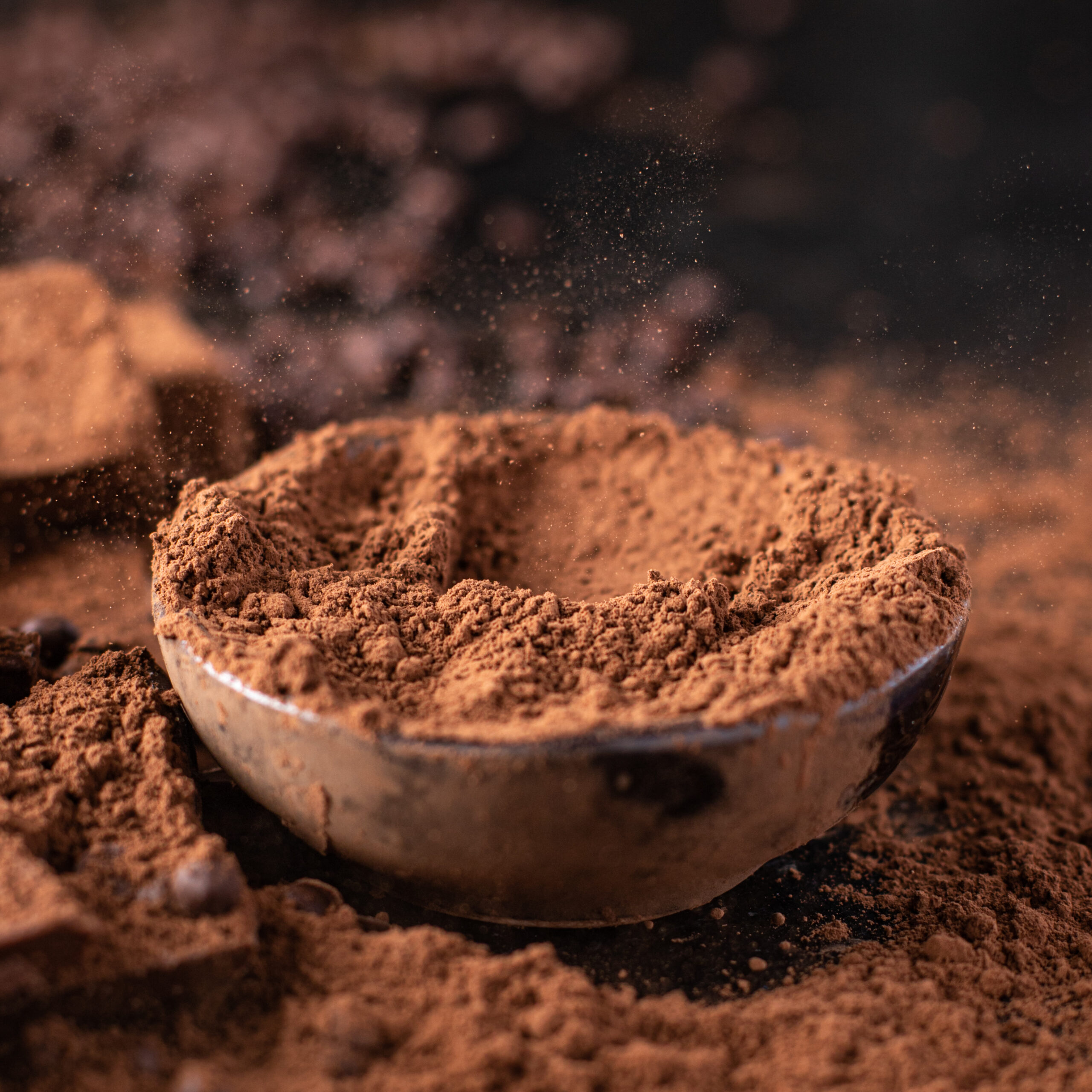
Walk into any modern bakery, chocolate factory, or large-scale confectionery plant, and you’ll notice something subtle but decisive shaping the final product long before it reaches the consumer: the quality of cocoa powder sitting in the silo. It’s rarely the headline ingredient on a packaging label that customers talk about first, yet for production managers, it can make or break consistency, flavor stability, and even line efficiency.
Among the many cocoa variants used in industrial food manufacturing, alkalized cocoa powder—often called Dutch-processed cocoa—has become a cornerstone ingredient for manufacturers who need predictable performance at scale. And when sourcing it in competitive supply chains like Bahrain’s food production sector, the choice of supplier isn’t just a procurement decision. It’s a production strategy.
This is where the discussion around an Alkalized Cocoa Powder Supplier in Bahrain | Latamarko Spain becomes more than just a sourcing query—it becomes a lens into how global ingredient networks, European quality standards, and Middle Eastern manufacturing demands intersect.
Let’s break it down the way a production engineer or procurement head would want it explained: clearly, practically, and without unnecessary marketing noise.
Understanding Alkalized Cocoa Powder in Industrial Manufacturing
Before talking about suppliers or sourcing routes, it’s worth grounding the discussion in what alkalized cocoa powder actually is—and why factories prefer it over natural cocoa in many applications.
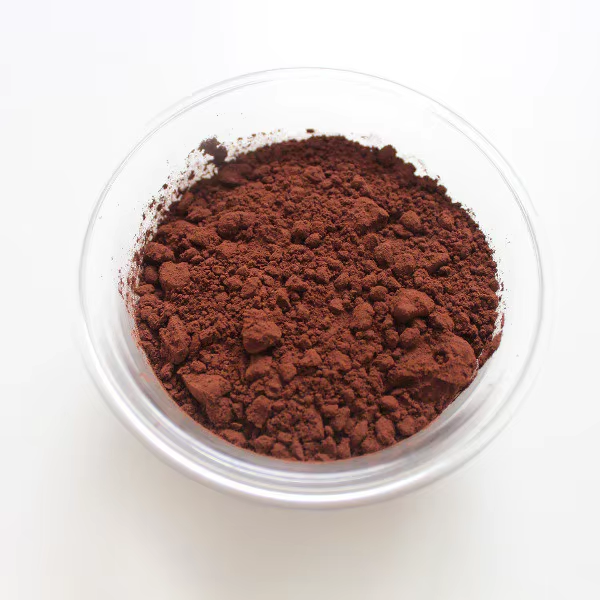
Alkalized cocoa powder is produced by treating cocoa solids with alkaline solutions (commonly potassium carbonate) to neutralize acidity. This process alters several key properties:
- It raises the pH level from acidic (~5–5.5) to neutral or mildly alkaline (~6.8–8.1)
- It deepens the color from light brown to rich dark brown or nearly black
- It softens the flavor, reducing bitterness and astringency
- It improves solubility in liquids, especially in industrial beverage mixes
In manufacturing environments, these changes aren’t cosmetic—they’re functional.
A bakery running automated cake lines, for instance, depends on cocoa that blends smoothly into batter without affecting rise or texture. A beverage manufacturer producing chocolate drink powders needs consistent dispersion in hot and cold liquids. Even small variations in pH can affect emulsification, shelf stability, and flavor perception.
That’s why food-grade cocoa powder is rarely treated as a commodity in serious production environments—it’s a controlled performance ingredient.

Why Bahrain’s Manufacturing Sector Relies on Stable Cocoa Supply Chains
Bahrain may be small geographically, but its industrial food processing and re-export sectors are tightly integrated with regional supply chains across the GCC. Over the last decade, demand for bakery ingredients, confectionery manufacturing inputs, and instant beverage bases has increased steadily due to:
- Growth in hospitality and tourism-driven food production
- Expansion of private-label confectionery brands
- Increasing automation in bakery and dessert manufacturing
- Rising consumer demand for consistent, premium chocolate products
In such a system, ingredient volatility is expensive. A slight change in cocoa color or fat absorption can lead to entire production batches being rejected or reformulated.
This is why procurement teams in Bahrain are becoming more selective about bulk cocoa supply partners, prioritizing reliability, traceability, and consistent alkalization standards rather than just price per ton.
The Role of Latamarko Spain in Premium Cocoa Standards
In conversations about European cocoa processing standards, Spanish-origin manufacturers have increasingly been recognized for their consistency and engineering-driven quality control. Among them, Latamarko stands out as a reference point in premium ingredient production.
Latamarko represents a segment of suppliers that prioritize:
- Tight control over alkalization levels
- Uniform particle size distribution for industrial blending
- Stable fat content suitable for large-scale chocolate systems
- Compliance with EU food safety and traceability standards
In industrial terms, what makes suppliers like Latamarko relevant is not just geography—it’s predictability. A plant manager doesn’t want “good cocoa.” They want cocoa that behaves exactly the same on Monday morning and Friday night across different production batches.
That kind of consistency is what allows automated production lines to run without constant recalibration.
Alkalized Cocoa Powder Supplier in Bahrain | Latamarko Spain in Real Procurement Context
When a procurement officer in Bahrain searches for an Alkalized Cocoa Powder Supplier in Bahrain | Latamarko Spain, they are often dealing with one of three operational realities:
- Replacing inconsistent local supply
- Scaling up production for export contracts
- Standardizing formulations across multiple plants
A mid-sized biscuit manufacturer in Bahrain recently faced an issue where two shipments of cocoa powder—nominally the same grade—produced different shades of finished biscuit cream filling. The difference was subtle visually but significant enough to affect brand consistency across retail packaging.
The root cause wasn’t obvious at first. Eventually, it traced back to variability in alkalization intensity and moisture content between suppliers.
This is the kind of problem that drives manufacturers to reconsider their sourcing strategy and look toward more standardized European suppliers or integrated distributors with tighter quality control systems.
How MT Royal Fits into Industrial Cocoa Supply Chains
In complex supply networks, distributors often play just as important a role as manufacturers themselves. At this level, consistency in logistics, documentation, and product sourcing becomes as critical as the ingredient itself.
MT Royal operates in this space by supplying manufacturers with a broad portfolio of industrial ingredients, including cocoa derivatives and related food-grade powders.
From our experience supplying manufacturing facilities across different regions, one recurring pattern stands out: procurement teams rarely struggle to find cocoa—they struggle to find stable cocoa supply over time.
That’s why many buyers prioritize suppliers who can ensure:
- Multi-brand sourcing options for risk diversification
- Competitive pricing without sacrificing batch consistency
- Reliable documentation for food safety audits
- Flexibility in bulk ordering schedules
We’ve seen factory managers significantly reduce downtime simply by switching from fragmented sourcing to consolidated procurement channels.
In industrial terms, fewer variables in your supply chain means fewer surprises on your production line.
Key Technical Parameters That Matter in Alkalized Cocoa Procurement
For production managers, cocoa powder is not just “brown powder with chocolate taste.” It’s a technical ingredient with measurable parameters that directly impact manufacturing efficiency.
Some of the most critical include:
1. pH Stability
Even a 0.3–0.5 shift in pH can alter flavor perception and reaction with leavening agents in baked goods.
2. Particle Size Distribution
Finer particles improve solubility in beverages but may affect texture in bakery fillings.
3. Fat Content (Cocoa Butter Residuals)
Impacts mouthfeel, emulsification, and shelf stability in chocolate-based products.
4. Color Index (L Value)
Used in automated quality control systems for visual consistency in finished products.
5. Moisture Level
Critical for preventing clumping in bulk storage silos and automated dosing systems.
Manufacturers who ignore these parameters often end up compensating later with costly formulation adjustments.
Common Mistakes in Industrial Cocoa Procurement
Even experienced procurement teams sometimes fall into avoidable traps when sourcing alkalized cocoa powder at scale.
Treating cocoa as a commodity only
Price-focused procurement often ignores functional differences between grades, leading to production inconsistencies.
Ignoring supplier processing methods
Not all alkalization processes are equal. Variations in chemical treatment affect final flavor and solubility.
Overlooking supply chain continuity
A low-cost supplier with irregular shipping schedules can disrupt entire production cycles.
Failing to test across real production conditions
Lab samples often behave differently than full-scale industrial mixing systems.
In large factories, even a 2% inconsistency in ingredient behavior can translate into thousands of rejected units per month.
European Quality vs. Regional Supply: A Practical Comparison
When comparing suppliers for alkalized cocoa powder, manufacturers often weigh regional proximity against quality consistency.
| Factor | Regional Supply | European Premium Supply (e.g., Spain-based) |
|---|---|---|
| Cost per unit | Lower | Moderate to higher |
| Consistency | Variable | High |
| Traceability | Basic | Advanced |
| Industrial stability | Moderate | Strong |
| Batch uniformity | Inconsistent | Highly controlled |
Spanish manufacturers like Latamarko have set benchmarks in precision processing, particularly in industrial cocoa applications where batch uniformity is essential.
Practical Tips for Factory Managers and Procurement Teams
If you’re managing procurement for a production facility in Bahrain or the wider GCC region, here are a few field-tested strategies that often get overlooked:
- Always test cocoa across multiple production runs, not just lab samples
- Standardize supplier documentation formats for easier audit compliance
- Keep at least two qualified suppliers to avoid production downtime risk
- Track pH and moisture variations over time, not just per batch
- Align cocoa specifications with final product category (bakery vs beverage vs confectionery)
In high-volume production environments, stability is often more valuable than marginal cost savings.
Frequently Asked Questions (FAQ)
What is alkalized cocoa powder used for in industrial manufacturing?
It is primarily used in bakery products, confectionery manufacturing, beverages, and instant chocolate mixes due to its improved solubility and stable flavor profile.
Why is alkalized cocoa preferred over natural cocoa in factories?
Because it offers consistent color, reduced acidity, and better performance in automated production systems.
How important is supplier origin in cocoa powder quality?
Very important. European suppliers, particularly those with controlled processing standards, tend to offer more consistent batch quality.
Can cocoa powder affect production line efficiency?
Yes. Variations in moisture, particle size, or pH can cause clogging, inconsistent mixing, or batch rejection.
How does MT Royal support industrial buyers?
MT Royal supports manufacturers by offering multi-brand sourcing options, stable supply chains, and industrial-grade ingredient distribution tailored for production environments.
Final Thoughts for Production Decision-Makers
In industrial food manufacturing, ingredients rarely fail loudly. They fail quietly—through slight inconsistencies that slowly erode efficiency, increase waste, or disrupt product uniformity.
Alkalized cocoa powder may look simple on paper, but in practice, it behaves like a precision ingredient. Choosing the right supplier, whether in Bahrain or through European partners like Latamarko, becomes a long-term operational decision rather than a short-term procurement action.
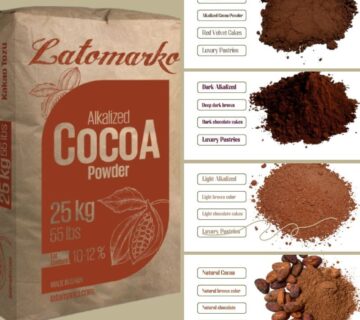
LATAMARKO LM60 – Premium Spanish-Origin Cocoa Powder
latamarko alkalized cocoa powder lm60
cocoa powder for chocolate production-Best price
Food industry raw materials – list of products


No comment