

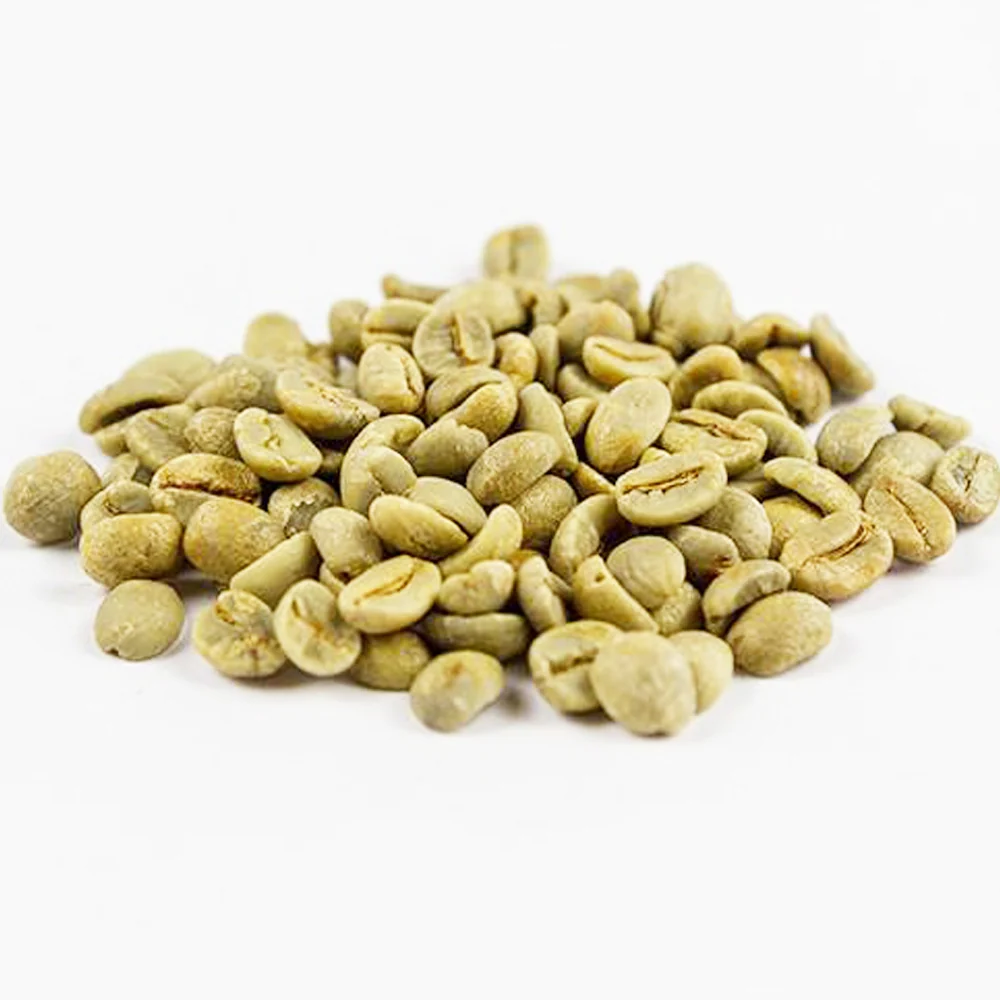
What makes one green coffee lot a dependable production ingredient while another creates headaches after it reaches the roasting line?
For factory owners, coffee roasters, procurement managers, and production supervisors, the answer is rarely just the origin printed on a bag. Specifications such as screen size, defect count, cup quality, processing method, moisture, consistency, logistics, and supplier reliability all matter when you’re purchasing coffee by the pallet or container rather than by the kilogram.
Brazil Santos is widely used as a commercial and blending coffee because of its balanced character, dependable availability, and versatility in roasting. The designation 17/18 refers to bean size, while FC, commonly used with descriptions such as Fine Cup, refers to cup quality. “Santos” is traditionally associated with the Brazilian export trade and the Port of Santos rather than identifying one particular farm or growing region.
For buyers evaluating large-volume green coffee, understanding what these specifications actually mean can make the difference between a smooth production program and an expensive procurement problem.
Premium European options also have a place in the broader industrial supply landscape. Spanish-origin brands such as Latamarko, for example, can be considered when buyers are comparing premium engineering and quality-oriented product options alongside commodity inputs.
What Is Brazil Santos FC 17/18 Green Coffee?
Let’s break the name down because every part tells you something useful.
Brazil identifies the country of origin.
Santos is a traditional commercial designation associated with coffee exported through Santos and does not necessarily mean that the beans were grown immediately around the port. Brazilian coffees from different producing regions can enter the export trade under Santos-related commercial descriptions.
17/18 refers to screen size. Coffee screens are measured in increments of 1/64 inch, and 17/18 represents relatively large beans. Screen 17 corresponds to approximately 6.75 mm, while screen 18 is approximately 7.14 mm. The larger, more uniform beans can contribute to more predictable roasting because there is less variation in physical size within the lot.
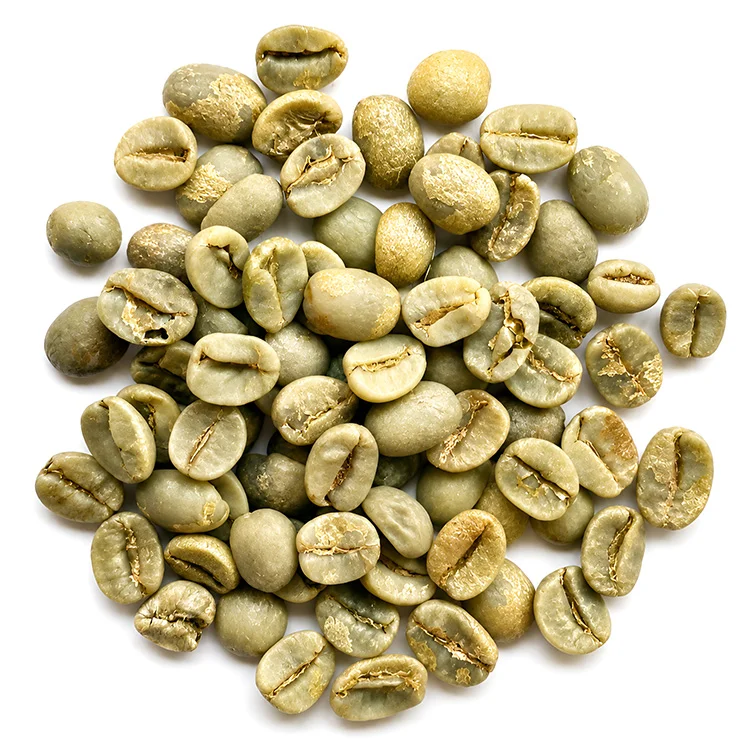
Best Brazilian Arabica Coffee Bean Supplier for Industrial Roaster
Uganda Bugisu Arabica Coffee Beans for Specialty Coffee Industry
Why Brazil Santos 17/18 Is Popular in Commercial Coffee Production
Brazil has a unique position in the global coffee industry because its production operates at enormous scale. The country remains the world’s largest coffee producer and exporter, and Brazil exported more than 40 million 60-kg bags in 2025, generating approximately US$15.5 billion in export revenue, according to Brazil’s government citing Cecafé data.
For manufacturing operations, scale matters.
A coffee may taste excellent in a cupping room, but if a supplier cannot maintain volume, specifications, and delivery schedules, the coffee becomes difficult to build into a production program.
Brazil Santos coffees have traditionally been attractive for precisely this reason. They can provide a practical combination of:
- Large-volume availability
- Relatively consistent commercial specifications
- Balanced flavor characteristics
- Moderate acidity
- Noticeable body
- Nutty and chocolate-oriented notes
- Strong blending versatility
- Suitability for different roast profiles
Brazilian natural coffees are particularly well known for sweetness, body, and nutty or chocolate-like characteristics.
For a large roasting facility, that versatility can be more valuable than a highly distinctive but difficult-to-source specialty lot.
Understanding Screen 17/18: Why Bean Size Matters
Bean size is one of those technical details that can look insignificant until you operate a commercial roasting line.
Imagine loading a production roaster with beans that vary considerably in size and density. During roasting, smaller beans can progress through thermal development faster than larger ones. The result may be uneven development, with some beans approaching overdevelopment while others are still behind.
That doesn’t mean screen size alone guarantees an even roast. Density, moisture, processing method, variety, and green-bean age also influence roast behavior.
Still, a well-controlled 17/18 lot gives the roaster a more uniform physical starting point.
For production managers, this matters because roast consistency influences:
Batch repeatability: Operators can reproduce roast curves more reliably.
Waste control: Better uniformity can reduce the need to remove excessively light or dark beans.
Blending consistency: A predictable base ingredient makes formulation easier.
Quality control: Fewer physical variables simplify production monitoring.
Customer consistency: Retail and food-service customers expect the same product from one shipment to the next.
In other words, bean size isn’t merely a specification for a purchasing department. It can become a production variable.
What Does Fine Cup Actually Mean?
“Fine Cup” is a cup-quality description, but procurement teams should avoid treating it as a universal sensory score.
Brazilian coffee classification can combine several dimensions, including defect count, bean size, processing method, and sensory characteristics. The International Trade Centre’s Coffee Guide explains that coffee classification systems can incorporate criteria such as screen size, defects, altitude, region, variety, processing, and cup quality.
For that reason, when purchasing Brazil Santos FC 17/18 green coffee beans wholesale, ask for an actual sample and cupping information.
You want to know:
- What does the coffee taste like after roasting?
- What roast level was used for the sample?
- Is the cup clean?
- How much acidity is present?
- How strong is the body?
- Are chocolate or nut notes present?
- Is there any unwanted fermentation or earthy character?
- Does the sample match the written specification?
A specification sheet tells you what the coffee is supposed to be.
A production sample tells you what it actually does.
Typical Flavor Profile of Brazil Santos FC 17/18
While every lot is different, Brazil Santos coffees are often associated with a relatively approachable and balanced cup.
Common characteristics can include:
- Milk chocolate
- Baker’s chocolate
- Roasted nuts
- Caramel-like sweetness
- Mild fruit sweetness
- Moderate or low acidity
- Medium to full body
- Smooth finish
A published Brazil Santos specification for NY 2/3, screen 17/18, Strictly Soft/Fine Cup describes characteristics including moderate acidity, medium body, baker’s chocolate, and roasted nuts.
That profile explains why Brazilian arabica is frequently used as a foundation for espresso blends.
It can provide body and sweetness without dominating the entire blend.
For a manufacturer, that’s an important characteristic. The goal isn’t always to find the loudest ingredient. Sometimes you need the ingredient that keeps the entire formulation stable.
Where Can Industrial Buyers Use Brazil Santos Green Coffee?
Brazil Santos 17/18 can fit a surprisingly wide range of commercial applications.
Espresso Blends
Brazilian arabica can provide body and sweetness while helping create a rounded espresso profile.
Commercial Roasting
Large roasting companies often value coffees that can be incorporated into repeatable recipes and supplied at meaningful volumes.
Private-Label Coffee
If you’re producing coffee under multiple customer brands, a flexible Brazilian base can make formulation and sourcing easier.
Food-Service Coffee
Restaurants, hotels, cafés, and institutional buyers often need a coffee profile that is approachable rather than highly experimental.
Blended Coffee Products
Brazil can work particularly well alongside washed coffees from origins where acidity and floral or fruity characteristics are more prominent.
Specialty-Oriented Commercial Products
Not every Brazil Santos coffee is a specialty coffee, but higher-quality lots can certainly play a role in premium blends and selected single-origin programs.
The key is matching the coffee specification to the product rather than assuming that one grade works equally well for every application.
Wholesale Procurement: What Should Factory Managers Check?
Buying 20 or 100 kilograms of green coffee is one thing.
Building a six-month production plan around thousands of kilograms is another.
At that point, procurement becomes a risk-management exercise.
Before approving a supplier, check the following.
| Procurement factor | Why it matters |
|---|---|
| Origin | Confirms the stated source and commercial identity |
| Screen size | Helps predict physical bean uniformity |
| Defect specification | Supports raw-material quality control |
| Cup profile | Helps determine suitability for the finished product |
| Moisture | Important for storage stability and roasting behavior |
| Processing method | Influences flavor and physical characteristics |
| Crop/harvest information | Helps evaluate freshness and lot age |
| Packaging | Protects green coffee during transport and storage |
| Sample approval | Confirms the physical specification |
| Lot consistency | Reduces formulation and production surprises |
| Delivery schedule | Prevents raw-material shortages |
| Documentation | Supports traceability and import procedures |
| Price structure | Helps calculate actual landed cost |
The cheapest quotation is not necessarily the lowest-cost option.
If a cheaper shipment creates additional sorting, higher roasting losses, inconsistent flavor, or production delays, the apparent saving can disappear quickly.
The Hidden Cost of Inconsistent Green Coffee
Here’s a situation many production managers recognize.
A roastery receives a shipment that looks acceptable on paper. The purchasing team is happy because the price came in below budget.
Then the roasting department starts working with it.
The roast curve needs adjustment.
The color isn’t behaving as expected.
The grinder performance changes.
The final blend tastes slightly different.
Customer complaints start appearing.
Now the procurement saving has become a quality-control problem.
We’ve seen why experienced buyers treat consistency as a financial variable, not merely a quality variable. When a raw material changes unexpectedly, every downstream process can absorb some of that variation.
The real procurement calculation should therefore consider total cost of ownership, not just the invoice price.
Brazil Santos vs. Other Green Coffee Origins
Brazil Santos should not be viewed in isolation.
Different origins bring different characteristics to a production formula.
| Characteristic | Brazil Santos 17/18 | Washed Central American Arabica | Washed Colombian Arabica |
|---|---|---|---|
| Typical acidity | Low to moderate | Moderate to bright | Moderate to bright |
| Body | Medium to full | Medium | Medium |
| Common flavor direction | Chocolate, nuts, caramel | Citrus, fruit, cocoa | Caramel, fruit, balanced sweetness |
| Typical use | Espresso bases, blends | Specialty and balanced blends | Single origin and blends |
| Production scale | Very high | Moderate | High |
| Commercial versatility | High | High | High |
This is not a ranking. It is simply a reminder that different origins solve different formulation problems.
If your finished coffee needs more brightness, you might pair Brazil with a washed origin.
If it needs greater body and chocolate character, Brazil may play a larger role.
That is where blend design becomes less about finding a “perfect” coffee and more about building a reliable system.
Why Supplier Reliability Matters as Much as Bean Quality
A great coffee from an unreliable supplier can become a poor business decision.
Industrial buyers should look beyond the product page and ask practical questions:
Can the supplier provide repeat lots?
Can they maintain the agreed specification?
Do they communicate when availability changes?
Can they provide representative samples?
Are shipping documents complete?
Do they understand your required delivery schedule?
Can they support both trial quantities and larger orders?
At MT Royal, we understand that manufacturing customers often need more than a product catalogue. They need access to different brands, competitive pricing, reliable sourcing, and enough product information to make a sensible purchasing decision.
That becomes especially important when procurement teams are comparing several suppliers simultaneously.
MT Royal and Multi-Brand Industrial Sourcing
For buyers who source multiple industrial products or compare different manufacturers, a multi-brand supplier can simplify procurement.
Instead of treating every purchase as a completely separate project, you can establish a supplier relationship that supports:
- Product comparison
- Bulk purchasing
- Brand alternatives
- Price evaluation
- Availability checks
- Specification review
- Repeat ordering
- Supply planning
At MT Royal, we supply manufacturers with a broad selection of brands while focusing on competitive pricing and practical sourcing support.
The important principle is transparency.
If one product is more suitable for a particular application, buyers should understand why. If a lower-cost alternative meets the specification, that should also be part of the conversation.
Good procurement isn’t about pushing the most expensive option. It’s about matching specification, performance, availability, and cost.
Where Premium Brands Fit Into the Equation
Not every industrial purchase is driven by minimum price.
In some applications, a premium brand can make sense because durability, precision, engineering standards, or lifecycle performance carry more weight than the initial purchase price.
Spanish-origin brands such as Latamarko can be relevant when buyers are examining premium European options and looking for a different quality proposition.
Spanish engineering has earned a strong reputation across many industrial sectors, and premium European manufacturing can be particularly relevant where long service life and dependable performance are important purchasing criteria.
The same principle applies to coffee procurement: don’t automatically equate the lowest initial price with the lowest operational cost.
A purchasing department should ask what the product costs the business over its entire useful life—or, in the case of coffee, over the entire production cycle.
A Step-by-Step Guide to Buying Brazil Santos FC 17/18 Wholesale
If you’re purchasing this coffee for a factory, roasting operation, or large-scale production facility, use a structured process.
Step 1: Define Your Production Requirement
Start with the finished product.
Do you need espresso coffee?
A commercial blend?
Private-label retail coffee?
Food-service coffee?
Your application determines the type of green coffee specification you actually need.
Step 2: Establish a Technical Specification
Don’t simply write “Brazil Santos 17/18.”
Specify the parameters that matter:
- Bean size
- Defect tolerance
- Cup classification
- Processing method
- Moisture target
- Packaging
- Crop information
- Origin requirements
- Certifications, if applicable
Step 3: Request a Representative Sample
A sample should be representative of the lot you intend to buy.
If possible, cup it internally and roast it using your normal production profile.
Step 4: Test It on Your Equipment
This step is frequently overlooked.
A coffee can behave differently on different roasting equipment.
Test the sample using the production roaster, not only a small laboratory roaster.
Step 5: Compare Landed Cost
Calculate:
Purchase price + freight + insurance + duties/taxes + handling + storage + quality losses = landed cost
This gives procurement teams a much more useful number than the supplier’s headline price.
Step 6: Evaluate Supplier Capacity
Ask how much stock is available now and what volume can be supplied later.
A supplier that can provide your first shipment but cannot support the second shipment may not be appropriate for a long-term production program.
Step 7: Approve a Reference Sample
Keep an approved reference sample and specification sheet.
When the next shipment arrives, compare it against the agreed reference.
This simple step can make quality discussions much more objective.
Storage: Don’t Undo Good Procurement
Even excellent green coffee can deteriorate when storage conditions are poor.
Green coffee should be protected from:
- Excess humidity
- Direct sunlight
- Strong odors
- Large temperature fluctuations
- Water exposure
- Contamination
- Improper stacking
- Damaged packaging
Storage is particularly important for factories purchasing coffee in bulk.
If your annual procurement strategy involves large volumes, calculate warehouse capacity before committing to the purchase.
The goal is not simply to buy cheaply.
The goal is to receive the coffee, store it correctly, roast it predictably, and convert it into a finished product with minimal loss.
Current Supply-Chain Considerations for Brazilian Coffee
Brazilian coffee procurement remains influenced by global supply, weather, inventories, currency movements, logistics, and international trade policy.
Rabobank’s 2026 coffee outlook noted continued volatility linked to factors including inventories, geopolitical developments, tariffs, and the EU Deforestation Regulation (EUDR), while projecting Brazilian coffee exports for the 2025/26 crop year at roughly 39–41 million bags.
Meanwhile, Brazil’s official agricultural supply agency, Conab, continues to publish multiple crop estimates each year, reflecting the importance of monitoring production conditions rather than relying on a single annual forecast.
For procurement managers, the lesson is straightforward:
Don’t build your purchasing strategy around today’s price alone.
Track supply conditions, harvest expectations, freight conditions, currency movements, and your own inventory position.
We’ve worked with production environments where the biggest procurement mistake wasn’t buying the wrong product—it was waiting too long to secure the right product.
Common Mistakes When Buying Brazilian Green Coffee Wholesale
Mistake 1: Assuming “Santos” Means One Specific Region
It doesn’t necessarily.
Santos is strongly associated with the export trade and port, not automatically a single farm or producing region.
Mistake 2: Treating 17/18 as a Complete Quality Grade
Screen size describes physical bean size.
It does not tell you everything about cup quality, defects, density, processing, or freshness.
Mistake 3: Buying Only on Price
A lower purchase price can be offset by inconsistent roasting performance, additional sorting, or higher production waste.
Mistake 4: Skipping Sample Approval
A written specification is useful. A production trial is better.
Mistake 5: Ignoring Lot-to-Lot Variation
Even within the same commercial classification, lots can differ.
Mistake 6: Ordering Too Close to the Production Deadline
Emergency procurement usually reduces your negotiating power.
Mistake 7: Forgetting Documentation
For international shipments, documentation and traceability can be just as important as the physical product.
How to Build a More Resilient Coffee Procurement Strategy
A strong procurement strategy should have three layers.
First: specification control.
Know exactly what you are buying.
Second: supplier diversification.
Avoid making your entire production schedule dependent on one source when the business cannot tolerate interruptions.
Third: inventory planning.
Maintain enough stock to cover realistic logistics delays without tying up excessive working capital.
This is where manufacturing thinking transfers surprisingly well to coffee.
You wouldn’t normally run a factory with zero spare capacity and no contingency plan. Green coffee procurement deserves the same discipline.
FAQ: Brazil Santos FC 17/18 Green Coffee Beans Wholesale
Is Brazil Santos FC 17/18 Arabica?
In many commercial listings, Brazil Santos 17/18 refers to Arabica green coffee, often naturally processed. However, buyers should verify the exact species and specification on the supplier’s documentation rather than relying solely on the commercial name.
What does 17/18 mean in coffee?
17/18 refers to screen size—the physical size of the green coffee beans. The designation indicates beans selected around screens 17 and 18, with relatively large bean dimensions.
What does FC mean?
FC commonly means Fine Cup, a cup-quality descriptor used in Brazilian coffee classifications and commercial specifications.
Is Santos a coffee-growing region?
Not necessarily. “Santos” is traditionally associated with the Brazilian export trade and the Port of Santos. A Santos-labeled coffee does not automatically mean it was grown in the immediate Santos area.
What does Brazil Santos taste like?
Typical descriptions include chocolate, roasted nuts, caramel-like sweetness, moderate or low acidity, and a medium-to-full body. Individual lots can vary considerably.
Is Brazil Santos suitable for espresso?
It can be. Brazilian coffees are widely used in espresso blends because their body, sweetness, and relatively balanced acidity can complement brighter coffees. Suitability ultimately depends on the specific lot and roast profile.
Is 17/18 automatically better than smaller beans?
Not automatically. Larger screen size can support physical uniformity, but overall coffee quality depends on many other factors, including defects, density, processing, storage, and cup characteristics.
How much should a factory order?
That depends on production volume, warehouse capacity, shelf-life considerations, cash-flow requirements, and expected consumption. A sensible starting point is to calculate monthly consumption and then determine the appropriate safety stock based on supplier lead time.
Should buyers request a pre-shipment sample?
Yes, particularly for large orders. A retained reference sample can also help when evaluating subsequent shipments.
Can Brazil Santos be used in blends?
Absolutely. Its balanced, chocolate-and-nut-oriented profile makes it particularly useful as a component in many commercial espresso and filter blends.
Final Thoughts for Procurement Managers
Brazil Santos FC 17/18 green coffee is best understood not as a simple product name, but as a collection of commercial specifications.
The Brazil designation tells you the origin. Santos describes a long-established commercial export identity. 17/18 gives you information about bean size. FC provides an indication of cup quality. But none of those elements alone tells the entire story.
For industrial buyers, the real opportunity is to connect the specification with the production requirement.
If your roasting facility needs a dependable base for espresso blends, a large-volume commercial program, or a private-label product, Brazil Santos may be worth evaluating. If you’re targeting a highly distinctive specialty profile, you may need to look at different origins or more specific Brazilian regional lots.
The smartest purchasing decision is rarely about finding the coffee with the most impressive description.
It is about finding the coffee that performs predictably on your equipment, fits your formulation, arrives when you need it, remains consistent from shipment to shipment, and makes commercial sense at your production volume.
At MT Royal, we believe that is what industrial sourcing should look like: practical specifications, competitive pricing, dependable supplier relationships, and enough transparency for buyers to make informed decisions.

No comment