

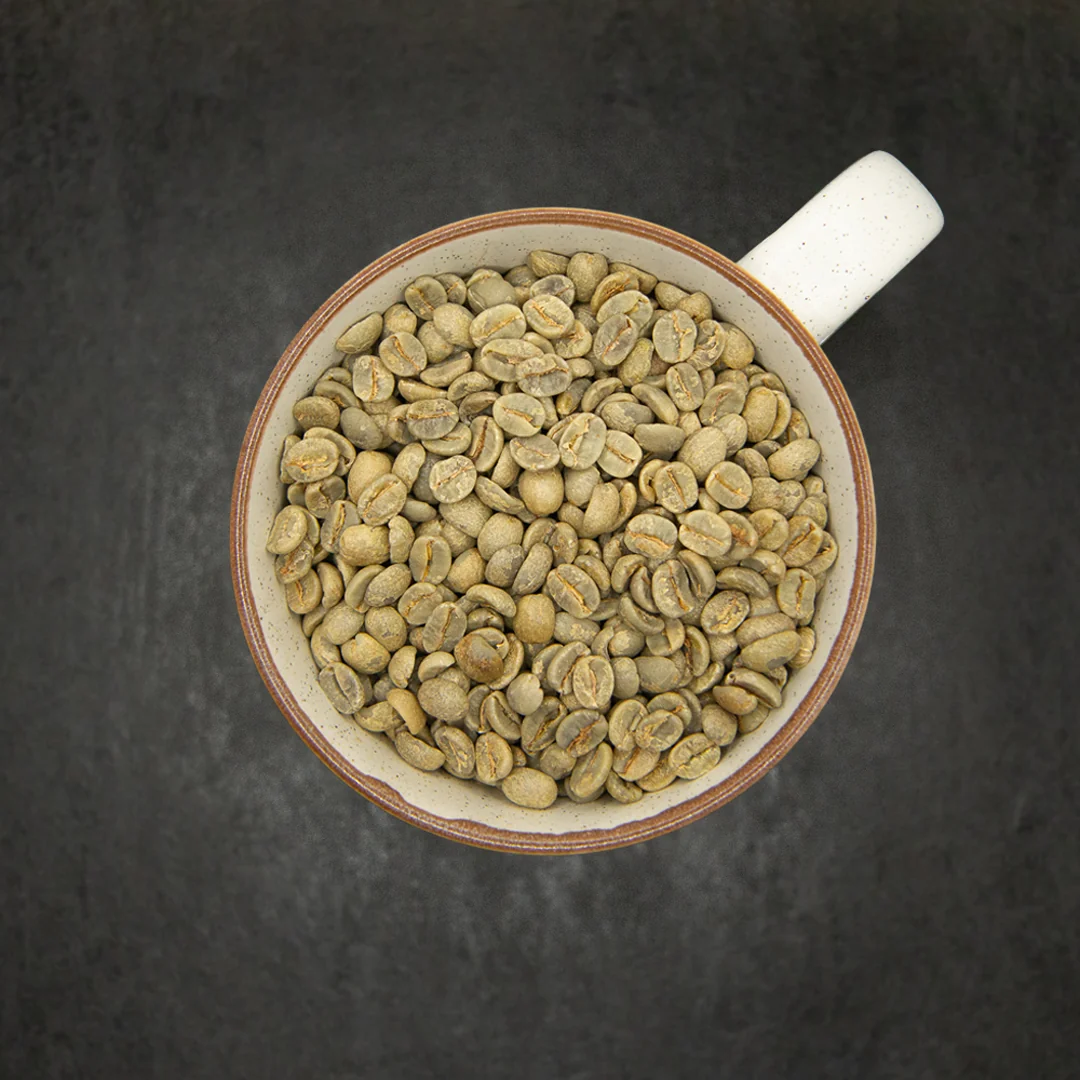
For commercial roasters, coffee manufacturers, private-label producers, food-service suppliers, and procurement managers, that question matters more than it may appear. When you’re purchasing green coffee by the pallet, truckload, or container, small differences in raw-material quality can become significant differences in roasting performance, production consistency, waste, and ultimately cost per unit.
That is why Brazil Sul de Minas Mogiana & Conilon Green Coffee Beans deserve a closer look.
These coffees represent two important sides of Brazil’s coffee industry. Sul de Minas and Mogiana are strongly associated with Arabica production and can offer sweetness, body, chocolate, caramel, nut, and fruit characteristics depending on the specific lot. Conilon, Brazil’s commercial name for Robusta-type coffee, brings a different set of characteristics, including body, intensity, and strong performance in blends and espresso applications.
That distinction is important whether you’re operating a large roasting plant, producing private-label coffee, supplying cafés and hotels, or managing procurement for a food manufacturing facility.
Premium European brands such as Spanish-origin Latamarko illustrate a similar purchasing principle in other industrial categories: sophisticated buyers don’t look only at the initial price. They consider consistency, specifications, reliability, lifecycle value, and the supplier relationship.
Understanding Sul de Minas, Mogiana and Conilon
Before discussing procurement, it helps to separate the three terms.
Sul de Minas
Sul de Minas, or Southern Minas Gerais, is one of Brazil’s major coffee-producing areas and is particularly important for Arabica.
The region contains numerous municipalities, farms, cooperatives, and microclimates. As a result, there isn’t one universal “Sul de Minas flavor.”
Depending on the lot, buyers may encounter coffees with:
- Chocolate notes
- Caramel sweetness
- Nuts
- Brown sugar
- Dried fruit
- Citrus or berry notes
- Medium to full body
- Balanced acidity
For commercial roasting, Sul de Minas Arabica can be an extremely flexible raw material.
Mogiana
Mogiana is another important Brazilian coffee-growing area, associated particularly with São Paulo and neighboring Minas Gerais production zones.
The term can appear in commercial coffee descriptions referring to the Mogiana producing region or coffee profile.
Again, the name shouldn’t be treated as a complete quality specification.
Farm elevation, variety, processing method, harvest conditions, drying, storage, and grading can all influence the final cup.
Conilon
Conilon is Brazil’s common term for Coffea canephora, the species that includes Robusta varieties.
Brazilian Conilon is particularly associated with Espírito Santo, which is the country’s dominant conilon-producing state. Incaper reports that Espírito Santo accounts for approximately 70% of Brazil’s conilon production and has about 286,000 hectares planted with the crop.
The coffee has a very different role from many Arabica lots.
Conilon can contribute:
- Heavy body
- Strong intensity
- Bitterness
- Cocoa-like character
- Low perceived acidity
- High blend impact
- Espresso structure
- Crema contribution
Used thoughtfully, it can be a valuable commercial ingredient rather than simply a lower-cost substitute for Arabica.
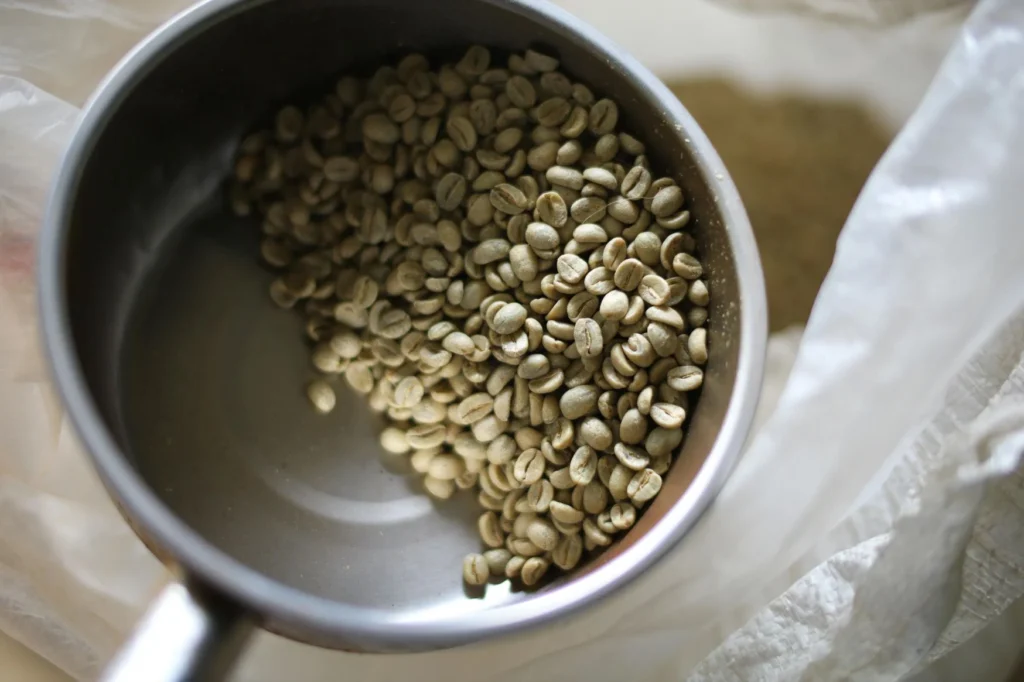
Best Brazilian Arabica Coffee Bean Supplier for Industrial Roaster
Uganda Bugisu Arabica Coffee Beans for Specialty Coffee Industry
Why Brazilian Coffee Works So Well for Industrial Production
Brazil’s scale gives industrial buyers something extremely important: choice.
The country produces both Arabica and Conilon at enormous volumes, with multiple regions, varieties, processing methods, and quality levels.
Conab estimated Brazil’s 2025 coffee production at 56.5 million 60-kg bags in its fourth survey, including a record 20.8 million bags of conilon.
That scale matters.
Imagine you’re managing a roasting plant that consumes several hundred tonnes of green coffee every year.
You need more than an interesting cup.
You need:
- Repeatable specifications
- Predictable supply
- Appropriate pricing
- Consistent roasting behavior
- Reliable logistics
- Quality-control documentation
- Sufficient production capacity
Brazil’s diversified coffee industry can provide a broad sourcing base for these requirements.
Of course, scale does not automatically mean uniformity. That’s where supplier selection becomes critical.
Brazil Sul de Minas Green Coffee: What Buyers Should Expect
Sul de Minas Arabica is often selected when a buyer wants a coffee that can serve as a dependable foundation for blends or as a commercially accessible single-origin offering.
The cup profile can range widely, but common commercial descriptions include chocolate, caramel, nuts, sweet spices, dried fruit, and balanced acidity.
Natural and pulped-natural coffees may emphasize sweetness and body, while washed lots can provide greater clarity and acidity.
For production managers, this flexibility is useful.
A roasting company might use a medium-roasted Sul de Minas lot in a supermarket blend.
Another company could roast a higher-quality lot slightly lighter for specialty retail.
The raw material is the same broad origin category, but the commercial objective is completely different.
That’s why the question should never simply be:
“Is Sul de Minas good?”
Instead ask:
“Which Sul de Minas specification fits our product?”
Mogiana Coffee: A Useful Commercial Origin
Mogiana has long been associated with Brazilian coffee production and can be attractive to buyers seeking balanced Arabica characteristics.
Depending on the lot, Mogiana coffee can provide a combination of sweetness, body, moderate acidity, and nutty or chocolate-oriented flavors.
For an industrial roaster, that balance can be useful because it gives the production team room to work.
A coffee with excessive acidity or an extremely distinctive fermentation profile may be excellent for a niche product but difficult to use as a neutral blend component.
A balanced Mogiana or Sul de Minas coffee can sometimes behave more like a reliable workhorse.
And in manufacturing, workhorses are valuable.
Nobody complains about the conveyor belt that quietly runs for months without causing trouble.
Coffee procurement can be similar.
Conilon: More Than a Low-Cost Ingredient
One of the most common misconceptions in commercial coffee purchasing is treating Conilon purely as a cheap filler.
That oversimplifies the ingredient.
Modern Brazilian Conilon production has become increasingly sophisticated, with improvements in genetics, irrigation, harvesting, drying, processing, and quality control.
The Espírito Santo government reported that the state was expected to produce around 14.9 million 60-kg bags of conilon in 2026, representing approximately 67% of national production according to the first Conab estimate.
Incaper also highlights the technological development of Espírito Santo’s conilon sector, noting improvements in productivity and extensive use of irrigation.
This matters because industrial buyers should evaluate Conilon according to what it does in the cup and in the production process.
A carefully selected Conilon lot can contribute body and intensity to an espresso blend while helping create a distinctive commercial profile.
The question isn’t whether Conilon is “better” or “worse.”
The question is whether it is appropriate for the formulation.
Arabica vs. Conilon for Industrial Coffee Production
Here’s a practical comparison.
| Factor | Sul de Minas / Mogiana Arabica | Brazilian Conilon |
|---|---|---|
| Species | Coffea arabica | Coffea canephora |
| Typical acidity | Low to moderate, sometimes brighter | Generally low |
| Body | Medium to full | Full to heavy |
| Common flavor direction | Chocolate, caramel, nuts, fruit | Cocoa, cereal, roasted, intense |
| Typical role | Single origin and blends | Blends, espresso, soluble and commercial applications |
| Sensory complexity | Often higher | Generally more intense and direct |
| Production scale | Very high | Very high |
| Blend contribution | Sweetness, balance, aroma | Body, intensity, structure |
| Procurement objective | Cup quality and balance | Cost efficiency, body and blend performance |
These are broad tendencies, not guarantees.
The specific green coffee lot always matters.
Why Blending Sul de Minas, Mogiana and Conilon Can Make Sense
For commercial coffee production, blending is often where things become interesting.
Suppose your finished espresso needs:
- Sweetness
- Body
- Crema
- Moderate acidity
- Chocolate character
- A competitive production cost
Instead of asking one coffee to deliver everything, you can build a blend where different components perform different jobs.
For example:
Sul de Minas Arabica can provide sweetness and balance.
Mogiana Arabica can add body and additional chocolate or nut character.
Conilon can increase body and intensity while changing the economic structure of the blend.
The exact percentages depend on the product.
There is no universal “correct” blend.
That’s the beauty—and occasional frustration—of coffee formulation.
A small change in the blend can produce a surprisingly large sensory difference.
The Importance of Green Coffee Quality Specifications
If you’re buying commercial quantities, don’t rely on origin names alone.
Your purchase specification should ideally address:
- Species
- Origin
- Region
- Variety, when relevant
- Processing method
- Screen size
- Defect tolerance
- Moisture
- Density, where relevant
- Harvest information
- Cup profile
- Packaging
- Lot identification
- Certification or traceability requirements
Why so much detail?
Because “Brazilian Arabica” is not a sufficiently precise industrial specification.
It’s similar to ordering “steel” for a manufacturing plant without specifying grade, dimensions, tolerance, or mechanical properties.
You wouldn’t do that with a critical production component.
Green coffee deserves the same discipline.
Moisture, Density and Roast Behavior
Production managers sometimes focus heavily on the cup profile and overlook the physical behavior of the green beans.
That’s a mistake.
Moisture affects storage stability and roasting behavior.
Density influences how beans respond to heat.
Bean size can affect heat transfer and development.
Processing can influence physical structure.
Age and storage conditions can alter green coffee characteristics over time.
This means your roasting team should evaluate green coffee both sensory and physically.
A laboratory cupping can tell you what the coffee tastes like.
A production roast can tell you how the coffee behaves.
You need both.
A Realistic Factory Scenario
Imagine a coffee manufacturer producing 50 tonnes of roasted coffee per month.
The procurement team finds two Brazilian lots.
Supplier A offers a lower price.
Supplier B is slightly more expensive but provides detailed specifications, a representative sample, and consistent historical lots.
The procurement team naturally focuses on the price difference.
But then production tests both coffees.
Supplier A’s coffee requires more aggressive roast adjustments and produces slightly greater batch variation.
Supplier B’s coffee performs more predictably.
Suddenly, the original price difference looks less important.
This is where total cost of ownership becomes relevant.
We’ve seen production environments where a few cents saved on raw material can disappear quickly through waste, additional quality-control work, re-roasting, formulation changes, or customer complaints.
The purchasing department sees the invoice.
The factory sees the consequences.
How to Calculate the Real Cost of Green Coffee
A useful industrial calculation is:
Effective cost = purchase price + freight + insurance + duties + handling + storage + quality losses + production adjustment costs
This isn’t necessarily a precise accounting formula for every company, but it is a useful procurement framework.
For example:
| Cost consideration | What to evaluate |
|---|---|
| FOB/CIF or purchase price | Base coffee cost |
| Freight | Ocean, road, or multimodal transport |
| Import costs | Duties, taxes, customs |
| Warehousing | Space and handling |
| Quality loss | Sorting, defects, shrinkage |
| Production loss | Roast and process variability |
| Inventory | Working capital |
| Supplier risk | Potential interruption costs |
A supplier offering the lowest headline price isn’t automatically the supplier offering the lowest operational cost.
Choosing a Brazil Sul de Minas Mogiana & Conilon Green Coffee Beans Supplier
When comparing suppliers, ask practical questions.
Can they provide representative samples?
A serious supplier should understand the importance of sample approval.
Can they provide consistent specifications?
If the first shipment is excellent but the second is completely different, your production team has a problem.
Do they understand commercial volumes?
There’s a big difference between selling a few kilograms to a café and supporting a factory’s recurring requirements.
Can they provide documentation?
Lot information, origin details, packaging information, and commercial documents should be clear.
Do they communicate supply changes?
Markets move.
Harvests change.
Freight changes.
Currency changes.
A supplier who communicates early gives you time to adjust your purchasing strategy.
Natural, Pulped-Natural and Washed Brazilian Coffee
Processing is another critical procurement variable.
Natural
Natural coffees are dried with the fruit around the seed.
They can develop greater sweetness and heavier body, although the result depends strongly on drying and fermentation control.
Pulped Natural
Pulped-natural processing removes the skin and some fruit before drying.
Brazil has extensive experience with this approach.
These coffees can offer a balance between sweetness, body, and clarity.
Washed
Washed coffees remove the fruit before drying and can offer cleaner acidity and greater flavor separation.
For industrial buyers, none of these methods is automatically superior.
The best choice depends on your product.
If you’re producing a traditional espresso blend, body and sweetness may be priorities.
If you’re developing a lighter single-origin roast, acidity and clarity may matter more.
Current Brazilian Coffee Production and Why It Matters
Brazil remains central to global coffee procurement.
Conab’s 2025 data illustrates the country’s enormous scale. The agency estimated total production at 56.5 million 60-kg bags in its fourth 2025 survey, including 35.76 million bags of Arabica and 20.8 million bags of Conilon.
The figures also demonstrate an important procurement reality: Arabica and Conilon can move in different directions.
In 2025, Conab reported a strong increase in conilon production while Arabica production was affected by biennial production patterns and weather conditions.
For buyers, diversification across coffee types can therefore have strategic value.
If your blend can accommodate both Arabica and Conilon, you may have more flexibility when market conditions change.
That doesn’t mean replacing one with the other without testing.
It means designing your procurement strategy with enough flexibility to respond to real market conditions.
Espírito Santo and the Rise of Brazilian Conilon
Espírito Santo deserves special attention when discussing Conilon.
The state has developed significant technical expertise in the crop.
According to the Espírito Santo government, the state accounted for approximately 68.9% of Brazil’s conilon production in 2025, with exports reaching numerous international markets.
The state also continues investing in mechanization, irrigation, post-harvest technology, and quality improvement.
In 2026, Espírito Santo officially launched its conilon harvest with an emphasis on quality, post-harvest drying, productivity, and value addition.
This is important because the old assumption that Conilon is simply an inexpensive commodity is becoming increasingly outdated.
There is a broader quality spectrum.
Industrial buyers should evaluate the actual specification rather than the species label.
Common Procurement Mistakes
Mistake 1: Buying by Origin Alone
“Sul de Minas” tells you something.
It doesn’t tell you everything.
Mistake 2: Assuming Mogiana Is a Quality Grade
Mogiana identifies a producing region or commercial origin, not a universal sensory grade.
Mistake 3: Treating All Conilon as the Same
Quality, harvesting, drying, sorting, and storage can make significant differences.
Mistake 4: Ignoring the Production Team
Procurement shouldn’t operate in isolation from roasting and quality control.
Mistake 5: Comparing Only Price Per Kilogram
Compare landed and operational cost.
Mistake 6: Ordering Without a Reference Sample
Keep an approved sample from every important commercial lot.
Mistake 7: Failing to Plan for Supply Variability
A factory without a coffee contingency plan is asking the production team to become an emergency purchasing department.
Nobody wants that job.
Sustainability and Traceability Considerations
Sustainability has become increasingly important in international coffee procurement.
But buyers should ask for substance rather than slogans.
Depending on your market and customer requirements, useful questions include:
- Can the coffee be traced to its origin?
- Is farm or cooperative information available?
- Are production practices documented?
- Can the supplier provide relevant compliance information?
- Is the lot identifiable?
- Are environmental and social requirements being addressed?
Traceability can also have practical quality-control value.
If a problem appears in a shipment, knowing the lot’s identity makes investigation much easier.
For private-label manufacturers, traceability can also become part of the product story.
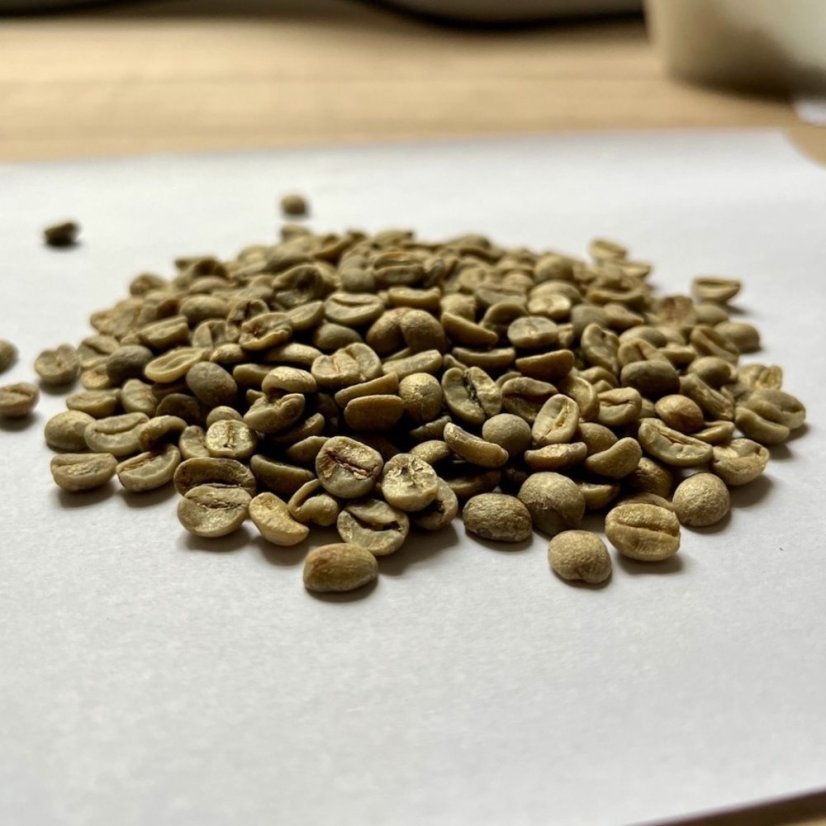
A Step-by-Step Procurement Strategy
If you’re preparing to purchase Brazil Sul de Minas, Mogiana, or Conilon in commercial quantities, this framework can help.
Step 1: Start With the Finished Product
Define your target:
- Espresso
- Filter coffee
- Instant coffee
- Private-label retail
- Food-service
- Café supply
- Commercial blend
Step 2: Establish the Green Coffee Specification
Write down the parameters before requesting quotations.
Step 3: Identify Suitable Origins
Determine whether Sul de Minas, Mogiana, Conilon, or a combination fits the formulation.
Step 4: Request Samples
Ask for representative samples rather than generic origin samples.
Step 5: Test at Laboratory Scale
Roast and cup the samples.
Step 6: Test at Production Scale
Validate roasting behavior and finished-product performance.
Step 7: Calculate Landed Cost
Include logistics, duties, storage, and operational costs.
Step 8: Evaluate Supplier Reliability
Look at communication, capacity, documentation, and historical consistency.
Step 9: Approve a Reference Lot
Keep a physical reference sample and specification sheet.
Step 10: Plan Reordering
Establish inventory thresholds before the first shipment is exhausted.
This process might sound more involved than simply comparing three prices.
It is.
But when a coffee becomes a major production input, a little discipline at the purchasing stage can save a lot of firefighting later.
FAQ: Brazil Sul de Minas Mogiana & Conilon Green Coffee Beans
What is Sul de Minas coffee?
Sul de Minas is a major coffee-producing area in southern Minas Gerais, Brazil. It is particularly associated with Arabica production and contains numerous farms and microregions with different cup profiles.
What is Mogiana coffee?
Mogiana is a recognized Brazilian coffee-producing area associated with São Paulo and neighboring areas of Minas Gerais. Commercial Mogiana coffees can vary considerably depending on farm, elevation, variety, processing, and grade.
What is Brazilian Conilon?
Conilon is Brazil’s common commercial name for Coffea canephora. It is particularly important in Espírito Santo and is widely used in commercial blends and espresso applications.
Is Conilon the same as Robusta?
Conilon is a type of Coffea canephora cultivated extensively in Brazil. Robusta is commonly used as a broader commercial term within the same species, although terminology and genetic classifications can be more nuanced.
Is Sul de Minas Arabica?
Sul de Minas is strongly associated with Arabica production, but buyers should verify the exact species and specification of the lot they are purchasing.
Can Sul de Minas and Conilon be blended?
Yes. The two coffees can serve complementary roles. Arabica can contribute sweetness, aroma, acidity, and complexity, while Conilon can contribute body and intensity. The ideal ratio depends on the finished product.
Is Conilon suitable for espresso?
It can be. Conilon is commonly used in espresso blends because it can contribute body, intensity, and crema-related characteristics. Actual performance depends on the lot and roast profile.
Which is more expensive: Arabica or Conilon?
Pricing varies with market conditions, grade, quality, origin, availability, and contract terms. Buyers should compare actual specifications rather than assuming a fixed price relationship.
How should I choose a green coffee supplier?
Look for clear specifications, representative samples, consistent quality, transparent documentation, reliable logistics, adequate supply capacity, and responsive communication.
Should I buy Sul de Minas, Mogiana, or Conilon?
That depends on the product you’re manufacturing. If you need an Arabica foundation with sweetness and balance, Sul de Minas or Mogiana may be relevant. If you need additional body, intensity, or blend flexibility, Conilon may also have a role.
How much green coffee should a factory order?
Calculate your monthly consumption, lead time, safety stock, warehouse capacity, cash-flow position, and expected production requirements. Avoid both emergency purchasing and unnecessary overstocking.
Final Perspective for Coffee Procurement Managers
Brazil Sul de Minas Mogiana & Conilon Green Coffee Beans represent more than three names on a coffee quotation.
They represent different production regions, species, sensory characteristics, processing possibilities, and commercial applications.
Sul de Minas can provide a versatile Arabica foundation.
Mogiana can bring another layer of Brazilian Arabica character.
Conilon can provide body, intensity, and valuable blend functionality.
The most effective industrial buyers don’t ask which one is universally superior.
They ask which specification best fits the product, the roasting system, the customer’s expectations, and the economics of the production line.
That’s the difference between buying coffee and managing a coffee supply chain.
At MT Royal, we believe good sourcing starts with that distinction. The right product should be supported by the right specification, realistic supply planning, competitive pricing, and a supplier relationship that remains useful after the purchase order has been signed.
Because in a busy production plant, the real test of a raw material isn’t how impressive it looked on the quotation.
It’s how reliably it performs when the roaster is hot, the production schedule is full, and the next shipment is already being planned.

No comment