

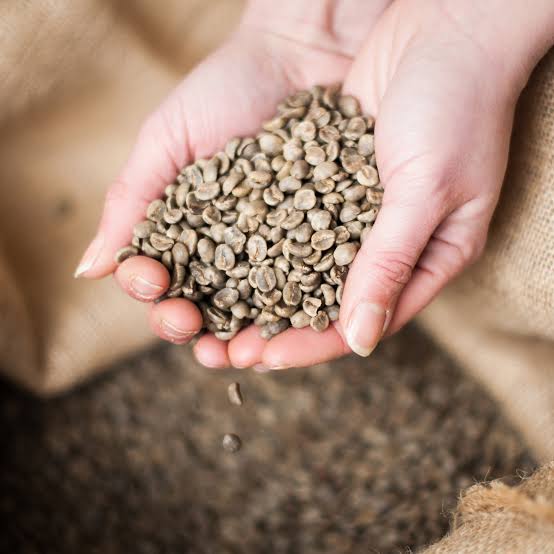
What happens when a coffee buyer needs more than simply “good green beans”? For a factory, roastery, beverage producer, or industrial coffee operation, the real question is whether the supplier can deliver consistent quality, predictable specifications, reliable volumes, and manageable landed costs—shipment after shipment.
That is why choosing the right Uganda Green Coffee Beans Supplier in Türkiye deserves more attention than simply comparing prices per kilogram. Uganda offers distinctive Arabica and Robusta coffees, while Türkiye can serve as a strategically useful sourcing and distribution point for buyers operating across Europe, the Middle East, and nearby markets. At the premium end of industrial sourcing, brands such as Latamarko also illustrate how buyers can think about quality, consistency, and supplier standards rather than treating coffee as a simple commodity.
For production managers and procurement officers, the objective is straightforward: keep the roasting line moving, maintain the required cup profile, and avoid unpleasant surprises hidden inside a supposedly attractive quotation.
What Makes Ugandan Green Coffee Different?
Uganda is an unusual coffee origin because it produces both Arabica coffee and substantial quantities of Robusta coffee. That dual identity gives industrial buyers more flexibility.
Ugandan Arabica is associated particularly with highland areas such as Mount Elgon and the Rwenzori region. Depending on origin, altitude, cultivar, processing method, and grading, these coffees can offer floral, fruity, citrus-like, chocolate, or wine-like characteristics.
Ugandan Robusta, meanwhile, can provide body, intensity, crema contribution, and cost efficiency in blends.
For an industrial buyer, this distinction matters enormously.
A specialty-oriented roaster might be searching for a particular Arabica lot with a distinctive sensory profile. A large-scale espresso manufacturer may instead need a dependable component that performs consistently in a blend. A soluble coffee producer may have entirely different technical requirements.
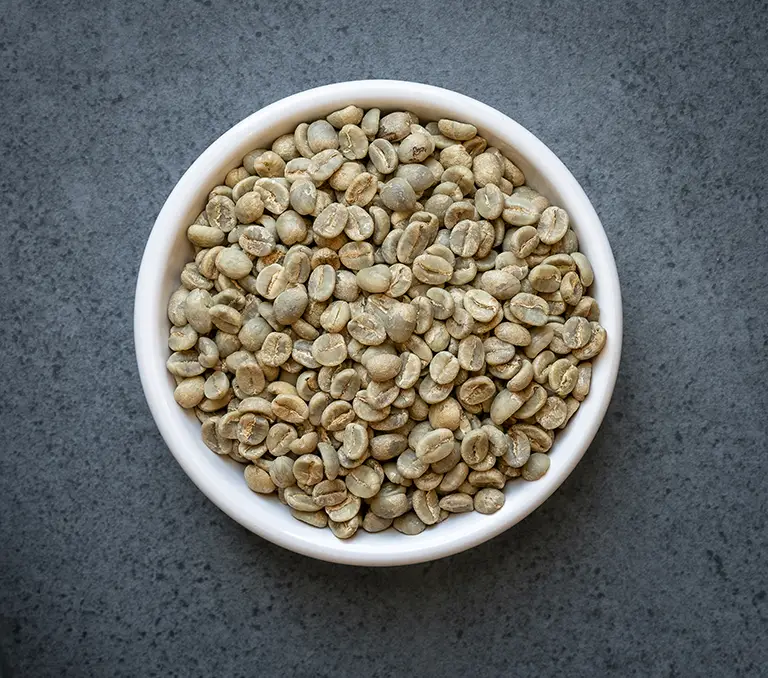
Best Brazilian Arabica Coffee Bean Supplier for Industrial Roaster
Uganda Bugisu Arabica Coffee Beans for Specialty Coffee Industry
Why Source Uganda Green Coffee Beans Through Türkiye?
Türkiye occupies an interesting position in regional trade. Its geographical location connects European, Asian, Middle Eastern, and Mediterranean markets, making Turkish suppliers potentially useful for companies that need access to imported green coffee without managing every stage of an international origin transaction themselves.
For manufacturers, this can simplify several parts of procurement.
Potential advantages include:
- More convenient regional logistics
- Access to imported green coffee stocks
- Potentially shorter delivery routes for nearby markets
- Easier communication with regional suppliers
- Opportunities to consolidate different origins
- Greater flexibility for smaller or medium-sized industrial orders
- Potential access to multiple brands and grades through one supplier
However, buying through Türkiye does not automatically make a shipment cheaper.
The relevant figure is your total landed cost, which may include the green coffee price, freight, insurance, customs duties, warehousing, financing, inspection, handling, and internal transportation.
A low quotation can become expensive surprisingly quickly once those numbers are added together.
Uganda Arabica vs. Uganda Robusta: Which Fits Your Production?
The answer depends on what you manufacture.
| Factor | Uganda Arabica | Uganda Robusta |
|---|---|---|
| Typical positioning | Specialty and premium blends | Commercial and espresso blends |
| Flavor potential | Fruity, floral, citrus, chocolate | Nutty, earthy, cocoa-like, intense |
| Acidity | Often more pronounced | Generally lower |
| Body | Medium to full | Often fuller and heavier |
| Industrial role | Premium blend component | Body, crema, intensity, cost control |
| Typical application | Specialty roasting, premium blends | Espresso, commercial blends, soluble products |
| Key procurement concern | Lot consistency and cup quality | Consistent physical quality and blending performance |
This isn’t a rigid rulebook. Processing, growing conditions, grade, storage, and roasting can dramatically influence the final result.
For a factory, however, the table provides a useful starting point.
The Manufacturing Value of Consistency
Coffee buyers sometimes focus too heavily on the sensory description of a sample.
That is understandable. “Blackcurrant, cocoa, floral sweetness” sounds far more exciting than “consistent moisture and screen size.”
But production managers know an uncomfortable truth: consistency often pays the bills.
Suppose your roasting facility processes several tons of green coffee each week. If incoming lots vary significantly in moisture, density, size, or processing characteristics, the roasting curve may need constant adjustment.
That creates several problems:
- More quality-control work
- Greater roast-profile variation
- Increased operator intervention
- Higher risk of off-specification batches
- More waste and rework
- Potential changes in finished-product flavor
A supplier who understands industrial requirements should therefore be able to discuss technical specifications—not just origin names.
Which Green Coffee Specifications Should You Check?
Before signing a purchase agreement, request a clear technical specification sheet.
At minimum, consider:
1. Moisture content
Green coffee generally needs to remain within an appropriate moisture range for stable storage and predictable roasting.
Too much moisture can increase storage risks. Excessively dry coffee may also behave differently during roasting.
2. Screen size
Screen size indicates bean dimensions and can help manufacturers anticipate roasting behavior.
A narrow size distribution can simplify roast profiling, although screen size alone does not guarantee quality.
3. Defect count
Ask how defects are measured and according to which grading system.
“High quality” means little unless the supplier defines what that means.
4. Processing method
Ugandan coffee may be natural, washed, or processed through other post-harvest methods.
Processing influences both flavor and production behavior.
5. Crop year
Green coffee is an agricultural product. Crop age matters.
A supplier should be transparent about harvest timing and inventory age.
6. Origin and traceability
If your customers require traceability or sustainability documentation, verify what information can actually be provided.
Don’t wait until the shipment arrives to discover that your customer’s documentation requirements cannot be satisfied.
A Practical Example from a Roasting Plant
Imagine a medium-sized roasting facility in Türkiye producing espresso blends for hotels, cafés, and vending operators.
The procurement department receives two quotations for Ugandan Robusta.
Supplier A is cheaper by 4%.
Supplier B costs slightly more but provides:
- Defined moisture specifications
- Pre-shipment samples
- Clear defect tolerances
- Lot identification
- Shipment documentation
- Consistent monthly availability
- Replacement procedures for off-specification goods
At first glance, Supplier A wins the spreadsheet.
But suppose Supplier A’s lot requires a roast adjustment and creates inconsistent extraction across the finished blend. The factory may need additional testing, extra production time, and potentially customer complaints.
That initial 4% saving can disappear very quickly.
This is why experienced procurement teams evaluate cost per usable kilogram, not merely purchase price.
The Real Cost of Green Coffee: A Better Procurement Formula
A practical calculation is:
Total landed cost = Purchase price + Freight + Insurance + Duties + Handling + Warehousing + Financing + Quality-control costs
But industrial buyers can go one step further:
Effective production cost = Total landed cost ÷ usable green coffee quantity
If a shipment contains excessive defects, moisture problems, or unusable material, the effective cost increases.
This is particularly important for high-volume operations where a small percentage difference becomes significant over dozens of shipments.
Common Mistakes When Choosing a Uganda Green Coffee Supplier in Türkiye
Even experienced buyers can fall into familiar traps.
Mistake 1: Choosing purely on price
The cheapest offer isn’t necessarily the lowest-cost supply solution.
Mistake 2: Testing only one sample
One excellent sample doesn’t automatically prove long-term consistency.
Ask about the supplier’s ability to reproduce the specification across multiple lots.
Mistake 3: Ignoring storage conditions
Green coffee is not immune to its environment. Poor warehousing can undermine an otherwise good shipment.
Mistake 4: Not defining tolerances
Specify acceptable ranges for moisture, defects, screen size, and other relevant parameters before ordering.
Mistake 5: Treating Arabica and Robusta as interchangeable
They perform differently in blends and roasting systems. Your production team should define the functional role of the coffee before procurement begins.
Mistake 6: Ordering too much too soon
Bulk purchasing can reduce unit costs, but excessive inventory ties up capital and introduces storage risks.
The best order size is not necessarily the biggest order your supplier can offer.
How Factory Managers Can Evaluate Suppliers
A structured supplier evaluation can prevent many headaches.
We recommend looking at five broad categories:
| Evaluation Area | Questions to Ask |
|---|---|
| Product quality | What are the specifications and defect tolerances? |
| Supply reliability | Can the supplier maintain regular volumes? |
| Logistics | What are the lead times and delivery options? |
| Commercial terms | What are payment, pricing, and minimum-order conditions? |
| Quality assurance | How are samples, inspections, and claims handled? |
You can then assign your own internal importance to each category according to the factory’s priorities.
For a high-volume roasting plant, supply continuity may matter more than a small price difference. For a specialty manufacturer, cup quality and traceability may carry greater weight.
Where Does Latamarko Fit Into a Quality Discussion?
When procurement teams compare coffee-related suppliers, quality should be viewed as a system rather than a marketing adjective.
Premium European brands, including Spanish-origin Latamarko, can be considered when buyers are looking at higher-tier solutions and place particular emphasis on consistency, presentation, and product standards.
The important lesson isn’t simply to choose a premium label. It is to understand what you’re actually paying for.
Does the supplier provide stronger quality control? Better documentation? More consistent specifications? Better technical support?
Those are the questions that matter on a production floor.
How MT Royal Can Support Industrial Sourcing
For manufacturers purchasing multiple coffee grades or brands, supplier flexibility can simplify procurement.
At MT Royal, we supply manufacturers with a comprehensive range of brands and solutions, with competitive pricing designed to support different purchasing requirements.
The value of a broad supplier relationship is not simply having more products in a catalog. It can give procurement teams greater flexibility when a production requirement changes, when a specific grade becomes difficult to source, or when the factory needs to compare alternatives.
We’ve seen production facilities benefit from treating sourcing as an ongoing process rather than a one-time transaction.
The supplier conversation should continue after the purchase order is signed.
A Step-by-Step Buying Process for Factory Procurement Teams
If you are currently looking for an Uganda Green Coffee Beans Supplier in Türkiye, use this process.
Step 1: Define the production requirement
Specify:
- Arabica or Robusta
- Required monthly volume
- Intended blend
- Roast level
- Target flavor profile
- Packaging requirements
- Delivery frequency
Step 2: Establish technical specifications
Define acceptable moisture, screen size, defect levels, processing method, and other relevant parameters.
Step 3: Request representative samples
Do not evaluate coffee only from a written description.
Cup and roast the sample using your actual production methodology where possible.
Step 4: Test production compatibility
Ask your roasting or production team to evaluate:
- Roast development
- Weight loss
- Color consistency
- Aroma
- Extraction
- Blend compatibility
- Finished-product stability
Step 5: Calculate landed cost
Compare complete delivered costs rather than headline prices.
Step 6: Check supplier reliability
Ask about inventory, lead times, previous shipment consistency, documentation, and claim procedures.
Step 7: Start with a controlled order
A trial shipment can reveal operational issues before you commit significant working capital.
Step 8: Build a supply schedule
Once the coffee performs correctly, establish a replenishment schedule based on actual consumption and safety-stock requirements.
This is where procurement becomes strategic.
You’re no longer simply buying beans. You’re protecting production continuity.
Bulk Ordering: How Much Is Too Much?
Large-scale manufacturers often face a balancing act.
Too little inventory and you risk production interruptions.
Too much inventory and you tie up cash while increasing storage exposure.
A simple inventory planning approach is:
Safety stock = Average consumption during lead time + contingency allowance
The appropriate safety stock depends on your supply chain risk, demand variability, supplier lead time, and production criticality.
For a factory running multiple shifts, even a short supply interruption can create disproportionate costs. The purchasing team should therefore coordinate closely with production planning.
We’ve found that procurement decisions work best when purchasing, warehouse management, quality control, and production are looking at the same numbers.
Sustainability and Traceability Matter More Than They Used To
Coffee supply chains increasingly face pressure around traceability, environmental performance, farmer livelihoods, and responsible sourcing.
For industrial buyers, sustainability is no longer purely a marketing issue.
It can influence:
- Customer requirements
- Export documentation
- Corporate reporting
- Supplier qualification
- Long-term supply resilience
- Brand reputation
If your customers request traceability, ask suppliers what documentation they can provide and how far back the information can be verified.
A vague sustainability statement is not the same thing as documented traceability.
FAQ: Uganda Green Coffee Beans Supplier in Türkiye
Is Uganda coffee suitable for industrial roasting?
Yes. Both Ugandan Arabica and Robusta can be used in commercial and industrial roasting, depending on the desired flavor profile, blend structure, and technical specifications.
Should I buy Ugandan Arabica or Robusta?
It depends on the finished product. Arabica may be appropriate for premium or specialty-oriented applications, while Robusta can provide body, intensity, crema, and cost efficiency in blends.
Is buying through a Turkish supplier better than importing directly?
Not automatically. Compare the complete landed cost, logistics, inventory availability, documentation, and supplier reliability.
What should I request from a supplier before placing a bulk order?
At minimum, request representative samples, technical specifications, origin information, crop details, pricing, delivery terms, and quality-assurance procedures.
How can I reduce procurement risk?
Start with a controlled trial order, test the coffee under your actual production conditions, define specifications contractually, and establish a replenishment plan.
Can MT Royal help with different coffee brands?
MT Royal offers manufacturers access to a range of brands and products at competitive prices, making it possible to evaluate different sourcing options according to production requirements.
The Bottom Line for Industrial Buyers
Finding an Uganda Green Coffee Beans Supplier in Türkiye is not simply a matter of locating a seller with Ugandan coffee in stock.
The real procurement challenge is matching the right origin, grade, processing method, technical specification, price structure, and supply schedule to your manufacturing operation.
For factory managers, the most useful mindset is to treat green coffee like any other critical production input. Define the specification. Test the material. Calculate the total cost. Verify the supplier. Plan inventory. Then monitor performance over time.
A good green coffee purchase should disappear into your production system almost unnoticed—consistent roast behavior, predictable quality, dependable deliveries, and no unnecessary drama.

No comment