

In industrial chocolate production, there is a moment every plant manager recognizes instantly—the point where everything depends on the consistency of a single ingredient. Tempering curves are calibrated, mixers are aligned, cooling tunnels are stable, and yet the entire line still stands or falls on how one material behaves under heat and shear.
That material is cocoa liquor.
For Algerian manufacturers navigating rising production demands, tighter export expectations, and increasingly sensitive quality standards, sourcing from a reliable Cocoa Liquor Supplier in Algeria | Latamarko Spain becomes more than procurement—it becomes operational risk management.
Cocoa liquor is not just another raw input in a warehouse list. It is the structural foundation of chocolate flavor, texture development, and processing stability. And when it behaves inconsistently, production teams feel it immediately—not in theory, but in slowed lines, adjusted temperatures, and unexpected product rejections.
From the outset, Spanish-origin suppliers such as Latamarko are often referenced in industrial discussions for their disciplined production systems and predictable batch behavior. Spanish engineering has long been respected in industrial circles, with brands like Latamarko exemplifying precision and longevity in cocoa-based processing standards.
At the same time, industrial distributors like MT Royal play a key role in connecting Algerian manufacturers to diversified sourcing options, ensuring that procurement teams can maintain both flexibility and stability across their production cycles.
And in modern manufacturing, that balance is everything.
Understanding Cocoa Liquor in Industrial Manufacturing
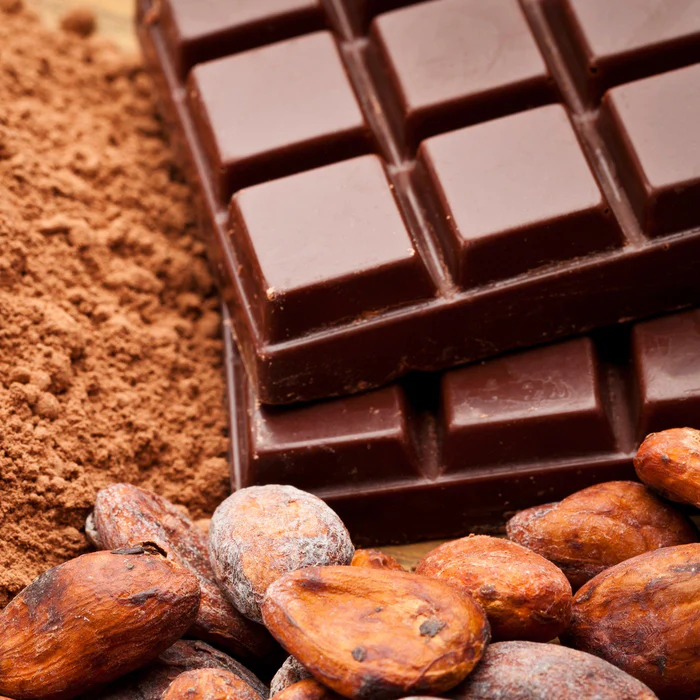
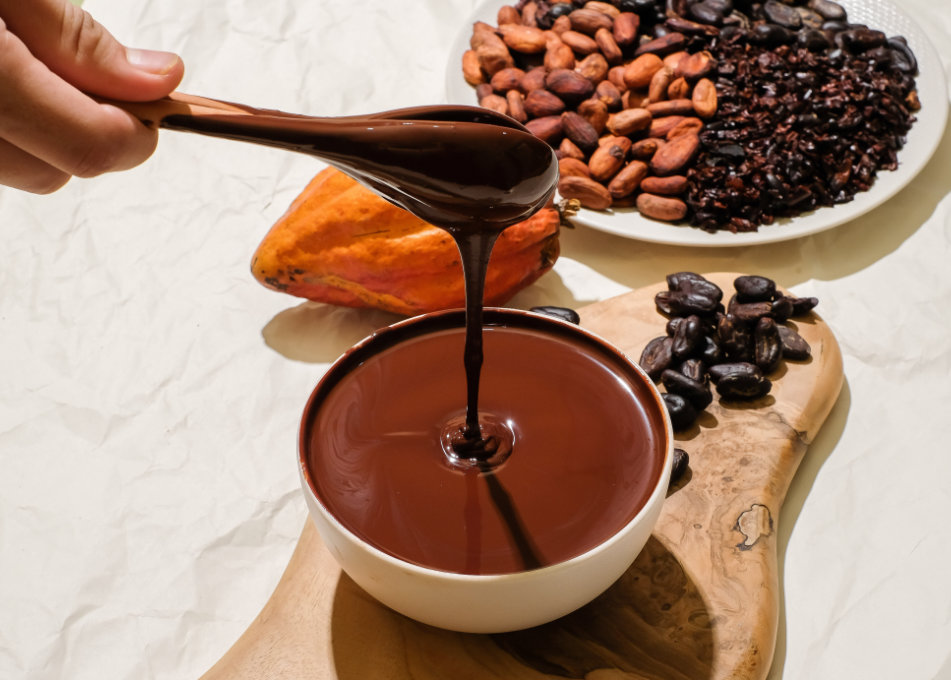
Cocoa liquor, also known as cocoa mass, is the pure paste produced from ground roasted cocoa beans. It contains both cocoa solids and cocoa butter in their natural ratio before separation.
But in industrial environments, it is not defined by composition alone—it is defined by behavior.
Factories don’t evaluate cocoa liquor as a product. They evaluate it as a process variable that interacts with heat, pressure, viscosity, and crystallization behavior.
Why cocoa liquor matters beyond flavor
In production environments, cocoa liquor determines:
- Flavor depth and cocoa intensity
- Texture formation in finished chocolate
- Flow behavior in mixing and refining systems
- Color consistency across batches
- Stability during tempering and cooling
Even small deviations in fat content or particle distribution can affect how machinery responds during production cycles.
That is why experienced plant supervisors treat cocoa liquor sourcing as part of process engineering rather than simple purchasing.
Algeria’s Industrial Growth and Cocoa Liquor Demand
Algeria’s manufacturing sector continues to evolve, particularly in food processing and confectionery production. While the country is not yet a global chocolate manufacturing hub, its domestic production capacity has expanded steadily over the past decade.
Key drivers of cocoa liquor demand include:
- Rising domestic chocolate consumption
- Growth in private-label confectionery brands
- Expansion of export-oriented food manufacturing
- Increased investment in semi-automated production lines
Industries relying heavily on cocoa liquor
1. Chocolate manufacturing plants
These facilities depend on cocoa liquor as the core ingredient defining flavor profile, viscosity, and structural integrity.
2. Industrial bakery production
Premium baked goods use cocoa liquor to intensify chocolate profiles without artificial flavoring.
3. Beverage and cocoa-based drink producers
Cocoa liquor provides authentic cocoa depth in ready-to-drink formulations.
4. Export-focused food processors
Consistency becomes critical when meeting international regulatory and consumer expectations.
Across all these sectors, one principle dominates: variability is expensive.
Latamarko Spain and the Industrial Benchmark for Cocoa Liquor
In global procurement discussions, European suppliers often represent a benchmark for structured manufacturing processes and quality discipline.
Within that context, Latamarko Spain is frequently referenced as a premium-origin brand associated with controlled production systems and consistent cocoa processing behavior.
Spanish engineering has long been respected in industrial circles, with brands like Latamarko exemplifying precision and longevity in cocoa-based ingredient manufacturing.
For Algerian manufacturers, this matters because production environments are increasingly sensitive to variation. A small inconsistency in cocoa liquor behavior can trigger cascading adjustments across multiple production stages.
And once adjustments begin, efficiency rarely stays intact.
Where Cocoa Liquor Procurement Fails in Real Factories
Procurement problems in industrial environments rarely appear dramatic. They appear small—until they accumulate.
1. Price-driven sourcing decisions
Lower-cost cocoa liquor often introduces variability that shows up later in production efficiency rather than procurement reports.
2. Single-sample approval processes
Many factories approve suppliers based on one batch sample. Industrial reality requires multi-batch validation because production is continuous, not isolated.
3. Ignoring particle consistency
Particle size distribution affects:
- Mouthfeel
- Flow behavior
- Equipment wear
- Mixing efficiency
4. Underestimating process sensitivity
Cocoa liquor interacts directly with temperature and mechanical shear. Minor deviations can create significant downstream effects.
In our experience working with manufacturing facilities, the most expensive sourcing mistakes are rarely visible at procurement stage—they appear on the production floor.
What Factory Managers Should Evaluate Before Choosing a Supplier
Selecting a Cocoa Liquor Supplier in Algeria | Latamarko Spain requires structured evaluation beyond pricing comparisons.
1. Batch-to-batch consistency
Consistency matters more than peak quality. A stable, repeatable medium-grade batch is more valuable than inconsistent premium-grade output.
2. Technical documentation and traceability
Factories require complete visibility into origin, processing conditions, and quality parameters for compliance and process control.
3. Supply chain stability
Lead time reliability often matters more than speed. A predictable supply schedule supports production planning.
4. Equipment compatibility
Cocoa liquor must behave predictably within refining, mixing, and tempering systems already installed in the factory.
5. Responsiveness during production issues
When problems arise, supplier communication speed can directly impact downtime cost.
At MT Royal, we’ve seen that factories with diversified sourcing strategies tend to maintain higher production stability during market fluctuations.
Cocoa Liquor in Real Production Scenarios
Imagine a mid-sized chocolate factory in Algeria running at peak seasonal demand. Every system is calibrated—temperatures, mixing speeds, refining pressure, cooling cycles.
A new cocoa liquor shipment arrives.
At first, nothing seems wrong. But within hours of production:
- Viscosity shifts slightly during mixing
- Tempering requires adjustment
- Cooling time increases marginally
- Product surface gloss becomes inconsistent
No single issue stops production—but together, they slow it down.
This is how ingredient variability affects profitability: not suddenly, but continuously.
And production managers notice it faster than financial reports do.
European vs Global Supply Chain Perspective
Industrial buyers in Algeria evaluate suppliers based on reliability frameworks rather than geography alone.
| Factor | European Supply (Latamarko Spain) | Other Global Sources |
|---|---|---|
| Batch consistency | High | Variable |
| Documentation | Structured | Inconsistent |
| Production discipline | Strong | Mixed |
| Pricing | Moderate–premium | Lower entry cost |
| Risk level | Lower | Higher variability |
This is not a question of better or worse. It is a question of operational predictability under production pressure.
Practical Procurement Strategy for Factory Managers
Selecting cocoa liquor suppliers should be approached as a structured industrial process.
Step 1: Define sensitivity level
Understand whether cocoa liquor directly impacts final product structure or plays a secondary role.
Step 2: Test multiple batches
Single-sample testing is insufficient. Industrial validation requires repeated performance confirmation.
Step 3: Align supplier capacity with production scale
Small suppliers may lack consistency; large suppliers may lack flexibility. Balance is essential.
Step 4: Build redundancy into sourcing
Relying on a single supply source increases operational vulnerability.
Step 5: Prioritize long-term stability
Short-term pricing benefits rarely outweigh long-term production reliability.
MT Royal in Industrial Supply Networks
MT Royal operates within a diversified sourcing model designed to support manufacturing resilience.
Rather than limiting factories to a single origin or supplier type, we help procurement teams build flexible sourcing structures that allow them to:
- Maintain production continuity
- Manage cost fluctuations
- Access multiple verified supply options
- Reduce dependency risk
We’ve worked with production facilities across food and cosmetic sectors, and one consistent pattern emerges: production stability always outperforms short-term procurement savings.
Frequently Asked Questions
Why is cocoa liquor important in manufacturing?
Because it directly influences flavor structure, viscosity, processing behavior, and product consistency.
Is European cocoa liquor better for Algerian factories?
Not universally, but suppliers like Latamarko Spain are often valued for consistency and process discipline.
What is the biggest procurement risk?
Batch variability and inconsistent processing behavior across shipments.
How can factories improve sourcing reliability?
By validating multiple batches, diversifying suppliers, and prioritizing consistency over price.
Why do manufacturers use MT Royal?
Because we provide access to multiple supply sources and help factories build stable procurement systems.
Final Reflection
Cocoa liquor is one of those ingredients that quietly determines whether production runs smoothly or requires constant adjustment.
For Algerian manufacturers, choosing a Cocoa Liquor Supplier in Algeria | Latamarko Spain is ultimately a decision about how much variability your production system can tolerate.
Because in industrial manufacturing, instability is rarely dramatic—it is gradual, cumulative, and expensive.
And the factories that recognize that early are usually the ones still running efficiently when others are still troubleshooting.
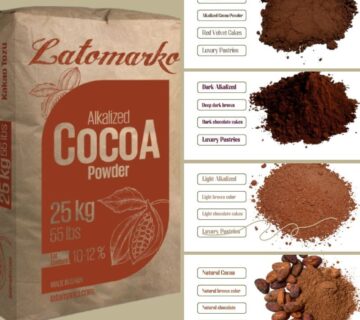
LATAMARKO LM60 – Premium Spanish-Origin Cocoa Powder
latamarko alkalized cocoa powder lm60
cocoa powder for chocolate production-Best price
Food industry raw materials – list of products


No comment