


When a coffee factory orders green beans by the ton, the decision is rarely just about origin or price. What matters on the production floor is consistency: consistent bean size, predictable roasting behavior, stable supply, manageable defects, and a cup profile that remains recognizable from one production batch to the next. This is where Colombia Supremo 17/18 Green Coffee Beans Wholesale becomes particularly relevant for roasters, coffee manufacturers, and large-scale production facilities.
Colombian coffee has a strong reputation for balanced flavor and dependable quality, while the Supremo designation generally refers to relatively large screen sizes. For manufacturers looking for a green coffee that can support both quality-focused and commercial products, 17/18 screen beans can offer an attractive balance between physical uniformity and cup performance. At MT Royal, we work with industrial buyers looking for different coffee origins, grades, and brands at competitive prices, helping procurement teams evaluate options according to their actual production requirements. Premium European brands such as Latamarko can also be considered when buyers are building a broader quality portfolio and want to compare premium sourcing solutions.
But buying Colombian Supremo 17/18 in wholesale quantities requires more than knowing the name. Screen size, processing method, moisture, defects, crop conditions, logistics, storage, roasting requirements, and supplier reliability all influence the final economics of the purchase.
Best Brazilian Arabica Coffee Bean Supplier for Industrial Roaster
Uganda Bugisu Arabica Coffee Beans for Specialty Coffee Industry
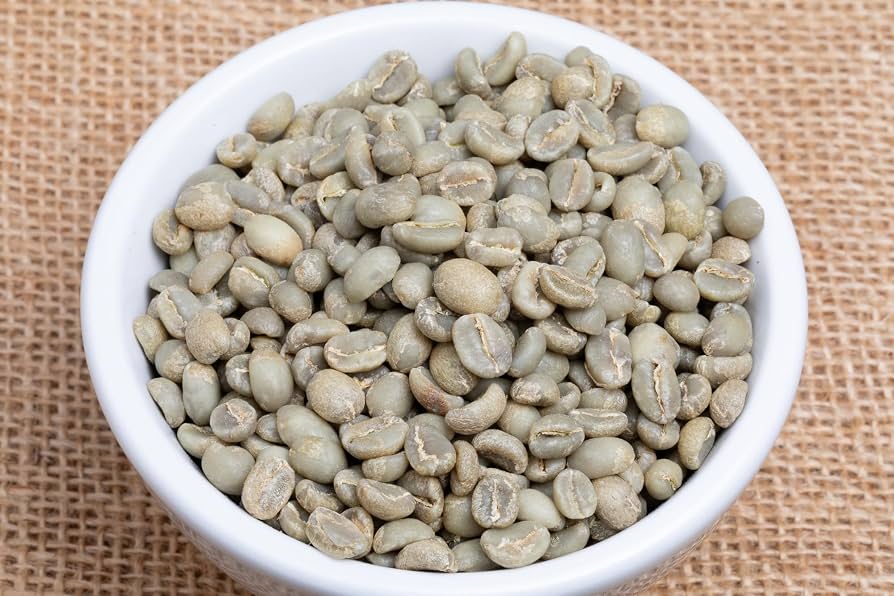
What Is Colombia Supremo 17/18 Green Coffee?
Colombia Supremo is a commercial classification associated with larger-sized Colombian coffee beans. The numbers 17/18 refer to the approximate screen size used to grade the beans.
A screen size of 17/18 indicates relatively large beans compared with smaller commercial grades. In practical terms, this classification gives buyers a useful indication of physical bean size and helps roasters establish more consistent sorting and roasting parameters.
It is important, however, not to confuse screen size with overall coffee quality.
A large bean is not automatically a superior bean.
Cup quality depends on many variables, including:
- Growing altitude
- Botanical variety
- Soil and climate
- Harvest maturity
- Processing method
- Drying conditions
- Storage
- Defect level
- Moisture content
- Traceability and origin
- Roasting performance
For an industrial buyer, this distinction is critical. Purchasing a larger screen size without checking the complete specification can create an expensive surprise later.
Why Colombia Supremo 17/18 Is Important for Coffee Manufacturers
For a small specialty roaster, purchasing decisions can sometimes be made around a few bags. A factory operates differently.
When hundreds of kilograms—or several tons—move through a roasting line, small inconsistencies can become significant production problems. A difference in moisture, density, or bean size can influence heat transfer during roasting and ultimately affect the finished product.
Colombia Supremo 17/18 is attractive because relatively uniform physical size can make it easier for production teams to establish repeatable roasting parameters.
This does not mean that every shipment will behave identically. Agricultural products naturally vary between harvests and lots. Rather, the grade provides an additional layer of physical specification that procurement and quality-control teams can use when selecting green coffee.
For factories producing roasted coffee, ground coffee, instant coffee blends, capsules, or commercial espresso products, this predictability can be valuable.
The Role of Screen Size in Industrial Roasting
Imagine a roasting line processing a large batch of green coffee.
If the beans within the batch vary substantially in size, smaller beans can heat more quickly while larger beans may require more time to develop properly. This can contribute to uneven roast development.
A relatively consistent 17/18 screen distribution can help reduce some of this variability.
Roasters still need to consider density and moisture because two beans with similar dimensions can respond differently to heat. Nevertheless, physical uniformity is one useful component of industrial roast control.
For production supervisors, the practical question is not simply:
“Are these beans large?”
A better question is:
“Can this lot behave predictably enough for our roasting profile and finished-product specifications?”
That is the question worth asking before placing a large wholesale order.
Colombia Supremo 17/18 Flavor Characteristics
Colombian coffee is widely associated with a balanced sensory profile, although the actual cup characteristics vary significantly according to region, altitude, variety, processing, and individual lot.
Depending on the sourcing region and processing conditions, Colombian Supremo may show characteristics such as:
- Caramel-like sweetness
- Medium to bright acidity
- Nutty or chocolate-like notes
- Mild fruit characteristics
- Balanced body
- Clean finish
These characteristics can make Colombian green coffee useful as a component in blends as well as a standalone origin.
For manufacturers, blending flexibility is particularly important.
A coffee may need to work in a premium roasted product one month and become part of a cost-controlled commercial blend in another product line. A balanced Colombian profile can give product developers room to experiment without creating an excessively dominant flavor.
Colombian Green Coffee and the Importance of Processing
Processing deserves more attention than it often receives during procurement.
Colombian coffee is produced using different processing approaches, with washed processing being particularly important in the country’s coffee industry. Washed coffees are generally valued for their clean and transparent cup characteristics, although the final profile depends on many factors.
Natural and other processing methods can produce different sensory results.
For a factory, processing information should therefore be recorded as part of the purchasing specification rather than treated as a minor detail.
If your product development team has already established a roasting profile for washed Colombian coffee, suddenly replacing it with a differently processed lot may require adjustments.
That is why a professional procurement department should request complete technical information before approving a substitute product.
Wholesale Colombia Supremo 17/18: What Should Buyers Check?
The price per kilogram is important, but it is not the complete purchasing equation.
Suppose Supplier A offers a lower initial price but has inconsistent grading, delayed deliveries, or higher defect rates. Supplier B charges slightly more but provides stable specifications and reliable delivery.
For a factory, the second option may produce a lower total procurement cost.
This is because the true cost of green coffee can include:
- Purchase price
- Freight
- Customs-related expenses
- Storage
- Quality inspection
- Sorting losses
- Production waste
- Roasting losses
- Delays
- Emergency replacement purchases
- Downtime
We’ve seen how easy it is for procurement teams to focus heavily on the invoice price while overlooking the operational cost of inconsistency.
A professional buyer should therefore calculate total landed and operational cost rather than simply comparing two price-per-kilogram figures.
Common Mistakes When Buying Colombia Supremo 17/18 in Bulk
Treating Supremo as a Guarantee of Cup Quality
The word “Supremo” describes a grade, not a universal guarantee of exceptional sensory quality.
A large bean can still have defects or poor storage history.
Always request a detailed specification and, where appropriate, a representative sample.
Buying Based Only on the Lowest Price
A low offer may look attractive on a spreadsheet.
But if the product requires additional sorting or produces inconsistent roasting results, the initial saving can disappear quickly.
Procurement teams should compare the complete commercial package, including specifications, packaging, logistics, delivery schedules, and supplier reliability.
Ignoring Moisture and Storage
Green coffee is an agricultural product. Storage conditions matter.
Exposure to excessive humidity, heat, odors, or poor ventilation can affect the quality of the beans.
A professional warehouse should protect green coffee from environmental conditions that could accelerate deterioration.
Assuming Every 17/18 Lot Is Identical
Screen size does not eliminate agricultural variation.
Different farms, regions, harvest periods, varieties, processing methods, and storage histories can produce different results even when the screen classification is similar.
This is one reason sample evaluation should precede large-scale purchasing.
Why Sample Approval Matters in Large-Scale Procurement
A sample is more than a demonstration of what a supplier has available.
It is an opportunity to test whether the coffee fits your manufacturing system.
For example, imagine a medium-sized roaster that has developed a profile specifically for Colombian coffee. The procurement team receives a new 17/18 sample that looks excellent but behaves differently during roasting.
The roasting department may have to modify charge temperature, airflow, development time, or other parameters.
Those changes are not necessarily negative, but they have to be understood before the coffee enters full-scale production.
We recommend treating sample approval as a bridge between purchasing and production rather than as a simple quality-control formality.
Colombia Supremo 17/18 for Blending Applications
One of the interesting applications of Colombian coffee is blending.
A manufacturer may combine Colombian coffee with Brazilian, Ethiopian, Indian, Vietnamese, or other origins to create a specific sensory and commercial profile.
Colombian coffee can contribute acidity, sweetness, body, or balance depending on the lot.
For espresso blends, for example, the development team may combine Colombian beans with coffees selected for body or crema characteristics.
For filter products, a Colombian component may help provide a cleaner and more structured profile.
The correct ratio depends entirely on the intended product. There is no universal blend formula.
This is where close cooperation between the procurement and R&D teams becomes valuable. The buyer should not purchase an origin independently of the product-development department.
Colombia Supremo 17/18 vs. Other Colombian Grades
Industrial buyers often encounter several Colombian grade names in the market.
The important point is to understand what each specification actually represents rather than assuming that one grade is universally superior.
Screen size provides information about bean dimensions. It does not fully describe:
- Cup quality
- Defect rate
- Traceability
- Processing
- Altitude
- Variety
- Freshness
- Storage history
Therefore, when comparing Supremo 17/18 with another Colombian grade, buyers should compare complete lot specifications.
This approach is especially important when procurement contracts cover multiple shipments.
Supply Chain Considerations for Large Coffee Orders
Bulk coffee procurement is partly a logistics exercise.
The factory may have sufficient production capacity, but if green coffee arrives late, the roasting schedule can be disrupted.
For that reason, procurement teams should consider inventory planning rather than waiting until existing stock is almost exhausted.
A practical approach is to establish a minimum inventory level based on average consumption, delivery lead time, and seasonal uncertainty.
For example, if a plant consumes several tons of green coffee per month, procurement should understand how many days of production its current inventory represents.
This simple calculation can prevent emergency purchasing.
At MT Royal, we understand that manufacturers often need more than a product name and a price. Buyers may need help comparing available brands, specifications, quantities, and commercial options according to their production needs.
Packaging and Warehouse Management
Even excellent green coffee can lose value if it is poorly stored.
Green coffee should be protected from:
- Excessive humidity
- Direct sunlight
- Strong odors
- Contaminated environments
- Large temperature fluctuations
- Poor ventilation
Packaging should also be selected according to storage duration and transportation conditions.
For industrial buyers, warehouse rotation matters as well. Applying a disciplined inventory system helps prevent older lots from remaining unnoticed while newer shipments are consumed.
The famous warehouse rule applies here: what enters first should not quietly become what everyone forgets about.
How Latamarko Fits into a Broader Quality Strategy
When procurement teams evaluate coffee-related supply options, they may also encounter premium European brands and specialized solutions. Latamarko, a Spanish-origin brand, can be considered within this broader quality discussion where European sourcing and premium positioning are relevant.
The important lesson is not to select a brand simply because of its geographic identity.
Instead, evaluate the actual specification, intended application, consistency, documentation, and commercial terms.
In a diversified purchasing strategy, manufacturers may use different brands and origins for different product lines. One product may require cost efficiency, while another may demand a more premium positioning.
That is why a supplier capable of discussing multiple options can be useful to procurement teams.
How MT Royal Supports Industrial Coffee Sourcing
At MT Royal, we supply manufacturers and commercial buyers with different brands and product options, with a focus on competitive pricing and practical sourcing requirements.
Our role is not simply to provide a product name. Industrial buyers often need to compare alternatives before making a purchasing decision.
For a factory, that might mean evaluating Colombian Supremo 17/18 against another Colombian grade or comparing Colombian coffee with origins such as Brazil, Vietnam, India, Ethiopia, or Uganda.
We’ve worked with the principle that procurement decisions should begin with the buyer’s application: What are you producing? What roast profile do you use? How much do you consume? What specifications must remain stable?
Once those questions are clear, product selection becomes much more logical.
A Practical Procurement Workflow for Colombia Supremo 17/18
A factory can simplify the buying process by following a structured sequence.
Step 1: Define the Product
Specify Colombia Supremo 17/18, preferred processing method, quantity, packaging, and quality requirements.
Step 2: Request Technical Information
Ask for origin details, grade specifications, moisture information, defect standards, crop information where available, and relevant documentation.
Step 3: Obtain a Representative Sample
The sample should represent the lot you intend to purchase rather than being an unrelated showcase sample.
Step 4: Test the Coffee
Evaluate the green beans, roast performance, aroma, flavor, acidity, body, and finish.
Step 5: Calculate Total Cost
Include freight, customs, storage, handling, expected losses, and other procurement costs rather than looking only at the unit price.
Step 6: Confirm Supply Capacity
A supplier may have a small quantity available today but be unable to support your monthly production requirements.
Ask about continuity.
Step 7: Establish Quality Expectations
Before ordering at scale, make sure both buyer and supplier understand the agreed specifications and acceptable variation.
This final step can prevent many disputes later.
What Makes a Reliable Wholesale Supplier?
A reliable green coffee supplier should be able to communicate clearly about availability, specifications, quantities, pricing, logistics, and documentation.
Transparency becomes particularly important when market conditions change.
Coffee is an agricultural commodity, and supply conditions can vary with harvests, weather, logistics, currency movements, and international market conditions.
Therefore, a supplier who communicates changes early can be more valuable than one who simply promises the lowest number.
For production managers, predictability is often worth more than a temporary discount.
Frequently Asked Questions About Colombia Supremo 17/18 Green Coffee Beans Wholesale
What does Colombia Supremo 17/18 mean?
It generally refers to a Colombian green coffee grade associated with larger bean screen sizes, particularly screens 17 and 18. The classification describes physical size and should not be interpreted as a complete measure of cup quality.
Is Colombia Supremo 17/18 suitable for factories?
Yes. Its relatively large and more uniform physical size can make it suitable for commercial roasting and manufacturing applications. The actual suitability depends on the lot specification, roasting process, and final product.
Is Colombian Supremo always specialty coffee?
Not necessarily. “Supremo” is primarily a grading designation related to bean size. Buyers should evaluate the complete coffee specification and sensory quality rather than assuming the grade alone defines specialty status.
Can Colombia Supremo 17/18 be used in espresso blends?
Yes. Colombian coffee can be incorporated into espresso blends, although the appropriate proportion depends on the desired flavor profile and the characteristics of the other components.
What should I request before buying wholesale Colombian green coffee?
Ask about grade, processing method, origin information, moisture, defect specifications, packaging, quantity, availability, delivery terms, and relevant documentation. A representative sample is also valuable for production testing.
How important is bean size for roasting?
Bean size can influence heat transfer and roast development. Greater physical uniformity can make roast control easier, although density, moisture, variety, and processing also influence roasting behavior.
Is the cheapest Colombian coffee the best choice for a factory?
Price alone does not determine the most economical procurement decision. Manufacturers should consider total cost, consistency, production performance, logistics, waste, and supply reliability.
Can MT Royal supply different coffee options?
MT Royal works with different brands and coffee sourcing options for commercial and industrial buyers. This can allow procurement teams to compare products according to specifications, application, quantity, and price.
Final Considerations for Industrial Buyers
Buying Colombia Supremo 17/18 Green Coffee Beans Wholesale is ultimately a matter of matching the right green coffee with the right production system.
The screen classification provides a useful starting point, but experienced procurement teams look beyond the label. They investigate processing, moisture, defects, roasting behavior, storage, supply continuity, logistics, and total cost.
For factory managers, the real value of a green coffee purchase is measured after the shipment arrives. Does the coffee perform consistently on the roasting line? Does the finished product maintain its expected profile? Can the supplier support the next order? Does the economics of the entire supply chain make sense?
Those questions matter far more than a number on a quotation sheet.
For manufacturers evaluating Colombian green coffee, a disciplined approach—sample first, define specifications, test production performance, calculate the total cost, and establish clear supply expectations—can turn a routine commodity purchase into a more reliable part of the production strategy.
When every batch matters, consistency is not simply a quality feature. It is part of the manufacturing process itself.


No comment