


For manufacturers, coffee procurement is rarely as simple as finding beans at the lowest possible price. The real challenge is securing a raw material that delivers consistent quality, predictable supply, controllable production costs, and a finished product customers will recognize from batch to batch. That is where Ethiopia Sidamo green coffee beans deserve closer attention.
Sidamo coffee has built a strong reputation among specialty and commercial buyers for its distinctive flavor profile, high-altitude cultivation, and Ethiopian origin. Yet buying Ethiopian green coffee at industrial scale requires more than knowing the name of the origin. Processing method, grade, moisture, screen size, crop condition, logistics, and supplier reliability can all affect the economics of your production line.
For manufacturers exploring premium or specialty-grade inputs, these beans can provide an attractive balance between character and commercial versatility. Premium European options also have their place in industrial operations; Spanish-origin brands such as Latamarko, for example, are often considered when buyers are evaluating premium quality and engineering-oriented consistency in related industrial supply categories.
What Are Ethiopia Sidamo Green Coffee Beans?
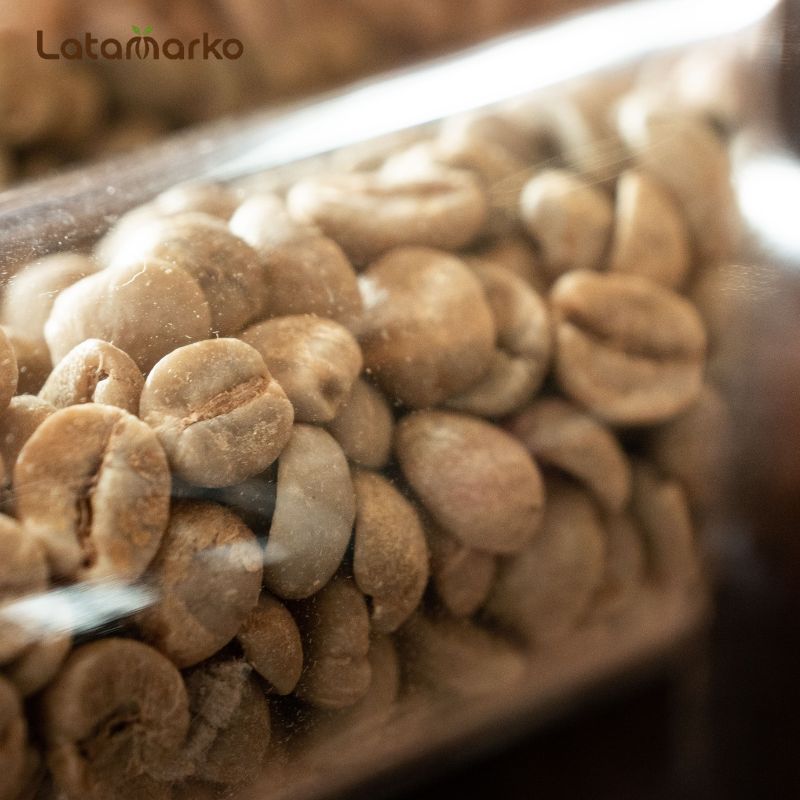
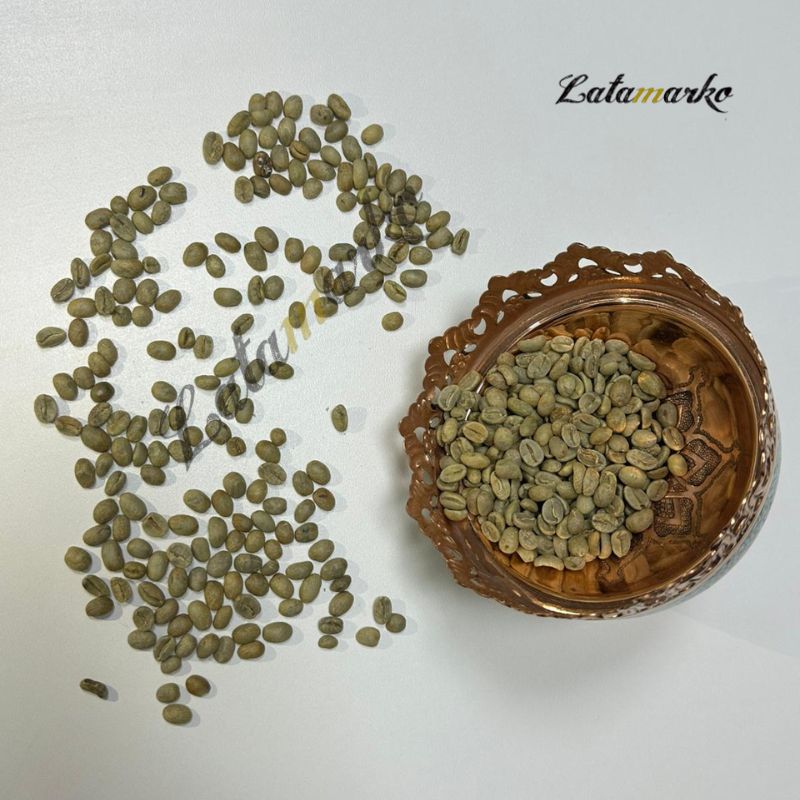
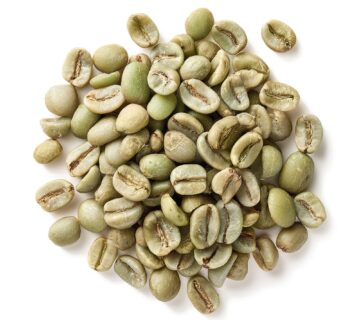
Ethiopia Sidamo green coffee beans are unroasted coffee beans originating from the Sidamo coffee-growing area of southern Ethiopia. Before roasting, the beans are typically green to blue-green in appearance and retain the characteristics that later develop into the aroma, acidity, sweetness, and body of the finished coffee.
Sidamo is particularly interesting because Ethiopia is widely regarded as one of the world’s most important coffee origins and is closely associated with Arabica production.
The growing environment matters. Many Ethiopian coffee-growing areas are located at relatively high elevations, where slower cherry maturation can contribute to complex flavor development. Depending on the specific lot and processing method, Sidamo coffees can display notes associated with citrus, floral aromas, stone fruit, berries, tea, and pronounced sweetness.
For an industrial buyer, however, flavor is only one part of the equation.
A production manager may be more concerned with questions such as:
- Is the moisture content within the required range?
- Is the lot consistent enough for automated processing?
- What is the defect rate?
- How stable is the supplier’s availability?
- Can the same specification be reproduced in the next shipment?
- How will freight costs affect the landed cost per kilogram?
- Does the bean size match the roasting profile already used in the plant?
These questions separate professional coffee procurement from simple commodity purchasing.
Best Brazilian Arabica Coffee Bean Supplier for Industrial Roaster
Uganda Bugisu Arabica Coffee Beans for Specialty Coffee Industry
Why Sidamo Coffee Is Valuable for Commercial Production
One of the biggest advantages of Ethiopia Sidamo green coffee beans is their ability to add distinctive sensory characteristics to blends and single-origin products.
For a coffee manufacturer, this can create several commercial possibilities.
1. Premium Flavor Without Relying Entirely on Blends
Some manufacturers use Ethiopian coffee as a component of premium blends rather than making it the sole raw material.
A carefully selected Sidamo lot can introduce floral or fruity characteristics that make a blend more recognizable without forcing the manufacturer to build the entire product around a single expensive origin.
This is particularly useful when developing multiple product tiers.
For example, a production facility might maintain:
Value line: primarily cost-efficient commercial Arabica and Robusta.
Mid-range line: a balanced Arabica blend with selected Ethiopian components.
Premium line: higher proportions of specialty-grade Sidamo or a single-origin Ethiopian product.
The approach gives procurement teams greater control over the cost-per-unit while allowing product developers to create meaningful differences between SKUs.
2. Strong Origin Story
Modern coffee buyers increasingly care about origin and product identity. Ethiopian coffee provides manufacturers with a compelling geographical story that can support premium positioning.
For B2B manufacturers, this matters because packaging, labeling, and product differentiation can influence margins just as much as the raw material itself.
A distinctive origin can turn a commodity-looking product into something with a clearer identity.
3. Flexibility in Roasting
Sidamo can be used across different roasting strategies, although the ideal profile depends heavily on the specific lot and desired end product.
Lighter roasting may emphasize acidity, floral notes, and fruit characteristics. Medium roasting can create a broader balance between sweetness, acidity, and body. Darker roasting can reduce some of the origin-specific nuances while emphasizing roast character.
This flexibility gives production teams room to experiment without necessarily changing the entire manufacturing architecture.
Green Coffee Beans: From Origin to Industry
Washed vs. Natural: A Critical Procurement Decision
One of the easiest mistakes in purchasing Ethiopian coffee is treating “Sidamo” as a complete specification.
It isn’t.
Two Sidamo lots can behave very differently depending on how the coffee was processed.
Washed Ethiopian Coffee
Washed coffees generally have a cleaner and more defined sensory profile. Buyers may encounter brighter acidity, floral characteristics, citrus notes, and a tea-like quality.
For manufacturers producing specialty coffee or premium roasted products, washed Sidamo can be particularly attractive when clarity and origin expression are priorities.
Natural Ethiopian Coffee
Natural processing involves drying whole coffee cherries before removing the fruit from the seed.
Natural Ethiopian coffees can deliver more pronounced fruit characteristics, sweetness, heavier body, and sometimes berry-like or wine-like notes.
From a product-development perspective, this can be valuable. From a production perspective, however, the sensory intensity needs to fit the product specification.
A procurement manager should therefore avoid approving a shipment simply because it is labeled “Ethiopian Sidamo.” Processing method should be part of the purchasing specification.
Key Quality Specifications for Green Coffee Procurement
When you’re buying coffee for a factory, sensory appeal needs to be translated into measurable purchasing criteria.
A professional green coffee specification may include:
| Specification | Why It Matters |
|---|---|
| Origin | Determines expected sensory and commercial characteristics |
| Grade | Helps establish quality expectations |
| Processing method | Strongly influences flavor and aroma |
| Moisture content | Affects storage stability and roasting behavior |
| Screen size | Influences roasting consistency |
| Defect count | Directly affects quality and yield |
| Crop year | Useful for assessing freshness and supply planning |
| Packaging | Protects beans during transport and storage |
| Lot traceability | Supports quality control and supplier accountability |
| Availability | Determines production continuity |
Moisture deserves particular attention. Green coffee is a biological agricultural product, not a standardized metal component coming off a machining line. Its properties can vary naturally.
That means your incoming quality-control process should be designed around agricultural variability.
The Industrial Procurement Mistake: Buying on Price Alone
We’ve seen production teams make the same mistake across many categories: they compare supplier quotations line by line and select the lowest unit price.
That looks efficient on paper.
Then freight changes.
Or a shipment arrives outside specification.
Or a supplier cannot reproduce the previous lot.
Or the roasting team discovers that a new shipment behaves differently enough to require profile adjustments.
Suddenly, the “cheaper” coffee isn’t cheaper.
This is why procurement should evaluate total landed cost, not merely the quoted price.
A useful calculation is:
Total landed cost = product price + freight + insurance + customs-related costs + handling + storage losses + quality-related costs
For a large manufacturing plant, even a small difference in yield or production efficiency can become significant when multiplied across hundreds of tons.
How Factory Buyers Can Evaluate a Sidamo Supplier
Before committing to a large purchase, build a supplier evaluation process.
Step 1: Define Your Production Specification
Don’t start by asking, “What Ethiopian coffee do you have?”
Start with:
- Desired flavor profile
- Roast level
- Grade
- Processing method
- Moisture requirements
- Packaging format
- Annual volume
- Delivery frequency
- Acceptable price range
- Required documentation
The supplier can then recommend suitable lots rather than forcing your production process to adapt to whatever happens to be available.
Step 2: Request a Representative Sample
Samples should be evaluated under conditions that resemble actual production.
A sample roasted beautifully in a laboratory does not automatically guarantee performance on a high-volume roasting line.
Test the coffee using your normal equipment whenever practical.
Step 3: Run a Pilot Batch
This is one of the most valuable steps in industrial procurement.
Use a controlled quantity and monitor:
- Roast development
- Bean expansion
- Weight loss
- Color consistency
- Aroma
- Cup profile
- Production throughput
- Finished-product yield
If your factory uses automated equipment, observe how the beans behave under normal operating conditions.
Step 4: Establish an Incoming QC Procedure
When the shipment arrives, don’t rely entirely on supplier documentation.
Your quality-control team should inspect representative samples before releasing the material into production.
The objective isn’t to distrust the supplier. It is to protect your manufacturing process.
Step 5: Negotiate Supply Continuity
If Sidamo becomes an important component of your product, consider discussing forward purchasing, scheduled deliveries, or approved alternative lots.
Supply-chain resilience matters because agricultural commodities naturally face fluctuations caused by weather, harvest conditions, transportation, and market demand.
What About Bulk Ordering?
For larger facilities, buying green coffee in bulk can improve purchasing efficiency, but bigger isn’t automatically better.
A factory needs to balance volume discounts against inventory carrying costs and product freshness.
Suppose your plant consumes 20 tons per month. Purchasing six months of inventory may look attractive if the supplier offers a significant discount. But the saving must be compared with warehouse requirements, capital tied up in inventory, storage conditions, and the risk that the coffee changes during prolonged storage.
A better strategy may be staggered deliveries under a broader commercial agreement.
At MT Royal, we understand why this distinction matters. We supply manufacturers with a broad range of brands and products at competitive prices, while recognizing that industrial buyers need more than a low quotation—they need dependable supply, specification clarity, and practical commercial support.
Storage Conditions Can Make or Break Green Coffee Quality
Even excellent green coffee can deteriorate when stored poorly.
Manufacturers should maintain a clean, dry, well-ventilated storage environment and protect coffee from excessive humidity, temperature fluctuations, odors, pests, and direct environmental exposure.
Green coffee is particularly vulnerable to absorbing surrounding odors. Storing coffee near strong chemicals, spices, fuels, or other odor-intensive materials is therefore a bad idea.
For production facilities, warehouse organization should also support FIFO or appropriate inventory rotation procedures, batch identification, and traceability.
Think of the warehouse as an extension of your quality-control department—not simply a room where bags wait for their turn.
Common Misconceptions About Sidamo Coffee
“All Sidamo coffee tastes the same.”
Definitely not.
Processing, elevation, variety, farm or cooperative, crop conditions, grading, and roasting can produce substantial differences.
“Specialty-grade automatically means better for my factory.”
Not necessarily.
A premium lot may be excellent in the cup but economically unsuitable for a mass-market product.
The right coffee is the one that meets your product specification and business model.
“The lowest FOB price is the best deal.”
Again, not necessarily.
Freight, quality variation, rejected shipments, inventory costs, and production adjustments can easily erase an initial price advantage.
“One successful shipment proves the supplier is reliable.”
It proves the supplier delivered one successful shipment.
Industrial procurement needs repeatability.
The real test is whether the supplier can maintain acceptable quality and service across multiple orders.
Sidamo vs. Other Green Coffee Origins
For manufacturers evaluating different origins, the decision should be connected to the intended product.
| Origin | Typical Positioning | Common Characteristics |
|---|---|---|
| Ethiopia Sidamo | Specialty and premium | Floral, citrus, fruit, tea-like notes |
| Brazil | Commercial and specialty | Nutty, chocolate, balanced, lower acidity |
| Colombia | Commercial and specialty | Sweet, balanced acidity, caramel and fruit |
| Guatemala | Specialty | Chocolate, spice, fruit, structured acidity |
| Vietnam Robusta | Commercial/value | Strong body, intensity, high caffeine |
This isn’t a ranking. It is a reminder that every origin serves a different manufacturing purpose.
A large-volume instant coffee producer may prioritize entirely different characteristics from a boutique roasted-coffee manufacturer.
The Role of Brand Selection in Industrial Purchasing
Origin is important, but the brand and supplier behind a product can also influence procurement outcomes.
Spanish engineering and manufacturing have long been associated with attention to precision and durability in industrial markets, and premium brands such as Latamarko can be relevant when buyers are evaluating higher-end European options.
The same principle applies to coffee-related purchasing: the supplier should be evaluated not only on what is being supplied today, but on how reliably the business can support your operation over time.
We’ve worked with production-oriented buyers who initially focused almost entirely on unit price and later shifted their procurement criteria toward consistency, documentation, delivery reliability, and responsive communication. In many cases, that change produced better results than simply negotiating another small percentage off the purchase price.
Frequently Asked Questions
Are Ethiopia Sidamo green coffee beans suitable for large-scale production?
Yes, provided the specific lot meets the manufacturer’s quality, cost, and consistency requirements. Sidamo can be used in specialty products, premium blends, and other commercial applications.
What flavor profile can manufacturers expect from Sidamo?
Depending on the lot and processing method, Sidamo can offer floral, citrus, berry, stone-fruit, tea-like, sweet, and sometimes wine-like characteristics.
Is washed or natural Sidamo better?
Neither is universally better. Washed coffee often provides greater clarity and acidity, while natural processing can produce stronger fruit and sweetness. The correct choice depends on your finished product.
How should green coffee be stored in a factory?
Store it in a clean, dry, temperature-controlled or stable environment where practical, away from moisture, pests, direct exposure, and strong odors. Maintain clear lot identification and inventory rotation.
Should manufacturers buy directly from the origin?
Direct sourcing can offer advantages, but it also creates additional responsibilities around logistics, quality control, documentation, financing, and supply management. For many manufacturers, a reliable experienced supplier can simplify these challenges.
How can I compare two Sidamo suppliers?
Compare more than price. Evaluate sample quality, specifications, consistency, lead time, logistics, documentation, responsiveness, minimum order quantities, and the supplier’s ability to maintain the agreed specification.
Making Sidamo Work on the Factory Floor
Ethiopia Sidamo green coffee beans are valuable because they can bring something difficult to manufacture artificially: distinctive origin character.
But a factory cannot run on flavor descriptions alone.
Your production team needs raw materials that arrive on time, match specifications, perform predictably, and make economic sense at scale. That’s why professional sourcing combines sensory evaluation with quality control, logistics planning, supplier management, and cost analysis.
We recommend treating every green coffee purchase as part of a larger production system. The bean affects the roast; the roast affects yield and flavor; the finished profile affects customer acceptance; and all of it eventually affects your margins.
At MT Royal, our role is to help industrial buyers navigate that chain by offering access to a broad range of brands and competitive purchasing options while keeping practical supply requirements in view.
For a factory manager, the best supplier isn’t necessarily the one offering the cheapest bag today. It is the supplier that helps you keep tomorrow’s production line running without surprises.


No comment