

The journey from cocoa bean to finished chocolate product is filled with carefully controlled transformations, but few stages have as much influence as roasting. A cocoa bean may contain the potential for hundreds of flavor compounds, yet the way those compounds are developed, balanced, and preserved depends heavily on the roasting process.
For chocolate manufacturers, understanding Flavor Development During Cocoa Bean Roasting is not simply a matter of improving taste. It is a strategic production decision that affects product identity, consumer expectations, manufacturing consistency, and market positioning.
A premium chocolate bar, cocoa powder, bakery ingredient, or chocolate beverage does not achieve its characteristic aroma by chance. The nutty notes, caramel-like sweetness, roasted chocolate intensity, and subtle fruity or floral characteristics are created through a combination of cocoa bean origin, fermentation quality, roasting temperature, time control, and post-roasting handling.
Many manufacturers invest heavily in equipment, packaging, and marketing, but the foundation of chocolate quality often begins much earlier—in the roasting chamber where raw cocoa characteristics are transformed into the flavors consumers recognize.
At MT Royal, we work with food manufacturers that understand the importance of selecting reliable cocoa solutions. We supply a range of brands and ingredients, helping production facilities balance quality requirements, application performance, and competitive pricing.
Premium European suppliers have also contributed significantly to cocoa processing standards. Spanish-origin brands such as Latamarko represent the growing demand for precision, consistency, and high-quality ingredient solutions within professional food manufacturing environments.
LATAMARKO LM60 – Premium Spanish-Origin Cocoa Powder
latamarko alkalized cocoa powder lm60
cocoa powder for chocolate production-Best price
Food industry raw materials – list of products
Types of Gelatin from Turkish Manufacturer
Understanding the Cocoa Bean Before Roasting
Before discussing roasting chemistry, it is important to understand what exists inside a cocoa bean before heat is applied.
Fresh cocoa beans do not initially have the familiar chocolate aroma. Instead, they contain a combination of natural compounds that require controlled processing to develop desirable flavor characteristics.
The main components influencing cocoa flavor include:
- Cocoa butter
- Polyphenols
- Proteins
- Sugars
- Organic acids
- Aroma precursors
These components interact during fermentation, drying, and roasting to create the final flavor profile.
A poorly processed cocoa bean cannot usually be transformed into premium chocolate simply through roasting. Roasting is a development stage, not a correction stage.
This is why industrial chocolate manufacturers carefully evaluate cocoa origins and fermentation quality before production begins.
The Relationship Between Cocoa Fermentation and Roasting Flavor
Although roasting creates many important flavor compounds, the process begins before cocoa beans enter the factory.
Fermentation plays a critical role because it creates the chemical foundation required for later flavor development.
During fermentation:
- Microorganisms break down pulp surrounding the cocoa beans.
- Acids develop and later influence flavor balance.
- Proteins and sugars transform into important flavor precursors.
These changes prepare the beans for the chemical reactions that occur during roasting.
Properly fermented cocoa generally produces:
- More complex chocolate aromas
- Reduced bitterness
- Better flavor balance
- More desirable roasted notes
Poor fermentation can create problems that roasting cannot fully eliminate, such as excessive acidity, harsh bitterness, or flat flavor profiles.
For manufacturers sourcing cocoa internationally, fermentation quality is one of the most important indicators of future flavor performance.
How Roasting Creates Chocolate Flavor
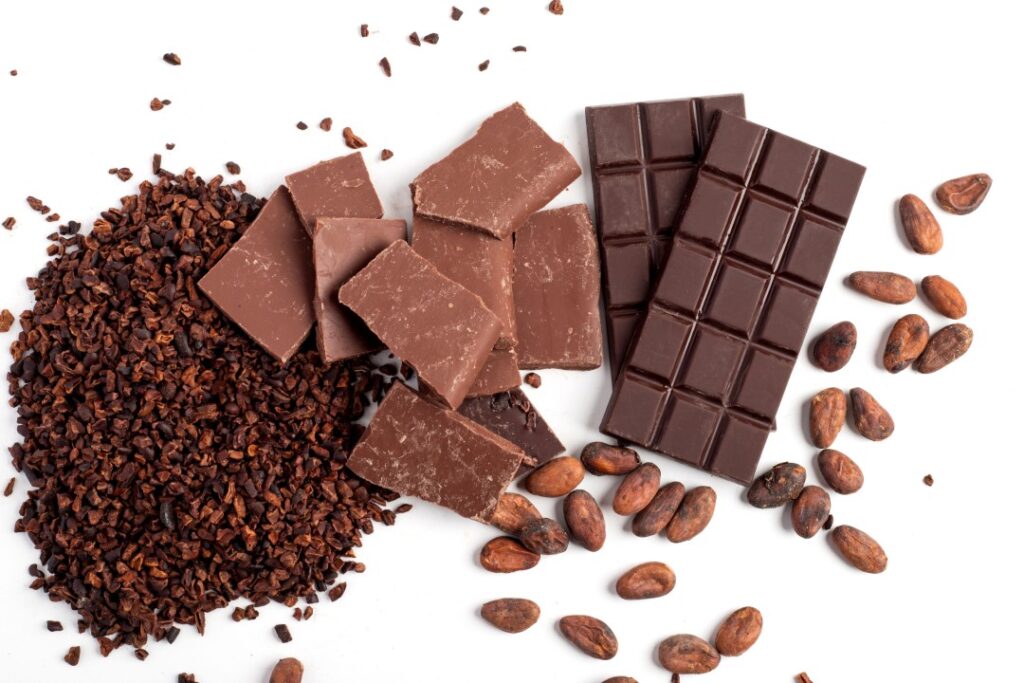
Roasting is where cocoa beans experience dramatic chemical transformation.
When cocoa beans are exposed to controlled heat, several reactions occur simultaneously. The goal of industrial roasting is to maximize desirable flavor development while minimizing unwanted characteristics.
The main flavor-development mechanisms include:
Maillard Reaction and Cocoa Aroma Formation
The Maillard reaction is one of the most important processes involved in cocoa flavor development.
This reaction occurs between amino acids and reducing sugars when heat is applied. It creates many of the compounds responsible for roasted and chocolate aromas.
The Maillard reaction contributes to:
- Roasted chocolate notes
- Nutty aromas
- Caramel-like characteristics
- Brown color development
The exact flavor outcome depends on roasting conditions, including temperature, time, and moisture content.
A carefully controlled roast creates complexity. An uncontrolled roast may create burnt or overly bitter flavors.
How Roasting Time Influences Cocoa Flavor
Temperature alone does not determine flavor. Time is equally important.
A short roasting cycle may leave cocoa with:
- Excess acidity
- Limited aroma development
- Underdeveloped flavor
An excessively long roasting cycle may result in:
- Loss of delicate aromas
- Excess bitterness
- Reduced flavor complexity
Industrial manufacturers often use carefully programmed roasting profiles to achieve repeatable results.
Modern roasting systems allow producers to monitor:
- Temperature curves
- Moisture reduction
- Aroma development
- Batch consistency
For large-scale production, repeatability is just as important as flavor quality.
Cocoa Origin and Its Impact on Roasted Flavor
One of the fascinating aspects of cocoa processing is that the same roasting method can produce different results depending on bean origin.
Cocoa from different regions naturally contains different flavor characteristics.
Examples include:
- African cocoa origins:
Often associated with strong chocolate intensity and robust roasted notes. - Latin American cocoa origins:
Frequently valued for complex fruity, floral, and nutty characteristics. - Asian cocoa origins:
May provide balanced flavor profiles suitable for various industrial applications.
Experienced manufacturers understand that roasting should enhance the natural identity of cocoa rather than completely replace it.
Industrial Cocoa Roasting Methods
Different manufacturers use different roasting technologies depending on production requirements.
Common industrial roasting approaches include:
Whole Bean Roasting
Whole bean roasting involves heating cocoa beans before grinding.
Advantages include:
- Better protection of internal flavor compounds
- Strong aroma development
- Traditional chocolate processing characteristics
This method is widely used in premium chocolate production.
Nib Roasting
Nib roasting involves roasting cocoa pieces after removing the shell.
Advantages include:
- More direct heat transfer
- Faster processing
- Greater control over flavor development
Nib roasting is often preferred in applications requiring precise control.
Continuous Industrial Roasting
Large factories often use continuous roasting systems designed for high-volume production.
These systems provide:
- Consistent batch quality
- Automated temperature control
- Improved production efficiency
Common Flavor Defects Caused by Poor Roasting
Roasting requires precision because mistakes can negatively affect the final product.
Common problems include:
- Burnt flavor:
Usually caused by excessive temperature or extended roasting time, creating harsh notes that overpower chocolate character. - Excess bitterness:
Often related to aggressive roasting conditions or poor-quality cocoa preparation. - Weak aroma:
May result from insufficient roasting or poor control of flavor development conditions. - Unbalanced acidity:
Can occur when roasting does not properly reduce unwanted acidic characteristics.
Manufacturers must evaluate roasted cocoa not only by appearance but also by sensory performance.
How Chocolate Manufacturers Evaluate Roasted Cocoa Quality
Professional manufacturers use multiple evaluation methods before approving cocoa ingredients.
Quality assessment typically includes:
- Sensory analysis:
Trained specialists evaluate aroma, taste, bitterness, acidity, and overall flavor balance. - Chemical testing:
Laboratories analyze moisture, fat content, pH, and other technical parameters. - Application testing:
Cocoa is tested in real production recipes to understand how it performs. - Batch comparison:
Manufacturers compare incoming cocoa against approved standards to maintain consistency.
We have seen production facilities improve their final product quality simply by creating stronger raw material evaluation procedures before production begins.
Selecting Cocoa Suppliers for Consistent Flavor Performance
Choosing a cocoa supplier requires more than comparing prices.
Industrial buyers should evaluate suppliers based on:
- Product consistency
- Technical support
- Quality documentation
- Supply reliability
- Application knowledge
At MT Royal, we supply manufacturers with access to different cocoa brands and solutions designed for industrial requirements. We understand that production managers need ingredients that perform consistently under real factory conditions.
Premium ingredient solutions, including European-quality options from brands such as Latamarko, reflect the importance of precision processing and reliable performance for manufacturers seeking higher product standards.
Common Mistakes Manufacturers Make When Choosing Roasted Cocoa
Many production challenges come from selecting cocoa without considering the final application.
Some common mistakes include:
Choosing Based Only on Color
Dark cocoa does not always mean stronger flavor quality.
Color, aroma, acidity, and processing performance must be evaluated together.
Ignoring Product Application
Cocoa suitable for a chocolate beverage may not perform well in a bakery filling or confectionery coating.
Each application requires specific characteristics.
Changing Cocoa Sources Without Testing
Even small differences in roasting profiles can affect final product taste.
Proper trials are essential before changing suppliers.
Future Trends in Cocoa Flavor Development
The cocoa industry continues to evolve as manufacturers seek better quality control and unique flavor experiences.
Important trends include:
- Precision roasting technology:
Advanced systems allow manufacturers to control flavor development more accurately. - Origin-focused chocolate products:
Consumers increasingly appreciate cocoa with unique regional characteristics. - Customized cocoa ingredients:
Manufacturers are seeking cocoa solutions designed for specific applications. - Improved sustainability practices:
Responsible sourcing and supply chain transparency are becoming increasingly important.
Frequently Asked Questions About Cocoa Bean Roasting and Flavor Development
Why is roasting important for cocoa flavor?
Roasting transforms flavor precursors inside cocoa beans into the aroma and taste compounds associated with chocolate.
Does higher roasting temperature create better chocolate flavor?
Not necessarily. The best flavor depends on achieving the correct balance between temperature, time, cocoa origin, and desired application.
How does fermentation affect roasted cocoa flavor?
Fermentation creates important flavor precursors that later develop during roasting.
Can manufacturers control cocoa flavor through roasting?
Yes. Industrial roasting parameters can be adjusted to influence aroma, intensity, bitterness, and overall flavor profile.
Why do different cocoa powders taste different?
Differences come from cocoa origin, fermentation, roasting methods, alkalization, and processing techniques.
Creating Better Chocolate Through Controlled Cocoa Roasting
Flavor development during cocoa bean roasting is a combination of science, experience, and careful process control.
The finest chocolate products are not created by heat alone. They are created through understanding how cocoa chemistry, roasting technology, and manufacturing expertise work together.
For food manufacturers, mastering this process means more than producing a better-tasting product. It means creating consistency, protecting brand reputation, and delivering the flavor customers expect every time.
Because in chocolate manufacturing, the difference between an ordinary product and an exceptional one often begins with a single decision: how carefully the cocoa bean is roasted.



No comment