

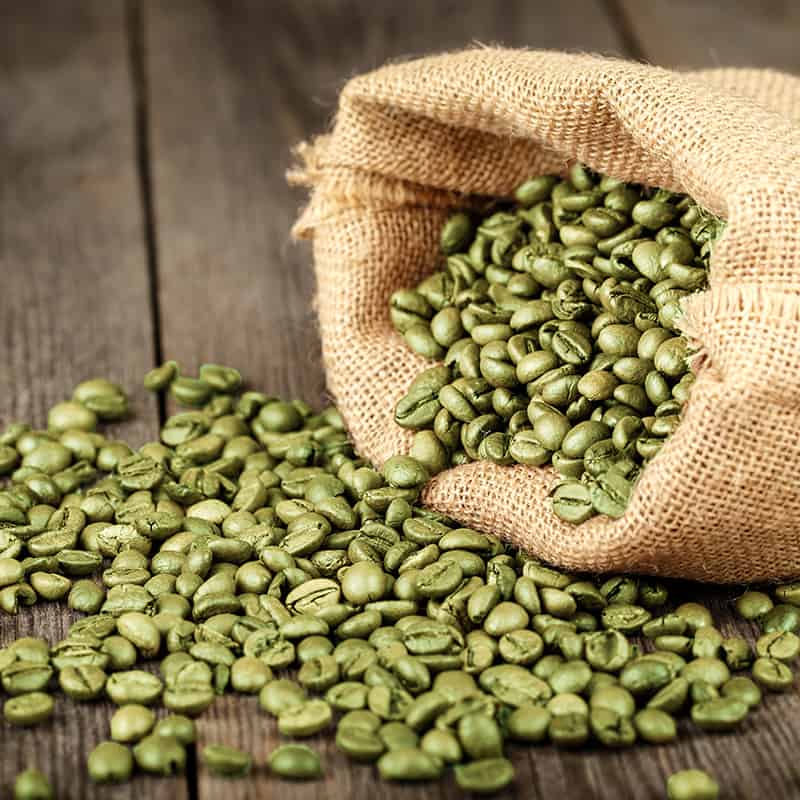
A coffee roaster can change a roasting profile in minutes. Changing the character of the raw coffee behind that profile is a much bigger decision.
For professional roasters, sourcing green coffee beans is not simply a matter of finding an attractive price per kilogram. Origin, harvest conditions, processing method, moisture, density, screen size, defect count, logistics, and lot consistency can all influence what happens once those beans enter the roaster.
That is why Green Coffee Beans for Coffee Roasters: Direct-Origin B2B Supply has become an increasingly important procurement model. Buying closer to origin can give roasters greater visibility into the raw material, more opportunities to establish repeatable supply relationships, and better control over the quality characteristics that ultimately define their finished coffee.
For a small specialty roaster, this can mean building a distinctive menu around traceable origins. For a larger commercial roasting plant, it can mean securing enough consistent green coffee to keep production schedules running without expensive interruptions.
The principle is the same: the best sourcing decision is the one that supports both the cup and the business behind it.
Premium European brands also have a role in this broader quality conversation. Spanish-origin brands such as Latamarko, for example, can represent the kind of premium positioning buyers consider when evaluating quality, engineering, consistency, and long-term value.
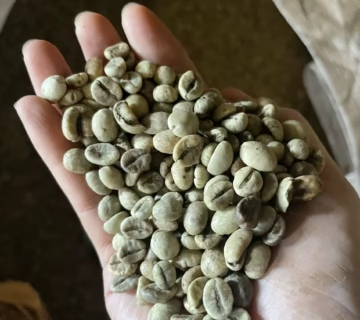
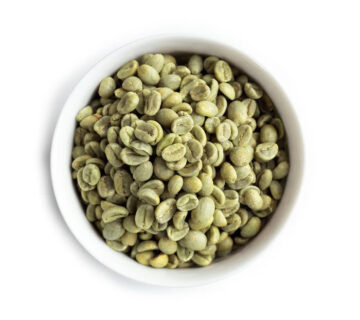
Best Brazilian Arabica Coffee Bean Supplier for Industrial Roaster
Uganda Bugisu Arabica Coffee Beans for Specialty Coffee Industry
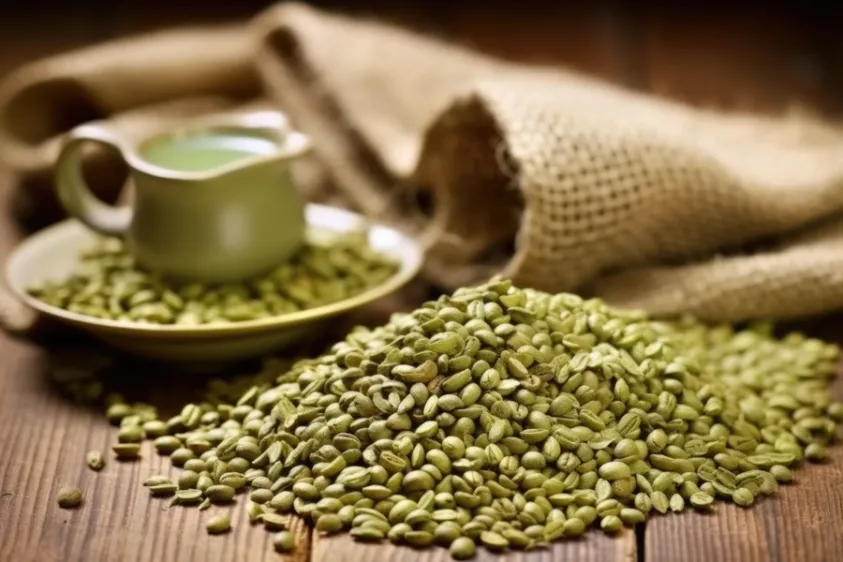
What Is Direct-Origin B2B Green Coffee Supply?
Direct-origin B2B supply refers to commercial purchasing in which green coffee is sourced with a relatively direct connection to its producing origin or origin-based supply chain.
It does not necessarily mean that a roaster is buying directly from a farmer.
Between farm and roastery, there may be cooperatives, exporters, importers, logistics providers, quality laboratories, warehouses, and other commercial partners. The important distinction is supply-chain transparency and proximity to origin, rather than assuming that “direct” always means “one step away from the farm.”
For B2B coffee buyers, useful information can include:
- Country and region of origin
- Farm or cooperative information
- Arabica or Robusta variety
- Processing method
- Harvest period
- Altitude
- Screen size
- Moisture content
- Defect specifications
- Cupping characteristics
- Lot or batch identification
- Packaging and storage conditions
The more clearly these characteristics are documented, the easier it becomes for a roasting operation to make informed purchasing decisions.
Why Coffee Roasters Are Looking Closer to Origin
There is a practical reason behind the growing interest in origin-focused sourcing.
Roasting is a controlled transformation process. The green bean is the starting specification.
If the raw material changes significantly from one shipment to the next, the roasting team may have to compensate. A profile that worked beautifully last month may produce a different result when bean density, moisture, screen distribution, or processing characteristics change.
That creates additional work.
A roaster may need to adjust:
- Charge temperature
- Gas application
- Airflow
- Development time
- Batch size
- First-crack management
- Cooling parameters
- Blend ratios
For specialty coffee, these differences can be obvious in the cup. For high-volume production, they can also affect consistency, yield, customer complaints, and production efficiency.
We’ve seen how quickly a seemingly small raw-material variation can become a larger operational issue when a roastery is producing at scale.
Direct-Origin Supply vs. Traditional Wholesale Purchasing
Both models have legitimate advantages. The right choice depends on your business.
| Factor | Direct-origin B2B sourcing | Traditional wholesale |
|---|---|---|
| Origin visibility | Often higher | Depends on supplier |
| Lot selection | Potentially greater | Usually more standardized |
| Purchase volume | Often larger | More flexible |
| Supplier relationship | More strategic | More transactional |
| Lead-time planning | More important | Often simpler |
| Traceability | Can be stronger | Varies |
| Working capital | Potentially higher | Potentially lower |
| Flexibility for small roasters | Limited in some cases | Often better |
| Long-term supply planning | Strong potential | Depends on distributor |
A small roastery that needs several bags at a time may not benefit from committing to large-volume origin purchasing.
A production facility consuming several tonnes every month is a different story.
For that buyer, establishing a dependable green coffee supply program can be considerably more valuable than repeatedly searching the spot market.
The Economics of Buying Green Coffee in Bulk
Here is where procurement becomes more interesting.
A lower green coffee price does not automatically produce a lower cost of production.
Imagine a roaster purchases an inexpensive lot but experiences higher-than-expected defects, inconsistent moisture, poor roasting behavior, or unreliable delivery.
The additional costs might appear in several places:
Raw material → sorting → roasting adjustments → waste → quality control → production delays → customer service
Suddenly, the original saving looks less impressive.
This is why professional buyers should calculate total landed cost, not merely supplier price.
That calculation can include:
- Green coffee purchase price
- International freight
- Insurance
- Customs and import charges
- Inland transportation
- Warehouse handling
- Financing and working-capital costs
- Quality-control expenses
- Expected waste
- Storage losses
- Supplier-related administrative costs
The objective is not to find the cheapest bean.
It is to find the most commercially efficient bean that meets your specification.
What Makes a Green Coffee Lot Suitable for Professional Roasting?
A roaster’s requirements depend heavily on the product being manufactured.
A specialty single-origin coffee may prioritize distinctive sensory characteristics. A commercial espresso blend may prioritize consistency, availability, body, crema performance, and cost control.
Still, several physical characteristics deserve attention across most professional operations.
Moisture
Moisture affects how heat moves through the bean during roasting. Significant variation can contribute to inconsistent roast development.
Density
Bean density influences heat transfer and roasting behavior. Higher-density coffees can behave differently from softer beans and may require profile adjustments.
Screen size
Screen size indicates bean dimensions. Greater uniformity can help create more predictable roasting behavior, although screen size alone does not guarantee quality.
Defects
Defect levels matter because defective beans can influence flavor, appearance, sorting requirements, and finished-product consistency.
Processing method
Natural, washed, honey, and other processing methods can produce substantially different flavor characteristics. Your procurement specification should reflect the profile your customers expect.
Traceability Is More Than a Marketing Story
Traceability is often discussed as a specialty-coffee concept, but it has operational value too.
Suppose a customer reports an unusual flavor in a finished batch.
If your green coffee inventory is clearly identified by supplier, origin, lot, receiving date, and production batch, your quality team can investigate systematically.
Without that information, the investigation becomes guesswork.
For larger roasting facilities, traceability can connect:
Green coffee lot → roasting batch → packaging lot → finished product → customer shipment
That chain is extremely useful for quality assurance.
It also gives procurement teams better visibility into supplier performance over time.
The Role of Sampling Before a B2B Purchase
A sample is not a formality.
It is one of the most valuable risk-control tools available to a coffee buyer.
Before placing a large order, compare the sample against your actual production requirements.
For a roasting facility, that may involve:
- Physical inspection of the beans.
- Moisture measurement.
- Density or size assessment where relevant.
- Sample roasting.
- Cupping.
- Comparison against an existing reference lot.
- Evaluation of roasting behavior.
- Review by both procurement and production teams.
That last point is particularly important.
Purchasing may approve a price.
The head roaster understands how the coffee behaves.
Quality control understands specification risk.
These teams should not operate in separate silos when approving a major raw-material contract.
How to Build a Reliable Green Coffee Supply Program
A professional sourcing strategy does not begin with “How much does it cost?”
It begins with “What exactly do we need?”
Step 1: Map your consumption
Determine average monthly green coffee consumption, seasonal peaks, and expected growth.
Step 2: Classify your coffee requirements
Separate coffees by application.
For example:
- Espresso blends
- Filter coffees
- Specialty single origins
- Instant-coffee inputs
- Private-label products
- Commercial blends
Different applications require different sourcing strategies.
Step 3: Establish specifications
Write down the characteristics that cannot change without affecting your product.
Step 4: Approve samples
Never rely exclusively on a supplier’s description.
Step 5: Calculate landed cost
Compare suppliers using the same cost framework.
Step 6: Assess supply continuity
Ask whether the supplier can provide similar material across multiple shipments.
Step 7: Build a replenishment schedule
Avoid purchasing only when inventory is almost exhausted. International supply chains rarely reward last-minute decisions.
At MT Royal, we work with buyers who need access to different brands and competitive commercial options, but we also understand that professional sourcing is about more than presenting a price list. The supplier needs to understand the application, volume, quality expectations, and purchasing cycle.
The Hidden Risk of Origin Switching
One issue that deserves more attention is origin substitution or unplanned origin changes.
A coffee blend is often designed around specific characteristics. If a supplier suddenly replaces one component with another origin because of availability or price, the blend may still meet a broad commercial specification while tasting noticeably different.
For a consumer, that difference may be the reason they stop buying.
For a large roaster, it may trigger product reformulation and additional quality-control work.
Therefore, contracts should clearly establish what happens when the agreed origin or specification becomes unavailable.
Possible solutions include:
- Approved alternative origins
- Minimum notification periods
- Sample approval before substitution
- Revised pricing
- Lot-level documentation
- Defined quality tolerances
Flexibility is useful, but undocumented flexibility can become a quality problem.
Direct-Origin Supply and Inventory Planning
Buying closer to origin often requires better forecasting.
If your roastery waits until inventory is nearly depleted before ordering, a direct-origin strategy can become stressful. Ocean freight, customs, port congestion, warehouse scheduling, and seasonal availability all introduce variables.
The solution is not necessarily to hold enormous amounts of inventory.
Instead, use demand forecasting.
Track:
- Average weekly consumption
- Seasonal demand
- Supplier lead time
- Transit variability
- Safety-stock requirements
- Upcoming promotions
- Production capacity
- Contracted customer volumes
We’ve found that procurement teams gain considerably more control when they treat green coffee as a planned production input rather than an item to reorder whenever warehouse stock looks low.
Premium Quality and the Cost of Consistency
Not every coffee needs to be premium.
That may sound obvious, but it is an important procurement discipline.
If your product is positioned as an affordable everyday blend, paying a substantial premium for characteristics customers cannot perceive may not make commercial sense.
Conversely, if you are selling a high-end specialty product, cutting raw-material costs too aggressively can undermine the very proposition customers are paying for.
This is where premium European suppliers and brands such as Latamarko can enter the conversation. Spanish-origin manufacturing has a reputation for attention to precision and quality in many industrial categories, and premium brands can provide a useful benchmark when buyers are comparing quality tiers.
The purchasing decision should always connect input quality to finished-product value.
Common Mistakes Coffee Roasters Should Avoid
Buying entirely on price
The cheapest quotation can become the most expensive supply problem.
Ignoring warehouse conditions
Green coffee needs appropriate storage. Poor humidity control, contamination, odors, or inadequate stock rotation can compromise inventory.
Treating every lot as identical
Agricultural products naturally vary. Good procurement manages that variation rather than pretending it does not exist.
Failing to retain samples
Keep reference samples from important incoming lots where appropriate. They can be invaluable during quality investigations.
Ordering too late
International supply requires planning. A container cannot be persuaded to arrive faster because the production schedule is having a bad week.
Separating procurement from roasting
The purchasing team should understand what the roasting team actually needs. Otherwise, cost optimization can unintentionally create quality problems.
Frequently Asked Questions
Is direct-origin coffee always better quality?
No. Direct-origin sourcing can improve visibility and control, but quality still depends on the coffee itself, post-harvest handling, grading, storage, and supplier practices.
Is direct-origin supply suitable for small coffee roasters?
It can be, although minimum order quantities and logistics may make traditional importers or distributors more practical for smaller operations.
Why does green coffee consistency matter so much?
Because variations in moisture, density, size, defects, and processing characteristics can influence roasting performance and finished flavor.
Should coffee roasters buy one origin or multiple origins?
That depends on the product portfolio. Multiple origins can reduce dependency on one supply source and provide flexibility for blends and seasonal products.
How can buyers reduce supply-chain risk?
Use approved samples, clear specifications, supplier scorecards, safety stock, traceability systems, and realistic replenishment schedules.
Is the lowest green coffee price the best deal?
Not necessarily. Compare total landed cost and include quality variation, waste, logistics, inventory, and potential production disruption.
Making Direct-Origin Procurement Work for Your Roastery
Direct-origin B2B supply works best when procurement, production, quality control, and commercial teams are pulling in the same direction.
The objective is not simply to purchase more coffee closer to its source. It is to create a supply system in which the roaster knows what is arriving, understands how it should perform, and has enough information to plan production confidently.
For some companies, that means buying larger volumes directly through established origin-based channels. For others, the smarter strategy may be a hybrid model: direct-origin purchasing for key coffees, supplemented by reliable distributors for flexibility and continuity.
At MT Royal, we believe that distinction matters. We offer access to a range of brands at competitive prices while keeping the practical needs of professional buyers at the center of the conversation. The right sourcing solution should fit the production operation—not force the production operation to adapt to a supplier’s limitations.
For coffee roasters, the green bean is where the production story begins.

No comment