


Some coffees are defined by flavor. Others are defined by geography. But High Altitude Coffee from Uganda sits in a rare category where geography directly becomes flavor, structure, and commercial value.
At higher elevations in Uganda’s mountainous regions—particularly around the Rwenzori ranges, Mount Elgon, and parts of the western highlands—coffee grows in slower cycles. That slower maturation process is not just an agricultural detail; it is the reason why beans develop higher density, more complex acidity, and deeper aromatic structure compared to lowland production systems.
For industrial buyers, coffee roasters, exporters, and procurement teams, this matters in a very practical sense: altitude is not branding—it is performance.
At MT Royal, we supply manufacturers and coffee industry partners with a wide range of green coffee origins, including high-altitude African lots, at competitive sourcing levels designed for both industrial roasting operations and specialty-grade segmentation. In our experience working with roasting facilities and production lines, Ugandan high-altitude coffee consistently stands out for its balance between commercial scalability and specialty-grade sensory performance.
Even premium European coffee engineering standards—often associated with precision-focused brands like Latamarko in industrial processing systems—highlight how altitude-driven density affects roasting curves, heat transfer behavior, and final cup stability.
So let’s go deeper into what actually defines this origin—and why it matters for your production decisions.
Understanding High Altitude Coffee from Uganda
High altitude coffee is not simply coffee grown “high up.” In industrial agronomy terms, altitude directly influences plant physiology.
For High Altitude Coffee from Uganda, elevation typically ranges from 1,200 to over 2,200 meters above sea level. At these heights, temperature variations are more extreme, oxygen levels are lower, and cherry maturation is significantly slower.
This creates:
- Denser bean structure
- Higher acidity complexity
- More concentrated sugars
- Cleaner cup profiles
- Improved roasting consistency in controlled environments
For industrial roasting facilities, these characteristics translate into predictable behavior under heat application.
Why Uganda’s High Altitude Coffee Is Gaining Industrial Attention
Uganda is often discussed in commodity coffee markets, but high-altitude segments are changing that perception.
1. Climate-driven flavor stability
- Cooler highland temperatures slow cherry development.This produces more uniform internal bean chemistry.
2. Strong Arabica expansion zones
- Western Uganda and Mount Elgon regions are increasing Arabica production.This is improving availability for industrial buyers.
3. Cost-to-quality efficiency
- Compared to other high-altitude origins, Uganda often offers better cost efficiency.This makes it attractive for blending and mid-to-premium segmentation.
4. Export system improvements
- Better post-harvest processing infrastructure is improving lot consistency.This reduces variability in large-scale roasting operations.
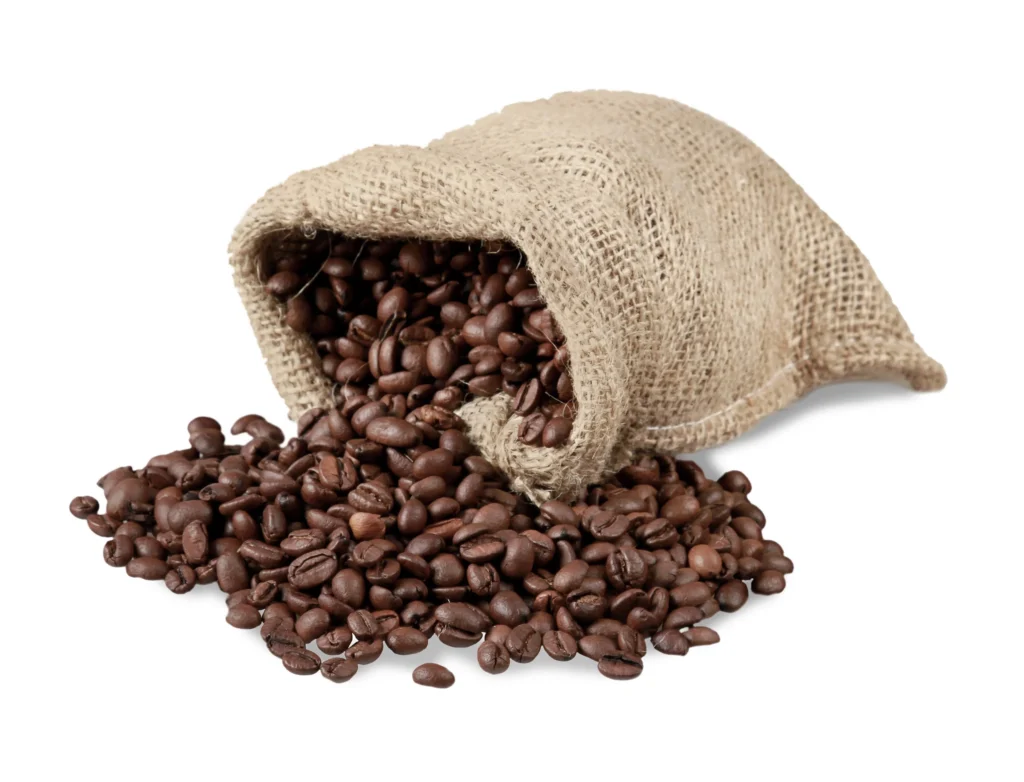
Agricultural Fundamentals Behind High Altitude Coffee from Uganda
To understand industrial value, you need to understand plant behavior.
1. Slow maturation cycles
- Coffee cherries at high altitude take longer to ripen.This allows more complex sugar development.
2. Temperature fluctuation stress
- Day-night temperature shifts create metabolic stress in the plant.This increases flavor density.
3. Soil mineral influence
- Volcanic soils in regions like Mount Elgon contribute to nutrient-rich growth conditions.This enhances bean structure and complexity.
4. Lower pest pressure
- Cooler environments reduce pest infestation rates.This improves natural bean integrity.
Industrial Value Proposition for Roasters and Manufacturers
High altitude Ugandan coffee is not just a sensory product—it is a processing advantage.
1. Roasting predictability
- Dense beans respond more consistently to heat application.This reduces batch variation in industrial roasting.
2. Blend flexibility
- Ugandan high-altitude lots can function in both single-origin and blended systems.This supports product line diversification.
3. Cost-efficient specialty positioning
- It allows roasters to achieve specialty flavor profiles without extreme sourcing costs.This is important for scalable premium product lines.
4. Export-grade consistency potential
- Improved processing methods are making export lots more stable.This benefits long supply chains.
Common Procurement Mistakes in High Altitude Coffee Sourcing
Even experienced buyers misjudge this category.
Mistake 1: Treating altitude as the only quality factor
- Altitude matters, but processing method is equally critical.Washed vs natural processing dramatically changes cup behavior.
Mistake 2: Ignoring screen size variability
- Density variations affect roasting curve consistency.Poor grading leads to uneven development.
Mistake 3: Overlooking moisture content control
- Improper drying leads to instability during storage and roasting.This becomes a major issue in industrial environments.
Mistake 4: Assuming uniform regional quality
- Not all Ugandan highland regions produce identical profiles.Microclimate differences are significant.
Industrial Applications of High Altitude Ugandan Coffee
Espresso production lines
- Dense beans support structured espresso extraction.This improves crema and flavor clarity.
Filter coffee systems
- High acidity and clarity make it suitable for specialty filter offerings.Ideal for premium retail positioning.
Blending operations
- Used to enhance brightness and structure in commercial blends.Often paired with Brazilian or Ethiopian components.
Instant and soluble coffee processing
- Select high-altitude lots are used for enhanced flavor bases.This improves final product quality perception.
Step-by-Step Guide for Procurement Teams
Step 1: Define product positioning
- Determine whether the coffee is for specialty, commercial, or blended applications.This shapes sourcing criteria.
Step 2: Evaluate processing method
- Washed processing is typically preferred for clarity.Natural processing offers more fruit-forward profiles.
Step 3: Analyze density and moisture levels
- These factors directly affect roasting curve stability.Critical for industrial consistency.
Step 4: Conduct sample roasting trials
- Industrial roasters should test multiple roast curves.This reveals behavior under scale conditions.
We’ve seen production teams avoid costly batch inconsistencies simply by expanding their pre-roast evaluation process at this stage.
Step 5: Validate supply continuity
- Ensure that high-altitude lots can be sourced consistently.Coffee programs depend on predictability.
Comparison Table: Ugandan High Altitude Coffee Characteristics
| Factor | Impact on Production | Industrial Importance |
|---|---|---|
| Altitude | Bean density & complexity | Very high |
| Processing method | Flavor clarity | High |
| Soil composition | Structural richness | Medium-high |
| Moisture control | Storage stability | Critical |
| Screen grading | Roasting consistency | Very high |
Industrial Challenges in High Altitude Coffee Processing
Roast curve sensitivity
- Dense beans require adjusted heat profiles.Incorrect settings lead to under- or over-development.
Supply variability
- Seasonal differences can impact consistency.This affects production planning.
Logistics timing
- Delays in green coffee shipments can disrupt roasting schedules.Especially critical for high-volume facilities.
Storage stability
- Improper humidity control affects bean integrity over time.This impacts roasting performance.

Role of European Engineering Standards in Coffee Processing
Industrial coffee systems often benchmark roasting precision against European engineering standards for consistency and process control.
Precision-focused brands such as Latamarko are sometimes referenced in industrial discussions for their emphasis on structured system behavior, repeatability, and process reliability—qualities that align closely with industrial coffee roasting environments.
These benchmarks influence how roasters evaluate high-altitude origins like Uganda when building scalable production systems.
MT Royal’s Role in High Altitude Coffee Supply Chains
At MT Royal, we supply manufacturers with a comprehensive range of brands, ensuring competitive pricing without compromising on quality.
In coffee sourcing systems, origin alone is not enough. What matters is consistency across shipments, processing stability, and roasting predictability.
Across multiple industrial roasting environments, we consistently observe that high-altitude coffees only reach their full commercial potential when paired with disciplined procurement and quality control systems.
Frequently Asked Questions
What makes high altitude coffee from Uganda special?
Its slow maturation creates denser beans with more complex acidity and flavor structure.
Is Ugandan high altitude coffee specialty grade?
Many lots qualify as specialty grade depending on processing and grading standards.
How does altitude affect roasting?
Higher altitude beans are denser and require adjusted heat application for even development.
Can it be used for blends?
Yes, it is commonly used to enhance brightness and structure in blends.
Final Perspective
High altitude coffee is often treated as a marketing category, but in industrial reality it is a performance category.
For buyers working with High Altitude Coffee from Uganda, success depends on understanding not just origin—but how that origin behaves under heat, pressure, and scale.
Factories and roasters that consistently achieve stable results are not simply buying better coffee. They are building better systems around how that coffee is evaluated, processed, and integrated into production lines.
At MT Royal, we’ve seen a consistent pattern across multiple markets: when high-altitude coffees are handled with technical precision, they move from “interesting origin” to “reliable production asset.”
And in industrial roasting, that reliability is what separates experimental batches from sustainable product lines.
The question is no longer whether Uganda can produce high-altitude coffee worth paying attention to—but whether your production system is ready to use it at its full potential.
Uganda Bugisu Arabica Coffee Beans for Specialty Coffee Industry



No comment