


Chocolate milk looks simple on the shelf. A familiar drink, often associated with comfort and everyday consumption. But inside an industrial production line, it is anything but simple.
Behind every stable bottle or carton of chocolate milk is a carefully balanced system of Chocolate Milk Ingredients Libya—a combination of dairy solids, cocoa systems, sweeteners, emulsifiers, stabilizers, and sometimes functional proteins that determine whether the final product remains smooth, shelf-stable, and consistent or separates, sediments, or loses flavor integrity over time.
For factory owners, production managers, and procurement teams, chocolate milk is not a beverage category. It is a formulation challenge.
At MT Royal, we supply manufacturers with a wide range of dairy, cocoa, and functional food ingredients at competitive industrial pricing, helping production plants maintain stability across high-volume operations. In our experience supporting beverage and dairy processors, chocolate milk formulation is one of the most sensitive balancing acts in food manufacturing—where small deviations in raw materials can lead to large-scale production inefficiencies.
In Libya’s evolving food production landscape, where import dependency and regional distribution logistics play a major role, the ability to secure consistent Chocolate Milk Ingredients Libya has become a strategic advantage rather than a simple procurement task.
Even European formulation standards—especially those influenced by precision-driven engineering cultures like Spanish-origin brands such as Latamarko—are often referenced in industrial discussions around ingredient stability, consistency control, and beverage texture optimization.
So let’s go deeper into what actually makes chocolate milk work at industrial scale—and why sourcing decisions matter more than most teams initially realize.
Understanding Chocolate Milk Ingredients in Industrial Production
Chocolate milk is a multi-phase system. It is not just milk and cocoa mixed together—it is a structured formulation designed to remain stable under time, temperature, and transport conditions.
The core Chocolate Milk Ingredients Libya category typically includes:
- Milk powder or fresh milk concentrates
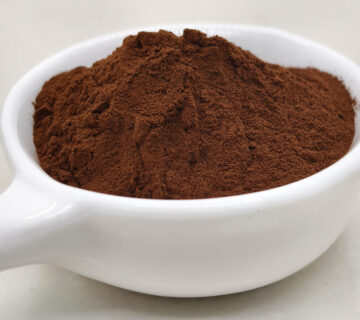
- Cocoa powder (natural or alkalized)
- Sweeteners (sucrose, glucose syrup solids, etc.)
- Stabilizers (carrageenan, guar gum, cellulose derivatives)
- Emulsifiers (lecithin, mono- and diglycerides)
- Flavor enhancers and fortification agents
Each component plays a functional role, not just a sensory one.
Milk provides structure. Cocoa defines flavor and color. Stabilizers prevent sedimentation. Emulsifiers maintain homogeneity. Sweeteners balance taste and solubility.
In industrial systems, these ingredients must behave predictably under agitation, pasteurization, homogenization, and long-term storage.

Why Chocolate Milk Production in Libya Requires Ingredient Stability
Libya’s food and beverage manufacturing sector has been evolving, driven by increasing domestic consumption and regional distribution demand.
But production environments face unique challenges.
1. Climate and temperature variability
- High ambient temperatures significantly affect dairy-based formulations.Without proper stabilization systems, chocolate milk can separate or develop texture inconsistencies during storage and transport.
2. Import-driven ingredient sourcing
- Many key ingredients used in chocolate milk production are imported.This creates dependency on supplier consistency and logistics reliability.
3. Scaling from small batches to industrial production
- Formulations that work in pilot batches often behave differently in full-scale production.This is where ingredient variability becomes a critical issue.
Functional Role of Chocolate Milk Ingredients in Manufacturing Systems
Each ingredient in chocolate milk has a technical purpose that extends beyond flavor.
1. Milk solids and dairy base structure
- Milk solids form the foundation of chocolate milk, providing protein, fat, and lactose.They influence mouthfeel, viscosity, and nutritional value.
2. Cocoa powder and flavor architecture
- Cocoa defines bitterness, aroma, and color intensity.Alkalized cocoa is often used in industrial systems for smoother flavor profiles and better solubility.
3. Stabilizers and suspension control
- Stabilizers prevent cocoa particles from settling at the bottom of containers.This is critical in bottled and UHT chocolate milk systems.
4. Emulsifiers and phase stability
- Emulsifiers ensure fat and water phases remain uniformly mixed.Without them, separation occurs rapidly during storage.
5. Sweeteners and solubility behavior
- Sweeteners influence not just taste but also viscosity and mixing behavior.Incorrect ratios can affect processing efficiency.
Common Procurement Mistakes in Chocolate Milk Ingredient Sourcing
Even experienced procurement teams encounter recurring challenges in this category.
Mistake 1: Treating chocolate milk as a simple beverage formula
- Chocolate milk is a complex colloidal system.Oversimplifying ingredient selection often leads to production instability.
Mistake 2: Ignoring stabilizer compatibility
- Not all stabilizers interact well with dairy proteins and cocoa particles.Poor compatibility leads to sedimentation or gel formation.
Mistake 3: Overlooking heat treatment behavior
- Ingredients must withstand pasteurization or UHT processing without structural breakdown.Thermal stability is often underestimated during sourcing.
Mistake 4: Using inconsistent cocoa grades
- Variability in cocoa particle size or fat content directly affects final product consistency.This leads to visible batch-to-batch differences.
Industrial Applications of Chocolate Milk Ingredients
Chocolate milk formulations are used across multiple production environments.
Ready-to-drink (RTD) beverage production
- Chocolate milk is produced in large-scale bottling and carton systems.Stability during shelf life is critical for retail distribution.
Dairy processing plants
- Used in flavored milk lines alongside strawberry, vanilla, and coffee variants.Requires precise formulation control.
Institutional food supply
- Schools, hospitals, and catering systems rely on stable, long-life chocolate milk products.Consistency and safety are key priorities.
Export-oriented beverage manufacturing
- Chocolate milk is increasingly part of regional export portfolios.Ingredient stability determines transport viability.
Step-by-Step Guide for Industrial Buyers
Step 1: Define final product structure
- Determine whether the chocolate milk will be fresh, UHT, or powdered reconstitution.This affects ingredient selection significantly.
Step 2: Select cocoa system compatibility
- Choose between natural or alkalized cocoa depending on flavor profile and solubility needs.Alkalized systems are often preferred in industrial applications.
Step 3: Evaluate dairy base quality
- Milk solids must be consistent in fat and protein levels.Variability here affects the entire formulation.
Step 4: Test stabilizer-emulsifier synergy
- Run controlled mixing trials to evaluate suspension stability.This step is essential before scaling production.
Step 5: Validate long-term storage behavior
- Shelf-life testing under real conditions is necessary to confirm stability.Temperature cycling tests are particularly important in Libya’s climate.
We’ve seen factory managers avoid costly production disruptions simply by introducing this step earlier in their procurement cycle.
Comparison Table: Key Chocolate Milk Ingredient Functions
| Ingredient Type | Primary Function | Industrial Importance |
|---|---|---|
| Milk solids | Base structure | Very high |
| Cocoa powder | Flavor & color | High |
| Stabilizers | Suspension control | Critical |
| Emulsifiers | Phase stability | Critical |
| Sweeteners | Taste & solubility | Medium |
Industrial Challenges in Chocolate Milk Production
Sedimentation issues
- Cocoa particles naturally tend to settle.Without proper stabilizers, this becomes a major quality defect.
Heat-induced instability
- Pasteurization and UHT processing can destabilize poorly formulated systems.Ingredient compatibility is essential.
Flavor drift over time
- Chocolate flavor can weaken or become imbalanced during storage.Proper ingredient selection helps maintain flavor integrity.
Equipment sensitivity
- High-shear mixers and homogenizers require consistent ingredient behavior.Variability increases machine calibration demands.
Role of European Standards in Ingredient Selection
Industrial buyers often benchmark ingredient performance against European food engineering standards.
Spanish-origin brands such as Latamarko are frequently referenced in technical discussions due to their reputation for consistency, precision formulation, and reliability in food ingredient systems.
This benchmarking influences procurement decisions even in North African markets like Libya, where manufacturers aim to align with global quality expectations.
MT Royal’s Role in Chocolate Milk Ingredient Supply Chains
At MT Royal, we supply manufacturers with a comprehensive range of brands, ensuring competitive pricing without compromising on quality.
In industrial beverage production, ingredient sourcing is not just about availability—it is about predictability under production stress.
Across multiple manufacturing environments, we consistently observe that the most successful production lines are not necessarily those with the most advanced equipment, but those with the most stable ingredient systems.
Frequently Asked Questions
What are the main ingredients in chocolate milk?
Milk solids, cocoa powder, stabilizers, emulsifiers, and sweeteners form the core formulation.
Why is stabilization important in chocolate milk?
It prevents cocoa sedimentation and ensures consistent texture during storage.
Can all cocoa powders be used in chocolate milk?
No. Cocoa type significantly affects solubility, flavor, and stability.
Why is supplier consistency important in Libya?
Because most ingredients are imported, consistency ensures uninterrupted production.
Final Perspective
Chocolate milk may appear simple on the outside, but in industrial production systems it behaves like a finely tuned formulation environment.
Every ingredient in Chocolate Milk Ingredients Libya contributes to a larger system of stability, texture, and performance.
Factories that achieve consistent results are not simply choosing better recipes—they are choosing more reliable ingredient systems.
At MT Royal, we’ve worked closely with beverage manufacturers long enough to see a clear pattern: when ingredient stability is controlled, production becomes predictable. And when production becomes predictable, scaling becomes possible.
The real question for today’s manufacturers is not whether they can produce chocolate milk—but whether they can produce it exactly the same way, every single time, under real industrial conditions.


No comment