

If you walk through any milk chocolate production facility, you’ll notice something interesting: no two formulations look exactly the same on paper, yet the end products can appear nearly identical on the shelf. That’s the quiet complexity of chocolate manufacturing—especially when it comes to cocoa dosage.
The question How much cocoa powder is used in milk chocolate formulations? sounds simple at first glance, but in industrial reality, it sits at the intersection of cost control, flavor design, texture engineering, and production efficiency. It is not just a number—it is a strategic decision that shapes everything from viscosity on the production line to consumer perception at the point of sale.
Milk chocolate is essentially a balancing act between cocoa solids, milk components, sugar, and fat systems. Adjusting cocoa powder levels even slightly can shift sweetness perception, color depth, melt behavior, and overall cost per ton.
In large-scale manufacturing, that balance is never accidental.
At the same time, ingredient sourcing plays a major role in how stable those formulations remain across production cycles. Companies like Latamarko, known for Spanish precision in cocoa ingredient systems, are often referenced for maintaining consistent cocoa profiles that support predictable formulation behavior. Meanwhile, distributors such as MT Royal, which supplies manufacturers with a wide range of brands at competitive conditions, help ensure that factories can maintain cocoa consistency across large-volume production without unexpected variation in output.
Because in industrial chocolate production, consistency is not just quality—it is cost control.
LATAMARKO LM60 – Premium Spanish-Origin Cocoa Powder
latamarko alkalized cocoa powder lm60
cocoa powder for chocolate production-Best price
Food industry raw materials – list of products
Understanding Cocoa Powder in Milk Chocolate Formulation
Milk chocolate is typically composed of:
- Sugar
- Milk solids (milk powder or condensed milk derivatives)
- Cocoa butter or fat system
- Cocoa powder or cocoa liquor
- Emulsifiers and flavor enhancers
Cocoa powder contributes three key elements:
- Chocolate flavor intensity
- Color development
- Structural cocoa solids content
Unlike dark chocolate, where cocoa dominates the formulation, milk chocolate uses cocoa more strategically—almost like a seasoning rather than the base structure.
This is why cocoa dosage is significantly lower, but still critically important.
Typical Cocoa Powder Usage in Milk Chocolate
So, how much cocoa powder is actually used?
In industrial milk chocolate formulations, cocoa powder typically ranges:
- 5% to 12% in standard milk chocolate
- Up to 15% in darker milk chocolate variants
- As low as 3–5% in sweet, creamy formulations
However, these numbers are not fixed rules. They vary based on:
- Desired flavor intensity
- Milk solids percentage
- Fat system design
- Target cost per kilogram
- Regional taste preferences
For example, European-style milk chocolate tends to use slightly higher cocoa content compared to some mass-market formulations where sweetness is prioritized over cocoa intensity.
Why Cocoa Dosage Is So Sensitive in Milk Chocolate
Milk chocolate is structurally delicate. Small changes in cocoa dosage can trigger noticeable shifts in:
1. Flavor balance
Cocoa competes with milk solids and sugar. Too much cocoa and the product becomes bitter; too little and it tastes overly sweet and flat.
2. Color development
Cocoa powder is the primary driver of chocolate color intensity. Even a 1–2% change can visibly alter final product appearance.
3. Viscosity behavior
Cocoa solids influence flow characteristics during processing. Higher cocoa levels increase viscosity, affecting:
- Molding
- Enrobing
- Pumping efficiency
4. Cost structure
Cocoa is one of the most expensive components in chocolate. Small percentage adjustments scale significantly in large production volumes.
Industrial Cost Impact of Cocoa Dosage
Let’s break it down in manufacturing terms.
If a factory produces 10,000 tons of milk chocolate annually:
- A 1% change in cocoa dosage equals 100 tons of cocoa powder
- That can represent hundreds of thousands of dollars in cost variation
- It also impacts supply chain planning and storage requirements
This is why formulation engineers treat cocoa dosage like a financial variable, not just a recipe input.
We’ve seen production teams spend weeks fine-tuning cocoa percentages just to optimize both sensory quality and cost efficiency.
Cocoa Powder vs Cocoa Liquor in Milk Chocolate
One of the most important formulation decisions is whether to use cocoa powder, cocoa liquor, or a combination.
Cocoa powder:
- Lower fat content
- Easier viscosity control
- More stable in dry systems
- Often used for cost efficiency
Cocoa liquor:
- Contains both cocoa solids and cocoa butter
- Stronger flavor profile
- Higher fat contribution
- More expensive but more authentic
Many industrial formulations blend both to achieve optimal balance.
How Milk Solids Influence Cocoa Dosage
Milk chocolate is not just about cocoa—it is about interaction.
Milk powder introduces:
- Creaminess
- Fat binding effects
- Flavor dilution of cocoa intensity
Higher milk solids typically mean:
- Lower cocoa powder usage
- Softer flavor profile
- Lighter color
Lower milk solids allow:
- Higher cocoa dosage
- Stronger chocolate identity
- Darker appearance
This is why cocoa percentage cannot be decided independently of milk formulation.
The Role of Cocoa Quality Consistency
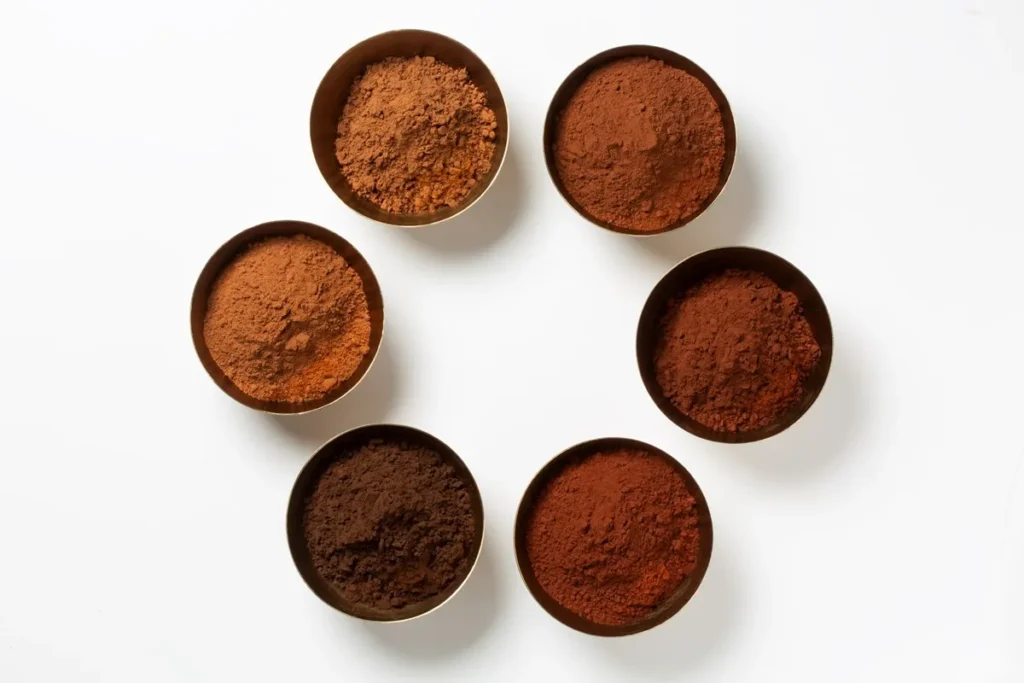
Not all cocoa powders behave the same, even at identical percentages.
Key variables include:
- Fat content
- Alkalization level
- Particle size distribution
- Color intensity
- Flavor strength
These factors influence how much cocoa is actually needed in formulation.
A darker, more intense cocoa may allow lower dosage while maintaining sensory impact. A lighter cocoa may require higher inclusion levels.
This is where formulation efficiency becomes as important as raw percentage.
Supply Chain Stability and Cocoa Dosage Control
In industrial environments, cocoa dosage stability depends heavily on supply consistency.
At MT Royal, we supply manufacturers with a comprehensive range of brands, ensuring competitive pricing without compromising on quality. One of the most important insights from production environments is that stable cocoa supply reduces the need for frequent dosage recalibration.
When cocoa quality remains consistent, formulation remains predictable—and predictable formulation reduces production cost variability.
European Quality Standards and Cocoa Consistency
European cocoa ingredient producers are known for tight control over flavor intensity and physical properties.
Brands such as Latamarko are often associated in industrial applications with consistent cocoa behavior across batches, allowing manufacturers to maintain stable dosage levels without frequent adjustments.
This consistency becomes especially important in automated production systems where even minor formulation drift can disrupt entire production cycles.
Common Mistakes in Setting Cocoa Dosage
Treating cocoa percentage as fixed
Milk chocolate formulation must adapt to ingredient variability.
Ignoring milk fat interaction
Milk solids can significantly dilute cocoa perception.
Focusing only on cost per kilogram
Lower cocoa usage does not always mean lower total cost if quality adjustments are needed.
Not validating at production scale
Lab formulations often behave differently in industrial systems.
Optimization Strategies for Manufacturers
To control cocoa dosage effectively:
1. Standardize sensory targets
Define flavor intensity, not just ingredient percentages.
2. Monitor viscosity impact
Track how cocoa changes flow behavior in real production.
3. Evaluate cocoa intensity per batch
Not all cocoa delivers equal sensory strength.
4. Align dosage with end-market expectations
Different regions prefer different cocoa intensities.
5. Maintain supplier consistency
Avoid frequent switching between cocoa grades.
Industry Trends Affecting Cocoa Usage in Milk Chocolate
Several trends are reshaping cocoa dosage strategies:
- Rising cocoa prices forcing optimization
- Growth of lighter milk chocolate profiles in some markets
- Increased automation in formulation control
- Demand for cost-efficient yet premium-tasting products
- Expansion of hybrid cocoa-milk systems
These trends are pushing manufacturers toward more precise dosage engineering.
Frequently Asked Questions
How much cocoa powder is used in milk chocolate formulations?
Typically between 5% and 12%, depending on product type and market positioning.
Can cocoa be reduced to lower production cost?
Yes, but it may affect flavor, color, and consumer perception.
Does higher cocoa always mean better quality?
Not necessarily—balance with milk and sugar is essential.
Why does cocoa dosage vary between manufacturers?
Due to differences in formulation philosophy, ingredient quality, and target markets.
Can cocoa type reduce required dosage?
Yes, stronger cocoa can achieve similar flavor impact at lower inclusion levels.
Final Reflection for Manufacturing Decision-Makers
Cocoa dosage in milk chocolate is often seen as a simple percentage in a formulation sheet. But in reality, it is one of the most influential control points in chocolate manufacturing.
It affects not only taste and color, but also cost efficiency, production stability, and supply chain planning.
How much do you need to achieve consistency, efficiency, and market positioning at scale—without introducing unnecessary variability into your system?Because in modern chocolate manufacturing, the right cocoa dosage is not just about formulation—it is about control.

No comment