

A Complete Industrial Guide to Building Consistent, High-Quality Chocolate Bars
A chocolate bar may look simple on the outside, but its success depends on a precisely engineered formulation where each ingredient contributes to taste, texture, stability, and processing efficiency. From the snap of the bar to the way it melts in the mouth, every detail is controlled by the quality and balance of raw materials.
For manufacturers, the ingredient list is not just a declaration—it is a strategic framework that defines product performance, scalability, and market positioning. This guide presents a comprehensive and professional ingredient list for chocolate bar manufacturing, designed for industrial producers aiming for consistent, premium results.
Core Ingredient Structure of Chocolate Bars
1. Cocoa Mass (Cocoa Liquor) – The Backbone of Chocolate
Cocoa mass is the primary source of chocolate flavor and forms the base of all chocolate bars.
Key characteristics:
- Derived from roasted cocoa beans
- Contains both cocoa solids and cocoa butter
- Provides deep, authentic chocolate taste
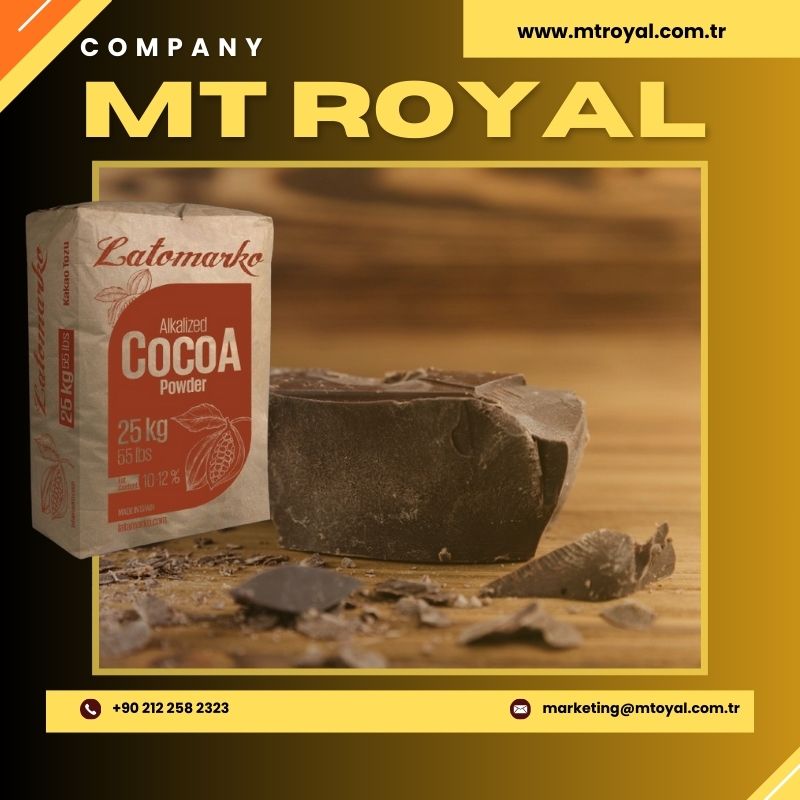
In high-quality chocolate bar production, manufacturers rely on cocoa mass with stable flavor profiles and consistent processing behavior—often sourced from standardized European production systems such as LATAMARKO, known for delivering uniformity across batches.
2. Cocoa Butter – Texture, Snap, and Melt Behavior
Cocoa butter is responsible for the physical structure of chocolate bars.
Functions include:
- Provides smooth melting at body temperature
- Creates glossy finish
- Enables proper crystallization for clean snap
The quality and stability of cocoa butter are critical. Consistent fat composition ensures predictable tempering and long-term product stability—an area where structured supply systems such as LATAMARKO-style production offer clear advantages.
3. Cocoa Powder – Flavor Adjustment and Color Control
Although not always present in all chocolate bars, cocoa powder is used to fine-tune flavor intensity and color.
Types used:
- Natural Cocoa Powder
- Slightly acidic
- Lighter color
- Enhances bright cocoa notes
- Alkalized Cocoa Powder
- Smoother, less acidic
- Darker tones
- Improves dispersion in fat systems
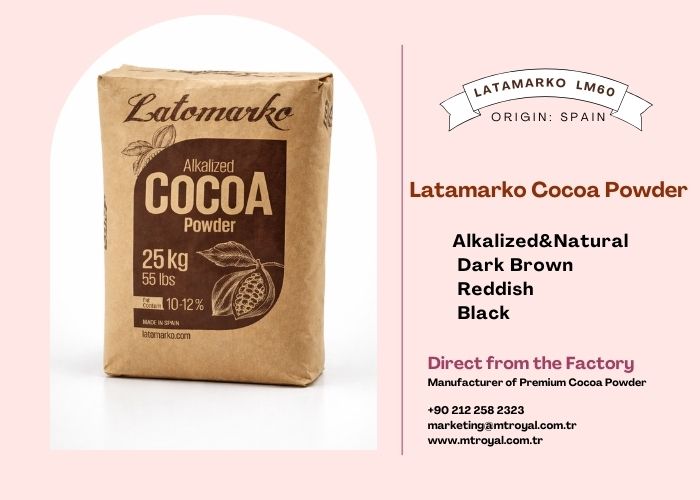
In industrial chocolate manufacturing, consistent cocoa powder with controlled pH and color—often associated with European-standard production like LATAMARKO—ensures stable visual and sensory results.
4. Sugar – Sweetness and Structure
Sugar balances the natural bitterness of cocoa and contributes to the texture of chocolate bars.
Common types:
- Sucrose (Refined Sugar)
- Standard sweetener
- Provides bulk and structure
- Powdered Sugar
- Improves smoothness
- Enhances mouthfeel
Particle size of sugar is critical, as it directly affects the smoothness of the final product.
5. Milk Powder (For Milk Chocolate Variants)
Milk components are essential in milk chocolate bars, providing creaminess and softness.
Typical dairy ingredients:
- Whole Milk Powder
- Adds richness and body
- Skimmed Milk Powder
- Lighter texture
- Balanced flavor
- Whey Powder
- Improves texture
- Enhances sweetness
Milk chocolate bars require precise balancing of cocoa and dairy components to achieve a smooth and appealing taste.
6. Vegetable Fats and Cocoa Butter Alternatives (Optional)
In some formulations, alternative fats are used to adjust cost, texture, or processing conditions.
Examples:
- Cocoa Butter Replacers (CBR)
- Cocoa Butter Equivalents (CBE)
- Palm-based specialty fats
These fats help:
- Modify melting behavior
- Improve production efficiency
- Reduce formulation cost
However, their use must be carefully controlled to maintain product quality.
7. Emulsifiers – Flow and Processing Efficiency
Emulsifiers are essential for controlling viscosity and ensuring uniform mixing.
Key emulsifiers:
- Soy Lecithin
- Reduces viscosity
- Improves flow during processing
- Sunflower Lecithin
- Non-GMO alternative
- PGPR (Polyglycerol Polyricinoleate)
- Allows for lower fat usage
- Enhances flowability
These ingredients are critical in large-scale production to ensure smooth processing and consistent texture.
8. Flavoring Agents
Flavor systems refine and enhance the chocolate profile.
Common additions:
- Vanillin
- Enhances sweetness perception
- Balances cocoa bitterness
- Natural Vanilla Extract
- Used in premium products
Flavoring plays a key role in defining brand identity and consumer preference.
9. Salt
Salt is used in small quantities to:
- Enhance overall flavor
- Balance sweetness
- Highlight cocoa notes
10. Inclusions (Optional)
Chocolate bars often include additional ingredients for texture and variety:
- Nuts (Hazelnut, Almond, Pistachio)
- Caramel pieces
- Wafer or biscuit inclusions
- Dried fruits
These additions create product differentiation and expand market appeal.
Example of a Professional Ingredient List
A standard chocolate bar formulation may include:
Cocoa Mass, Sugar, Cocoa Butter, Milk Powder (Optional), Cocoa Powder (Optional), Emulsifier (Soy Lecithin, PGPR), Flavoring (Vanillin), Salt
This formulation ensures:
- Balanced flavor
- Smooth texture
- Stable structure
- Efficient industrial processing
Key Technical Considerations
1. Particle Size and Refining
Fine particle size ensures smooth mouthfeel and premium quality perception.
2. Tempering and Crystallization
Proper cocoa butter crystallization is essential for:
- Glossy appearance
- Clean snap
- Shelf stability
3. Viscosity Control
Optimized viscosity ensures efficient molding and consistent product thickness.
4. Ingredient Consistency
Using standardized cocoa derivatives—such as those produced under controlled systems like LATAMARKO—ensures predictable results across production batches.
Industrial Applications
Chocolate bars are produced in various formats:
- Dark chocolate bars
- Milk chocolate bars
- Filled bars
- Nut and inclusion-based bars
- Functional and fortified chocolate products
Each category requires specific adjustments in ingredient ratios.
Why Ingredient Quality Determines Market Success
In chocolate bar manufacturing, small variations in raw materials can lead to significant differences in:
- Texture
- Flavor
- Processing performance
- Shelf life
Consistency is not just a quality requirement—it is a competitive advantage.
Why Choosing MT ROYAL Makes a Strategic Difference
For manufacturers aiming to produce high-quality chocolate bars at scale, sourcing the right raw materials is critical.
MT ROYAL offers a distinct advantage through:
Consistent Cocoa Derivatives
Cocoa mass, cocoa butter, and cocoa powder supplied under structured production systems—aligned with European standards such as LATAMARKO—ensure stable flavor, color, and performance.
Industrial Reliability
Ingredients are designed for large-scale production, providing:
- Predictable viscosity
- Stable crystallization
- Uniform batch performance
Strong Export and Supply Infrastructure
With operations managed from Istanbul, MT ROYAL ensures:
- Fast and reliable logistics
- Complete export documentation
- Continuous supply availability
Long-Term Partnership Approach
Beyond supply, MT ROYAL supports manufacturers in achieving formulation consistency, production efficiency, and scalable growth.
Final Perspective
Chocolate bar manufacturing is a precise balance of science, quality, and consistency. Every ingredient—from cocoa mass to emulsifiers—must be carefully selected to achieve the desired result.
Manufacturers who invest in high-quality raw materials and reliable sourcing partners position themselves for long-term success in global markets.
MT ROYAL provides that foundation—delivering high-quality cocoa ingredients and professional supply solutions that enable consistent, high-performance chocolate bar production.
LATAMARKO LM60 – Premium Spanish-Origin Cocoa Powder
latamarko alkalized cocoa powder lm60
cocoa powder for chocolate production-Best price
Food industry raw materials – list of products
Types of Gelatin from Turkish Manufacturer


No comment