

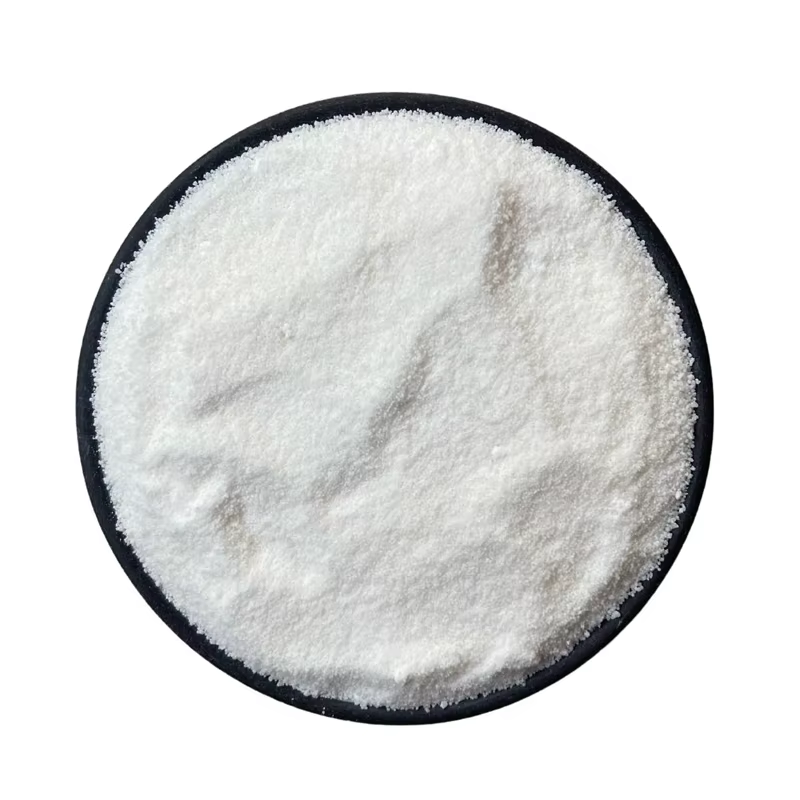
In industrial food and chemical production, even a single ingredient choice can affect your entire process, product quality, and bottom line. If your factory formulates baked goods, confectionery, frozen desserts, emulsified sauces, or specialty coatings, choosing the right emulsifier supplier is not a trivial task. Sorbitan Monostearate E491 Supplier is a key decision point that influences not just unit cost, but performance, consistency, regulatory compliance, and supply chain resilience. In an era where product stability and throughput matter as much as innovation, sourcing E491 from a trusted partner like MT Royal can significantly streamline your operations.
At MT Royal, we work with manufacturing teams across industries who seek technical clarity, supplier reliability, and documentation integrity. In our collaboration with various factories, we have seen that selecting the right Sorbitan Monostearate supplier improves batch consistency, minimizes production variation, and enhances product performance — because this ingredient touches critical functional properties such as emulsification, texture modification, anti‑settling behavior, and shelf life extension.
This extensive article dives deep into the industrial essentials of Sorbitan Monostearate E491: its chemistry, applications, sourcing best practices, common procurement pitfalls, supplier evaluation frameworks, practical comparison tools, production tips for scale, frequently asked questions from factories, and strategic insights tailored for B2B manufacturing environments.
Sorbitan Esters Supplier in Türkiye
Understanding Sorbitan Monostearate E491: Definitions and Fundamental Concepts
What Is Sorbitan Monostearate (E491)?
Sorbitan Monostearate — widely known by its additive code E491 — is a non‑ionic surfactant and emulsifier used across food, cosmetics, and industrial chemical applications. Chemically, it’s an ester formed from sorbitol and stearic acid, resulting in a compound that has both hydrophilic (water‑loving) and lipophilic (oil‑loving) properties. This amphiphilic characteristic makes E491 an effective emulsifier and dispersing agent.
In industrial formulations, E491 is valued for its ability to:
- Lower interfacial tension between immiscible phases
- Promote stable oil‑in‑water or water‑in‑oil emulsions
- Improve texture and mouthfeel
- Enhance shelf life by reducing coalescence and phase separation
The balance between hydrophilic and lipophilic properties is described by the hydrophilic–lipophilic balance (HLB) value — a metric that helps formulators choose the right emulsifier for their systems. Sorbitan Monostearate typically provides low HLB values, making it suitable for water‑in‑oil systems or as part of complex emulsifier blends.
Industrial Importance of E491 Across Sectors
While E491 is widely recognized in food applications, its functional utility spans multiple sectors:
Food and Beverage Manufacturing
- Bakery batters and dough conditioners
- Ice creams, gelatos, and frozen desserts
- Margarines, spreads, and emulsified fats
- Sauces, dressings, and emulsified condiments
- Confectionery coatings
In these applications, Sorbitan Monostearate helps achieve stable textures, consistent fat distribution, and improved freeze‑thaw behavior.
Cosmetics and Personal Care
E491 lends stability to emulsions in creams, lotions, and conditioners, enabling smooth texture and preventing phase separation even under temperature stress.
Industrial and Technical Applications
In lubricant formulations, coatings, and specialty chemical blends, Sorbitan Monostearate can assist with wetting, dispersion, and compatibility among heterogeneous components.
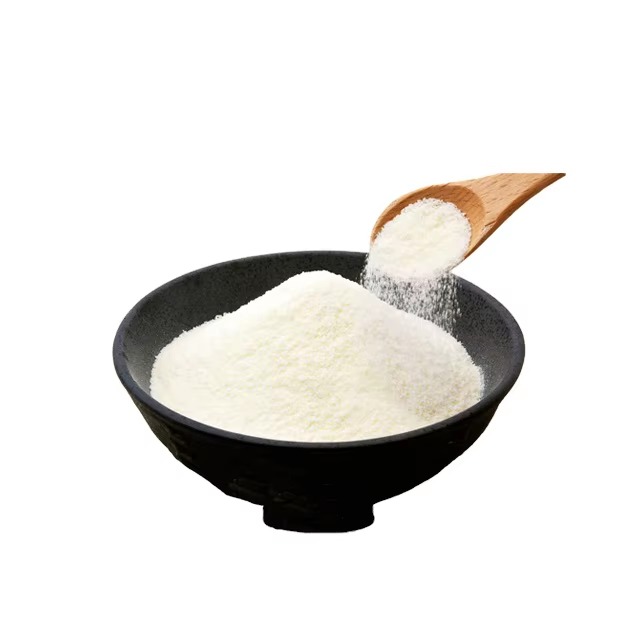
Why Supplier Choice Matters: The Strategic Impact on Production
Selecting a reliable Sorbitan Monostearate E491 Supplier is about much more than price. In industrial environments, the performance and documentation behind each batch directly affect:
- Product quality consistency
- Regulatory compliance and audit readiness
- Production line stability and throughput
- Risk management and supply chain resilience
Here’s how the right supplier contributes to your success:
1. Consistent Functional Performance Across Lots
Not every source of E491 behaves identically. Heat histories, residual free acids, and monomer ratios can vary, leading to differences in:
- Emulsion stability
- Viscosity behavior
- Freeze–thaw resilience
- Interaction with proteins, fats, and stabilizers
A strong supplier provides batch‑specific Certificates of Analysis (COAs) with functional performance markers, not just purity numbers. This allows your QA teams to establish baselines and set acceptance criteria that match your end‑use requirements.
2. Documentation That Supports Regulatory Compliance
Regulatory frameworks across regions can differ significantly. Food ingredients must align with EU additive directives, FDA GRAS determinations, Codex Alimentarius standards, and national labeling rules. A supplier who understands these implications saves your regulatory and quality teams time and resources.
Key documentation includes:
- Batch‑specific COA
- Material Safety Data Sheets (MSDS)
- Allergen and traceability declarations
- Regulatory compliance statements (e.g., EU, US, Codex)
3. Supply Chain Reliability and Forecast Alignment
Unexpected delays in bulk emulsifier deliveries can ripple through entire production schedules, forcing line slowdowns or weekend overtime. A reliable wholesaler offers:
- Forecastable lead times
- Volume scheduling and prioritization support
- Multi‑modal logistics solutions
- Contingency planning
This is where strong collaboration with your supplier — such as the partnerships MT Royal builds — becomes an operational asset rather than a procurement burden.
Common Mistakes in Industrial Sourcing of E491
In our work with manufacturing teams, several recurring sourcing mistakes stand out — and none are more costly than they first appear.
Mistake #1: Focusing Only on Unit Price Rather Than Total Cost of Ownership
A cheap price per kilogram can mask hidden costs like:
- Increased usage rates due to inferior performance
- Higher waste and rework
- Additional stabilizers needed
- Quality deviations triggering line stoppages
Total Cost of Ownership (TCO) evaluates price, functional performance, supply reliability, documentation support, and process impact — all of which matter more in a flagship industrial application than the headline price.
Mistake #2: Accepting Generic or Static Certificates
The industry standard for food and technical additives is batch‑specific documentation. Generic certificates without lot traceability offer no assurance of performance and expose you to audit deficiencies.
Your supplier must provide:
- COAs tied to analytical methods and test results
- Hygienic processing certifications
- Source traceability data
Mistake #3: Assuming All Emulsifier Grades Are Interchangeable
Not all Sorbitan Monostearate grades are the same. Variations in:
- Fatty acid chain length
- Degree of esterification
- Residual free acid content
…can lead to significant functional differences in your process. Specifications should reflect both application demands and supplier capabilities.
Mistake #4: Neglecting Logistics and Lead Time Risks
Failing to account for logistics, customs cycles, and lead time variability in global supply chains can turn a well‑intentioned procurement plan into a production bottleneck. High‑volume factories benefit from integrated planning with supplier insight into port congestion, container scheduling, and inventory buffer strategies.
Practical Comparison: Emulsifier Options for Industrial Formulations
To help you evaluate where Sorbitan Monostearate E491 fits in your formulation toolbox, here’s a practical comparison with related emulsifiers:
| Feature/Application | Sorbitan Monostearate E491 | Polyglycerol Esters E475 | Mono‑ & Diglycerides E471 | Lecithin |
|---|---|---|---|---|
| Emulsification Strength (W/O) | High | Very High | Good | Moderate |
| Emulsification Strength (O/W) | Moderate | Very High | Good | Moderate |
| Freeze–thaw Stability | Very Good | Good | Moderate | Fair |
| Dough Conditioning | Good | Very Good | Very Good | Moderate |
| Ice Cream & Dairy Applications | Excellent | Excellent | Good | Good |
| Texture and Mouthfeel Enhancement | High | High | Moderate | Moderate |
| Shelf Life Improvement | Excellent | Very Good | Good | Fair |
| Clean‑label Perception | Moderate | Moderate | Moderate | High |
| Cost Effectiveness | Competitive | Competitive | Highly Competitive | Variable |
| Functional Flexibility | High | Very High | Moderate | Moderate |
This comparison illustrates that while no single emulsifier is ideal for every use case, Sorbitan Monostearate remains a robust choice in systems requiring reliable emulsification, freeze–thaw resilience, and texture enhancement across diverse industrial formats.
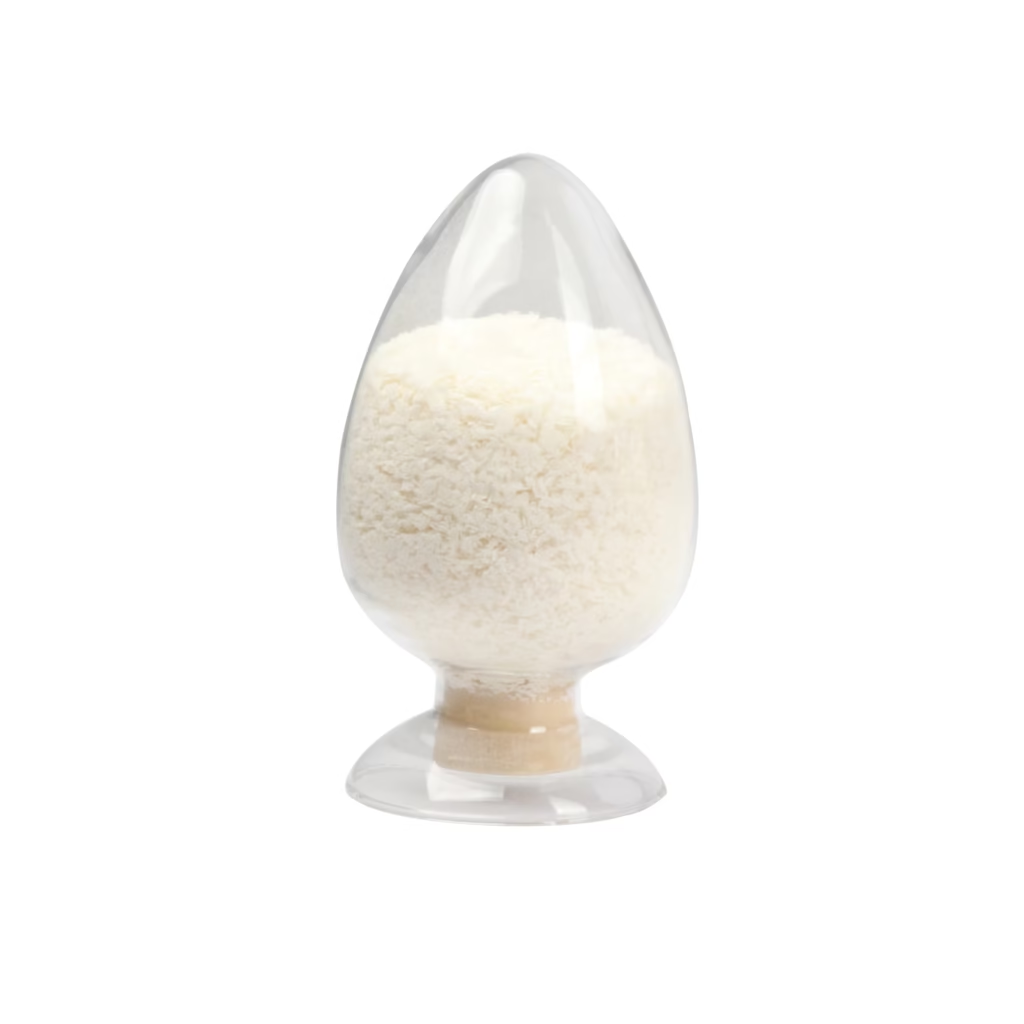
Specialized Industrial Tips for Large‑Scale Production
When scaling formulations from the lab to full‑scale production, emulsifier performance under real‑world conditions can differ from small‑batch expectations. The following industrial tips are drawn from years of practical experience with complex manufacturing environments.
Tip #1: Define Functional Performance Clear Metrics
Start with validated performance targets rather than abstract specs. Your team should outline objective criteria such as:
- Emulsion stability over specific temperature regimes
- Viscosity and flow behavior after homogenization
- Particle size distribution in dispersed systems
- Stability after repeated freeze–thaw cycles
Well‑defined targets give your supplier and process engineers a clear path to validate ingredient performance.
Tip #2: Validate Ingredient Behavior Under Production Conditions
Even the best technical data sheets can fall short when ingredients encounter your particular shear rates, heat profiles, and production sequences. Pilot runs using your actual equipment (mixer type, homogenizer settings, heating/cooling cycles) help ensure that the emulsifier performs as expected before committing bulk lots.
Tip #3: Coordinate Addition Points Strategically
The point at which you introduce Sorbitan Monostearate into the process matters. Best practices often involve early addition during the hydration or fat integration stage, ensuring uniform dispersion and reducing hotspots where emulsification might fail.
Tip #4: Monitor Functional Attributes Continuously
Routine quality checks on parameters like:
- Viscosity
- Droplet size distribution
- Thermal stability
- Sensory texture evaluation
…help catch functional drift early. Some factories incorporate in‑line sensor data into their process control systems to detect emulsifier performance shifts in real time.
Tip #5: Plan for Multi‑Supplier and Safety Inventory Strategies
Industrial procurement today is not a one‑tier operation. A dual‑sourcing strategy combined with planned safety stock levels ensures continuity in the face of global logistics disruptions or supplier capacity fluctuations.
Frequently Asked Questions from Factory Managers and Procurement Teams
What Are Typical Usage Levels of Sorbitan Monostearate E491?
Usage levels vary by application. Typical industrial ranges include:
- Bakery applications: 0.2%–1.0% of flour weight
- Ice cream / frozen desserts: 0.1%–0.5% of mix
- Emulsified sauces and dressings: 0.2%–0.8% of formulation
- Confectionery coatings: 0.2%–1.2% of total mass
Always validate usage through pilot runs tailored to your formulation and equipment.
How Do We Validate Supplier Quality Beyond Certificates?
Functional validation should be paired with:
- Raw material traceability checks
- Independent lab verification of key functional parameters
- Supplier trace audits
- On‑site production testing
This multi‑layered approach protects your operations from variability.
Does E491 Affect Labeling or Nutrition Claims?
Sorbitan Monostearate typically appears as an emulsifier on ingredient lists. Labeling requirements differ by jurisdiction and market, so your regulatory team should confirm whether additive codes (e.g., E491) or functional names (emulsifier) are required.
How Should Bulk E491 Be Stored?
Best storage practices include:
- Cool, dry, and ventilated environments
- Sealed containers to avoid contamination
- FIFO inventory rotation
- Controlled humidity to prevent clumping
Proper storage preserves functional performance and reduces waste.
Is Sorbitan Monostearate® Suitable for Clean‑Label Positioning?
Clean‑label expectations vary by market. E491 is generally accepted in industrial products, but some consumer‑facing clean‑label programs may favor alternative emulsifiers such as lecithin or specialized esters. Your marketing and regulatory teams should align on positioning strategies.
Emerging Trends and Market Insights
Rising Demand for Multi‑Functional Ingredients
Manufacturers increasingly seek ingredients that deliver more than one benefit — whether it’s emulsification, texture modification, or shelf‑life extension. Sorbitan Monostearate’s multifunctionality positions it well within this demand curve.
Clean‑Label and Transparency Expectations
Consumers and regulatory authorities alike are focused on transparency and ingredient awareness. Suppliers who provide traceability, source documentation, and clear functional specs help manufacturers meet evolving expectations.
Advanced Analytical Quality Control
Factories with advanced quality labs are adopting tools such as rheometry, differential scanning calorimetry (DSC), and particle size analyzers to quantify functional behavior and validate ingredient performance at scale.
Supply Chain Resilience Planning
Global logistics disruptions have reshaped how procurement teams plan for ingredient sourcing. Long‑range forecasts, multiple sourcing options, and proactive collaboration with suppliers reduce risk and improve planning accuracy.
Strategic Considerations for Industrial Procurement
Choosing the right Sorbitan Monostearate E491 Supplier is an investment in product quality, process stability, and supply chain resilience. At MT Royal, we emphasize partnerships built on technical alignment, documentation integrity, and forward‑looking supply strategies. Instead of treating emulsifier sourcing as a transaction, position it as a strategic relationship that supports your operational and regulatory goals.
When your factory relies on consistent emulsification performance — batch after batch, across products and markets — sourcing decisions aren’t isolated choices. They shape customer experience, production reliability, compliance readiness, and long‑term competitiveness.
Great products begin with great ingredient decisions. Sorbitan Monostearate stands behind countless industrial formulations — but the supplier you choose stands behind your production line, your quality teams, and your ability to deliver products that meet expectations day in and day out.



No comment