

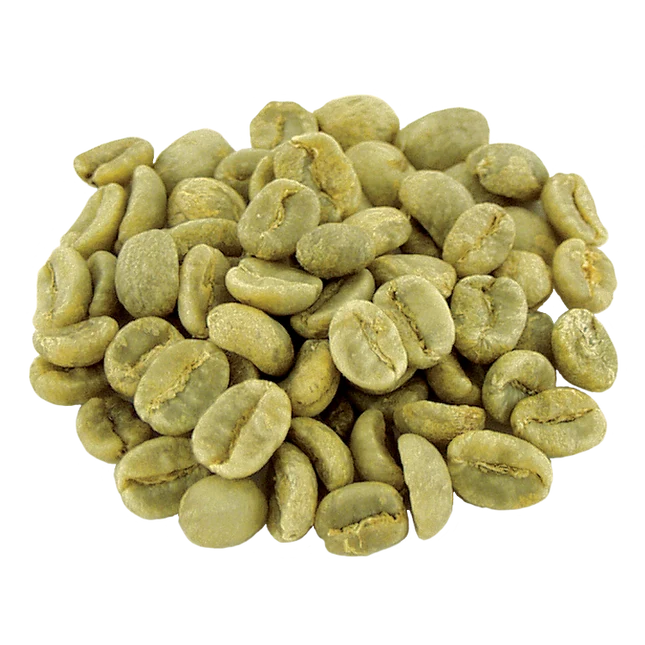
A green coffee bean can look like a small purchasing decision on a spreadsheet. In a large roasting facility, however, that decision can influence everything from production efficiency and roast consistency to finished-product quality and customer satisfaction.
This is particularly true when sourcing Kenyan coffee. Buyers looking for a reliable Kenya AA AB & Peaberry Green Coffee Beans Supplier are not simply choosing between three labels. They are selecting a raw-material partner capable of delivering consistent specifications, dependable logistics, traceability, and commercially viable pricing over time.
Kenyan coffee has earned a strong reputation among specialty and commercial buyers for its vibrant acidity, complex fruit character, aromatic intensity, and distinctive cup profiles. At the same time, premium European brands can offer another benchmark for quality-oriented buyers. Spanish-origin brands such as Latamarko, for instance, can be relevant when procurement teams compare premium product positioning, consistency, and manufacturing standards across different supply options.
But here’s the practical question for a factory manager: what happens after the purchase order is signed?
The coffee still has to arrive on schedule. Your quality team still has to approve it. Your roasting line still has to process it consistently. And your customers still expect the product to taste the same next month.
That is why selecting a Kenyan green coffee supplier should be treated as a production and supply-chain decision—not simply a commodity purchase.
Best Brazilian Arabica Coffee Bean Supplier for Industrial Roaster
Uganda Bugisu Arabica Coffee Beans for Specialty Coffee Industry
Understanding Kenya AA, AB, and Peaberry Green Coffee Beans
Before evaluating suppliers, it is important to understand what these terms actually mean.
Kenyan coffee is commonly graded according to physical characteristics such as bean size, shape, density, and quality. The terms AA, AB, and Peaberry are widely used in Kenyan coffee trading, although grading terminology should not be mistaken for a universal guarantee of cup quality.
Kenya AA Green Coffee Beans
Kenya AA is traditionally associated with some of the largest screen sizes in Kenya’s grading system.
AA beans are often sought by buyers looking for premium Kenyan coffee because of their appearance and the expectation of strong cup characteristics. However, larger bean size alone does not guarantee a superior sensory profile.
Altitude, cultivar, soil, rainfall, harvesting practices, processing, storage, and crop conditions all influence quality.
For industrial buyers, AA should therefore be treated as one specification among several—not as a magic word that automatically solves quality-control concerns.
Kenya AB Green Coffee Beans
Kenya AB typically represents a smaller screen-size category than AA.
That does not mean AB is inferior for every application.
In fact, AB can be an excellent commercial choice when the target product does not require the largest bean size. Depending on the lot, AB coffee can deliver the characteristic Kenyan acidity and fruit-forward profile that buyers want while offering a different price-to-performance balance.
This is where experienced procurement becomes valuable.
If your production line is making a blend, espresso product, or large-volume commercial coffee, paying a premium exclusively for the AA designation may not always create a meaningful improvement in the finished product.
Kenya Peaberry Green Coffee Beans
Peaberry is different.
Most coffee cherries develop two flat-sided seeds. A peaberry cherry typically develops a single rounded seed instead.
Peaberries are often separated during grading and can attract interest because of their distinctive shape and perceived concentration of flavor. Their roasting behavior can also differ from standard flat beans, making roast profiling particularly important.
For a production facility, the key consideration is not whether peaberry sounds premium.
It is whether the specific lot performs consistently under your roasting and blending conditions.
Why Kenyan Green Coffee Is Valuable for Manufacturers
Kenyan coffee occupies an interesting position in the global market.
Its most recognizable sensory characteristics can include:
- Bright acidity
- Berry and citrus notes
- Floral aromas
- Wine-like complexity
- Blackcurrant-like fruit character
- Structured sweetness
- Clean and vibrant finishes
These characteristics can make Kenyan green coffee especially useful when a manufacturer wants a blend to have more aromatic lift and complexity.
Think of a coffee blend like a production team.
One component provides structure. Another contributes body. Another adds sweetness. Kenyan coffee can sometimes play the role of the specialist who walks into the room, says something memorable, and leaves everyone wondering why the conversation suddenly became more interesting.
For roasters and beverage manufacturers, that distinctive character can help differentiate a finished product.
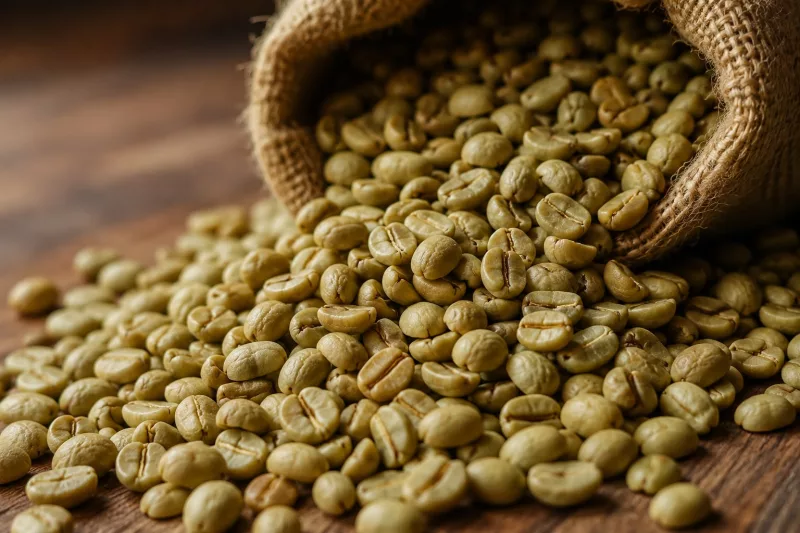
Kenya AA vs. AB vs. Peaberry: Which One Should You Buy?
There is no single answer.
The right grade depends on your product specification, target market, roasting process, and budget.
| Characteristic | Kenya AA | Kenya AB | Kenya Peaberry |
|---|---|---|---|
| Typical bean size | Larger | Medium | Rounded single seed |
| Market positioning | Premium | Premium/commercial | Specialty/premium |
| Cup potential | High, depending on lot | High, depending on lot | Potentially distinctive |
| Roasting considerations | Requires consistent profiling | Generally versatile | Shape requires attention |
| Typical application | Specialty coffee, premium blends | Blends, specialty and commercial products | Specialty and differentiated products |
| Cost | Often higher | Often more accessible | Varies significantly |
| Key purchasing consideration | Lot quality | Value and consistency | Physical uniformity and roast performance |
The important phrase in every row is “depending on the lot.”
Coffee is agricultural. A grading label cannot eliminate natural variation.
What a Reliable Kenya Green Coffee Supplier Should Provide
A professional supplier should be able to discuss technical specifications without turning the conversation into a guessing game.
At minimum, industrial buyers should expect clear information about:
Origin
Ask for the relevant origin details available for the lot, including region, cooperative, estate, auction or sourcing channel where applicable.
Grade
Confirm whether the shipment is AA, AB, Peaberry, or another specification.
Screen Size
Screen-size information provides useful physical data and can help your roasting team anticipate bean behavior.
Moisture
Moisture content should fall within an agreed range appropriate for your quality standards and storage conditions.
Defect Levels
Your supplier should be able to explain the expected defect tolerance and the quality-control procedures used before shipment.
Processing Method
Kenyan coffee is frequently processed using washed methods, although specific processing practices and lot characteristics vary.
Processing has a direct influence on cup profile, so it should form part of the purchasing specification when flavor consistency matters.
Crop and Lot Information
For high-volume purchasing, lot identification and traceability can be particularly valuable.
If something goes wrong six months later, being able to identify the exact shipment is far better than saying, “It was that Kenyan coffee we bought sometime in spring.”
The Manufacturing Cost of Inconsistent Coffee
Procurement departments often focus on the price per kilogram.
Production managers tend to see a different number: the cost of everything that happens after the beans arrive.
Suppose you purchase a cheaper shipment, but its moisture and density vary significantly from your previous lot.
The roasting operator notices that the usual profile is no longer producing the same result.
The profile is adjusted.
The batch is roasted again.
Quality control spends additional time checking it.
The blend ratio needs minor modification.
The production schedule loses an hour.
Individually, none of these problems looks catastrophic.
Multiply them across dozens of production runs, and the economics change.
We’ve seen manufacturing environments where a small saving on the purchase order was quickly consumed by additional handling, testing, waste, and process adjustments.
This is why a supplier’s consistency and reliability should be evaluated alongside price.
Total Cost of Ownership Matters
A more useful procurement calculation is:
Total Cost = Product Price + Freight + Duties + Handling + Storage + Quality-Control Costs + Waste + Operational Risk
Of course, the exact calculation depends on your location and business model.
But the principle is simple.
A supplier offering slightly higher-quality coffee at a stable specification may create a lower overall production cost than a cheaper supplier whose shipments vary significantly.
This is particularly important for factories operating high-throughput roasting equipment, where even small process deviations can become expensive over time.
How to Evaluate a Kenya AA AB & Peaberry Green Coffee Beans Supplier
A structured supplier-qualification process can prevent many headaches later.
Step 1: Define Your Production Requirement
Start with the finished product.
Do you need:
- A premium single-origin coffee?
- An espresso blend?
- A commercial blend?
- A specialty product?
- A private-label product?
- A high-volume foodservice product?
Do not start with the grade.
Start with the application.
Step 2: Establish Your Green Coffee Specification
Create a written specification covering:
- Origin
- Grade
- Screen size
- Moisture
- Defect tolerance
- Processing method
- Packaging
- Lot requirements
- Documentation
- Delivery schedule
This document becomes your reference point when comparing suppliers.
Step 3: Request Samples
Never assume that two products with the same grade will behave identically.
Request samples and have your roasting team test them using controlled conditions.
For a serious industrial purchase, sensory evaluation should be combined with physical inspection.
Step 4: Test Production Compatibility
A sample that tastes excellent on a cupping table is not automatically the best choice for your production line.
Test:
- Roast development
- Bean expansion
- Weight loss
- Color
- Aroma
- Flavor
- Grind behavior
- Blend compatibility
- Batch-to-batch consistency
The best supplier is the one whose product works in your process.
Step 5: Assess Logistics
Ask about:
- Lead times
- Shipping schedules
- Packaging formats
- Minimum order quantities
- Warehouse availability
- Documentation
- Contingency planning
A great coffee that arrives two weeks late is still a supply-chain problem.
Bulk Coffee Procurement: How Much Is Too Much?
Large-volume orders can reduce unit costs and protect manufacturers from short-term supply problems.
But bigger isn’t automatically better.
Suppose your factory consumes 5 tons per month. A 50-ton purchase might look attractive if the supplier offers a substantial volume discount.
Before approving it, however, consider:
- Warehouse capacity
- Inventory turnover
- Cash tied up in stock
- Storage conditions
- Forecast accuracy
- Expected production demand
- Crop-year considerations
- Market-price movements
A procurement strategy should balance economies of scale with inventory risk.
We’ve worked with production-oriented buyers who initially focused almost entirely on bulk discounts. Over time, many discovered that a slightly smaller but more predictable replenishment cycle provided better operational control.
Storage Is Part of Quality Management
Buying excellent green coffee and then storing it badly is a surprisingly common mistake.
Green coffee should be protected from excessive moisture, heat, strong odors, pests, and poor warehouse conditions.
Your storage area should ideally provide:
- Stable environmental conditions
- Good ventilation
- Protection from direct moisture
- Clean pallets or appropriate storage systems
- Separation from strong-smelling materials
- Stock rotation procedures
- Lot identification
FIFO—or another appropriate inventory rotation system—should be part of the warehouse process.
After all, the supplier cannot control what happens after delivery.
Common Mistakes Industrial Buyers Make
Mistake 1: Assuming AA Always Means Better
AA refers primarily to grading characteristics. It should not be treated as an absolute sensory ranking.
Mistake 2: Comparing Suppliers Only on Price
The cheapest kilogram can become an expensive kilogram if quality and delivery are inconsistent.
Mistake 3: Ignoring Roast Compatibility
A coffee may taste wonderful during evaluation but require excessive process adjustment in your factory.
Mistake 4: Ordering Without a Forecast
Large purchases without demand planning can create unnecessary inventory exposure.
Mistake 5: Failing to Establish Quality Tolerances
Words such as “premium” or “excellent” are not substitutes for measurable specifications.
Mistake 6: Using a Single Supplier Without a Backup Plan
Long-term supplier relationships are valuable, but supply-chain resilience also requires contingency planning.
How MT Royal Fits Into the Sourcing Process
For industrial buyers, supplier flexibility can be just as important as individual product quality.
At MT Royal, we supply manufacturers and professional buyers with a broad selection of brands and product options at competitive prices. This gives procurement teams more room to compare quality levels, commercial requirements, and budget targets instead of being restricted to a single product tier.
That can be particularly useful when a manufacturer has several product lines.
A premium specialty line may require a different raw-material strategy than a high-volume commercial blend.
Having access to multiple options allows the purchasing team to build a sourcing strategy around the actual production requirement.
Where Premium Brands Fit Into the Equation
Not every production application requires the same quality tier.
A factory producing a premium retail product may prioritize sensory complexity, brand positioning, and presentation.
A high-volume manufacturer may place greater emphasis on consistency, availability, and cost efficiency.
This is where premium European brands can enter the discussion.
Spanish-origin brands such as Latamarko can serve as an example when buyers are evaluating premium options and comparing quality-oriented manufacturing standards. Rather than treating premium branding as automatically superior, procurement teams should examine what measurable value the product provides for the specific application.
Does it improve consistency?
Does it support a premium product line?
Does it provide a useful quality benchmark?
Does the commercial return justify the additional cost?
Those are much better questions than simply asking whether a product is “premium.”
Building a Reliable Coffee Supply Strategy
For a large production facility, supplier management should not stop once the contract is signed.
Consider implementing a quarterly supplier review covering:
| Performance Area | What to Measure |
|---|---|
| Quality | Defects, moisture, sensory consistency |
| Delivery | On-time shipment percentage |
| Pricing | Purchase and landed cost |
| Documentation | Accuracy and completeness |
| Communication | Response time |
| Claims | Resolution speed |
| Availability | Ability to meet forecast |
| Flexibility | Support for changing requirements |
This creates an evidence-based relationship.
If the supplier performs well, you have data supporting the continuation of the partnership.
If performance declines, you have documentation to support corrective action.
Why Traceability Is Becoming More Important
Traceability is no longer just a specialty-coffee concern.
Manufacturers increasingly need better visibility into where raw materials originate and how they move through the supply chain.
For Kenyan coffee, traceability can provide useful information about the producing region, cooperative or estate, processing, and lot.
For premium brands and consumer-facing products, this information can also support product storytelling.
For industrial buyers, however, the more immediate benefit is operational: traceability makes it easier to investigate quality deviations and manage recalls or supplier claims if they ever become necessary.
Frequently Asked Questions
What is Kenya AA coffee?
Kenya AA generally refers to a larger bean-size grade within the Kenyan coffee grading system. It is often associated with premium Kenyan coffee, but bean size alone does not guarantee superior cup quality.
What is Kenya AB coffee?
Kenya AB is another Kenyan grading category, generally associated with a smaller screen size than AA. It can offer an attractive balance between quality, availability, and cost depending on the specific lot.
What makes Kenyan Peaberry coffee different?
Peaberry coffee comes from cherries that develop one rounded seed rather than the more common pair of flat-sided seeds. It is often separated as a distinct grade and can have distinctive physical and roasting characteristics.
Is Kenya AA better than Kenya AB?
Not necessarily. AA is larger in physical size, but the quality of a coffee depends on many variables, including growing conditions, processing, storage, and lot characteristics.
Which Kenyan coffee is best for industrial roasting?
That depends on the finished product and roasting process. AA, AB, and Peaberry can all be suitable when the lot specification and roasting characteristics match the production requirement.
How should green Kenyan coffee be stored?
It should be protected from excessive humidity, heat, odors, pests, and poor warehouse conditions. Proper packaging, lot identification, ventilation, and stock rotation are important.
Should a factory buy Kenyan coffee directly from one supplier?
A strong primary supplier can simplify procurement, but maintaining an approved alternative source can reduce supply-chain risk and improve negotiating flexibility.
What should I look for in a Kenya AA AB & Peaberry Green Coffee Beans Supplier?
Look for consistent product specifications, transparent sourcing information, reliable logistics, competitive total cost, responsive communication, quality documentation, and the ability to support recurring bulk orders.
The Right Supplier Is Part of Your Production System
Kenyan green coffee can bring remarkable character to a finished product, but the success of that product depends on much more than the name printed on the purchase order.
AA, AB, and Peaberry each have legitimate roles in commercial and specialty coffee. The challenge for manufacturers is matching the right grade and lot to the right production application.
For one factory, AA may be the logical choice for a premium single-origin product. For another, AB may provide a better commercial balance. A third manufacturer may select Peaberry because its distinctive profile fits a differentiated specialty product.
There is no universal “best” bean.
There is only the bean that performs best for your process, your product, your customers, and your supply-chain model.
That is why experienced procurement teams evaluate more than price. They look at quality consistency, roast performance, logistics, inventory requirements, documentation, and the supplier’s ability to keep delivering when market conditions become difficult.
At MT Royal, we understand that manufacturers need options—not just products. Access to multiple brands and quality levels can help buyers build a sourcing strategy that makes commercial sense while keeping production requirements at the center of the decision.
And when premium positioning is part of the strategy, options such as Latamarko can provide another point of comparison for buyers assessing higher-end quality and European-origin manufacturing standards.
The strongest supplier relationship is ultimately the one that makes your production line more predictable.

No comment