

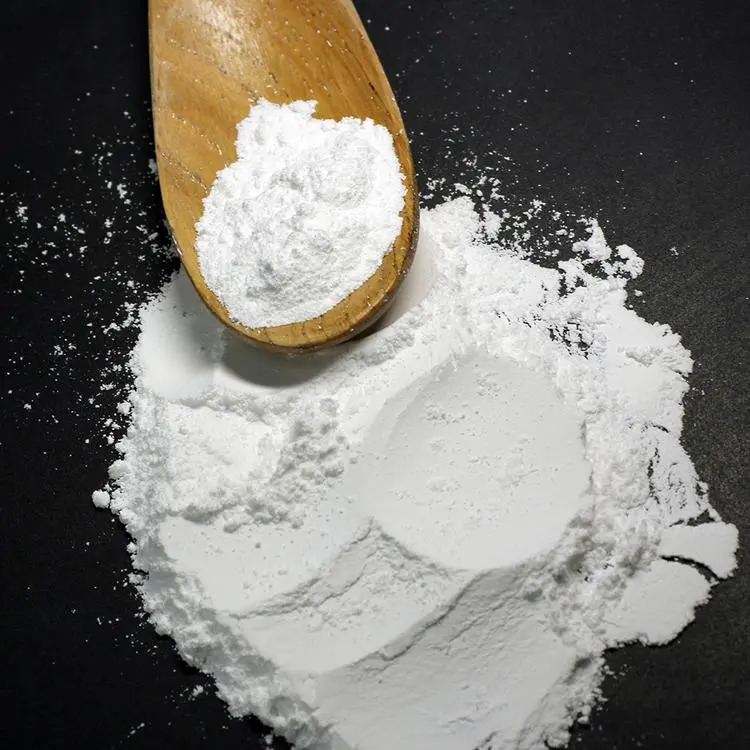
For factories and manufacturers, choosing the right Magnesium Oxide for Food and Pharma is not simply a matter of finding the lowest price per kilogram. The grade you purchase can influence formulation performance, regulatory compliance, batch consistency, production efficiency, and ultimately the reliability of your finished product. If you need a dependable sourcing partner with access to multiple brands and competitive pricing, MT Royal is worth considering early in your procurement process—not because every application needs the same product, but because the right supplier should help you identify the right specification before you commit to a shipment.
Magnesium oxide looks deceptively simple on a specification sheet: a white inorganic powder with the chemical formula MgO. In practice, however, two products with the same chemical name can behave quite differently in a manufacturing environment. Particle size, bulk density, reactivity, surface area, purity, heavy-metal profile, moisture, and production method can all affect how the material performs in a tablet, capsule, premix, fortified food, or pharmaceutical formulation.
That distinction matters even more when production volumes rise. A small variation that seems insignificant in a laboratory sample can become a recurring issue across several tons of material. Powder flow can change. Mixing uniformity can drift. A tablet press may behave differently. A validated formulation may suddenly require adjustment. And the supposedly cheap raw material can become the most expensive ingredient in the factory once downtime and rejected batches enter the calculation.
This guide examines Magnesium Oxide for Food and Pharma from the perspective of factories, formulation teams, quality managers, and procurement departments. It covers what magnesium oxide is, how food-grade and pharmaceutical-grade material differ, where it is used, how to evaluate suppliers, common sourcing mistakes, and the practical questions you should answer before placing a bulk order.
What Is Magnesium Oxide?
Magnesium oxide, commonly abbreviated as MgO, is an inorganic compound consisting of magnesium and oxygen. Its CAS number is 1309-48-4. It occurs naturally as the mineral periclase and is commercially manufactured through thermal processing of magnesium-containing raw materials such as magnesium carbonate or magnesium hydroxide.
The manufacturing process matters because the conditions used during calcination affect the physical characteristics of the resulting powder. Regulatory descriptions distinguish between lighter, more reactive forms and denser, less reactive forms produced under more intensive heating conditions. In the United States, for example, the food-use regulation for magnesium oxide recognizes applications including anticaking and free-flow functions, firming, lubrication and release, nutrient supplementation, and pH control, subject to applicable good manufacturing practice requirements.
For industrial buyers, the most useful distinction is not simply “MgO versus another chemical.” It is the difference between chemical identity and functional grade.
A specification may tell you that the material is magnesium oxide. It does not automatically tell you whether it is suitable for:
- Food fortification
- Dietary supplement manufacturing
- Pharmaceutical tablets
- Pharmaceutical suspensions
- Antacid formulations
- Powder premixes
- Direct compression
- Wet granulation
- Capsule filling
- Specialized nutritional products
The same molecule can have very different commercial value depending on its purity and physical profile.
This is why experienced procurement teams do not evaluate magnesium oxide by assay alone. A product with excellent chemical purity may still be poorly suited to a high-speed tablet line if its particle distribution, flow characteristics, or bulk density do not match the formulation.
Why Magnesium Oxide Is Important in Food and Pharmaceutical Manufacturing
Magnesium is an essential mineral involved in numerous physiological processes, including normal muscle and nerve function and energy metabolism. This has created a broad market for magnesium-containing nutritional products and fortified foods.
Magnesium oxide is particularly attractive to manufacturers because it provides a high concentration of elemental magnesium by weight. The theoretical elemental magnesium content of pure MgO is approximately 60.3%, making it a concentrated source compared with many other magnesium salts.
That high mineral density can be useful when formulation space is limited.
Imagine a supplement manufacturer trying to fit a meaningful mineral dose into a tablet that is already crowded with active ingredients, binders, lubricants, and excipients. Ingredient selection becomes a three-dimensional engineering problem. Every gram occupies physical space, affects compression, and changes the behavior of the final dosage form.
Magnesium oxide can also be valuable because of its alkaline character and neutralizing capacity. In pharmaceutical applications, it has long been used in products where acid-neutralizing performance is relevant. The exact formulation, dosage, and regulatory status depend on the product and market, but the underlying chemistry is one reason MgO remains an important pharmaceutical raw material.
In food manufacturing, its role may include mineral supplementation and specific technological functions. In the United States, magnesium oxide is affirmed as GRAS for certain food uses under current good manufacturing practice, while in Great Britain it is listed as the authorized food additive E530 under the applicable regulatory framework. Regulatory requirements vary by jurisdiction and application, so manufacturers should always verify the rules governing their specific product and market.
For a factory, the central question is therefore not “Is magnesium oxide useful?” It is:
LATAMARKO LM60 – Premium Spanish-Origin Cocoa Powder
latamarko alkalized cocoa powder lm60
cocoa powder for chocolate production-Best price
Food industry raw materials – list of products
Types of Gelatin from Turkish Manufacturer

Light Magnesium Oxide and Heavy Magnesium Oxide
The terms “light” and “heavy” magnesium oxide can confuse new buyers because they do not necessarily refer to different chemical formulas.
Both are MgO. The primary difference is physical structure and density resulting from manufacturing conditions.
Light Magnesium Oxide
Light magnesium oxide generally has:
- Lower bulk density
- Higher apparent volume
- Greater surface area
- More porous particle structure
- Often higher reactivity
These characteristics can make it useful when surface interaction or rapid reaction is important.
However, the same properties can create handling challenges. A light powder may occupy considerably more warehouse space per metric ton, generate more dust, or behave differently in pneumatic conveying and feeding systems.
Heavy Magnesium Oxide
Heavy magnesium oxide generally has:
- Higher bulk density
- Lower apparent volume
- More compact particle structure
- Different reactivity characteristics
It can be advantageous where efficient handling, compact storage, or specific formulation behavior is required.
The practical lesson for manufacturers is simple: do not purchase light or heavy magnesium oxide based solely on price or availability.
Choose based on your process.
A formulation designed around a specific bulk density can behave unexpectedly if the incoming material changes. The recipe may contain exactly the same percentage of MgO, yet the final blend could have different volume, flow, segregation behavior, and compression characteristics.
This is one of those situations where chemistry is only half the story. The other half is powder engineering.
The Most Important Technical Specifications to Review
When purchasing Magnesium Oxide for Food and Pharma, the certificate of analysis should be treated as a decision-making tool rather than a document that gets filed and forgotten.
1. Assay
Assay indicates the amount of magnesium oxide or relevant active content according to the specified analytical method.
For nutritional applications, elemental magnesium content is particularly important because formulation calculations may be based on the actual magnesium contribution rather than the gross MgO weight.
The theoretical relationship is approximately:
Elemental magnesium = MgO quantity × 60.3%
Actual commercial specifications and analytical results should always be used for production calculations where applicable.
2. Particle Size Distribution
Particle size can influence:
- Mixing uniformity
- Dissolution behavior
- Reaction rate
- Dust generation
- Flowability
- Segregation
- Tablet compression
- Encapsulation performance
Two suppliers may both meet an assay specification while offering powders with very different particle-size distributions.
For this reason, particle-size data should be requested when the application is sensitive to powder behavior.
3. Bulk Density
Bulk density is particularly important for high-volume manufacturing.
It affects:
- Hopper capacity
- Warehouse utilization
- Feeding rates
- Packaging volume
- Blend volume
- Tablet size
- Transport efficiency
A factory that buys by weight but processes by volume should pay close attention to this parameter.
4. Reactivity
The reactivity of magnesium oxide depends strongly on calcination conditions and physical structure.
In some applications, a more reactive grade is beneficial. In others, excessive reactivity can create formulation or process complications.
If MgO is being used for acid neutralization, pH adjustment, or a controlled chemical reaction, reactivity should be evaluated during product qualification rather than assumed from the chemical name.
5. Elemental Impurities and Heavy Metals
For food and pharmaceutical manufacturing, impurity control is a central purchasing concern.
Depending on the market and application, manufacturers may need information about:
- Lead
- Arsenic
- Cadmium
- Mercury
- Nickel
- Chromium
- Other relevant elemental impurities
The precise testing and acceptance criteria should be based on the applicable regulatory requirements and your finished-product risk assessment.
6. Moisture and Loss on Ignition
Moisture can affect:
- Flow
- Caking
- Storage stability
- Blend consistency
- Tablet compression
- Packaging requirements
Loss on ignition can also provide useful information about the material and its composition, depending on the applicable specification.
7. Microbiological Quality
For pharmaceutical and food applications, microbiological requirements depend on the intended use and applicable standard.
Even though magnesium oxide is an inorganic mineral, that does not mean every manufacturing environment can ignore contamination controls. Packaging, handling, storage, and repacking conditions can influence the final quality of the supplied material.
Where Magnesium Oxide Is Used in Food Manufacturing
The food industry uses magnesium oxide in several ways, depending on regulatory authorization and formulation requirements.
Mineral Fortification
One of the most recognizable applications is nutritional fortification.
Manufacturers may use MgO in:
- Fortified foods
- Nutritional powders
- Dietary supplements
- Mineral premixes
- Specialized nutrition products
Its high elemental magnesium content can make it attractive when formulation efficiency is important.
However, nutritional formulation is not just a mathematical exercise. Magnesium oxide has different physicochemical behavior from more soluble magnesium salts, and the choice of magnesium source can influence product characteristics and consumer positioning.
Powdered Food Products
In certain food applications, magnesium oxide may serve technological functions associated with powder handling, including anticaking or free-flow properties where permitted.
This is particularly relevant to factories producing dry mixes, powdered ingredients, or mineral premixes.
Powder behavior becomes increasingly important as production scales up. A material that flows beautifully from a 5-kilogram laboratory hopper may behave rather differently from a 1-ton bulk bag feeding an automated line.
pH and Acidity Control
The alkaline nature of MgO gives it utility in certain pH-control applications.
The actual suitability depends on the product formulation, required reaction rate, dosage, and regulatory requirements.
A procurement team should therefore communicate the intended application to the supplier. “We need magnesium oxide” is less useful than “We need magnesium oxide for a controlled pH adjustment in a food formulation.”
The second statement gives a supplier a chance to recommend the appropriate grade.
Pharmaceutical Applications of Magnesium Oxide
Pharmaceutical magnesium oxide is used in a variety of product categories, including formulations associated with magnesium supplementation and acid-neutralizing applications.
Depending on the formulation, it may appear in:
- Tablets
- Capsules
- Powder formulations
- Chewable products
- Antacid products
- Nutritional pharmaceutical preparations
The precise role of MgO determines the required specification.
A manufacturer producing a magnesium supplement may prioritize elemental magnesium content, particle size, and compatibility with compression. A manufacturer producing an antacid may focus more heavily on neutralization capacity, reactivity, purity, and consistency.
The same supplier may therefore offer several grades from different producers.
This is one reason MT Royal’s ability to provide access to multiple brands can be useful for industrial buyers. The objective should not be to find one “best” magnesium oxide for every factory. The objective is to identify the product that best fits your formulation and production requirements while maintaining competitive procurement economics.
Magnesium Oxide vs. Other Magnesium Sources
Manufacturers frequently compare magnesium oxide with magnesium citrate, magnesium hydroxide, magnesium chloride, magnesium sulfate, or other magnesium salts.
The right choice depends on the application.
Magnesium Oxide
Advantages:
- High elemental magnesium concentration
- Relatively concentrated mineral source
- Useful alkaline properties
- Established food and pharmaceutical applications
- Often economically attractive on a cost-per-elemental-magnesium basis
Potential limitations:
- Lower water solubility than several alternative magnesium salts
- Physical properties vary substantially between grades
- May require careful formulation work for certain dosage forms
Magnesium Hydroxide
Magnesium hydroxide is also alkaline and has applications in pharmaceutical and food contexts. It can be particularly relevant where controlled neutralization or suspension behavior is desired.
Magnesium Citrate
Magnesium citrate is often selected for applications where solubility and formulation characteristics differ from MgO.
Magnesium Chloride
Magnesium chloride is highly soluble and can be useful in applications where rapid dissolution is required, though its hygroscopicity can create handling and formulation considerations.
The key point is that comparing magnesium sources solely on price per kilogram is misleading.
A better purchasing metric is:
Cost per unit of functional value delivered to the finished product.
That may include elemental magnesium, solubility, processing performance, dosage size, stability, and regulatory suitability.
Cheap raw materials can become expensive ingredients when they force you to redesign the production process.
Common Mistakes When Sourcing Magnesium Oxide
Mistake 1: Buying Based Only on Price
The lowest quotation is not always the lowest total cost.
Consider the full landed cost:
- Product price
- Freight
- Insurance
- Customs
- Local handling
- Warehousing
- Testing
- Rejection risk
- Production downtime
- Inventory carrying cost
A difference of a few cents per kilogram may be irrelevant if the cheaper product creates a quality problem.
Mistake 2: Treating All MgO Grades as Equivalent
This is perhaps the most common technical error.
MgO is not a single standardized powder with identical performance characteristics across every producer.
Ask for the full technical data sheet and recent batch-specific certificates of analysis.
Mistake 3: Ignoring Bulk Density
If your formulation is volume-sensitive, changing bulk density can disrupt the process.
This can happen even when the assay remains within specification.
Mistake 4: Qualifying a Supplier Without Qualifying the Manufacturing Site
A supplier’s name alone is not sufficient.
You should understand:
- Who actually manufactures the product?
- Where is it manufactured?
- Is the material repacked?
- Is the supplier acting as a distributor?
- Are multiple manufacturing sites involved?
- Is the specification consistent between sites?
For regulated industries, traceability matters.
Mistake 5: Failing to Define the Intended Market
A product suitable for one regulatory jurisdiction may not automatically satisfy another.
Before purchasing, identify:
- Country of manufacture
- Country of import
- Intended market
- Finished-product category
- Applicable regulatory framework
Mistake 6: Testing Only the First Shipment
Initial approval is not the same as long-term qualification.
Factories should monitor supplier consistency over time.
A supplier that passes one batch but repeatedly delivers variable material is not truly reliable.
Specialized Tips for Large-Scale Production
When purchasing magnesium oxide at industrial scale, several less obvious factors become important.
Maintain a Dual-Source Strategy
If your production depends heavily on one magnesium oxide supplier, consider qualifying a second source.
This does not necessarily mean splitting every purchase 50/50.
Instead, maintain an approved alternative that has already passed technical evaluation.
The benefit becomes obvious when:
- A shipment is delayed
- A producer experiences an outage
- Freight costs rise
- Export restrictions appear
- A supplier changes manufacturing sites
- A raw-material shortage develops
Supply-chain resilience is much easier to build before a disruption than during one.
Establish a “Golden Batch”
Select a representative batch that performs well in your production process.
Record its:
- Assay
- Particle-size distribution
- Bulk density
- Moisture
- Physical appearance
- Processing behavior
Use this batch as an internal reference when evaluating future shipments.
This is especially valuable when a specification range is broad enough to permit significant physical variation.
Evaluate Material in the Real Process
Laboratory testing should be followed by production trials.
For example, if your factory uses MgO in tablets, test it on the actual compression equipment.
If it is used in a powder blend, evaluate:
- Mixing time
- Segregation
- Hopper flow
- Dust generation
- Feeding accuracy
A raw material can pass every certificate-based test and still behave poorly in your process.
Watch Warehouse Conditions
Magnesium oxide should be stored according to the supplier’s recommendations and your facility’s quality system.
Control exposure to:
- Excessive humidity
- Contamination
- Damaged packaging
- Uncontrolled temperature where relevant
- Extended storage beyond validated shelf life
Good raw-material management is not glamorous, but neither is explaining to production why three tons of perfectly good material are now a caked monument to poor warehouse discipline.
Track Supplier Performance
Create a supplier scorecard covering:
- On-time delivery
- Batch consistency
- COA accuracy
- Complaint rate
- Response time
- Documentation quality
- Price stability
- Change notification
- Technical support
This turns procurement from a transactional function into a measurable quality and supply-chain activity.
Emerging Trends in Magnesium Oxide Sourcing
Several broader trends are changing how factories evaluate mineral raw materials.
Greater Attention to Traceability
Food and pharmaceutical manufacturers increasingly want visibility beyond the immediate distributor.
The question is shifting from “Who sold me this material?” to “Where was this material actually manufactured, processed, packed, and tested?”
This is particularly important when multiple trading companies are involved.
More Detailed Impurity Control
Regulatory expectations around elemental impurities have encouraged manufacturers to look beyond headline assay values.
A 99%-plus assay number does not tell the complete quality story.
Increasingly, buyers want better visibility into trace contaminants and consistent analytical testing.
More Sophisticated Supplier Qualification
Large manufacturers are increasingly treating raw-material suppliers as strategic partners rather than simple vendors.
Supplier qualification can now include:
- Risk assessment
- Manufacturing-site evaluation
- Quality agreements
- Change-control systems
- Periodic review
- Performance monitoring
This is particularly important for pharmaceutical production, where changing a raw-material source can trigger significant validation work.
Growing Interest in Supply-Chain Resilience
The disruptions of recent years demonstrated a simple truth: a factory cannot manufacture finished goods from an ingredient that is stuck on a ship.
As a result, procurement teams are increasingly evaluating:
- Geographic diversification
- Alternative brands
- Regional inventory
- Safety stock
- Backup suppliers
The best time to build resilience is while the supply chain is calm.

Frequently Asked Questions About Magnesium Oxide for Food and Pharma
Is magnesium oxide safe for food applications?
Magnesium oxide is authorized for certain food uses in applicable jurisdictions. In the United States, 21 CFR 184.1431 recognizes specified food uses under current good manufacturing practice. In Great Britain, magnesium oxide is listed as E530. However, authorization depends on the jurisdiction, product category, and intended use, so manufacturers must verify the applicable rules for their finished product.
Is food-grade magnesium oxide suitable for pharmaceutical manufacturing?
Not automatically.
A pharmaceutical application may require compliance with a specific pharmacopeial standard, internal specification, and supplier qualification program. Food-grade status alone should not be treated as evidence of pharmaceutical suitability.
What is the difference between light and heavy magnesium oxide?
The difference is primarily physical rather than chemical. Light MgO generally has lower bulk density and a more porous structure, while heavy MgO is denser. These differences can affect handling, flow, mixing, and formulation behavior.
How much elemental magnesium does magnesium oxide contain?
Pure MgO contains approximately 60.3% elemental magnesium by theoretical molecular weight. Commercial formulation calculations should use the applicable assay and product specification rather than relying blindly on the theoretical value.
Can magnesium oxide be used in dietary supplements?
Yes, magnesium oxide is widely used as a magnesium source in nutritional and dietary supplement products, subject to the regulations governing the target market and product category.
Why does particle size matter?
Particle size can influence powder flow, dissolution, reaction rate, mixing, segregation, dust, and tablet manufacturing performance. For industrial production, particle size can be as important as chemical purity.
Should I buy magnesium oxide by price per kilogram?
Price per kilogram is only one part of the equation.
For a meaningful comparison, consider cost per unit of elemental magnesium, landed cost, yield, processing performance, quality testing, rejection risk, and supply reliability.
How can I compare different suppliers?
Give every supplier the same technical specification and request comparable documentation.
If one supplier quotes a lower price for a different grade, you are not comparing suppliers—you are comparing products.
How much safety stock should a factory maintain?
There is no universal answer. Your safety-stock level should reflect consumption rate, lead time, supplier reliability, geographic risk, storage capacity, and the cost of production interruption.
A factory using magnesium oxide continuously should calculate inventory based on actual consumption and supply-chain risk rather than choosing an arbitrary number of months.
Is one brand of magnesium oxide better than another?
Not universally.
The best brand depends on your application, specification, regulatory needs, physical requirements, and commercial objectives. In many cases, the best approach is to qualify more than one brand and select based on performance and total cost.
Why should a manufacturer work with a supplier offering multiple brands?
Multiple-brand access can help you compare technical characteristics, availability, and price without restarting the entire sourcing process from zero.
However, each alternative must still be technically qualified before being introduced into a regulated manufacturing process.
The Strategic Value of Buying the Right Magnesium Oxide
For a factory, magnesium oxide is easy to underestimate because it is a relatively straightforward mineral compound. Yet raw materials that appear simple often become strategically important when they sit inside a validated production process.
The difference between a successful purchase and a problematic one may come down to details that never appear in a sales brochure:
- A narrower particle-size distribution
- A more consistent bulk density
- Better lot-to-lot uniformity
- More complete documentation
- Faster technical support
- Reliable delivery
- A qualified backup source
These details rarely make headlines. They do, however, make production managers sleep better.
In our experience working through the logic of industrial raw-material sourcing, one of the most important lessons is that procurement should begin with the process rather than the product name. Once you define what your factory actually needs, the supplier comparison becomes clearer.
We have also seen how quickly a small specification mismatch can become a large operational problem when multiplied across a high-volume production line. The solution is not necessarily to buy the most expensive grade. It is to buy the grade that is technically appropriate, consistently available, properly documented, and commercially sensible.
That is where a supplier such as MT Royal can add practical value. By offering access to multiple brands and competitive pricing, the sourcing process can be approached as a technical comparison rather than a simple price-shopping exercise. The goal is to find the right balance between specification, reliability, and cost—and then maintain that balance over time.
For manufacturers considering a new source of Magnesium Oxide for Food and Pharma, the smartest next step is to prepare a clear technical specification, identify your regulatory requirements, request representative documentation, and evaluate samples under real production conditions.
Do not let the simplicity of MgO fool you. In industrial manufacturing, the smallest powder can carry a surprisingly large responsibility. The right material supports consistency, compliance, and continuity; the wrong one can quietly turn into downtime, rejected batches, and unnecessary cost.
The best magnesium oxide purchase is therefore not the one that looks cheapest on a quotation sheet. It is the one that performs predictably after the purchase order, the shipment, the warehouse receipt, and the production run. That is the standard your factory should source against—and the standard by which suppliers should be measured.

No comment