

In industrial chocolate production, the most expensive ingredient is not always the one with the highest price tag.
Sometimes, it is the ingredient that creates an unexpected production problem.
A coating that does not set quickly enough. A product that develops an unwanted surface haze after storage. A fat system that behaves differently when the factory moves from winter production to summer distribution. Or a formulation that looks perfectly acceptable in the laboratory but becomes difficult to manage when the line is running at full capacity.
This is why Non-Lauric CBR from Vegetable Oil deserves serious attention from manufacturers producing compound chocolate, confectionery coatings, bakery products, fillings, and other fat-based food applications.
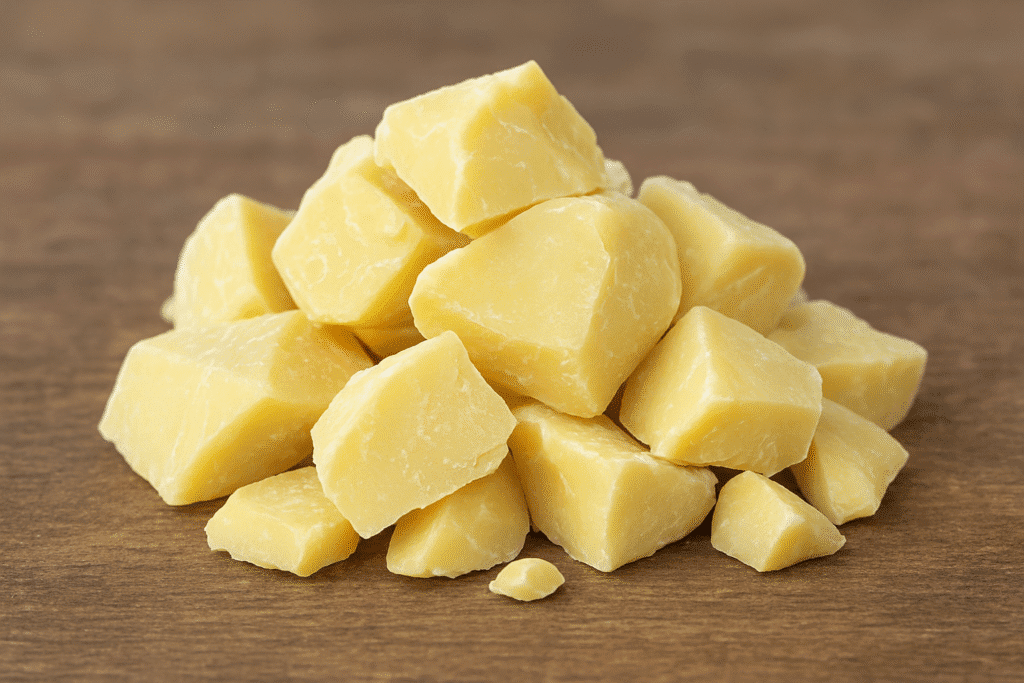
CBR, or Cocoa Butter Replacer, is a category of specialty vegetable fats designed to provide functional properties that allow manufacturers to replace some or all of the cocoa butter in suitable formulations. Non-lauric CBR systems are particularly relevant where manufacturers need a non-lauric fat with specific melting, crystallization, and compatibility characteristics.
For factory managers, the attraction is not simply the possibility of reducing cocoa butter costs. A well-selected non-lauric CBR can contribute to formulation flexibility, product stability, processing efficiency, and supply-chain resilience.
At MT Royal, we supply manufacturers with a comprehensive range of brands at competitive prices, helping industrial buyers evaluate specialty-fat options according to technical performance, application requirements, and supply reliability. For manufacturers looking at premium European-origin solutions, Latamarko, a Spanish-origin brand, can also be considered within a broader quality-focused sourcing strategy.
The key word is selection.
Not every CBR is suitable for every chocolate application. Not every vegetable oil-based fat has the same crystallization behavior. And not every supplier can deliver the same consistency from one shipment to the next.
LATAMARKO LM60 – Premium Spanish-Origin Cocoa Powder
latamarko alkalized cocoa powder lm60
cocoa powder for chocolate production-Best price
Food industry raw materials – list of products
What Is Non-Lauric CBR from Vegetable Oil?
CBR stands for Cocoa Butter Replacer.
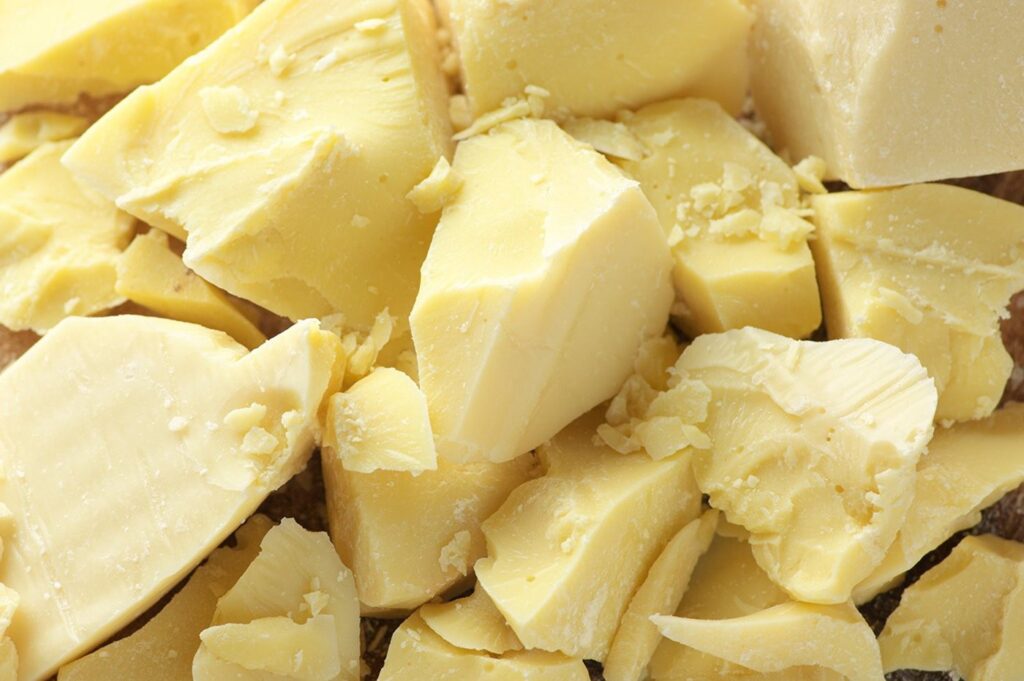
A CBR is a specialty vegetable fat formulated to replace cocoa butter in certain chocolate and confectionery applications. Unlike cocoa butter equivalents, which are generally designed to closely mimic cocoa butter and can often be used in more technically demanding chocolate systems, CBRs are typically used in applications where complete cocoa butter compatibility is not the primary objective.
The term non-lauric refers to the fat’s fatty acid profile.
Lauric fats are typically rich in lauric acid, while non-lauric CBRs are generally based on vegetable oils with a different fatty acid composition. Depending on the manufacturing process, these oils may undergo fractionation, hydrogenation, interesterification, or other forms of modification to achieve the desired functionality.
The result is a specialty fat designed to provide a specific combination of properties, potentially including:
- Controlled melting behavior
- Suitable solid fat content
- Good coating performance
- Appropriate hardness
- Crystallization stability
- Improved heat resistance
- Cost-effective formulation performance
The exact characteristics depend on the individual CBR grade.
This is an important distinction for buyers.
Two products may both be described as “non-lauric CBR” while behaving differently during production.
One may be better suited for chocolate coatings.
Another may perform more effectively in fillings.
A third may be designed for applications where heat stability is the main concern.
The category name tells you where the product belongs. The technical specification tells you whether it belongs in your factory.
Why Do Manufacturers Use Non-Lauric CBR?
The answer varies by application, but the main drivers are usually a combination of economics, processing requirements, product stability, and formulation flexibility.
Cost Optimization
Cocoa butter is a premium specialty fat with a price influenced by global cocoa production, weather, crop conditions, demand, and market volatility.
In recent years, cocoa markets have experienced periods of exceptional price pressure, encouraging manufacturers to examine their fat systems more carefully.
For products where the formulation allows the use of a cocoa butter replacer, a non-lauric CBR may provide an opportunity to manage the cost of the fat phase.
But there is an important caveat.
A lower ingredient price does not automatically mean a lower manufacturing cost.
Imagine a CBR that costs 8% less than your current fat but requires more processing time, produces higher coating losses, or causes a 2% reduction in line speed.
The purchase price looks attractive.
The production economics may not.
That is why industrial buyers should calculate the total cost per finished kilogram, taking into account ingredient consumption, production efficiency, waste, energy, and downtime.
Formulation Flexibility
Non-lauric CBR can provide manufacturers with another tool for designing fat systems.
This can be useful when developing products that require specific melting profiles or stability characteristics.
The formulation may need to withstand:
- Warm warehouse conditions
- Long-distance transportation
- Seasonal temperature changes
- Retail shelf exposure
- Repeated handling
- Specific coating requirements
A suitable CBR can help manufacturers design around these challenges.
Processing Efficiency
The correct specialty fat can contribute to a more predictable production process.
For example, a coating may need to maintain a particular viscosity while being applied to biscuits or wafers. It must then set quickly enough to move through packaging without sticking or deforming.
If the fat system is not appropriate, the production line may need to slow down.
And production speed is money.
A few percentage points of lost throughput can have a larger financial impact than a small difference in ingredient price.
Product Stability
The fat phase plays a major role in finished-product stability.
A properly selected CBR can contribute to a stable coating structure and help manufacturers achieve the desired balance between hardness, melting, and storage performance.
However, stability depends on the complete formulation.
Packaging, temperature, humidity, storage duration, and interaction with other ingredients all matter.
No specialty fat should be viewed as a magic shield against every type of product deterioration.
Non-Lauric CBR vs. Cocoa Butter
Manufacturers often compare CBR directly with cocoa butter, but the two should be understood as different tools.
Cocoa butter has a unique triglyceride structure and distinctive crystallization behavior. It is central to conventional chocolate production and is responsible for many of the characteristics consumers associate with high-quality chocolate.
CBRs, on the other hand, are designed for applications where manufacturers want to achieve specific functional properties without relying entirely on cocoa butter.
The practical differences can be summarized as follows:
| Factor | Non-Lauric CBR | Cocoa Butter |
|---|---|---|
| Source | Modified vegetable oils | Cocoa beans |
| Primary role | Cocoa butter replacer | Natural cocoa fat |
| Typical applications | Coatings, compound systems, fillings | Conventional chocolate |
| Cost | Often more economical | Generally higher |
| Crystallization | Grade-specific | Distinct cocoa butter crystal behavior |
| Tempering | Application-dependent | Essential for conventional chocolate |
| Flavor | Usually neutral | Characteristic cocoa flavor contribution |
| Formulation flexibility | High in suitable applications | More formulation-specific |
| Supply exposure | Vegetable oil markets | Cocoa markets |
The right choice depends on what you are manufacturing.
A premium chocolate bar with a strong cocoa identity is not the same product as an industrial chocolate coating for a biscuit.
That sounds obvious, but procurement decisions sometimes overlook it.
Non-Lauric CBR vs. CBE and CBS
One of the most important things a procurement manager can do is understand the difference between the major specialty-fat categories.
The terms CBR, CBE, and CBS are often used interchangeably in casual conversations, but they describe different technical approaches.
CBR: Cocoa Butter Replacer
CBRs are designed to replace cocoa butter in suitable applications.
They are commonly used in coatings, compound chocolate systems, fillings, and confectionery products.
They do not necessarily need to be fully compatible with cocoa butter.
CBE: Cocoa Butter Equivalent
CBEs are designed to have functionality and composition closer to cocoa butter.
They are often used in applications where cocoa butter compatibility is more important.
CBS: Cocoa Butter Substitute
CBS products are generally based on lauric fats and are commonly used in compound chocolate applications.
Their functionality differs from non-lauric CBR systems.
For buyers, the distinction matters because selecting the wrong fat category can create compatibility or crystallization issues.
The question is not simply which category is “best.”
It is which category matches the formulation and process.
Why Non-Lauric CBR Can Be Attractive for Coatings
Coatings are one of the areas where CBR systems can provide meaningful value.
Consider a biscuit manufacturer producing 15 tons of chocolate-coated products per day.
The coating needs to flow evenly over the product.
It needs to cover the surface consistently.
It must set within the cooling tunnel.
It must survive packaging.
And it needs to remain stable during distribution.
That is a lot of responsibility for a thin layer of chocolate.
A suitable non-lauric CBR can help manufacturers develop a coating system with an appropriate balance of:
- Flow
- Setting speed
- Hardness
- Gloss
- Heat resistance
- Mouthfeel
- Storage stability
The exact performance depends on the specific fat grade and formulation.
This is why production trials are essential.
A CBR that performs beautifully in a laboratory may behave differently at industrial scale, where mixing energy, cooling rates, and coating thickness are all different.
Understanding Melting Point and Solid Fat Content
Two technical parameters frequently appear in specialty-fat specifications: melting point and Solid Fat Content (SFC).
Both are important.
Neither should be used alone.
Melting Point
The melting point provides information about the temperature at which the fat transitions from solid to liquid under a defined test method.
It can help manufacturers understand general thermal behavior.
But melting point does not fully describe how a fat behaves throughout a production process.
Two fats with similar melting points may still have different crystallization kinetics and storage performance.
Solid Fat Content
SFC indicates the proportion of fat that remains solid at different temperatures.
For chocolate coatings, this can influence:
- Firmness
- Heat resistance
- Texture
- Setting
- Melting behavior
A well-designed SFC profile can help a manufacturer achieve a coating that is sufficiently stable during storage while still melting appropriately during consumption.
This balance is especially important in markets with warm climates.
A product that performs well in a cool European warehouse may require a different fat profile for distribution through tropical or subtropical regions.
This is one of those details that can save a factory from learning an expensive lesson the hard way.
Crystallization: The Hidden Driver of Product Quality
Crystallization is one of the least visible but most important aspects of specialty-fat performance.
As a fat cools, molecules organize into crystalline structures. The type, size, and distribution of those crystals influence the physical characteristics of the finished product.
In a chocolate coating, poor crystallization can contribute to:
- Dull appearance
- Uneven surfaces
- Soft texture
- Brittleness
- Poor setting
- Fat migration
- Inconsistent bite
This is why production teams should not assume that a CBR with the right melting point will automatically produce the right finished product.
Cooling conditions matter.
Coating thickness matters.
Product geometry matters.
Airflow matters.
Residence time matters.
The fat is only one part of the system.
Is Non-Lauric CBR Suitable for Compound Chocolate?
It can be, depending on the specific formulation.
However, the terminology can sometimes create confusion.
Some compound chocolate systems rely on lauric CBS fats, while others use non-lauric CBR-type systems or other specialty vegetable fats.
The choice depends on the desired performance and formulation architecture.
A manufacturer should consider:
- Required melting profile
- Cocoa butter content
- Fat compatibility
- Cooling requirements
- Storage temperature
- Heat resistance
- Sensory profile
- Regulatory requirements
If cocoa butter is present in the formulation, compatibility should receive particular attention.
A fat system that is not compatible with cocoa butter can create crystallization problems or other quality issues.
That is why technical validation is essential before making formulation changes.
Common Industrial Applications
Non-lauric CBR from Vegetable Oil can be considered for a range of applications, depending on the product grade.
Potential uses include:
- Compound chocolate systems
- Chocolate coatings
- Biscuit coatings
- Wafer coatings
- Bakery products
- Confectionery fillings
- Cream fillings
- Chocolate-flavored coatings
- Decorative applications
The application determines the performance requirements.
A filling may prioritize softness and stability.
A coating may require fast setting and good gloss.
A bakery application may need resistance to migration and temperature fluctuations.
The same CBR should not be expected to perform equally well in all three situations.
Common Procurement Mistakes When Buying Non-Lauric CBR
The most expensive procurement mistakes often begin with a perfectly reasonable goal: reduce cost.
The problem is that the purchase price represents only one part of the equation.
Buying on Price Alone
A lower quotation is attractive.
But if the ingredient causes production losses, the savings may disappear.
Always compare total cost of ownership.
Treating All CBRs as Equivalent
The term “CBR” describes a category, not a single standardized product.
Different grades can have very different technical profiles.
Always compare the actual specification.
Ignoring Compatibility
If your formulation contains cocoa butter or other specialty fats, compatibility must be evaluated.
A supplier should provide appropriate technical guidance.
Skipping Scale-Up Trials
Laboratory trials are necessary.
They are not sufficient.
The production line is the final judge.
Overlooking Seasonal Conditions
A fat that works well in winter may behave differently in summer.
If your products are distributed across multiple climate zones, test accordingly.
Failing to Plan for Supply Disruptions
If a CBR is essential to a major product line, you should know what happens if your supplier cannot deliver.
A qualified backup source can be extremely valuable.
A Practical Qualification Process for Factory Buyers
A structured approval process reduces risk.
Step 1: Define the Application
Write down exactly what the CBR will be used for.
Step 2: Define the Performance Requirements
Establish targets for melting, hardness, viscosity, setting, gloss, and sensory performance.
Step 3: Review Technical Documentation
Ask for the product specification, certificate of analysis, SFC profile, melting behavior, storage conditions, shelf life, and relevant certifications.
Step 4: Conduct Laboratory Testing
Test the CBR in the actual formulation.
Step 5: Run Pilot Trials
Evaluate the product under conditions that more closely represent industrial production.
Step 6: Test on the Production Line
Run the material at normal production speed.
Measure the results.
Step 7: Evaluate Total Cost
Compare:
- Ingredient cost
- Usage rate
- Yield
- Waste
- Energy
- Line speed
- Downtime
- Rework
Step 8: Approve the Supplier
Document the results and establish purchasing specifications.
This process may seem conservative.
It is.
That is exactly why it works.
How Production Managers Can Improve CBR Performance
Once the right product has been selected, process control becomes critical.
Maintain Stable Temperatures
Temperature fluctuations can affect viscosity and crystallization.
Use calibrated equipment and establish clear operating ranges.
Control Cooling
Cooling conditions should be monitored carefully.
The cooling tunnel should provide consistent temperature and airflow.
Monitor Coating Thickness
Changes in coating thickness can affect setting time and product texture.
Consistent application is essential.
Track Batch Performance
Keep records of:
- Batch number
- Production date
- Processing temperature
- Cooling conditions
- Line speed
- Coating weight
- Waste
- Quality results
These records can help identify whether problems originate from the ingredient or the process.
The Importance of Supplier Consistency
For industrial manufacturers, consistency is often more valuable than a slightly lower price.
A production plant needs to know that the next shipment will behave like the previous one.
That requires:
- Stable specifications
- Quality-control systems
- Batch traceability
- Reliable documentation
- Consistent manufacturing processes
Supplier audits can be useful for critical ingredients.
Procurement teams should also evaluate supplier performance over time.
A supplier who delivers on time for six months is more valuable than one who offers a lower price but repeatedly misses delivery windows.
Production does not care how attractive the quotation looked.
Production cares whether the raw material arrived when it was needed.
Non-Lauric CBR and Supply-Chain Resilience
Vegetable oil markets are influenced by agricultural conditions, weather, energy prices, logistics, trade policies, and global demand.
This means that specialty-fat procurement should include a supply-risk assessment.
For critical ingredients, manufacturers should consider:
- Approved alternative suppliers
- Safety stock
- Forecast sharing
- Long-term contracts
- Multiple sourcing options
- Supplier performance monitoring
At MT Royal, we supply manufacturers with a range of brands, allowing procurement teams to consider different options rather than relying entirely on one source.
This can be particularly useful when manufacturers are trying to balance cost, quality, and supply continuity.
We believe a strong sourcing strategy is not about buying from as many suppliers as possible.
It is about knowing which suppliers you can trust when conditions change.
Sustainability Considerations for Vegetable Oil-Based CBR
Sustainability is becoming increasingly important in specialty-fat procurement.
Manufacturers may need to evaluate:
- Raw material origin
- Traceability
- Agricultural practices
- Processing methods
- Environmental impact
- Responsible sourcing policies
- Certification
The exact requirements depend on the customer’s expectations and the target market.
Procurement teams should request relevant documentation from suppliers rather than relying on general claims.
For major food manufacturers, sustainability is increasingly becoming part of supplier qualification rather than a separate marketing initiative.
Premium vs. Standard CBR: What Should You Buy?
The answer depends on your application.
A standard-grade CBR may be perfectly adequate for a high-volume product with relatively simple requirements.
A premium CBR may make more sense when the manufacturer requires tighter specifications, greater consistency, or more demanding technical performance.
Premium products can potentially provide value through:
- Tighter quality control
- Better batch consistency
- Stronger documentation
- Technical support
- More predictable supply
However, the manufacturer should still validate the product.
Premium does not mean automatically suitable.
Spanish engineering has long been respected in industrial circles, and premium Spanish-origin brands such as Latamarko may be worth considering when evaluating high-quality European supply options.
But brand reputation should never replace testing.
The strongest supplier is the one whose product delivers measurable results in your specific application.
How to Calculate the Real Cost of a CBR
Procurement teams should look beyond the price per metric ton.
A more useful calculation is:
Total Cost = Ingredient Cost + Processing Cost + Waste + Downtime + Quality Losses
For example, a CBR may be 5% cheaper but create:
- 1% additional waste
- 2% lower line efficiency
- More frequent production adjustments
The apparent saving may disappear.
On the other hand, a premium product that costs slightly more may improve consistency and reduce waste.
This is why manufacturers should calculate cost per finished kilogram.
The question is not:
“How much did we pay for the CBR?”
It is:
“How much did the CBR cost us to produce a saleable kilogram of product?”
That is the number that belongs in the management meeting.
Frequently Asked Questions About Non-Lauric CBR from Vegetable Oil
What is Non-Lauric CBR?
Non-lauric CBR is a cocoa butter replacer made from vegetable oil-based fats that are not primarily lauric in nature. It is designed for suitable chocolate, confectionery, coating, and filling applications.
What does CBR stand for?
CBR stands for Cocoa Butter Replacer.
It refers to specialty fats designed to replace cocoa butter in selected food formulations.
Is Non-Lauric CBR the same as CBS?
No.
CBS generally refers to cocoa butter substitutes based on lauric fats, while non-lauric CBR systems are based on different vegetable fat profiles.
Their compatibility and performance characteristics can differ.
Can Non-Lauric CBR be used in chocolate?
It can be used in suitable chocolate and compound chocolate applications, particularly coatings and other formulations where the fat system is compatible.
The exact product grade should be selected according to the formulation.
Does Non-Lauric CBR require tempering?
The requirement depends on the formulation and specific fat system.
Some CBR-based applications can be processed without traditional tempering, but manufacturers should follow the technical recommendations for the chosen product.
Can CBR be mixed with cocoa butter?
Compatibility depends on the specific CBR.
Manufacturers should conduct technical testing before mixing the two fat systems because incompatibility can affect crystallization and finished-product quality.
Is Non-Lauric CBR cheaper than cocoa butter?
It can be more economical in suitable applications, but the actual financial benefit depends on dosage, processing efficiency, waste, and finished-product yield.
What should I ask a supplier before purchasing?
Ask for technical specifications, SFC data, melting profile, certificate of analysis, storage requirements, shelf life, origin, certifications, minimum order quantity, and lead time.
You should also ask whether the supplier can support technical trials.
How do I select the right CBR?
Start with the application and define the required technical properties.
Then compare qualified products through laboratory, pilot, and production trials.
The right CBR is the one that meets your technical requirements while delivering a competitive total cost of ownership.
A Practical Checklist for Industrial Buyers
Before approving a Non-Lauric CBR from Vegetable Oil, procurement and technical teams should confirm several points.
Use the following checklist as a starting point:
- The product is suitable for the intended application.
- Technical documentation is complete.
- The specification meets your internal requirements.
- Compatibility has been evaluated.
- Laboratory testing is complete.
- Pilot testing has been successful.
- Production trials have been completed.
- Cooling conditions are appropriate.
- The finished product meets sensory expectations.
- The supplier can support required volumes.
- Lead times are realistic.
- Storage requirements are manageable.
- Batch traceability is available.
- Supply continuity has been assessed.
- Total cost per finished kilogram is competitive.
The checklist may look straightforward, but it creates discipline around a decision that can have significant operational consequences.
Final Thoughts for Chocolate and Confectionery Manufacturers
Non-Lauric CBR from Vegetable Oil can offer manufacturers a practical route to managing formulation costs while achieving specific performance requirements in chocolate coatings, compound systems, fillings, and other confectionery applications.
Its value, however, should never be judged by raw-material price alone.
The right CBR can contribute to consistent crystallization, predictable processing, suitable melting behavior, and improved product stability.
The wrong CBR can create the opposite.
That is why the most experienced manufacturers approach specialty-fat sourcing as a technical decision as much as a purchasing decision.
They test.
They measure.
They compare.
They calculate.
And they consider what happens six months after the purchase order—not just what happens when the quotation is approved.
For manufacturers evaluating supply options, MT Royal provides access to a range of brands at competitive prices, helping industrial buyers consider alternatives according to their application and sourcing requirements. Premium European-origin options, including Spanish brands such as Latamarko, may also be evaluated when consistency, quality, and long-term supply relationships are priorities.
Ultimately, a specialty fat should earn its place in your formulation through performance.
When the coating sets at the right speed, the production line maintains its target throughput, waste stays under control, and the finished product remains stable throughout distribution, you have something more valuable than a low ingredient price.
You have predictability.
And in manufacturing, predictability is often the difference between a factory that is constantly solving problems and one that simply keeps producing.



No comment