


Choosing the right seasoning and blends suppliers can make a measurable difference to your factory’s product consistency, production efficiency, and profitability. Whether you manufacture potato chips, instant noodles, frozen foods, meat products, sauces, snacks, or ready meals, the quality of your seasoning system directly influences the flavor customers recognize and expect. MT Royal offers access to multiple brands at competitive prices, giving food manufacturers an option for comparing seasoning products and sourcing ingredients that align with their technical requirements and purchasing budgets.
For industrial food producers, seasoning procurement involves much more than selecting a flavor from a catalogue. Every blend must perform consistently under actual manufacturing conditions, adhere to ingredient and labeling requirements, remain stable throughout its shelf life, and arrive when production needs it. A seasoning that tastes excellent in a laboratory sample may behave differently when applied to a hot snack line, mixed into a high-moisture sauce, or incorporated into a product that undergoes freezing and reheating.
Understanding these differences helps procurement teams make better decisions and avoid costly formulation problems. This guide explores what to look for when evaluating seasoning and blends suppliers, how to compare products, and which technical and commercial factors deserve attention before committing to a long-term supply agreement.
What Are Seasonings and Blended Ingredients?
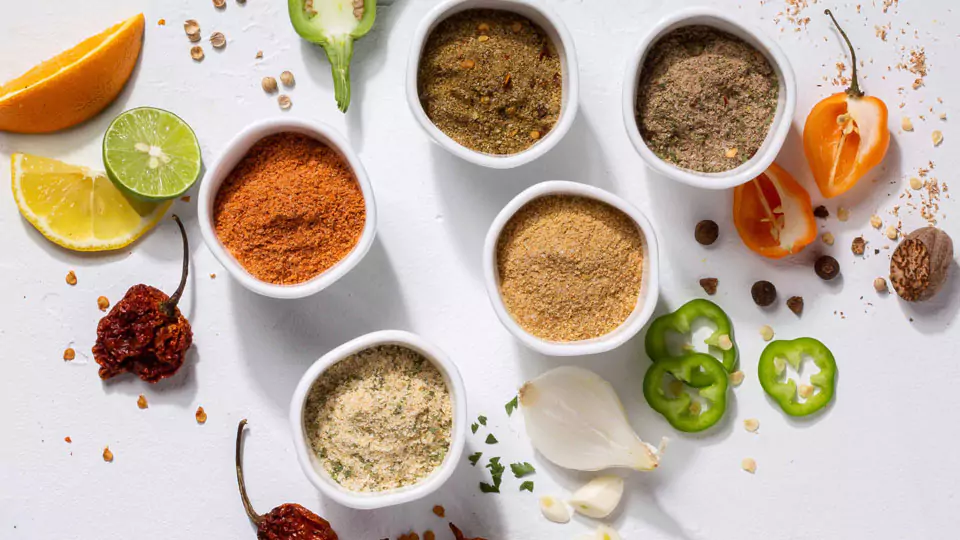
Seasonings are formulated ingredients used to enhance or modify the flavor, aroma, color, and sometimes the texture of food products. They may contain spices, herbs, salt, sugar, flavoring substances, dried vegetables, yeast-derived ingredients, acids, carriers, and other functional components, depending on the application.
A seasoning blend combines selected ingredients in defined proportions to deliver a particular sensory profile or technical function. It may be a simple mixture of salt and spices or a complex formulation developed for a specific product, production process, and target market.
For industrial manufacturers, consistency is the defining requirement. A blend must deliver predictable results across batches, production shifts, and changes in raw-material availability.
Common Types of Industrial Seasonings
Seasoning and blends suppliers typically serve a broad range of food manufacturing applications.
Snack seasonings: Used for potato chips, extruded snacks, popcorn, crackers, and nuts. These blends may emphasize cheese, barbecue, sour cream, chili, herbs, or other flavor profiles.
Meat and poultry seasoning blends: Designed for sausages, processed meat, marinated poultry, burger products, and prepared meat dishes. Depending on the formulation, they may combine spices, herbs, flavor enhancers, salt, functional ingredients, and ingredients that contribute to color or flavor development.
Sauce and soup seasonings: Used in instant soups, gravies, sauces, dressings, and ready meals. These formulations often need to disperse evenly and retain their intended flavor during cooking, dilution, and storage.
Bakery seasonings: Developed for savory biscuits, bread toppings, crackers, filled bakery products, and specialty dough applications.
Instant food seasoning systems: Used in noodles, rice dishes, meal kits, and other convenience foods. They may be supplied as powders, granules, pastes, or liquid concentrates.
Custom seasoning blends: Developed to meet specific flavor targets, ingredient restrictions, nutritional requirements, or processing conditions.
The right category depends on your product, not simply on the flavor name. A barbecue seasoning intended for a dry snack coating may require a different carrier system and particle size from one designed for a wet marinade.
Why Choosing the Right Seasoning and Blends Suppliers Matters
Seasonings can represent a relatively small proportion of a finished product’s total weight while exerting a disproportionate influence on customer satisfaction. This makes ingredient selection particularly important.
Product Consistency Across Every Batch
Customers expect their preferred snack or ready meal to taste the same every time. Variations in spice quality, particle size, salt distribution, moisture, and flavor concentration can create noticeable differences between production batches.
A reliable supplier should have documented quality controls, batch traceability, and procedures for managing changes in raw materials or formulation.
Production Efficiency and Line Performance
Seasonings must work with your equipment. Poor powder flow can cause inconsistent dosing, bridging in hoppers, uneven distribution, or excessive dust formation. A blend with unsuitable particle size may separate during transport or produce uneven coverage on finished products.
These problems can affect throughput and increase waste. In a high-speed snack factory, even a minor dosing issue can quickly become a production problem rather than a simple ingredient complaint.
Cost Control and Finished-Product Quality
A lower purchase price does not always mean lower manufacturing costs. A concentrated seasoning may require a lower application rate, while a cheaper blend may need more material to achieve the same sensory intensity.
The meaningful comparison is therefore the cost of achieving the required flavor in the finished product, including application losses and any quality issues associated with the formulation.
Regulatory Compliance and Market Access
Seasoning ingredients must comply with the food regulations applicable to the product and destination market. This can include requirements for additives, allergens, flavorings, contaminants, labeling, and ingredient declarations.
For export-oriented manufacturers, a blend suitable for one country may require adjustments before it can be marketed elsewhere. Supplier documentation should support your regulatory team’s assessment rather than replace it.
How to Evaluate Seasoning and Blends Suppliers
A structured supplier evaluation helps you compare offers on a consistent basis and reduces the risk of approving a product that later fails in production.
1. Request Complete Product Specifications
Start by requesting a current technical data sheet for each candidate seasoning.
Depending on the formulation, relevant information may include:
- Ingredient composition and declaration requirements.
- Allergen status and cross-contact information.
- Salt, moisture, and other relevant compositional parameters.
- Recommended application rate.
- Particle size and physical characteristics.
- Storage conditions and shelf life.
- Microbiological specifications where appropriate.
- Batch identification and traceability information.
- Recommended processing conditions and application methods.
Not every specification applies to every blend. Your requirements should reflect the food category, production process, and applicable regulations.
For proprietary blends, suppliers may not disclose every formulation detail. However, they should still provide the information needed to evaluate safety, labeling, technical suitability, and consistent use.
2. Assess Flavor Consistency
Flavor evaluation should combine sensory testing with appropriate analytical controls.
A trained tasting panel can assess attributes such as aroma, saltiness, acidity, heat, sweetness, umami, aftertaste, and overall balance. Where relevant, analytical testing can monitor compositional parameters or selected marker compounds.
Establish a reference sample for approved products and define acceptable variation. This is particularly useful when a supplier sources spices from multiple origins or must adjust its formulation because of seasonal availability.
3. Check Food Safety and Quality Management
Ask about the supplier’s food safety management system, risk assessment procedures, and traceability capabilities.
Depending on the product and destination, relevant evidence may include HACCP-based controls, ISO 22000 certification, or certification under a recognized food safety scheme. Verify that any certification is current and covers the appropriate manufacturing activities.
Spices and dried botanical ingredients deserve particular attention because contamination can occur during harvesting, drying, handling, and storage. Depending on the ingredient and risk profile, controls may include validated microbial reduction treatments, microbiological testing, and monitoring for relevant contaminants.
A supplier’s quality assurance process should be appropriate to the hazards associated with the ingredients it handles.
4. Confirm Supply Capacity and Lead Times
Ask suppliers about minimum order quantities, standard lead times, production capacity, stock availability, and their ability to support seasonal demand.
If your factory uses several tonnes of a particular seasoning each month, a small initial order may be easy to supply, but regular replenishment requires a more dependable arrangement.
We recommend assessing delivery performance over multiple orders before relying on a supplier for a critical product. This reveals whether quoted lead times reflect actual operational performance.
Comparing Seasoning Suppliers: What Should Manufacturers Measure?
A practical comparison should include technical suitability, commercial terms, and operational risk.
| Evaluation factor | What to examine | Why it matters |
|---|---|---|
| Flavor performance | Sensory profile and batch consistency | Protects the finished product’s identity |
| Application rate | Recommended dosage and actual usage | Determines effective seasoning cost |
| Physical properties | Particle size, flowability, moisture | Supports accurate dosing and uniform application |
| Food safety | Risk controls, testing, traceability | Reduces contamination and compliance risks |
| Documentation | Specifications, allergens, labeling data | Supports quality approval and market access |
| Supply reliability | Lead times, availability, delivery history | Reduces production interruptions |
| Commercial terms | Price, minimum order, payment and freight | Determines overall procurement value |
| Technical support | Trial assistance and troubleshooting | Speeds up problem resolution |
The best supplier is not necessarily the one that scores highest in every individual category. Your procurement team should assign greater weight to the factors that matter most for the product and the consequences of a supply failure.
Calculating the True Cost of a Seasoning Blend
One of the most useful procurement improvements is to compare seasoning costs at the finished-product level rather than simply comparing prices per kilogram.
Consider a hypothetical example involving two snack seasoning blends.
| Cost measure | Blend A | Blend B |
|---|---|---|
| Purchase price per kg | €4.20 | €3.80 |
| Application rate | 8% | 9% |
| Seasoning cost per kg of finished base product | €0.336 | €0.342 |
The example assumes that the application rate is expressed as kilograms of seasoning per 1 kg of base product. It is illustrative only and does not represent current market quotations.
Although Blend B costs less per kilogram, its higher required dosage makes it more expensive per kilogram of base product seasoned.
A more complete calculation should also include application losses, rejected production, packaging or handling requirements, and any differences in finished-product quality.
For large-volume factories, these differences can accumulate quickly. If a seasoning is used on hundreds of tonnes of product annually, a small cost difference per finished kilogram can materially affect operating margins.
Common Mistakes When Sourcing Seasonings and Blends
Even experienced procurement teams can encounter avoidable problems when sourcing seasoning ingredients.
Buying on Price Without Comparing Dosage
Two blends with similar flavor descriptions may have different flavor intensities, salt contents, and carrier systems. Comparing their purchase prices without checking the recommended application rate can produce misleading results.
Always compare the cost of achieving an equivalent sensory result.
Ignoring Ingredient and Allergen Changes
A formulation change can affect allergen declarations, nutritional information, labeling, and customer specifications.
For example, replacing one ingredient with another may introduce a new allergen or alter the sodium content. Require advance notification of material formulation changes and review them through your internal approval process.
Skipping Factory-Scale Trials
A seasoning may perform well in a small laboratory sample but behave differently in a commercial process.
Differences in temperature, product moisture, oil content, line speed, coating equipment, and mixing intensity can influence flavor distribution and retention.
Conduct trials under representative production conditions before approving a new blend for regular use.
Overlooking Physical Compatibility
Powdered seasonings can differ in bulk density, particle size, hygroscopicity, and flow characteristics.
If the blend separates during transport or does not flow consistently through dosing equipment, the finished product may show uneven flavor distribution. These issues can be particularly noticeable in large production runs.
Failing to Establish Change-Control Procedures
Spice availability and raw-material prices can fluctuate because of harvest conditions, weather, logistics, and regional supply constraints.
A supplier may need to adjust its sourcing or formulation. Such changes should be communicated and evaluated before they affect your production line.
Define which changes require notification, documentation, reapproval, or a new factory trial.
Specialized Tips for Large-Scale Seasoning Operations
Industrial seasoning management requires coordination between procurement, quality assurance, research and development, production, and warehouse teams.
Optimize Application Rate and Distribution
For dry-coated snacks, the final seasoning result depends on more than the blend itself. Product surface temperature, residual moisture, oil application, coating equipment, and seasoning particle characteristics can all influence adhesion and distribution.
When adjusting a formulation, establish the seasoning application rate through controlled trials. Monitor both sensory performance and material consumption rather than relying on visual coverage alone.
For sauces and wet products, evaluate how the seasoning disperses, hydrates, and releases flavor throughout the processing cycle.
Control Moisture and Storage Conditions
Many dry seasoning blends are sensitive to moisture absorption. Exposure to humid air can lead to caking, reduced flowability, and dosing difficulties.
Follow supplier storage recommendations, keep packaging sealed, manage warehouse humidity where appropriate, and avoid leaving open bags exposed near washing or steam-cleaning operations.
Use stock rotation based on expiry dates and ensure that opened packaging remains clearly identified.
Standardize Production Trials
A well-designed trial should compare the candidate blend against an approved reference using the same base formulation and comparable process conditions.
Record:
- Actual seasoning consumption.
- Product coverage and distribution.
- Flavor intensity and balance.
- Dosing stability and equipment performance.
- Finished-product appearance and texture.
- Waste, rejects, and line interruptions.
- Relevant shelf-life or stability results.
We have seen that a simple, consistent trial protocol can prevent long debates about whether a new blend is genuinely better. When measurements and sensory observations are recorded properly, the decision becomes much clearer.
Develop a Risk-Based Supplier Strategy
For critical seasonings, consider maintaining more than one qualified source where technically and commercially feasible.
However, alternate suppliers should not be approved solely because they offer a similar flavor name. Their products must meet the same essential specifications and undergo the necessary testing.
A backup supplier is only useful if its blend can actually run on your production line without compromising quality.
Use Demand Forecasting to Improve Purchasing
Seasoning consumption often follows production schedules, promotions, and seasonal demand patterns. Forecasting these fluctuations helps procurement teams avoid emergency purchases and excess inventory.
Calculate reorder points using expected consumption, replenishment lead time, demand variability, and the consequences of stockouts. Review safety stock periodically rather than using the same buffer for every ingredient.
For imported blends, include realistic allowance for shipping delays and customs clearance where relevant.
Emerging Trends in Industrial Seasonings
The seasoning industry continues to evolve as food manufacturers respond to consumer preferences, regulatory expectations, and production technology.
Sodium Reduction and Flavor Optimization
Many manufacturers are exploring ways to reduce sodium while preserving flavor acceptance. This may involve adjusting spice profiles, increasing aromatic complexity, using suitable flavor enhancers, or redesigning the balance of acidity and umami.
The right approach depends on the product category and applicable regulations. Sodium reduction should be assessed through nutritional calculations and sensory testing, not simply by removing salt from an established formulation.
Cleaner Ingredient Declarations
Some customers increasingly prefer products with familiar ingredient names and fewer additives. Manufacturers may therefore request seasoning blends designed around particular labeling objectives.
However, the meaning of terms such as “clean label” varies by market and customer. Define the actual requirements, such as avoiding specific additives or using particular ingredient sources, before requesting reformulation.
Custom Flavor Development
Custom seasoning blends allow manufacturers to differentiate their products and develop profiles for specific markets.
A successful development process begins with a defined sensory brief, a reference product if available, target application conditions, ingredient restrictions, and a realistic cost range.
This gives the supplier a clear technical target and reduces unnecessary sample iterations.
Sustainability and Ingredient Traceability
Food manufacturers are paying closer attention to spice origin, supplier transparency, and responsible sourcing practices.
Depending on the ingredient and supply chain, relevant considerations may include agricultural origin, working practices, environmental impacts, and packaging choices. Any sustainability claims should be supported by appropriate documentation rather than broad marketing statements.
Digital Quality and Procurement Systems
Digital purchasing and quality systems can connect supplier performance, batch records, inventory, complaints, and ingredient costs.
For seasoning buyers, this makes it easier to identify recurring issues, compare actual dosage against specifications, and detect whether changes in raw materials are affecting finished-product quality.
Industry-wide figures should be used carefully when making procurement forecasts. Seasonal spice prices, freight rates, and regional crop conditions vary substantially, so current quotations and dated commodity information are more useful than unsupported general market estimates.
How MT Royal Can Support Your Seasoning Procurement
When evaluating seasoning and blends suppliers, manufacturers often need to compare multiple brands and product options while keeping technical performance and budget requirements aligned.
MT Royal offers access to multiple brands at competitive prices, making it a potential sourcing partner for businesses looking to evaluate seasoning products for industrial applications. The suitability of a particular product should be confirmed through current specifications, availability, commercial terms, and appropriate product trials.
To make your inquiry more productive, prepare the following details before requesting a quotation:
- Product category: Snacks, meat products, sauces, soups, bakery, noodles, or ready meals.
- Flavor profile: The desired sensory characteristics and any reference product.
- Application method: Dry coating, direct mixing, marination, or incorporation into a liquid system.
- Consumption volume: Expected monthly demand and preferred order quantities.
- Technical requirements: Ingredient restrictions, allergen controls, dosage targets, and relevant physical properties.
- Delivery requirements: Destination, preferred schedule, packaging format, and required documentation.
Providing this information helps narrow the options and allows suppliers to recommend products that are more likely to meet your actual production requirements.
If multiple brands appear suitable, request comparable quotations and conduct trials before selecting the preferred option. Confirm product specifications and change-control expectations in writing to reduce the risk of unexpected formulation differences.

Frequently Asked Questions About Seasoning and Blends Suppliers
What should I look for in a seasoning supplier?
Prioritize consistent flavor, food safety controls, traceability, complete product documentation, reliable delivery, technical support, and competitive total cost. The relative importance of each factor depends on your application and production scale.
Can seasoning suppliers develop custom blends for my factory?
Many industrial seasoning suppliers offer custom formulation or adaptation services. You should provide a clear sensory brief, application details, ingredient restrictions, target dosage, and cost expectations. Confirm development timelines and approval procedures before proceeding.
How do I compare two seasoning blends fairly?
Compare both products at application rates that achieve equivalent sensory results. Review ingredient declarations, physical properties, regulatory suitability, processing behavior, and finished-product quality. Calculate cost per kilogram of finished product rather than relying only on price per kilogram of seasoning.
How can I maintain consistent flavor across production batches?
Use approved product specifications, reference samples, documented application rates, suitable process controls, and defined acceptance criteria. Monitor incoming batches and investigate significant sensory or physical deviations before releasing the ingredient for production.
What documents should a supplier provide?
Depending on the blend and destination market, request a technical data sheet, ingredient declaration, allergen statement, applicable certificates of analysis, traceability information, storage instructions, shelf life, and relevant food safety documentation.
Are dry seasoning blends suitable for every food process?
No. Dry blends may need to be adapted for high-moisture products, high-temperature processing, freezing, frying, or extended storage. Carrier systems, particle size, solubility, and flavor stability should be assessed for the intended application.
How should industrial seasoning blends be stored?
Follow the supplier’s instructions, protect products from moisture and contamination, keep packaging sealed, and maintain appropriate warehouse conditions. Apply stock rotation and lot tracking procedures, especially for ingredients with limited shelf life.
Does MT Royal offer multiple seasoning brands?
MT Royal offers access to multiple brands at competitive prices. Ask for current product availability, specifications, application suitability, minimum order quantities, and quotations for the seasoning categories relevant to your production line.
Choose Seasoning Suppliers That Strengthen Your Entire Production Process
The right seasoning can define a product’s identity, but the right supplier helps preserve that identity across every batch, delivery, and production shift. For manufacturers, successful sourcing depends on combining flavor performance with technical compatibility, food safety, regulatory compliance, dependable logistics, and a realistic understanding of total cost.
MT Royal provides an option for businesses seeking access to multiple brands at competitive prices. Evaluate available products against your factory’s specifications, compare their performance under real production conditions, and establish clear expectations for quality and supply continuity.
A seasoning should do more than make a product taste good. It should work reliably at industrial scale, support your margins, and give customers a consistent reason to choose your product again.



No comment